

So you bought cod, and it tastes so different from last time?
You’re not alone. Many cooks mix up black cod and regular cod. It’s frustrating when your recipe doesn’t turn out right.
This blog will clear up the confusion.
You’ll learn about taste, texture, and cooking methods. By the end, you’ll know exactly which fish to choose.
Is Cod Healthy?
Yes, cod is very healthy for you.
It’s packed with lean protein and low in calories. A single serving gives you plenty of nutrients without extra fat.
Regular cod contains vitamin B12, which supports your nervous system. It also has selenium and phosphorus for bone health.
Black cod offers more omega-3 fatty acids than regular cod. These healthy fats support heart health and reduce inflammation.
Both types provide iodine for thyroid function. Cod has minimal mercury compared to larger fish.
It’s safe to eat several times per week for most people.
The Different Types of Cods
Black cod and cod sound alike. But they’re not even close relatives. One is buttery and rich. The other is mild and flaky.
Atlantic Cod
Atlantic cod lives in cold ocean waters. It has a mild flavour and firm white flesh. This fish grows large and feeds near the bottom.
Fishermen catch it along the North American and European coasts. It’s the classic cod most recipes call for.
Pacific Cod
Pacific cod swims in northern Pacific waters. It tastes similar to Atlantic cod but slightly sweeter. The texture is firm and flakes easily when cooked.
This variety is common in Alaska. Many restaurants use it as a substitute for Atlantic cod.
Black Cod (Sablefish)
Black cod isn’t true cod at all. It’s actually called sablefish. This fish has rich, buttery flesh with high oil content.
It lives deep in Pacific waters and costs more than regular cod. The flavour is much stronger, and the texture is silky.
Lingcod
Lingcod is another fish that’s not really cod. It has lean, firm meat with a mild taste. This fish can grow quite large in size.
It lives along the Pacific coast from Alaska to California. The flesh stays moist and tender when cooked properly.
At a Glance: Black Cod vs Cod
| Feature | Black Cod | Regular Cod |
|---|---|---|
| Scientific Name | Anoplopoma fimbriata (Sablefish) | Gadus morhua (Atlantic) / Gadus macrocephalus (Pacific) |
| True Cod? | No, it’s a sablefish | Yes |
| Flavor | Rich, buttery, sweet | Mild, clean, subtle |
| Texture | Soft, moist, silky | Firm, flaky, lean |
| Fat Content | High (15g per 100g) | Low (0.7g per 100g) |
| Color | Dark, blackish skin | Light with spots |
| Price Range | $25-$40 per pound | $8-$15 per pound |
| Best Cooking Methods | Grilling, broiling, pan-searing | Baking, frying, poaching |
| Habitat | Deep Pacific waters | Shallow Atlantic/Pacific waters |
| Availability | Specialty markets | Widely available |
Detailed: The Differences Between Black Cod vs Cod
Black cod and regular cod differ in many ways. These differences will help you cook better meals.
1. Species and Family
Black cod belongs to the sablefish family. Regular cod comes from the Gadidae family. They’re not related at all, despite sharing similar names.
This scientific difference affects everything about them, from habitat to taste.
2. Appearance and Size
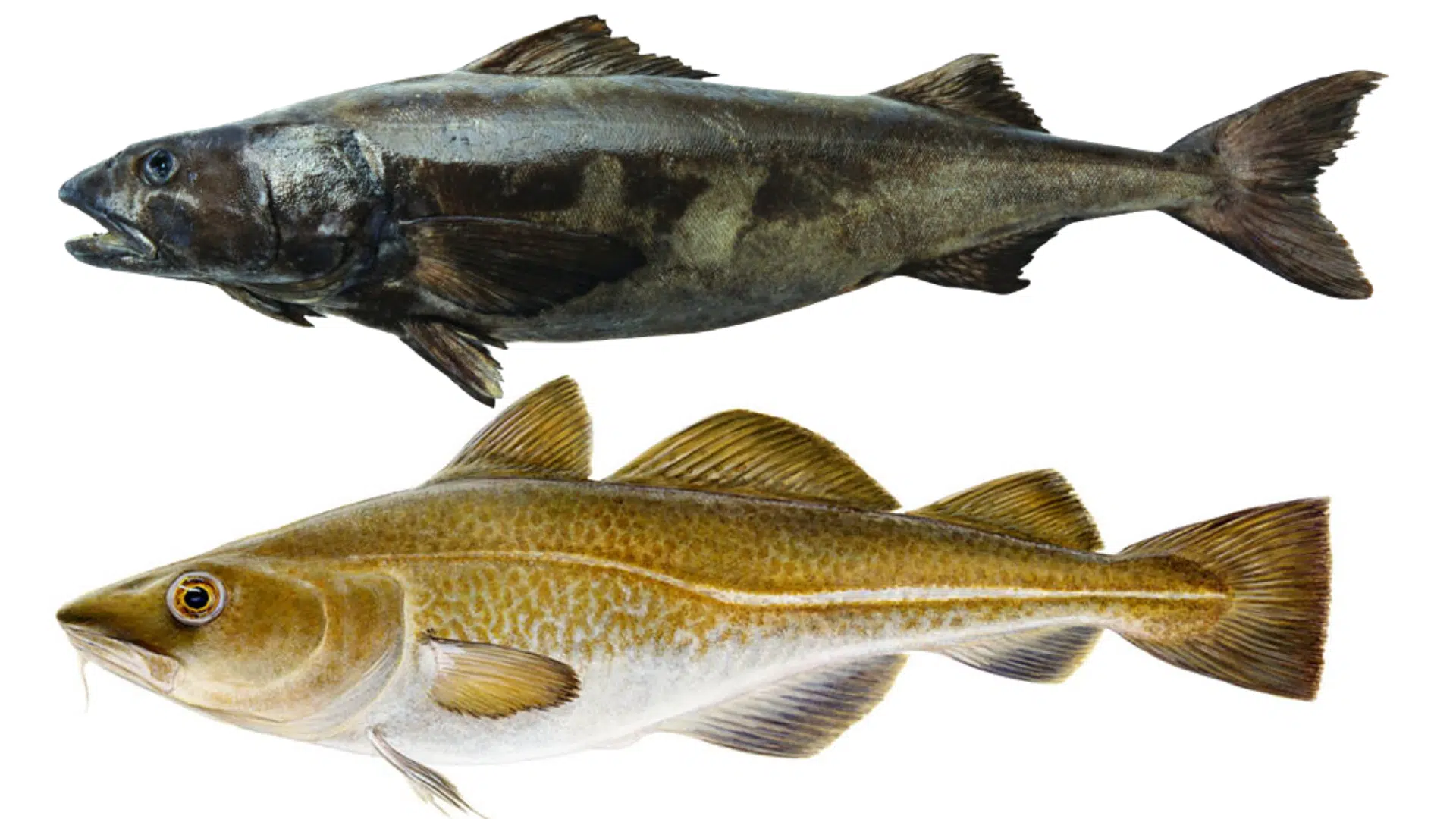
Black cod has dark, almost black skin with a sleek body. Regular cod features lighter colouring with spotted patterns.
Black cod grows up to 40 inches long, typically. Atlantic cod can reach much larger sizes, sometimes over 6 feet.
The body shape differs, too. Black cod looks more streamlined, while regular cod appears rounder and thicker.
3. Habitat and Fishing Locations
Black cod lives in deep Pacific Ocean waters. It prefers cold environments between 600 to 4,800 feet deep.
Regular cod inhabits shallower Atlantic and Pacific waters. Atlantic cod stays near the North American and European coasts.
Pacific cod swims in the northern Pacific regions. Black cod fishing happens mainly off Alaska and British Columbia shores.
4. Texture and Oil Content
Black cod contains high levels of healthy oils. This makes the flesh soft and moist. Regular cod has lean, firm meat with less fat.
Black cod feels almost creamy when you eat it. Cod flakes apart easily and has a drier texture.
The oil content in black cod keeps it tender during cooking.
5. Price and Availability
Black cod costs significantly more than regular cod. It’s considered a premium fish in restaurants.
| Factor | Black Cod | Regular Cod |
|---|---|---|
| Price per pound (fresh) | $25 – $40 | $8 – $15 |
| Price per pound (frozen) | $20 – $30 | $6 – $12 |
| Restaurant price (per dish) | $30 – $50 | $15 – $25 |
Regular cod is widely available and budget-friendly. You’ll find cod in most grocery stores year-round.
Black cod appears mainly in specialty seafood markets. The price difference can be three to four times higher for black cod.
6. Cooking Methods
Black cod works great for grilling and broiling.
The high fat content prevents it from drying out. Regular cod suits baking, frying, and poaching well. Black cod holds together better on the grill.
Cod needs careful cooking to avoid falling apart. You can marinate black cod longer without texture issues.
7. Nutritional Value
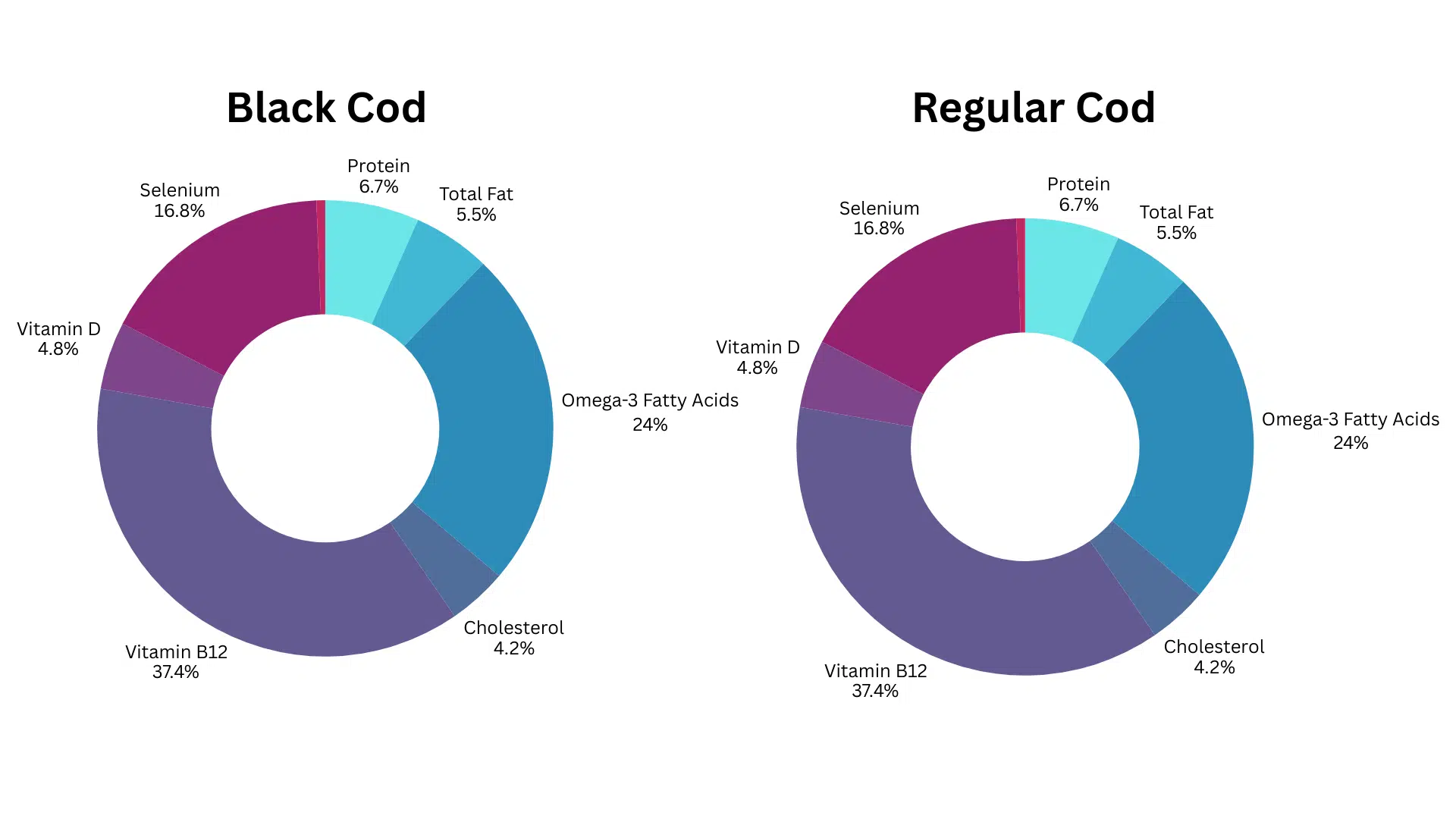
Both types of cod offer great nutrition. But they differ in fat and calorie content. Here’s how they compare per 100-gram serving.
Delicious Black Cod and Cod Recipes
Both fish work beautifully in countless recipes. You can bake, grill, fry, or broil them with excellent results every time
Black Cod Dishes for Home Cooks
Black cod shines in many recipes. Its rich flavor pairs well with different cuisines. Let me share some tried-and-tested recipes you’ll love.
Cooking Instructions for Black Cod
You’ll find black cod easy to cook once you know the basics.
Start by patting your fillets dry with paper towels. Season both sides with salt and pepper.
Heat your pan or grill to medium-high heat. Add a bit of oil to prevent sticking. Place the fillets skin-side down first.
Cook for about 5 minutes without moving them. Flip carefully and cook for another 3-4 minutes.
The fish is done when it flakes easily with a fork.
Don’t overcook it, though the high fat content gives you some wiggle room. Now, let’s start with the recipes.
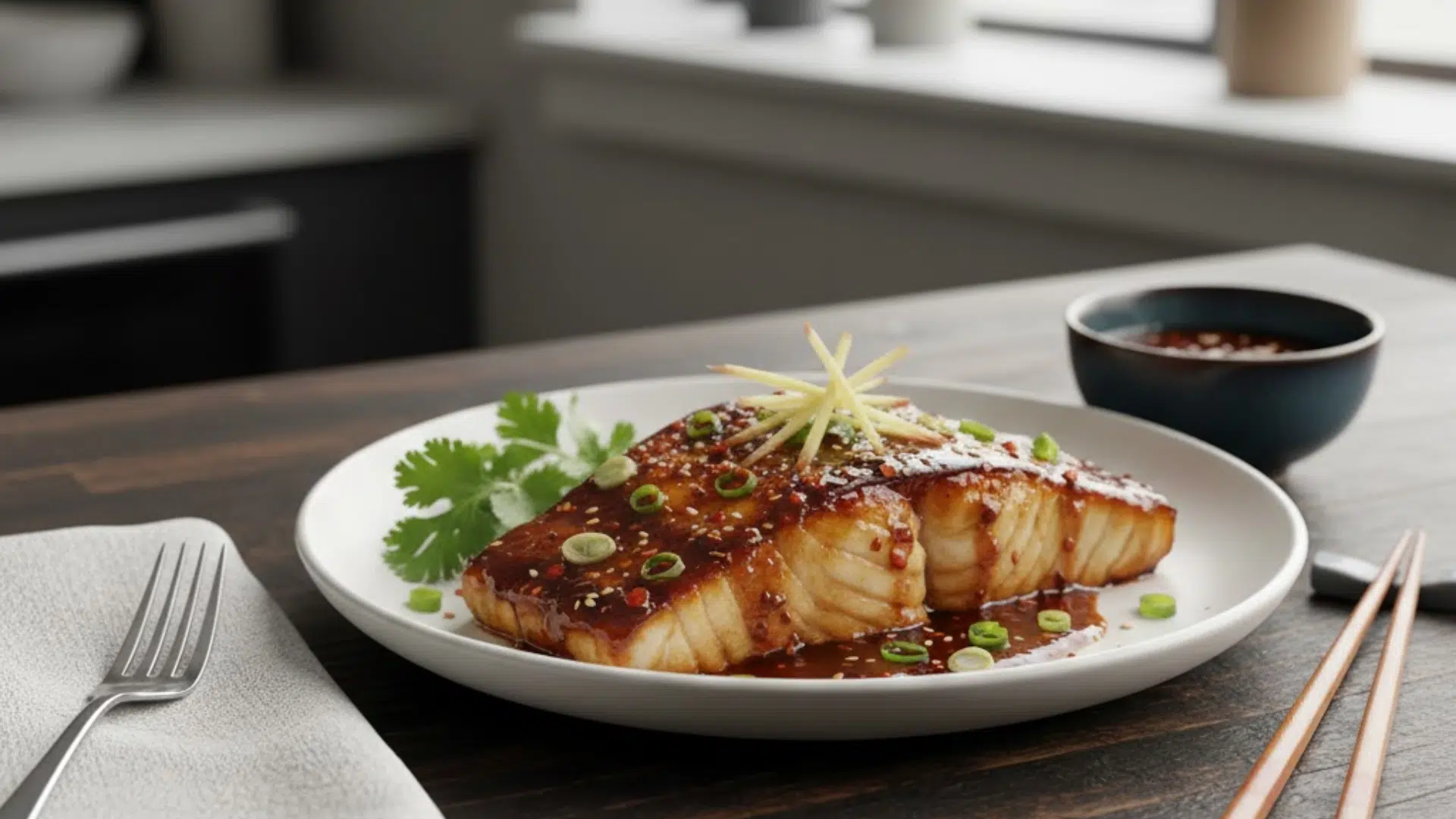
1. Hoisin-Ginger Black Cod
| Ingredient | Measurement |
|---|---|
| Black cod fillets | 4 pieces (6 oz each) |
| Hoisin sauce | 1/4 cup |
| Fresh ginger (grated) | 2 tablespoons |
| Soy sauce | 2 tablespoons |
| Rice vinegar | 1 tablespoon |
| Sesame oil | 1 teaspoon |
| Green onions (chopped) | 2 stalks |
Instructions:
- Mix hoisin sauce, ginger, soy sauce, vinegar, and sesame oil in a bowl.
- Place the black cod fillets in a shallow dish, then pour the marinade over them and coat them evenly.
- Cover and refrigerate for 30 minutes.
- Preheat your oven to 400°F, then transfer the fillets to a baking sheet lined with parchment paper.
- Bake for 12-15 minutes until the fish flakes easily.
- Garnish with green onions and serve hot with rice.
Click here for the recipe card.
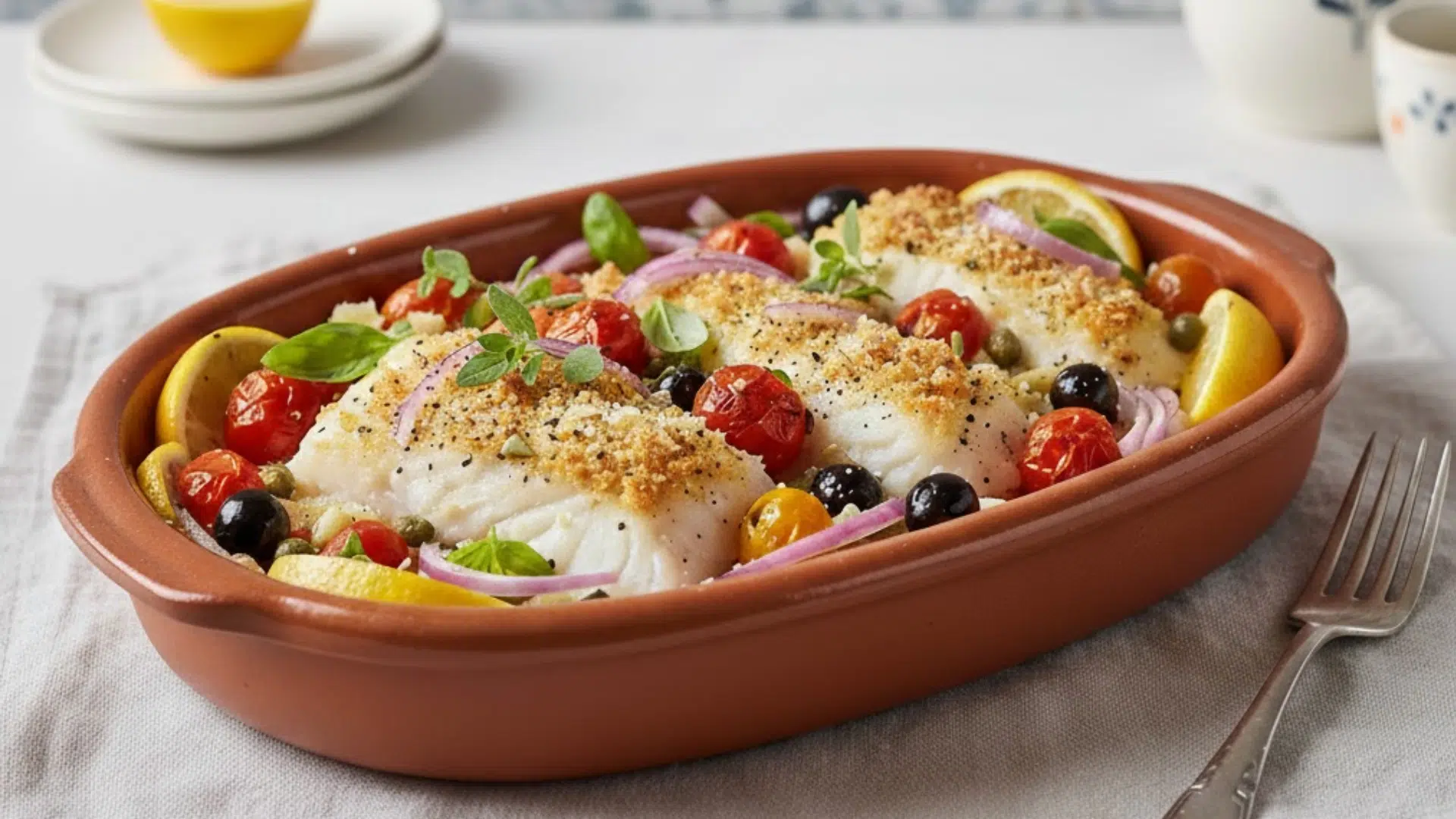
2. Mediterranean Baked Black Cod
| Ingredient | Measurement |
|---|---|
| Black cod fillets | 4 pieces (6 oz each) |
| Cherry tomatoes (halved) | 2 cups |
| Kalamata olives (pitted) | 1/2 cup |
| Garlic cloves (minced) | 4 cloves |
| Olive oil | 3 tablespoons |
| Lemon juice | 2 tablespoons |
| Dried oregano | 1 teaspoon |
| Salt and pepper | To taste |
Instructions:
- Preheat your oven to 375°F.
- Place black cod fillets in a baking dish.
- Arrange tomatoes and olives around the fish and sprinkle minced garlic over everything.
- Drizzle olive oil and lemon juice on top.
- Season with oregano, salt, and pepper.
- Cover the dish with foil.
- Bake for 20 minutes until the fish is cooked through and the tomatoes are soft.
Click here for the recipe card.
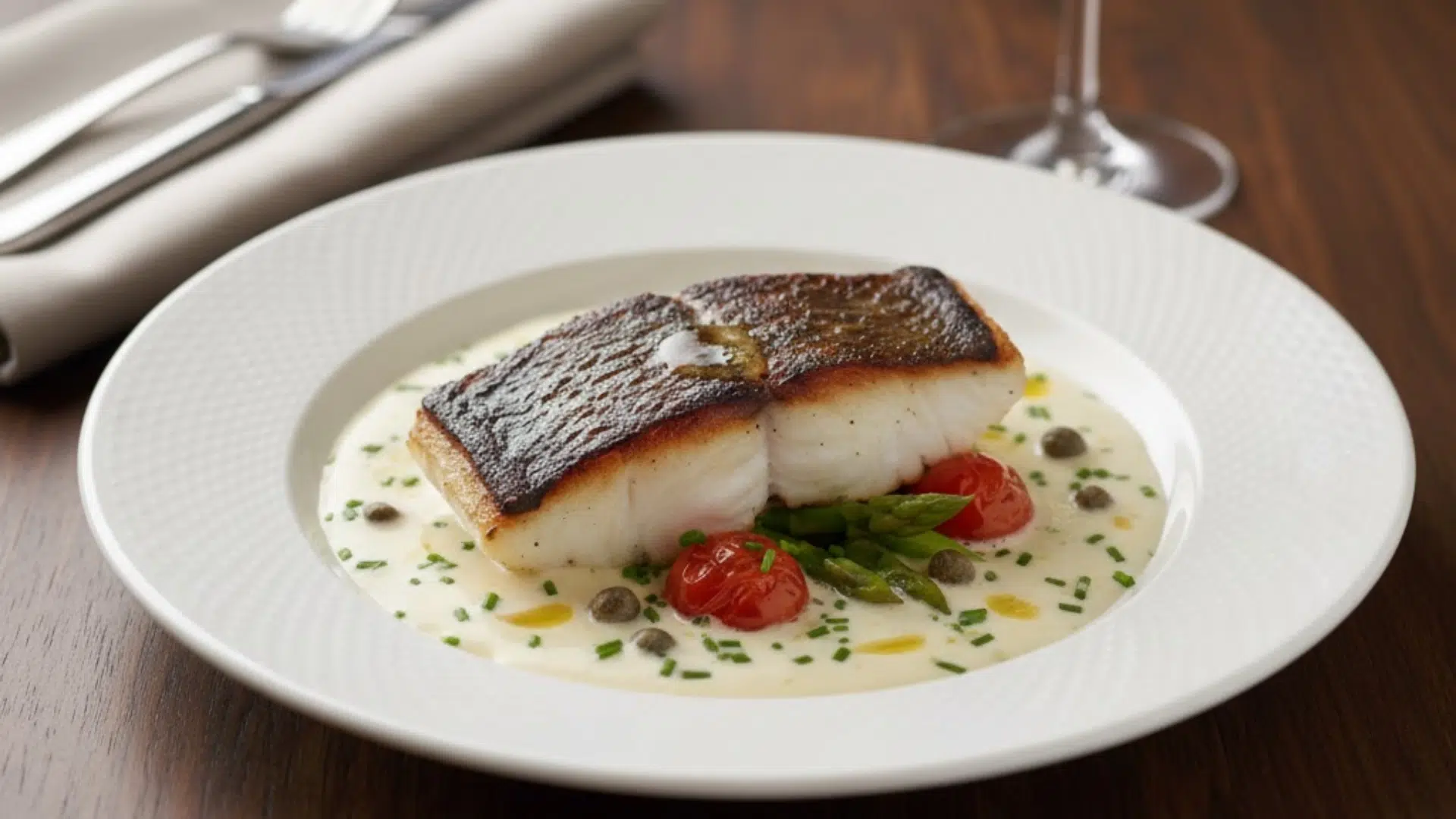
3. Black Cod with Beurre Blanc
| Ingredient | Measurement |
|---|---|
| Black cod fillets | 4 pieces (6 oz each) |
| White wine | 1/2 cup |
| White wine vinegar | 2 tablespoons |
| Shallots (minced) | 2 tablespoons |
| Heavy cream | 2 tablespoons |
| Cold butter (cubed) | 1/2 cup |
| Salt and pepper | To taste |
| Fresh parsley (chopped) | For garnish |
Instructions:
- Season black cod fillets with salt and pepper.
- Heat a skillet over medium-high heat with oil.
- Sear fillets skin-side down for 4 minutes.
- Flip and cook for another 3 minutes. Set aside.
- In a saucepan, combine wine, vinegar, and shallots.
- Simmer until reduced to 2 tablespoons.
- Add cream and whisk in cold butter gradually.
- Pour sauce over fish, garnish with parsley, and serve immediately.
Click here for the recipe card.
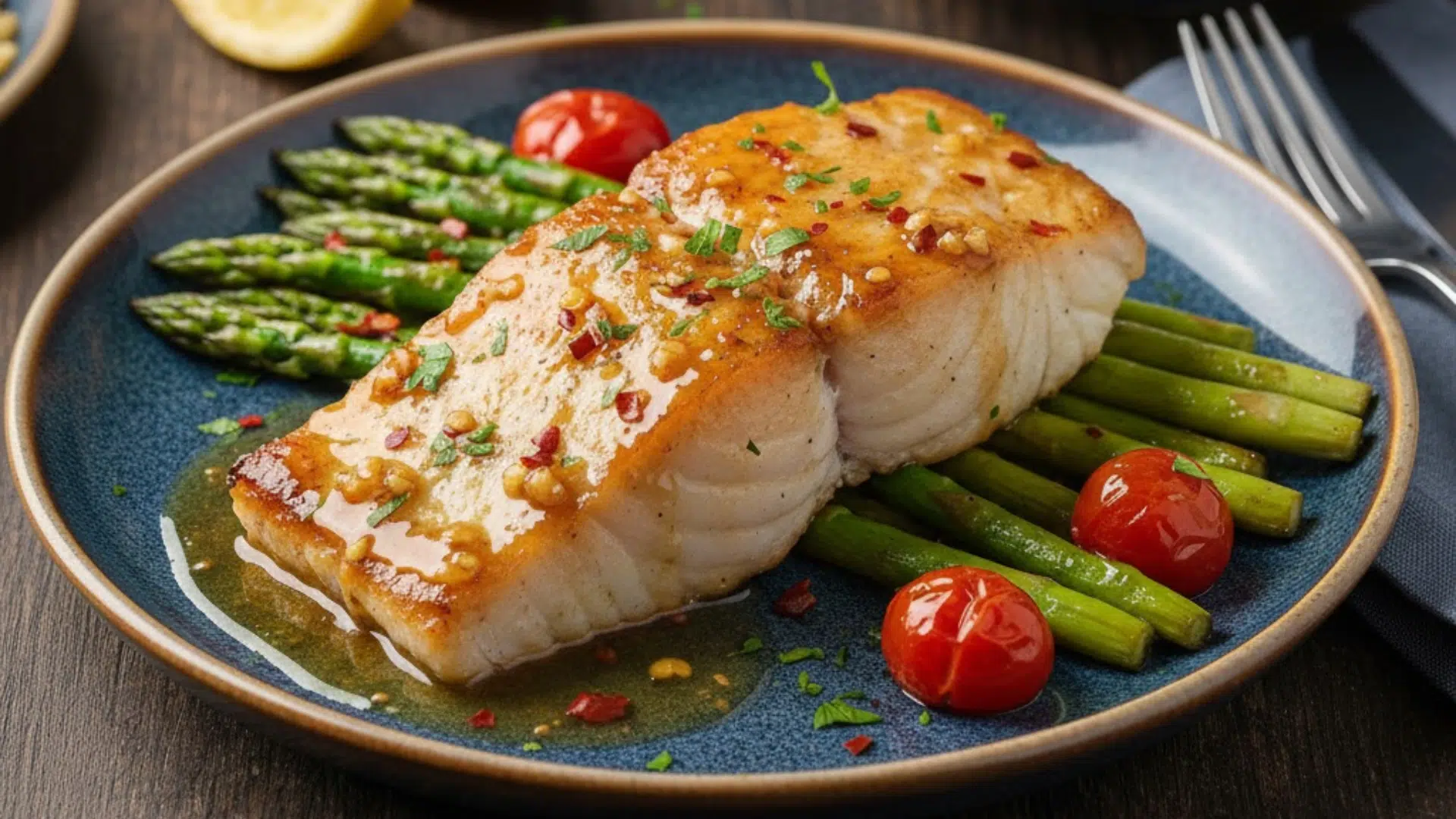
4. Honey-Garlic Black Cod
| Ingredient | Measurement |
|---|---|
| Black cod fillets | 4 pieces (6 oz each) |
| Honey | 3 tablespoons |
| Garlic cloves (minced) | 4 cloves |
| Soy sauce | 2 tablespoons |
| Lemon juice | 1 tablespoon |
| Butter | 2 tablespoons |
| Red pepper flakes | 1/4 teaspoon |
| Salt | To taste |
Instructions:
- Pat black cod fillets dry with paper towels.
- Season both sides with salt.
- Melt butter in a large skillet over medium heat.
- Add garlic and cook for 30 seconds until fragrant.
- Place fillets in the skillet skin-side down.
- Mix honey, soy sauce, lemon juice, and pepper flakesa and pour the mixture over the fish.
- Cook for 5 minutes, flip, and cook another 4 minutes until glazed.
Click here for the recipe card.
Simple and Easy Cod Recipes
Regular cod is easy to cook. It works well with simple seasonings and classic preparations. Here are some delicious recipes to try at home.
Let’s Cook the Cod First
You need to be gentle with cod since it’s delicate.
Pat your fillets dry with paper towels first. Season both sides with salt and pepper. Heat your pan to medium heat, not too high.
Add oil or butter to the pan. Place the fillets carefully in the pan. Cook for 3-4 minutes on the first side.
Flip gently using a wide spatula. Cook for another 3 minutes until the flesh turns opaque. The fish should flake easily when done.
Remove it immediately to avoid drying it out
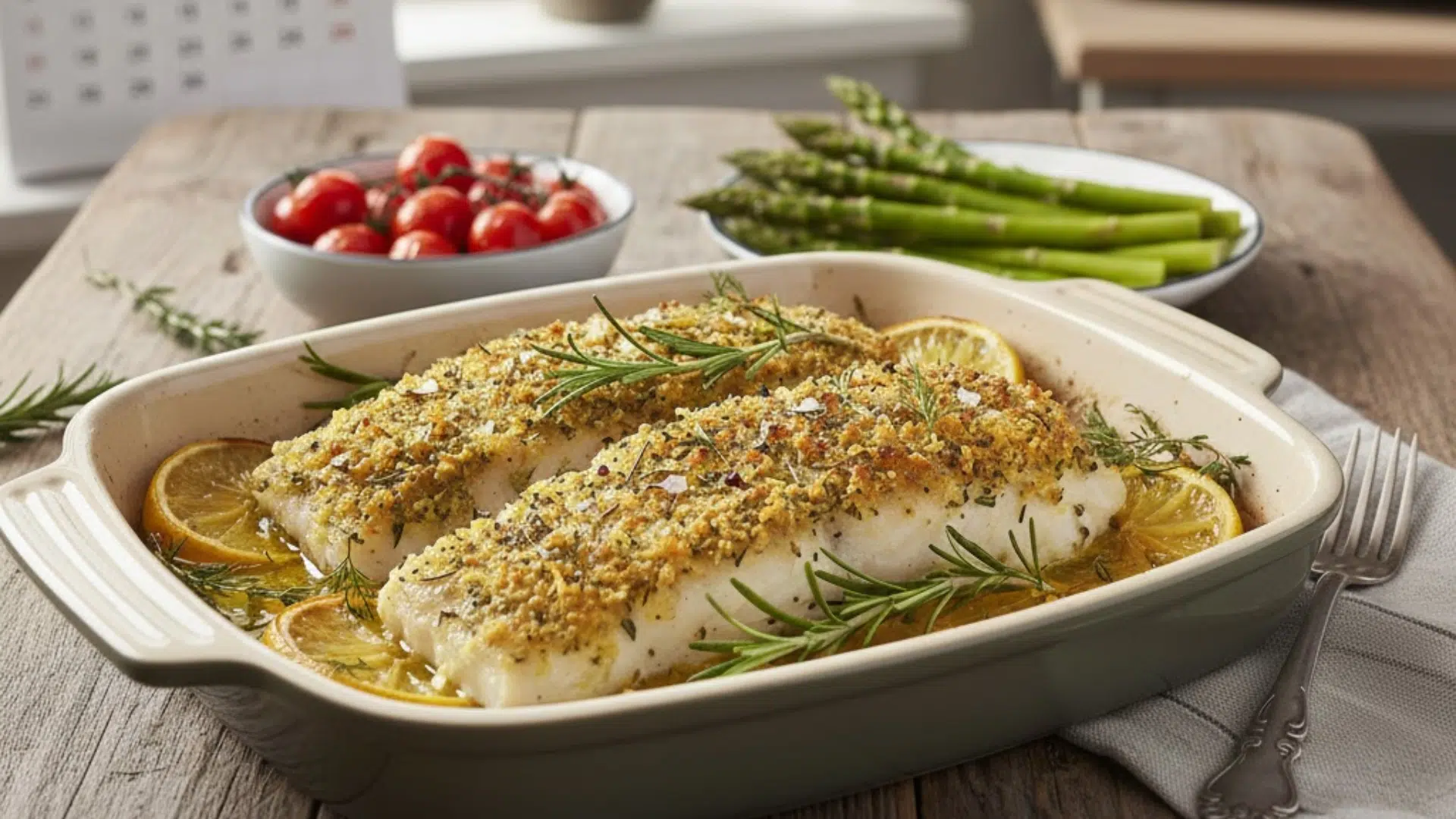
1. Lemon-Herb Baked Cod
| Ingredient | Measurement |
|---|---|
| Cod fillets | 4 pieces (6 oz each) |
| Lemon (sliced) | 1 whole |
| Olive oil | 3 tablespoons |
| Fresh parsley (chopped) | 2 tablespoons |
| Fresh dill (chopped) | 1 tablespoon |
| Garlic powder | 1 teaspoon |
| Salt | 1/2 teaspoon |
| Black pepper | 1/4 teaspoon |
Instructions:
- Preheat your oven to 400°F.
- Place cod fillets on a lined baking sheet, and drizzle olive oil evenly over each fillet.
- Sprinkle the garlic powder, salt, and pepper on top, then add fresh parsley and dill over the fish.
- Place lemon slices on top of each fillet.
- Bake for 12-15 minutes until the fish flakes easily.
- Serve hot with extra lemon wedges on the side.
Click here for the recipe card.
2. Fresh Spiced Oven Cod
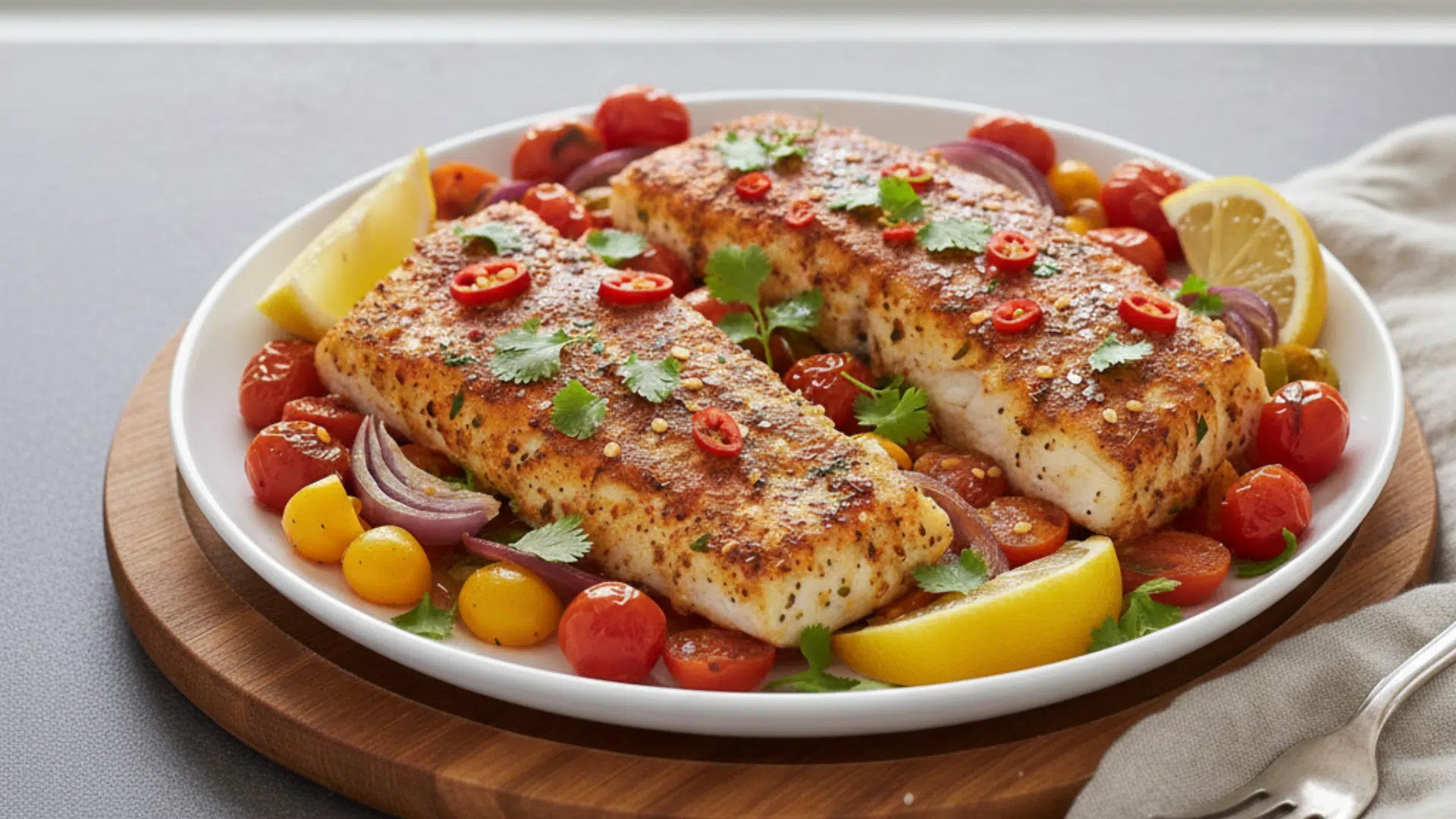
| Ingredient | Measurement |
|---|---|
| Cod fillets | 4 pieces (6 oz each) |
| Paprika | 1 teaspoon |
| Cumin powder | 1/2 teaspoon |
| Coriander powder | 1/2 teaspoon |
| Garlic powder | 1/2 teaspoon |
| Olive oil | 2 tablespoons |
| Lime juice | 2 tablespoons |
| Salt | 1/2 teaspoon |
| Cayenne pepper | 1/4 teaspoon |
Instructions:
- Preheat your oven to 375°F.
- Pat cod fillets dry with paper towels.
- Mix all spices together in a small bowl.
- Rub olive oil over each fillet.
- Sprinkle the spice mixture evenly on both sides.
- Place the fillets in a baking dish and drizzle with lime juice.
- Bake for 15-18 minutes, until the fish is opaque and cooked through.
Click here for the recipe card.
3. Garlic Butter Pan-Fried Cod
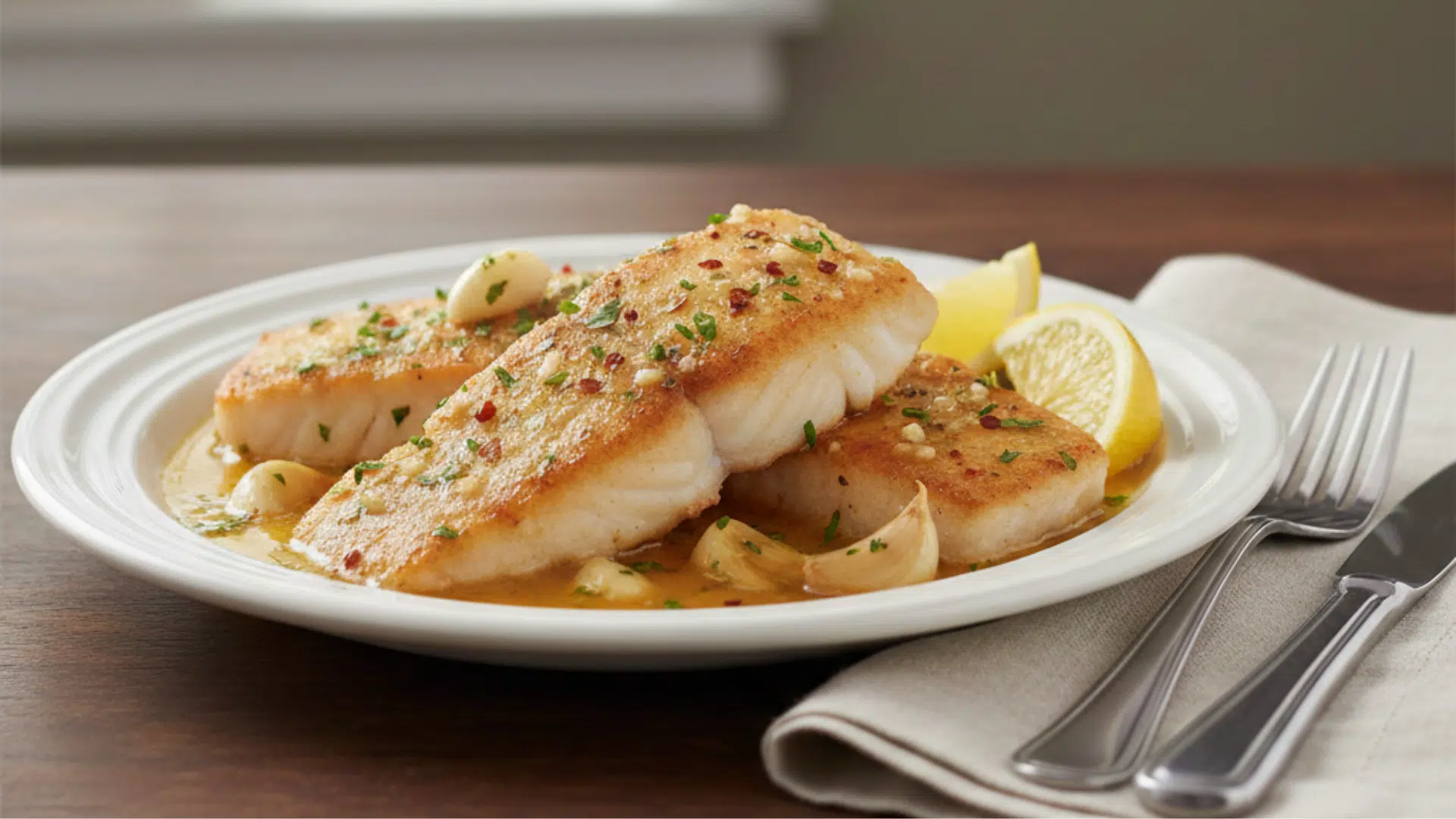
| Ingredient | Measurement |
|---|---|
| Cod fillets | 4 pieces (6 oz each) |
| Butter | 4 tablespoons |
| Garlic cloves (minced) | 5 cloves |
| All-purpose flour | 1/2 cup |
| Salt | 1/2 teaspoon |
| Black pepper | 1/4 teaspoon |
| Fresh thyme | 1 teaspoon |
| Lemon wedges | For serving |
Instructions:
- Pat cod fillets dry completely.
- Season both sides with salt and pepper, then lightly coat each fillet with flour.
- Heat butter in a large skillet over medium heat.
- Add minced garlic and thyme to the butter.
- Place fillets in the skillet carefully.
- Cook for 4 minutes on each side until golden.
- Spoon garlic butter over the fish while cooking and serve with lemon wedges.
Click here for the recipe card.
How are Black Cod and Cod Used in Culinary?
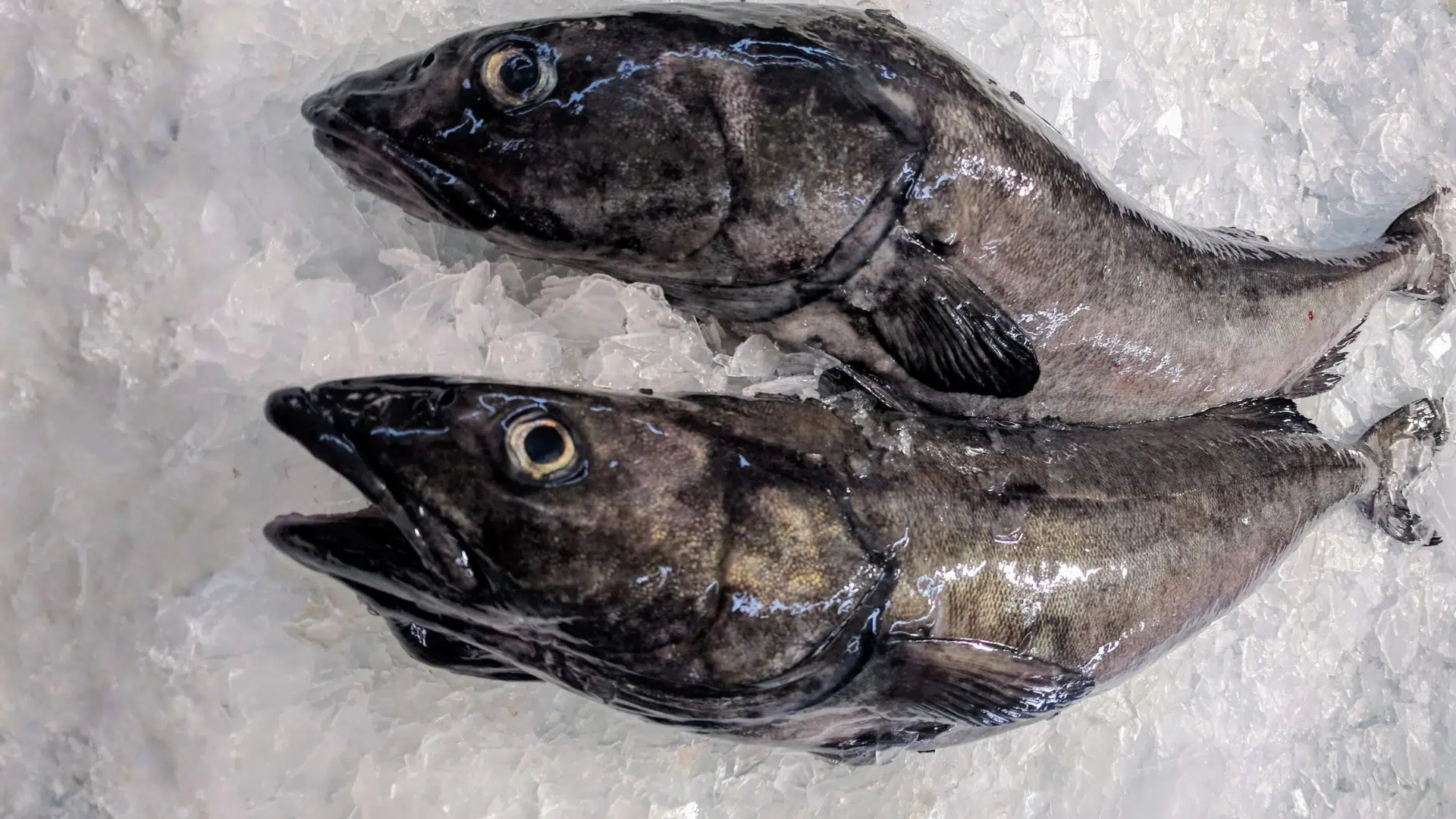
Both fish shine in different kitchen settings. Chefs love them for various reasons.
Black cod appears frequently in upscale restaurants. Japanese cuisine features it in miso-glazed dishes. The fish holds up well under high heat. Chefs grill, broil, or pan-sear it with excellent results. It’s often the star of the plate.
Regular cod dominates home cooking and casual dining. Fish and chips use cod almost exclusively.
It works perfectly for baking, frying, and making fish tacos. Cod absorbs flavours from batters and sauces easily.
Many families choose it for weeknight dinners. The mild taste pleases picky eaters, too. Cod also appears in fish stews and chowders.
Can You Use Cod Instead of Black Cod?
You can substitute them, but results will vary. Black cod has more fat and a richer flavor.
Regular cod is leaner and milder. If a recipe calls for black cod, regular cod might turn out too dry. The taste will be much less rich, too.
Going the other way works better. Black cod can replace regular cod in most recipes. It adds extra flavor and stays moist during cooking.
Just watch your cooking time. Black cod needs less time because of its oil content.
Adjust seasonings, too, since black cod has a stronger taste.
Difference in Taste
Taste matters most when choosing fish. Each type of cod brings its own flavour to your plate.
Let’s break down how they actually taste.
What Does Black Cod Taste Like?
Black cod has a rich, buttery flavour that melts in your mouth. The taste is slightly sweet with a smooth finish.
It’s more flavorful than most white fish you’ll try. The flesh tastes almost luxurious because of the high oil content.
Some people compare it to Chilean sea bass. The flavour is clean but definitely present and memorable.
What Does Regular Cod Taste Like?
Regular cod offers a mild, delicate flavour that’s barely fishy. The taste is clean and slightly sweet but very subtle.
It doesn’t have a strong seafood flavour at all. Many people who dislike “fishy” fish enjoy cod. The flavour works as a blank canvas for seasonings.
You can easily pair it with bold sauces and spices without conflict.
Which is the Right Cod for you?
The right cod depends on your recipe and budget. Think about what you’re cooking first. Black cod works best when you want a rich flavour.
It’s perfect for special dinners or when you’re grilling. Regular cod fits everyday meals and family cooking.
Consider these factors when shopping:
- Your cooking method: Black cod handles high heat better. Regular cod needs gentler cooking.
- Your budget: Regular cod costs less and stretches further for large meals.
- Flavour preference: Choose black cod for a bold taste. Pick regular cod for a mild, versatile flavour.
- Recipe requirements: Some dishes specifically call for one type over the other.
Which Cod is not a Cod at all? Is There Any?
Black cod isn’t actually cod. It’s a sablefish that got the “cod” name from fishermen years ago. The real name is Anoplopoma fimbriata.
Marketing kept the cod label because it sells better.
Lingcod also isn’t true cod. It belongs to a completely different fish family.
Rock cod is another fake cod name. True cod only includes Atlantic and Pacific varieties. These belong to the Gadidae family.
One way to identify the real cod is to always check the scientific name of the fish.
Finishing Up
Black cod and regular cod serve different purposes in your kitchen.
One brings a rich, buttery flavour to special occasions. The other offers a mild taste for everyday cooking. Both have their place on your table.
Now you know the key differences between black cod vs cod. You understand taste, texture, and price points. You can pick the right fish for any recipe.
Happy cooking, and enjoy your seafood meals!
FrequentlyAsked Questions (FAQs)
1. Is Black Cod Healthier than Regular Cod?
Black cod contains more omega-3 fatty acids and healthy fats than regular cod, making it nutritionally richer overall.
2. Is Black Cod Worth it?
Black cod’s buttery texture, rich flavor, and high omega-3 content justify the higher price for special meals.
3. Why is Black Cod so Expensive?
Black cod costs more due to limited supply, slow growth rates, deep-water fishing challenges, and high market demand globally.