

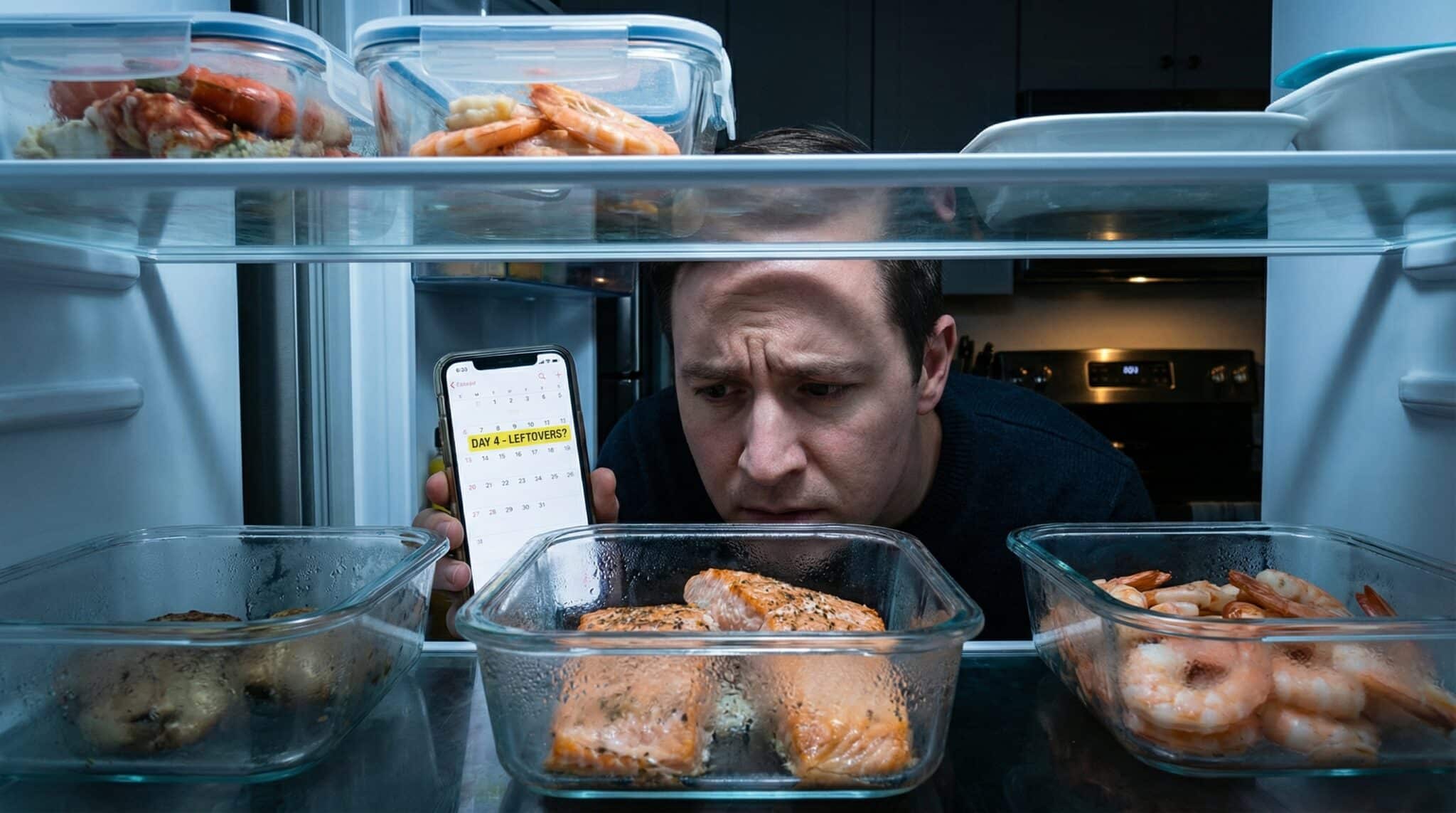
Leftover fish is the ultimate fridge mystery, right? One minute you’re thinking, “Oooh, salmon salad for lunch,” and the next minute you’re staring into the container like it’s a suspicious science experiment.
And listen I love being “resourceful” as much as the next person. I will absolutely turn one roasted chicken into seven different meals like I’m on a budget cooking show. But seafood? Seafood is dramatic. It does not age gracefully. It’s not a “let’s see how this feels on day five” kind of food.
So if you’ve got leftover fish (or shrimp, crab, scallops, etc.) hanging out in your fridge right now, here’s the real life, non-lab coat way to decide if it’s lunch… or if it needs to swim straight into the trash.
The 30-Second Seafood Safety Gut Check
Before you sniff anything (because yes, you’re going to sniff it), do this quick checklist:
- What day are we on?
If you’re at day 4+ for most fish/shrimp—or you honestly can’t remember—toss it. “I think it was Tuesday?” is not a food safety plan.
- Did it get refrigerated fast?
Seafood needs to be in the fridge within 2 hours of cooking (or 1 hour if it was super hot out—think 90°F+). If it sat out longer, I’m begging you: don’t eat it.
- Is your fridge actually cold?
Your fridge should be 40°F or lower. If you don’t know, you’re not alone (I didn’t know for years and I survived purely on vibes and luck). But if your fridge runs warm, shorten the safe window by about a day.
If it passes the checklist, then you move on to timelines and red flags.
So… How Long Does Cooked Seafood Last in the Fridge?
Here’s the part everyone wants: the “tell me the number and don’t make it weird” section.
Assuming your seafood was cooled and refrigerated within 2 hours:
- Cooked fish (salmon, cod, tilapia, etc.): 3-4 days
- Cooked shrimp/prawns: 3-4 days
- Cooked crab or lobster: 2-3 days
- Cooked scallops: 2-3 days
- Cooked mussels/clams: 2-3 days
- Cooked oysters: 2 days
- Mixed seafood dishes (paella, cioppino, seafood pasta): 2-3 days
(Mixed dishes follow the rules of the most delicate/short lived ingredient. One little scallop can ruin it for everybody, just like that one friend who insists on splitting the check “fairly.”)
A note on restaurant leftovers
If it’s takeout and you don’t know how long it sat before you got it, I personally subtract a day from those timelines. Not because I’m paranoid—because I enjoy living.
Why seafood is so bossy about time
Fish spoils faster than meat because it breaks down quickly and bacteria can grow more easily. Even if it looks fine, by day four-ish you’re officially wandering into “this could ruin my afternoon” territory. And I don’t know about you, but I don’t have time for a food poisoning storyline.
How to Store Cooked Seafood So It Actually Lasts
I know the temptation: you finish dinner, you shove the whole pan in the fridge, you slam the door, you whisper, “Good luck, little fish,” and you walk away.
Been there. Regretted that.
Do this instead:
- Cool it fast: Put leftovers in shallow containers so they chill quickly (not a deep, steamy pile that stays warm forever).
- Seal it up: Airtight containers are your friend. If it’s takeout, consider transferring it to something that actually seals.
- Put it in the cold zone: Back of the fridge is usually coldest. Not the door (the door is basically a temperature rollercoaster).
- Keep it away from raw meat: No seafood should be catching “mystery drips” from raw chicken. Ever. Please.
And if your fridge temperature is a big question mark, grab a cheap fridge thermometer. It’s one of those boring little adult purchases that saves you from the “why does my food go bad so fast?” spiral.
Reheating Seafood Without Turning It Into Rubber
Safety wise, you want leftovers heated to 165°F (yes, even if you’re careful). Texture wise, you want to avoid turning your salmon into a dry, sad plank and you want reliable shellfish doneness temperatures.
Here’s what works:
- Oven (best for texture): 275-300°F, cover with foil, about 10-15 minutes depending on thickness.
- Stovetop: Covered pan, medium low, with a splash of water/butter/sauce so it doesn’t dry out.
- Microwave (last resort, but fine): 50% power, short bursts, rearrange between rounds. (If you nuke it at full power and it turns into shrimp erasers, that’s between you and your conscience.)
Also: yes, you can eat cooked seafood cold as long as it’s within the safe window and was stored properly. Cold leftover shrimp in a salad? Delicious. Cold questionable fish on day five? Absolutely not.
When to Freeze Instead (Because You Know You’re Not Eating It)
If you can tell you won’t get to it in time, freeze it now—not on day four when you suddenly remember it exists.
Most cooked seafood freezes well for 2-3 months at 0°F for Dungeness crab dinner ideas:
- fish
- shrimp
- crab
- lobster
(Some shellfish like scallops/mussels/clams are better within 1-2 months for quality. And cooked oysters are not recommended for freezing—they get weird.)
My no drama freezing method
- Cool completely.
- Wrap tightly (plastic wrap works great).
- Add a freezer bag or foil layer and press the air out like you mean it.
- Label it with the date (because “sometime in spring” is not a date).
Thawing (do not get chaotic here)
- Best: thaw overnight in the fridge.
- Faster: sealed bag in cold water, changing the water every 30 minutes.
- Microwave: only if you must, and expect uneven spots.
Refreezing after fridge thawing is technically safe, but the texture usually takes a nosedive. Safe? Yes. Pleasant? Questionable.
Red Flags: How to Tell Seafood Has Gone Bad
Okay, here’s where your senses earn their paycheck.
If you notice any of the following, don’t bargain with it. Toss it.
- Smell: sour, ammonia like, sharply “off,” or just aggressively fishy in a bad way
- Texture: slimy, sticky, mushy fish, or shrimp that feels oddly soft
- Looks: discoloration, fuzzy mold, or a suspicious amount of liquid pooling in the container
And let’s tattoo this on our brains: When in doubt, throw it out.
(If you ignore that and eat sketchy seafood anyway, I cannot help you. I will, however, lightly bonk you with a metaphorical wet noodle.)
The Two Questions Everyone Asks Me
Can you eat cooked fish after 5 days?
No. Even if it smells okay, bacteria can still be at unsafe levels. Day five seafood is not brave. It’s reckless.
Is it safe to eat leftover seafood cold?
Yes—if it’s within the storage window and it was chilled quickly and stored correctly.
If you take nothing else from this: seafood is not a “maybe” food. Keep it cold, seal it well, respect the timeline, and don’t let fridge amnesia decide your fate.