
Wild Caught vs. Farmed Seafood: What Those Labels Actually Mean (and What I Buy)
I used to stand in front of the seafood case doing the kind of mental gymnastics normally reserved for tax season.
Wild caught! Farmed! “Responsibly sourced!” (…says who?) Meanwhile, the fish is sweating under fluorescent lights and I’m Googling “ASC vs MSC” like it’s a medical diagnosis.
So here’s the truth: wild vs. farmed isn’t a simple “good vs. bad” situation. It’s more like dating. There are amazing options in both categories, and there are also some choices that will make you go, “Wait… how did this end up in my cart?”
Let’s break it down in plain English, with the stuff that actually matters: nutrition, contaminants, antibiotics, sustainability, and because I live in the real world price and taste.
First: what “wild” and “farmed” really mean
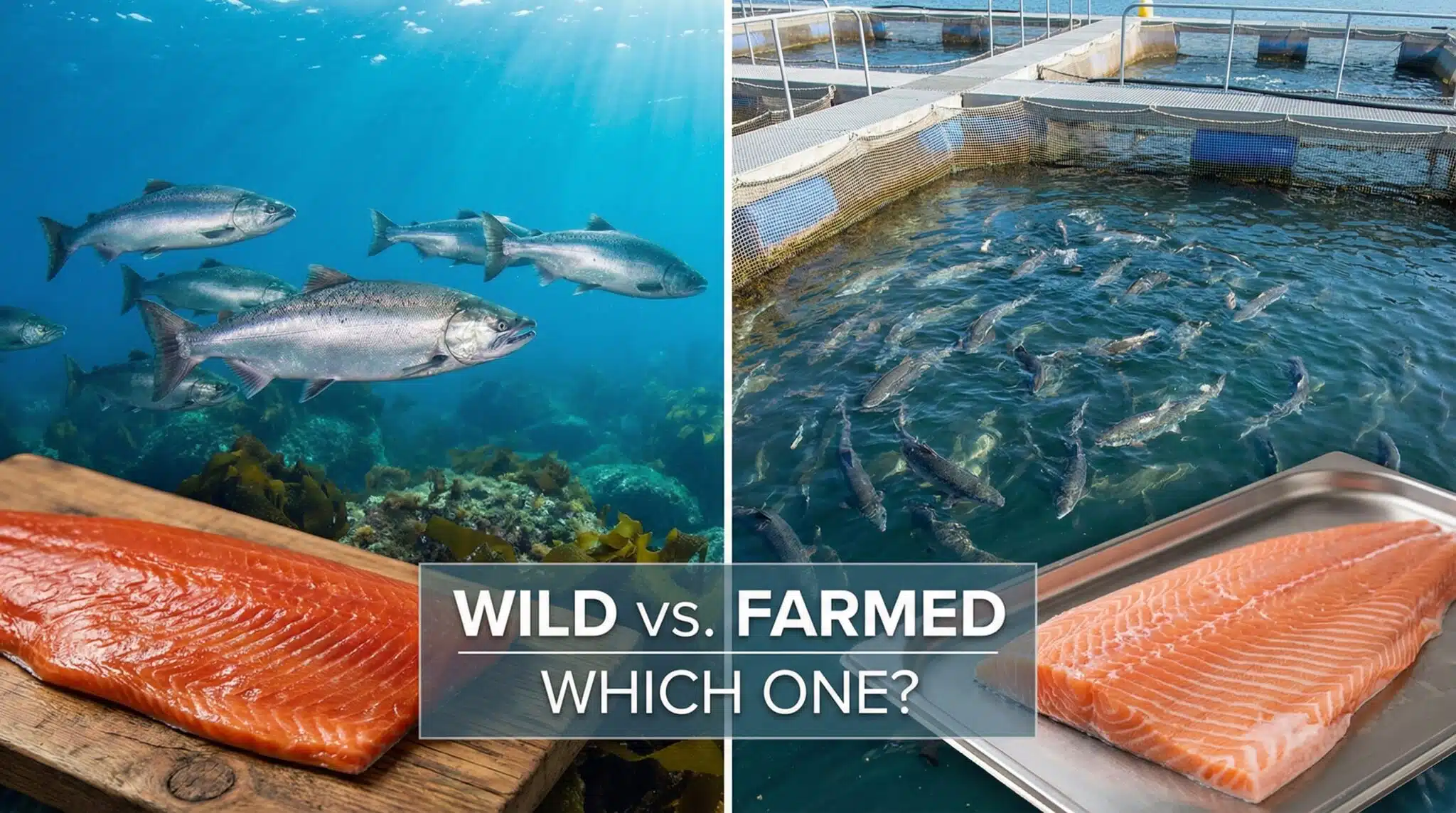
Wild caught fish live out in oceans/rivers/lakes, eating what they find and swimming like they have places to be. That usually means leaner, firmer fish with a stronger flavor.
Farmed fish are raised in systems like coastal net pens, ponds, or indoor tanks. They eat formulated feed and typically move less, which often means softer texture and more fat.
And this is important: “Farmed” covers a wildly big range. A tightly controlled indoor tank operation is not the same thing as an overcrowded net pen situation. That’s why labels and sourcing matter more than people want them to.
Nutrition: it’s not dramatic… but there are a few real differences
For salmon (since that’s where most of the wild vs. farmed drama lives):
- Protein is basically a tie. You’re getting a solid serving either way.
- Farmed salmon is usually fattier (more calories, more saturated fat). This is why it tastes buttery and forgiving if you slightly overcook it (which, yes, I have done).
- Wild salmon tends to have a better omega-3 to omega-6 balance. Farmed salmon often has plenty of omega-3s too, but it can come with more omega-6s from vegetable oils in feed.
- Wild salmon is often higher in some minerals like calcium and iron.
My take: if you’re eating salmon for “healthy fats,” both work when you compare serving size on labels. If you’re watching calories or prefer a firmer, meatier texture, wild is lovely. If you want a weeknight fish that won’t punish you for checking your kid’s homework mid-bake, farmed is… honestly convenient.
The part nobody wants to talk about: mercury, PCBs, and antibiotics
Okay, deep breath. This is where people get very “but wild is NATURAL,” and I’m like, yes, and poison ivy is natural too.
Mercury: farmed often wins (surprise!)
In general, farmed fish often tests lower in mercury than wild fish, because wild fish accumulate mercury from the environment over time.
For salmon specifically, both wild and farmed are typically low mercury choices. So unless you’re eating salmon for every meal (living your best bear life), mercury usually isn’t the deciding factor here.
High mercury fish to limit (especially if pregnant or feeding kids):
- shark
- swordfish
- king mackerel
- tilefish
Lower mercury staples include salmon, tilapia, catfish, and shrimp you eat often.
PCBs: this is where farmed salmon can look worse
Farmed Atlantic salmon has, in some testing, shown higher PCB/dioxin levels than wild salmon. These pollutants can show up via feed ingredients and build up more in fattier fish.
Important nuance: this doesn’t mean “all farmed fish is dirty.” For some species (tilapia, catfish, trout), farmed options can actually come out better than wild in contaminant testing.
If PCBs are your big concern and you love salmon: wild Pacific salmon is the easy answer.
Antibiotics: depends on the country and the farm
Wild fish aren’t given antibiotics. Farmed fish might be, depending on how and where they’re raised.
- Some regions have tighter rules (like the U.S., Canada, Norway).
- Other places have a more mixed track record.
If you don’t want to play guessing games, look for certifications (I’ll tell you which ones actually matter in a second).
Sustainability: “wild = good” and “farmed = bad” is a myth
I know. It would be so convenient if it were that simple.
Wild caught can mean:
- overfishing (if the fishery isn’t well managed)
- bycatch (unintended animals getting caught)
- habitat damage (depending on gear)
Farmed can mean:
- water pollution near open net pens
- disease/parasites in crowded conditions
- escapes that can mess with wild populations
But it can also mean efficient, responsible production especially with well regulated farms and better systems.
The eco “plot twist” I love: farmed shellfish
If you want a choice that’s usually very environmentally friendly, look at farmed oysters, mussels, and scallops.
They don’t need feed. They can actually help filter water. They’re often cheaper than salmon. And they make you feel slightly fancy even if you’re eating them in sweatpants. Win win win.
Price + taste: the real life deciding factors
Let’s not pretend budget doesn’t matter. Wild salmon is often significantly pricier than farmed, and it’s seasonal. Farmed is steady, predictable, and available when it’s February and you’re trying to cook something that isn’t chicken again.
Taste and texture (aka: which one will you actually enjoy?)
- Wild salmon: firmer, stronger flavor, cooks faster, can dry out if you overcook it by 37 seconds.
- Farmed salmon: milder, softer, buttery, more forgiving.
Personal opinion: if you’re new to cooking fish, farmed is a confidence builder. If you love bold flavor and don’t mind paying a little more (or buying frozen wild), wild is a treat.
Also: frozen is not a sad backup plan. Frozen can be fantastic, and sometimes it’s fresher than “fresh” fish that’s been traveling and sitting around.
What I buy (a super practical cheat sheet)
If you want the short version for the store:
- Salmon:
- Want the “cleanest simple choice”? Wild Pacific (especially sockeye/coho).
- Want budget + easy cooking? Farmed is fine, but I try to choose better sources/certifications.
- Shellfish (mussels/oysters/scallops): Farmed, and I feel smug about it.
- Tilapia & catfish: I look for U.S. farmed when possible.
- Shrimp: This is the one I’m pickiest about. I try to buy certified (more on that below) because sourcing can be all over the place.
The only label logos I trust enough to pay attention to
If you remember nothing else, remember these three:
- MSC (Marine Stewardship Council): for wild caught seafood from well managed fisheries
- ASC (Aquaculture Stewardship Council): for farmed seafood with stronger environmental/antibiotic standards
- BAP (Best Aquaculture Practices): another solid farmed certification
Labels that make me squint
- “Sustainably sourced” with no real certification (that’s vibes, not verification)
- “Product of multiple countries” (not automatically bad, just harder to track standards)
- “Atlantic salmon” with no origin listed (it’s usually farmed, and I want to know where)
Bottom line: what should you choose?
If you’re waiting for me to crown a winner: I can’t. Because the better question is usually:
- Where is it from?
- How was it raised/caught?
- Is it certified?
- Will you actually cook it and enjoy it?
A responsibly sourced farmed fish can be a smarter buy than an iffy wild one. And a bag of frozen wild salmon you’ll happily cook on a Tuesday beats “fresh” fish that sits in your fridge until it becomes a science experiment.
If you want the simplest, least stress approach:
- Aim for low mercury staples (salmon, tilapia, catfish, shellfish).
- Use MSC/ASC/BAP when you can.
- Buy what fits your budget and cooking style so you’ll eat it more than once a month.
Because the healthiest seafood is the one you’ll actually make for dinner… not the one you admire in the store while eating cereal at home.