

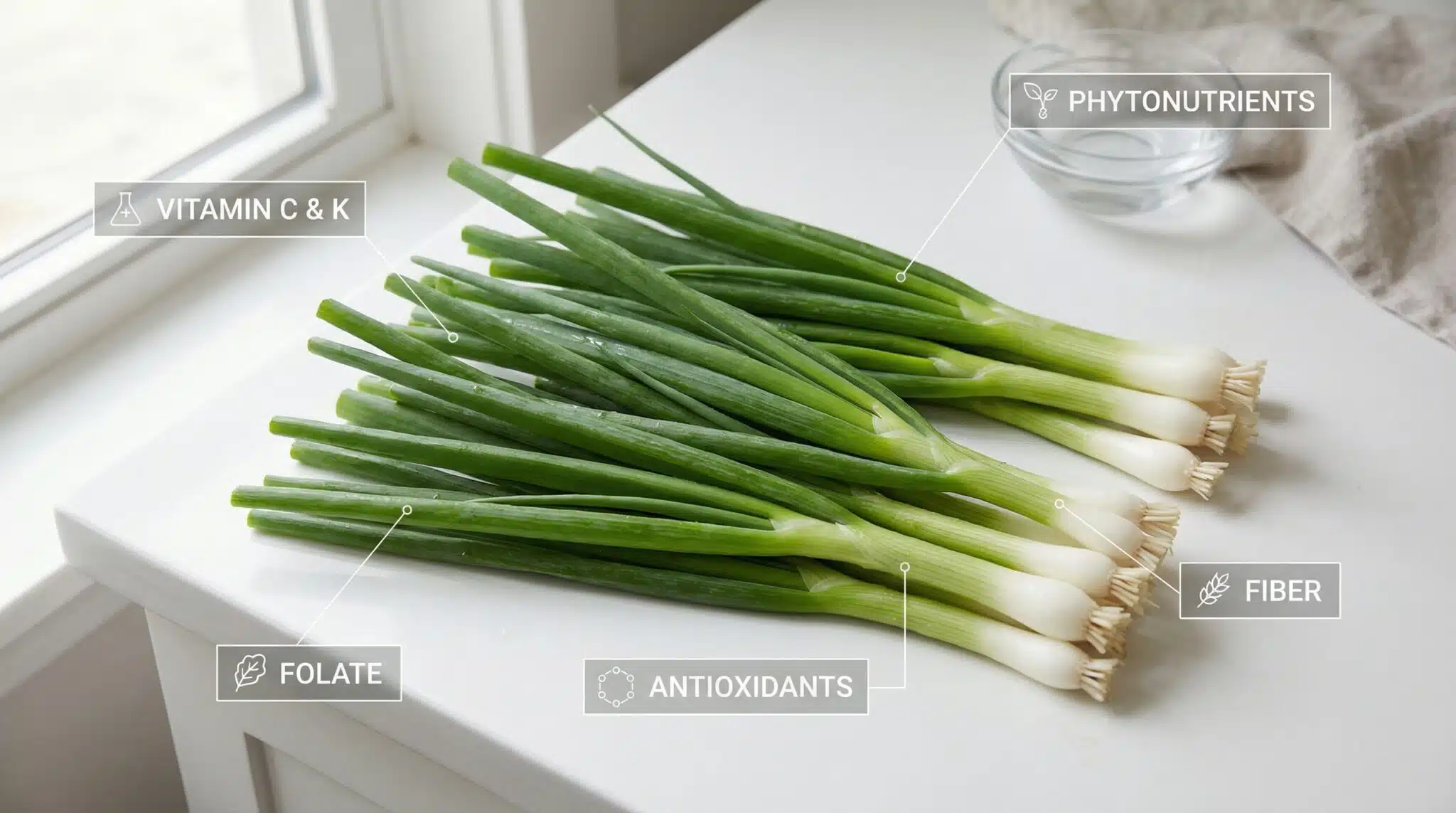
What You’re Missing by Skipping Scallions (Yes, I’m Being Dramatic)
Confession: I used to treat scallions like the “optional ponytail” of dinner. You know—cute, but unnecessary. I’d buy a bunch, use three sad little rings on top of tacos, and then watch the rest liquefy in the crisper drawer like some kind of science experiment.
And then I found out scallions are basically tiny green overachievers. They’re low calorie, high flavor, and sneakily packed with nutrients (especially vitamin K more on that in a second). If you’ve been skipping them or only using them as garnish, you’re leaving a lot on the cutting board.
Let’s fix that.
Scallions vs. Green Onions vs. Spring Onions (The Great Identity Crisis)
If you’ve ever stood in the produce aisle squinting like, “Are these… the same thing?” you’re not alone.
- Scallions = green onions. Same plant, same vibe: long green tops, straight-ish white bottoms, no real bulb.
- Spring onions are basically scallions that stayed in school a little longer and grew a small bulb.
Nutrition wise? Close enough that I don’t want you losing sleep over it.
What does matter: eat the whole thing (unless your stomach says otherwise also more on that later).
- The green tops bring more of the “fresh green” nutrients like vitamin K and vitamin C.
- The white parts bring more of the punchy sulfur compounds (aka the stuff that makes them taste like they’ve got opinions).
The “Why Should I Care?” Nutrition Pep Talk
Here’s the headline: scallions are one of those foods that look like they’re doing nothing and are secretly doing the most.
They’re very low calorie (a cup is roughly 32 calories) and they’re loaded with good stuff, especially:
- Vitamin K: scallions are shockingly high in it think more than a lot of leafy greens people brag about. Vitamin K matters for bone health and also plays a role in heart health.
- Vitamin C: helpful for immune function and general “please don’t let me catch every germ” support.
- Beta-carotene (vitamin A-ish energy): good for eyes and skin.
- Fiber: not a ton by volume, but a great fiber per calorie deal.
They also have plant compounds you won’t see on a label like quercetin and other antioxidants and sulfur compounds similar to what makes garlic and onions so “medicinal” (and also so rude to your breath).
Are scallions a magic wand? No. Are they a ridiculously easy upgrade to your everyday meals? Absolutely.
The Real-Life Benefits (Without the Wellness Fairy Dust)
1) Heart support (in a very “add this to your soup” kind of way)
Vitamin K helps your body manage where calcium goes (you want it in bones, not hanging out where it doesn’t belong). Scallions also have fiber and plant compounds that researchers think may support heart health over time.
2) More stable blood sugar (small but helpful)
Some compounds in scallions can slow how quickly carbs break down in lab studies. In real life, you’re not eating concentrated scallion extract like a woodland creature.
So here’s my take: scallions are a smart add on, not a blood sugar “hack.” Toss them on meals that already have protein/fiber/fat and let them quietly do their thing.
3) Stronger bones (hello, vitamin K)
Vitamin K helps activate proteins involved in building bone (your bones are basically a construction site that never closes). Scallions also have a little calcium and manganese in the mix.
If you’re trying to support bone health, scallions are a great sidekick… but they still need their bestie: vitamin D.
4) Immune + digestion + eyes (the bonus round)
- Vitamin C supports immune function.
- Fiber supports digestion (unless your gut is sensitive keep reading).
- Scallions also have carotenoids like lutein and zeaxanthin, which support eye health.
How to Prep Scallions So You Get the Good Stuff (and They Taste Amazing)
Chop them… and then WAIT (I know)
This is the nerdy but useful tip: those sulfur compounds form when the plant cells are broken.
So if you can:
- Chop your scallions
- Let them sit 10-15 minutes
- Then add them to your food
Is this required? No. Is it an easy upgrade if you already have them on the cutting board? Yep.
Add a little fat (because vitamins love friends)
Vitamins K and A are fat soluble, which means they absorb better with a bit of fat olive oil, sesame oil, avocado, whatever you’ve got going.
If you’re doing scallions on a salad or bowl, a drizzle of dressing isn’t just for taste. It’s helping your body actually use what you’re eating.
Heat: don’t boil them into sadness
If you want maximum nutrients, raw or lightly cooked is the sweet spot for ginger and green onion steam. Vitamin C is the diva here it drops with longer cooking.
My personal rule:
- Raw for toppings and salads
- Quick sauté for eggs/stir fries (like 1-2 minutes)
- Soups: toss them in at the end so they stay bright and perky
If you boil them for 10 minutes, they won’t hurt you… but they will taste like they gave up.
Easy Ways to Use More Scallions (Beyond the Sad Garnish Sprinkle)
Here are the no brainer moves I use on repeat including green onions with fish:
- Eggs: scrambled, fried, omelet scallions make eggs feel like you tried.
- Soups + ramen + chili: add at the end like you’re a restaurant.
- Tacos + burrito bowls: obvious, but worth saying.
- Cream cheese / Greek yogurt dip: stir in chopped scallions + salt + lemon. Eat with literally anything.
- Stir fries: throw them in during the last 30 seconds.
- Scallion oil (fancy but stupid easy): put chopped scallions in a heat safe bowl, pour hot oil over them until they sizzle, add a pinch of salt. Drizzle on noodles/rice/veg and feel wildly accomplished.
How to Buy and Store Scallions So They Don’t Rot in Your Fridge (RIP to Mine)
At the store, look for:
- bright green tops
- firm, crisp stalks
- no slimy weirdness, no yellowing, no limp noodles
At home, do this:
- Wrap them in a damp paper towel
- Slide into a bag
- Refrigerate
That usually keeps them going 7-10 days, which is much better than the “3 days then betrayal” method of just chucking them in loose.
One thing I personally skip: storing them standing in water. It can make them weird, and you’re not running a scallion daycare.
Also, pre-chopping speeds up flavor and nutrient loss (and makes them dry out faster), so I chop as I go unless I’m meal prepping for the next day.
When You Might Need to Be a Little Careful
I’m not here to scare you away from scallions. But a couple of situations deserve a quick heads up.
If you take warfarin (or other vitamin K sensitive blood thinners)
Scallions are high in vitamin K, so the key is consistency not panic.
If you suddenly go from “no scallions ever” to “I put scallions on everything including my cereal,” your INR can get thrown off. Keep your intake steady and talk to your clinician if you’re making big changes.
If you have an allium allergy
True allergy is rare, but if garlic or onions cause symptoms like hives, swelling, or mouth tingling, don’t ignore that. And if there’s throat swelling or trouble breathing yeah, that’s emergency territory.
If you have IBS (or you’re FODMAP sensitive)
A lot of people with IBS tolerate the green tops better than the white parts, because the whites are higher in fructans.
If your stomach is easily offended:
- start with just the green tops
- try 1-2 tablespoons
- see how you feel
Your gut gets the final vote.
My “Just Do This” Scallion Plan
If you want a simple habit that actually sticks: buy one bunch a week and aim to use it in one meal a day eggs, soup, rice bowls, whatever.
Scallions are one of the easiest ways to make food taste brighter and fresher while sneaking in legit nutrition. They’re not just decoration. They’re tiny green multitaskers.
And honestly? Anything that makes a Tuesday night bowl of leftovers taste like you have your life together… deserves a little respect.
This post is for educational purposes and isn’t medical advice. If you’re on blood thinners, managing IBS, or dealing with medical conditions, check in with a healthcare professional before making major diet changes.