

Why Reheated Seafood Gets Rubbery (and How to Stop It)
If you’ve ever reheated leftover shrimp and ended up chewing something that feels like a pencil eraser… welcome. You are among friends.
And no, it’s not that you “can’t cook.” Seafood is just dramatic. It’s tender and perfect for about five seconds, and then if you even think about blasting it in the microwave it tightens up like it got an alarming text from its ex.
Here’s what’s actually happening, plus the gentle, low drama ways to warm seafood so it stays soft and lovely instead of rubbery and vaguely resentful.
First: the boring but important safety stuff (sorry, I have to)
Everything below assumes your seafood leftovers were handled like a responsible adult:
- It went into the fridge quickly (not hanging out at room temp for more than 2 hours).
- Your fridge is at 40°F / 4°C or colder.
- You’re reheating fully cooked seafood.
Texture sweet spot: I like reheating seafood to about 145-155°F because it stays tender.
But if storage is questionable, you’re serving someone high risk (pregnant, elderly, immunocompromised), or you’re just not totally sure about that shellfish situation, aim closer to 160-165°F even though the texture won’t be as dreamy. Safety beats “perfect bite,” always.
The 5-second “is this even worth reheating?” test
Before you do anything, poke your cold seafood gently:
- Springs back? Great. It’s still in the game.
- Stays dented / feels mushy? That’s a fridge breakdown situation. Reheating won’t magically fix it. (More on what to do with it later.)
This little poke test has saved me from so many sad lunches.
Why seafood turns rubbery (aka: the temperature zone of doom)
Seafood has delicate proteins and not much “built in cushion.” Chicken and beef can take a little reheating abuse and still be okay. Shrimp? Shrimp takes it personally.
The big issue is this: as seafood reheats, it passes through a temperature range where proteins tighten and squeeze out moisture like wringing out a sponge you really needed to stay wet.
The rough breakdown:
- Below 140°F: gentle warming zone (best chance of staying tender)
- 140-160°F: tightening starts (fine if you go slowly)
- 160-176°F: things get ugly fast (a.k.a. rubber alley)
- Above 176°F: congrats, you’re basically cooking it again
And here’s the kicker: reheating is your second trip through that tightening zone. Whatever moisture survived round one is now fighting for its life.
Why the microwave is such a chaos gremlin for seafood
I’m not here to demonize the microwave. I love a microwave. It has its place. (Mostly with coffee I forgot about.)
But seafood + microwave is tricky because:
- It heats unevenly. The edges can hit “overcooked” while the center is still cold.
- It pushes moisture out fast. Small pieces like shrimp go from perfect to rubber in what feels like one dramatic blink.
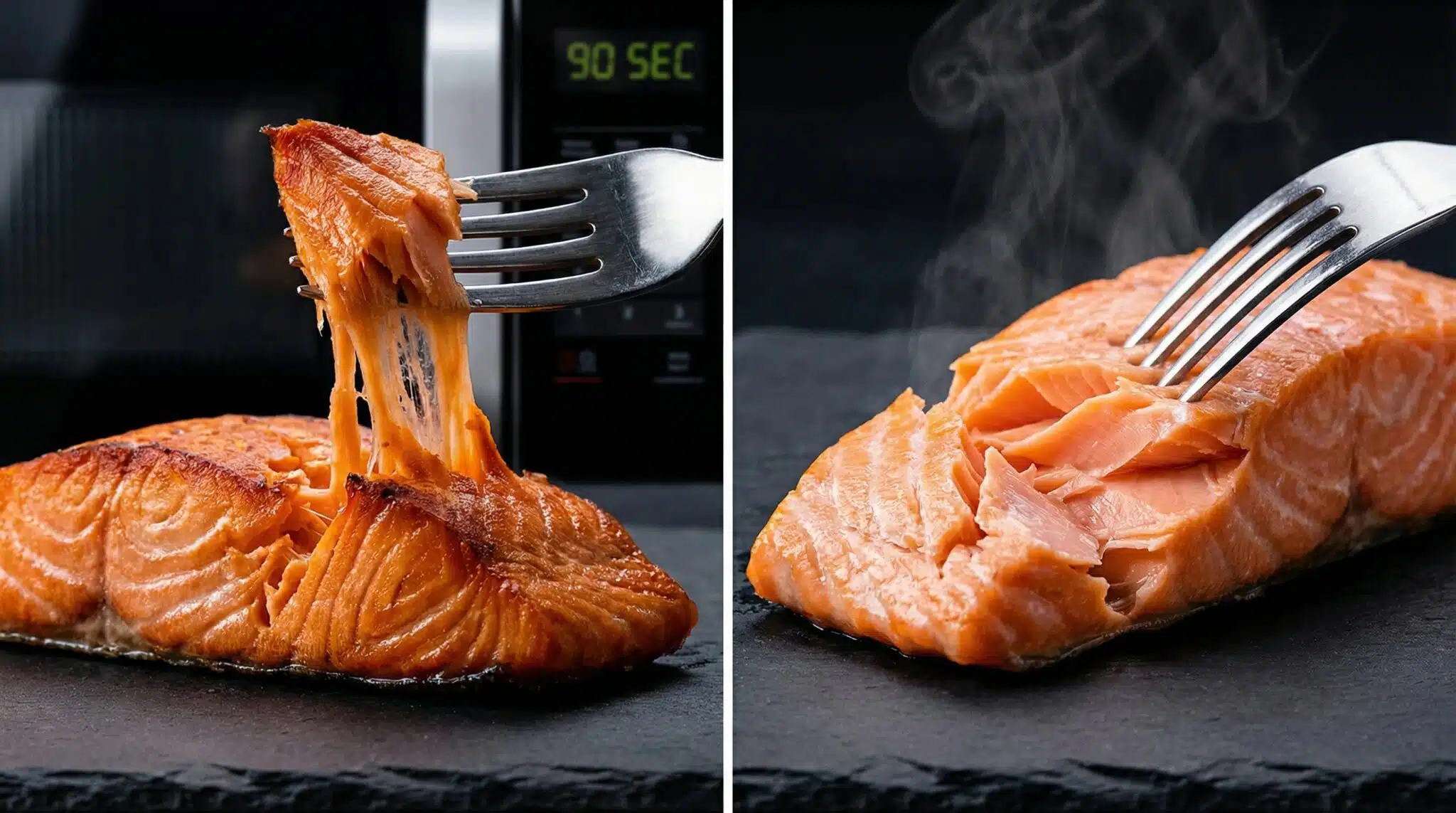
If you only take one thing from this post: seafood wants low heat + a little moisture + patience. Not a 90 second blast on High.
The reheating rules I live by (so you don’t have to learn the hard way)
These are the mistakes that turn leftovers into seafood jerky:
- High heat “to crisp it up.” That’s how you get chew. If it’s already cooked, you’re not searing you’re overcooking.
- Overshooting your temp. Seafood does not forgive.
- Crowding/stacking. Some pieces overcook while others stay cold, and then you keep heating “just a little more,” and suddenly everything is rubber.
- Reheating it twice. Reheat only what you’ll actually eat. (Yes, I know. I also think I’ll eat the whole container. I am often a liar.)
The best way to reheat seafood (depending on what you’ve got)
1) Steaming (my favorite for shrimp + scallops + shellfish)
This is the “tender and juicy” method. It’s basically a warm hug.
Do this:
- Bring a little water to a gentle simmer (not a raging boil).
- Put seafood in a single layer in a steamer basket (or a colander over a pot in a pinch).
- Cover and steam just until warm.
Timing (very approximate):
- Shrimp: 2-3 minutes
- Larger shellfish: 5-7 minutes
Stop sign: the moment it’s warmed through, pull it. Don’t wander off to “just quickly” answer a text. Seafood will use that time to betray you.
2) Low oven + foil (best for fillets like salmon, cod, halibut)
If you’re reheating a piece of fish and you want it to stay flake-y and not dry, this is the calm, steady option.
Do this:
- Heat oven to 250-275°F.
- Put fish in a baking dish in a single layer.
- Add a small splash of water, broth, or wine (just enough to create moisture).
- Cover tightly with foil.
- Heat 10-15 minutes, then check.
Optional but helpful: a tiny bit of butter or olive oil on top. Not because it’s fancy because it’s protective.
Stop sign: if you see that white stuff (albumin) oozing out like fish is sweating, you’re pushing it.
3) Warm it in broth or sauce (best for flaked fish or seafood headed for soups/tacos)
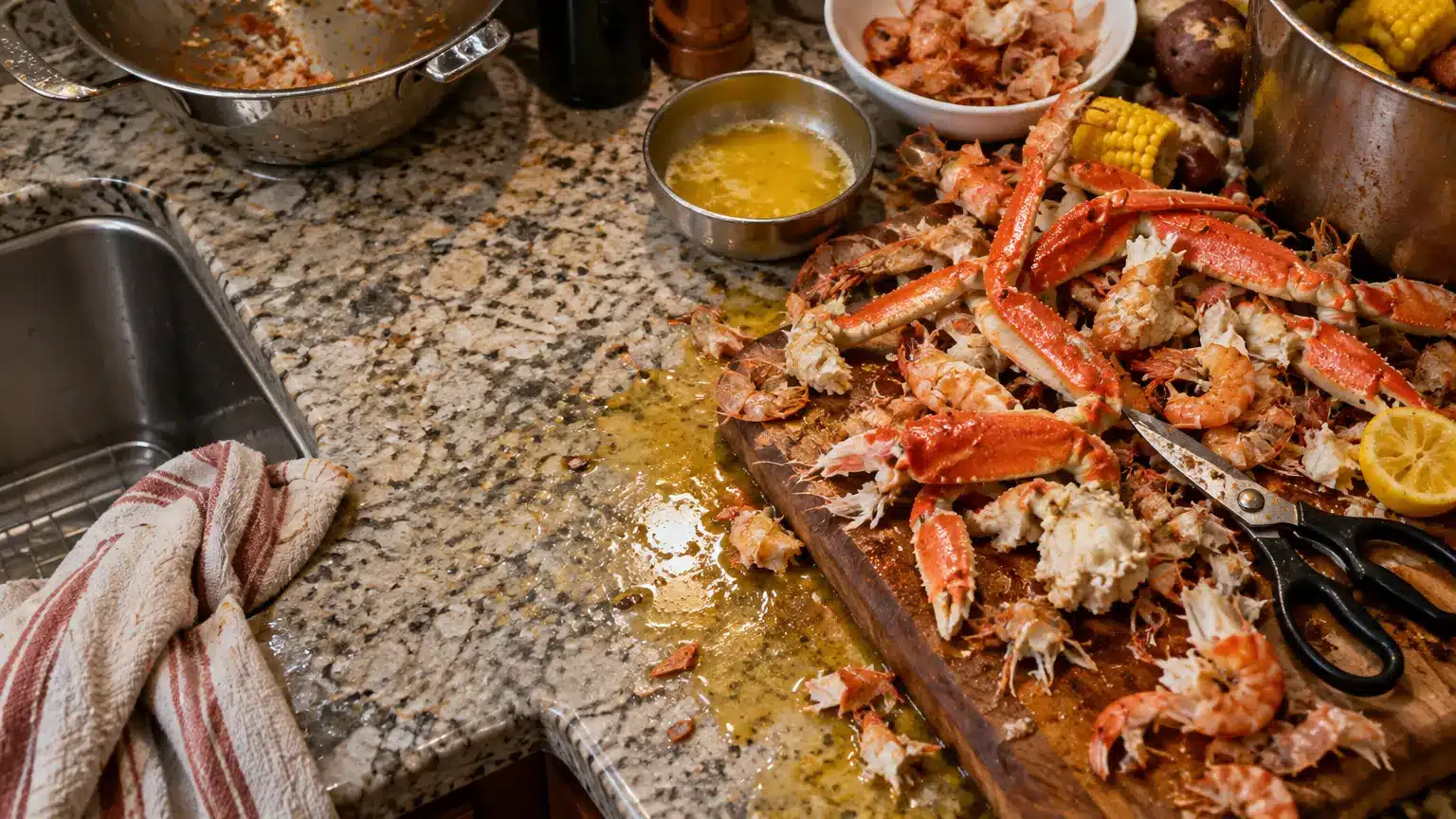
This is how I “save” leftovers with seafood boil remix dishes when the main goal is tasty and not necessarily “looks exactly like yesterday.”
Do this:
- Put the cold seafood into cold or room temp broth/sauce for a few minutes (it helps it warm more gently).
- Heat the liquid until it’s hot but not aggressively bubbling.
- Add seafood and warm just until heated through.
Stop sign: if the broth starts boiling hard, lower the heat immediately. Boiling is where tenderness goes to die.
This is my go to for leftover salmon: I flake it into a pot with a little broth, lemon, and herbs, then pretend I planned “salmon soup” all along.
4) The microwave (only if you must, like you’re at work and it’s that or sadness)
Okay. If the office microwave is your only tool, we can still reduce the damage.
Do this:
- Use 50% power (or even lower).
- Cover seafood with a damp paper towel.
- Heat in 30 second bursts, resting in between.
- Stop while it’s almost warm and let carryover heat finish the job.
My petty little trick: put an ice cube on the plate near the seafood (not touching). It adds moisture to the environment and slows things down a bit. Is it glamorous? No. Does it help? Weirdly, yes.
Stop sign: when the edges start firming up STOP. You can always add more heat. You cannot un-rubber a shrimp.
When your seafood is beyond saving (and what to do instead)
Sometimes it’s not your reheating method. Sometimes the leftover itself is the issue.
Seafood can start breaking down after a couple days in the fridge, and freeze/thaw cycles don’t help either. If it’s:
- Smells off, feels slimy, or is older than ~2 days in the fridge → toss it. I hate food waste too, but food poisoning is not the frugal flex we want.
- Soft/mushy but doesn’t smell bad → don’t reheat and expect it to “firm up.” Use it in something that likes a softer texture.
A few “make it tasty anyway” ideas:
- Flake cooked fish into a salad with a punchy vinaigrette (texture matters less when everything’s crunchy).
- Chop shrimp and mix into fish cakes or patties with breadcrumbs/egg/herbs.
- Add seafood to chowder or a creamy pasta at the very end warm it gently and call it a day.
This is not giving up. This is being smarter than a leftover.
The whole secret, in one sentence
Reheated seafood stays tender when you warm it slowly, with moisture, and stop early.
That’s it. That’s the spell.
Next time you’ve got leftover salmon or shrimp, warm up a seafood boil bag and skip the high heat panic reheating and go low and slow instead. Your dinner will taste like “I know what I’m doing” instead of “I was hungry and made choices.”