

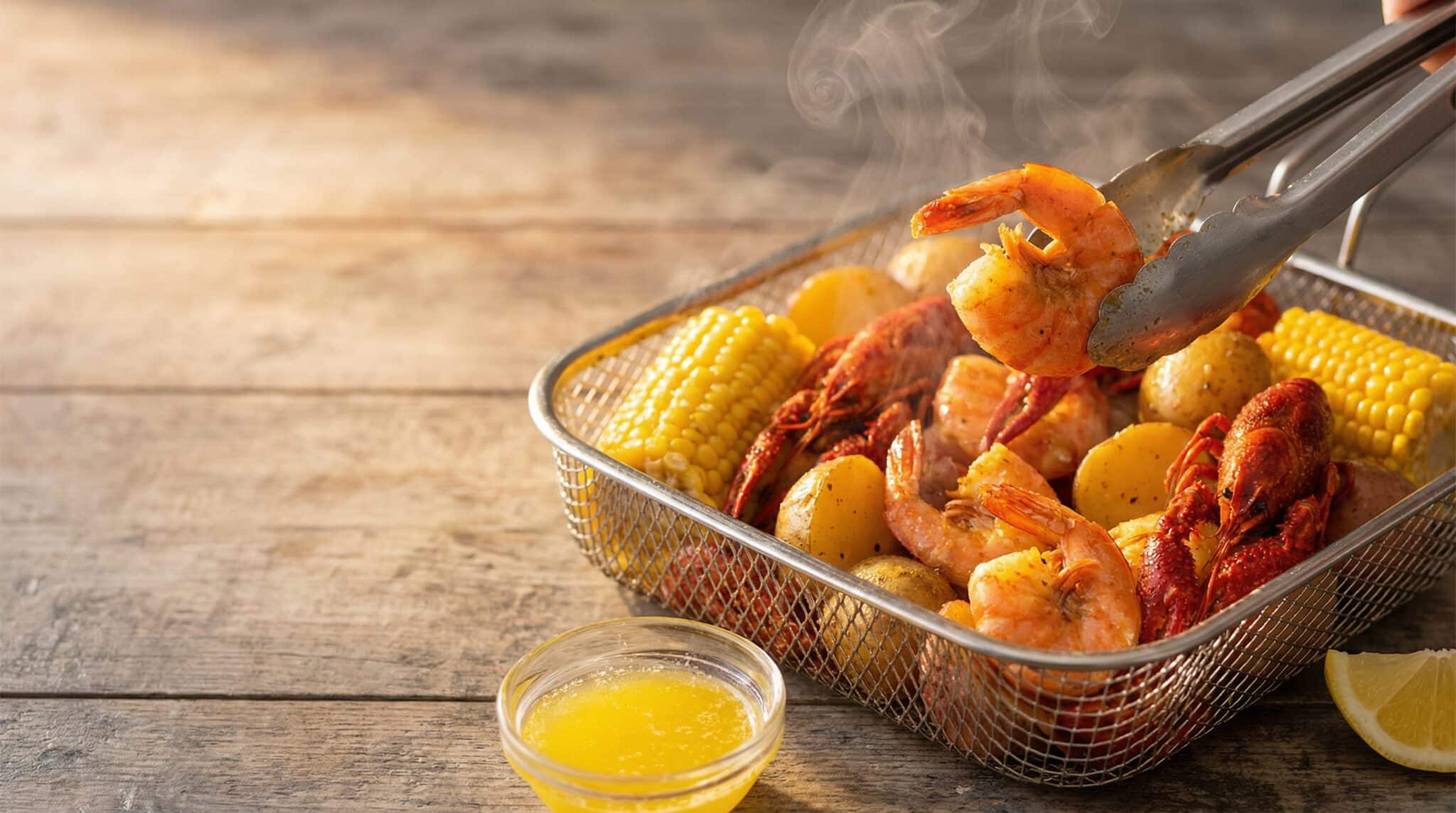
How to Reheat a Seafood Boil Without Turning Your Shrimp Into Erasers
You know that container of leftover seafood boil sitting in your fridge? The one you keep side-eyeing because you want it, but you also don’t want chewy shrimp and sad, cold in the middle potatoes? Yeah. That one.
Good news: you can absolutely reheat a seafood boil and have it taste like a respectable second act. The trick is gentle heat + not overcrowding + a tiny bit of butter based bribery. And honestly, the air fryer is the MVP here if you use it like a grown up and not like you’re trying to cremation roast a shrimp.
Why I Reach for the Air Fryer (Most of the Time)
An air fryer is basically a little convection oven that doesn’t require you to preheat your entire kitchen. That circulating hot air warms things up pretty evenly and keeps the seasoning where it belongs on your food, not diluted into a puddle like steaming can do.
But and this is a big but seafood overcooks fast. Shrimp have the emotional stability of a toddler: they go from “fine” to “WHY ARE YOU LIKE THIS” in about 60 seconds. So we’re going low and slow-ish.
The Temperature That Saves Shrimp (and Your Mood)
For refrigerated leftovers, I like 300°F. Not 400°F. Not “blast it and hope.” 300°F.
- Preheat your air fryer to 300°F
- Plan for 8-10 minutes total, depending on how packed your basket is and how chunky your potatoes are
Yes, you’ll see people do 325°F and that can work for smaller portions (or if your potatoes are already cut up). But if your air fryer runs hot some of them do, like they’re personally offended by “recommended temps” 300°F is the safer lane.
Quick note on frozen leftovers
If your seafood boil is frozen, do yourself a favor and thaw it overnight in the fridge. Reheating from frozen is how you get shrimp that are scorched on the outside while a potato chunk sits there like a cold, stubborn rock.
My No Rubbery, No Sad Potato Air Fryer Method
Here’s what I actually do at home (usually while hovering like a helicopter parent).
1) Get it out of the bag/container and into a bowl
If it came home in a plastic bag, do not put that seafood boil bag in the air fryer. (I feel like this should go without saying, but I’ve met the internet.)
Also: if there’s buttery liquid/sauce in the container, save it. That’s flavor gold.
2) Cut the big stuff smaller (just a little)
This is the unsexy part that makes everything work.
- If a potato chunk is bigger than a golf ball, cut it in half or quarters
- If sausage pieces are thick, halve them
When everything is closer in size, it heats at the same pace. Which means your shrimp don’t have to suffer while the potato catches up.
3) Add a little moisture if it looks dry
If your leftovers look kind of matte and sad (we’ve all been there), toss them with 2-3 tablespoons melted butter or a splash of seafood stock.
If everything still looks shiny and coated? Skip it. Too much liquid turns your air fryer into a steamer, and then you’ll be mad at me.
4) Don’t cram the basket like it’s a suitcase
Give the pieces a little breathing room. Crowding = trapped steam + cold spots + uneven heating.
If you have a lot, do two batches. Yes, it’s annoying. No, it’s not as annoying as rubbery shrimp.
5) Cook at 300°F for 8-10 minutes, shaking/tossing midway
About every 3-5 minutes, open it up and move things around so the hot air can do its job.
6) Know when to stop (before you ruin it)
You’re looking for:
- Potatoes: fork goes in easily
- Shrimp: evenly pink, not gray-ish and not tightening into tiny C-shapes of despair
- Overall: steady steam, everything hot
If you’re a thermometer person, aim for about 160°F in the thickest potato.
Serve immediately. Seafood boil leftovers do not improve with “let’s keep it warm for an hour.” They just… decline.
“Help, My Shrimp Got Rubbery” (Troubleshooting Without Crying)
- Dry outside, cold inside: you cooked too hot or packed the basket too tight. Next time: lower temp, spread out more, toss mid cook.
- Rubbery shrimp: it overcooked. Next time: pull the shrimp out a couple minutes early and add it back just to warm at the end (shrimp love drama).
- Soggy/steamy texture: too much added liquid or overcrowding. Drain excess, spread out, keep going for a couple minutes.
- Butter pooling instead of coating: toss everything in melted butter before it goes in, don’t just drizzle on top and hope.
If You Don’t Have an Air Fryer (Or It’s Buried in a Cabinet Somewhere)
You’ve got options:
- Oven (best for big batches): Wrap in foil with a little butter, bake at 325°F for 12-15 minutes.
- Stovetop (best for small portions + extra garlic butter moments): Low heat, covered pan, stir gently, watch closely.
- Microwave: If it’s this or starvation, fine but do low power, short bursts, and stir. Otherwise you’ll get “lava shrimp” and “ice potato” in the same bite.
- Steaming: I skip it for buttery boils. It can wash out flavor and mess with texture.
Food Safety (The Unfun But Important Part)
Seafood is not the food to get casual with.
- Refrigerate within 2 hours of cooking
- Eat within 3 days
- Reheat only once (reheating seafood repeatedly is a bad plan)
- Only reheat what you’ll actually eat, and don’t put reheated leftovers back in the fridge
And if it smells sour, looks slimy, or makes you hesitate? Toss it. Butter and seasoning are not magical protection spells.
That’s it. Low temp, a little space in the basket, and a tiny bit of butter support. Your shrimp can stay tender, your crab legs can stay juicy, and your leftover seafood boil can be a “wow, this is still good” situation instead of a “why did I do this” situation.