

The Secret to Perfect Ginger Scallion Fish (Spoiler: It’s Not a Fancy Pan)
If you’ve ever made ginger scallion fish and thought, “Okay… why does this taste like sadness with soy sauce?” I’m here to tell you: it’s probably not your technique. It’s not your steamer basket. It’s not even that you got distracted and checked Instagram “for one second” (been there).
It’s the fish.
This is one of those dishes that’s deceptively simple like a white tee that somehow only looks good on French women in movies. Ginger and scallions don’t cover problems; they highlight them. So if the fish is wrong, the whole thing feels… off.
Let me save you a few disappointing dinners and get you to the version that tastes like you should be charging yourself $28 for it.
Why ginger + scallion are picky little divas (and need mild fish)
Ginger and scallions aren’t just garnish. They’re doing active cleanup duty basically the bouncer at the door making sure “fishy” doesn’t get into the party. That “funk” comes from a compound that builds up as fish sits around, and ginger/scallion help neutralize it.
But here’s the catch: if your fish is super oily or super meaty, those aromatics don’t get to do their elegant little magic. They end up fighting for their lives.
My “please don’t” list:
- Oily fish (salmon, mackerel, trout) for classic steamed ginger scallion fish. It turns heavy fast.
- Dense steak-y fish (tuna, swordfish) because it’s like putting a leather jacket on a ballet dancer. Wrong vibe.
One exception: salmon can be amazing pan seared with ginger scallion because the browned bits + fat = dreamy. But for that clean Cantonese style “silky fish” moment? Mild white fish all day.
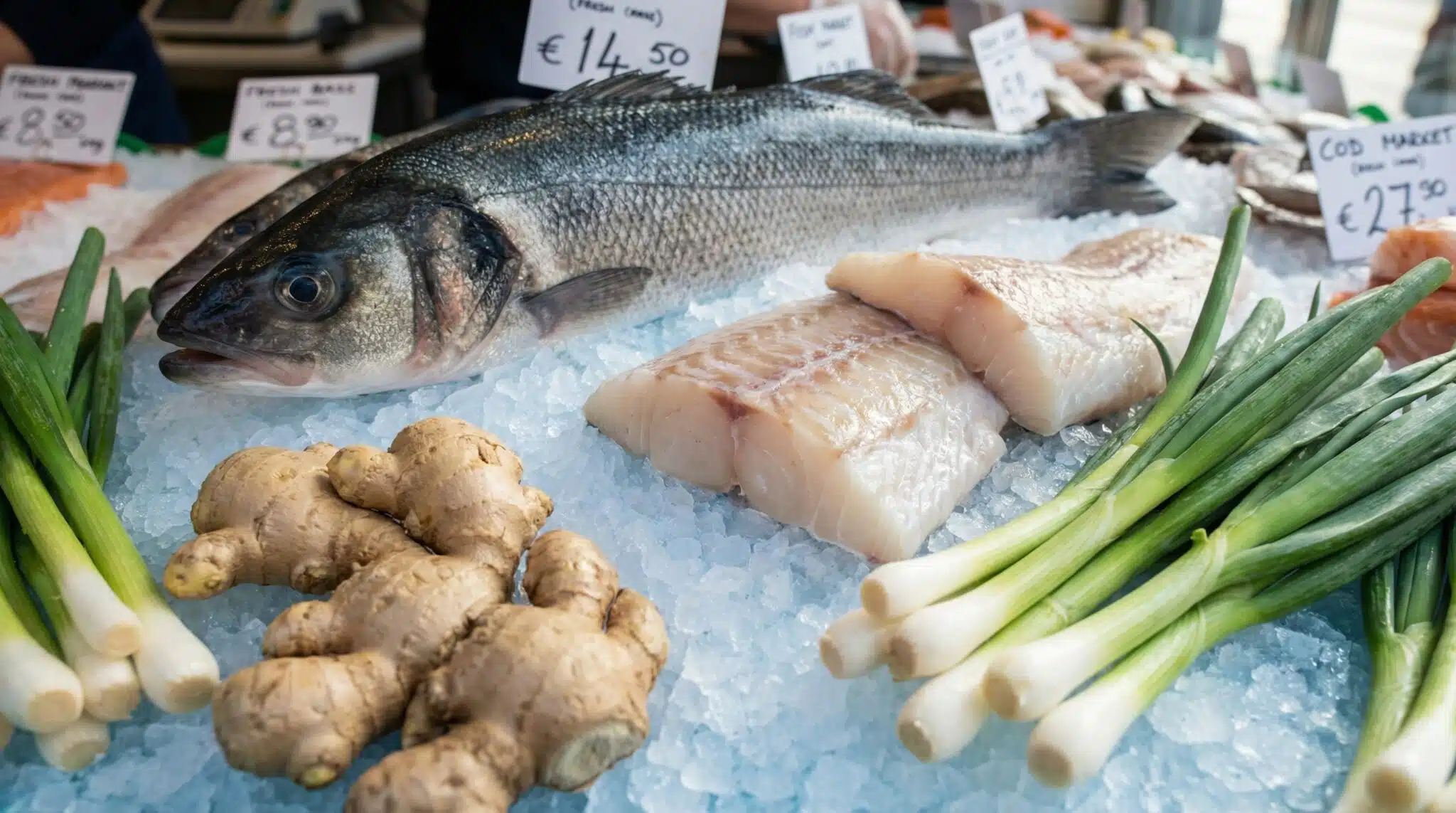
The best fish to buy (without needing a fish PhD)
When I’m standing at the fish counter pretending I know what I’m doing, I’m looking for four things: mild flavor, flaky texture, holds together, and easy to find.
Here are my go tos:
- Cod: The reliable friend who always shows up. Mild, flakes nicely, easy to find. Great for beginners.
- Tilapia: Budget friendly and fast. Don’t let the internet debates stress you out fresh is what matters most.
- Barramundi: Slightly firmer, really hard to mess up, great for searing or steaming. (Also: Costco often has good frozen fillets.)
- Sea bass / branzino: If you want the whole fish on a platter moment where you feel like you have your life together.
- Halibut: Thicker, forgiving, and tends to stay juicy if you’re the type who gets nervous and overcooks “just to be safe.” (I see you.)
- Grouper: Awesome if you’re braising or doing claypot style because it holds up in sauce.
If your store doesn’t have these exact fish, don’t spiral. Ask: “What’s the freshest mild white fish you have? I’m steaming it.” Fresh “boring” fish beats fancy fish that’s been sitting around collecting regrets.
Whole fish vs. fillets: which one should you pick?
Go whole fish if:
- You want maximum flavor (skin + bones really do something here)
- You want it to look like a special occasion even if it’s Tuesday
- You’re shopping at an Asian market where they’ll often clean it for you (just ask this is normal, not awkward)
Also, whole fish stays fresh a little longer, which is nice if you’re not cooking it the second you get home.
Go fillets if:
- It’s a weeknight and you’re not trying to wrestle bones
- You want easy portioning and easy doneness checking
Fillets don’t have as much “built in” flavor protection as a whole fish, so I like giving them a little head start with a quick rest in a simple mix soy + sesame oil + a splash of wine/sherry/white wine. (Not for hours. This isn’t a brisket. Just like 30 minutes while you chop ginger and question your knife skills.)
Yes, frozen fish is fine (put down the guilt)
Frozen fish can be great for this, especially if it’s IQF (individually quick frozen). Just thaw it overnight in the fridge. Not on the counter. Not in hot water. We’re making dinner, not conducting a science experiment.
Steaming is forgiving, too tiny texture differences won’t ruin your life.
Cooking methods that won’t betray you
Steaming (the classic)
This is the clean, silky version among four reliable cooking approaches. Gentle heat, tender fish, and then the dramatic hot oil sizzle at the end. Choose fish that won’t shred if you look at it wrong (cod, halibut, sea bass, barramundi).
Pan searing (my “I want crispy edges” mood)
Use a firmer fillet. You get browned flavor from the aromatics that’s totally different from steamed more savory, more toasty, more “I meant to do this.”
Braising/claypot
Go for fish that holds together in chunks (grouper, halibut, firmer white fish). Delicate stuff will melt and make your sauce look like you had a minor kitchen incident.
Timing cheat sheet (aka: pull it earlier than your instincts want)
Fish is done fast. Like, “I turned my back and now it’s over” fast.
- Whole fish (about 1 lb): ~10 minutes
- Whole fish (1.5 lb): ~12-15 minutes
- Thin fillets (under ½ inch): ~6-8 minutes
- Thick fillets (¾-1 inch): ~8-10 minutes
How you’ll know: a chopstick (or fork tip) slides into the thickest part with basically no resistance, and it flakes cleanly. If you’re a thermometer person, aim around 140-145°F.
When in doubt, check early, then add 90 seconds. Fish responds well to gentle babysitting. Unlike sourdough.
Three mistakes that ruin ginger scallion fish (and how to fix them)
1) “My fish glued itself to the plate.”
Put a little bed of smashed scallion whites (or even a few ginger slices) under the fish before steaming. It lifts it up, prevents sticking, and flavors the underside like a secret bonus level.
2) “My sauce tastes watery.”
Fish releases liquid as it cooks. Totally normal. Just tilt the plate and drain it for 30-60 seconds before you add sauce. (Yes, it feels wrong to pour out liquid. No, you won’t regret it.)
3) “My ginger is bitter.”
That’s usually from overcooking it. The move is: fish cooks first, then you add fresh ginger + scallion greens and pour hot oil over top at the end so they sizzle and perfume without burning.
That final hot oil moment is basically the entire point. It’s the grand finale. It’s the hair flip. Don’t skip it.
Quick fixes for the most common “help” moments
- My fish falls apart: Either it’s too delicate or you cooked it a smidge too long. Next time, choose a firmer fish (barramundi/halibut) and pull it about 90 seconds earlier than you think.
- No Shaoxing wine? Use dry sherry or dry white wine. Even a little lemon juice can work in a pinch (different vibe, still tasty).
- Leftovers? Honestly, this dish is best fresh because you can’t re-create that just sizzled ginger scallion magic. If you must: re-steam the fish for a couple minutes, then add fresh aromatics and hot oil again. Don’t just microwave it and hope. Hope is not a strategy.
The bottom line
If your ginger scallion fish has ever tasted flat, heavy, or vaguely funky, don’t blame yourself. This dish is a “right fish or wrong fish” situation.
Pick a mild white fish, don’t overcook it, drain the steaming liquid, and save the fresh ginger/scallion + hot oil for the very end.
Then stand there for a second and inhale like a cartoon character floating toward a pie in a window because that sizzling aroma is everything.