

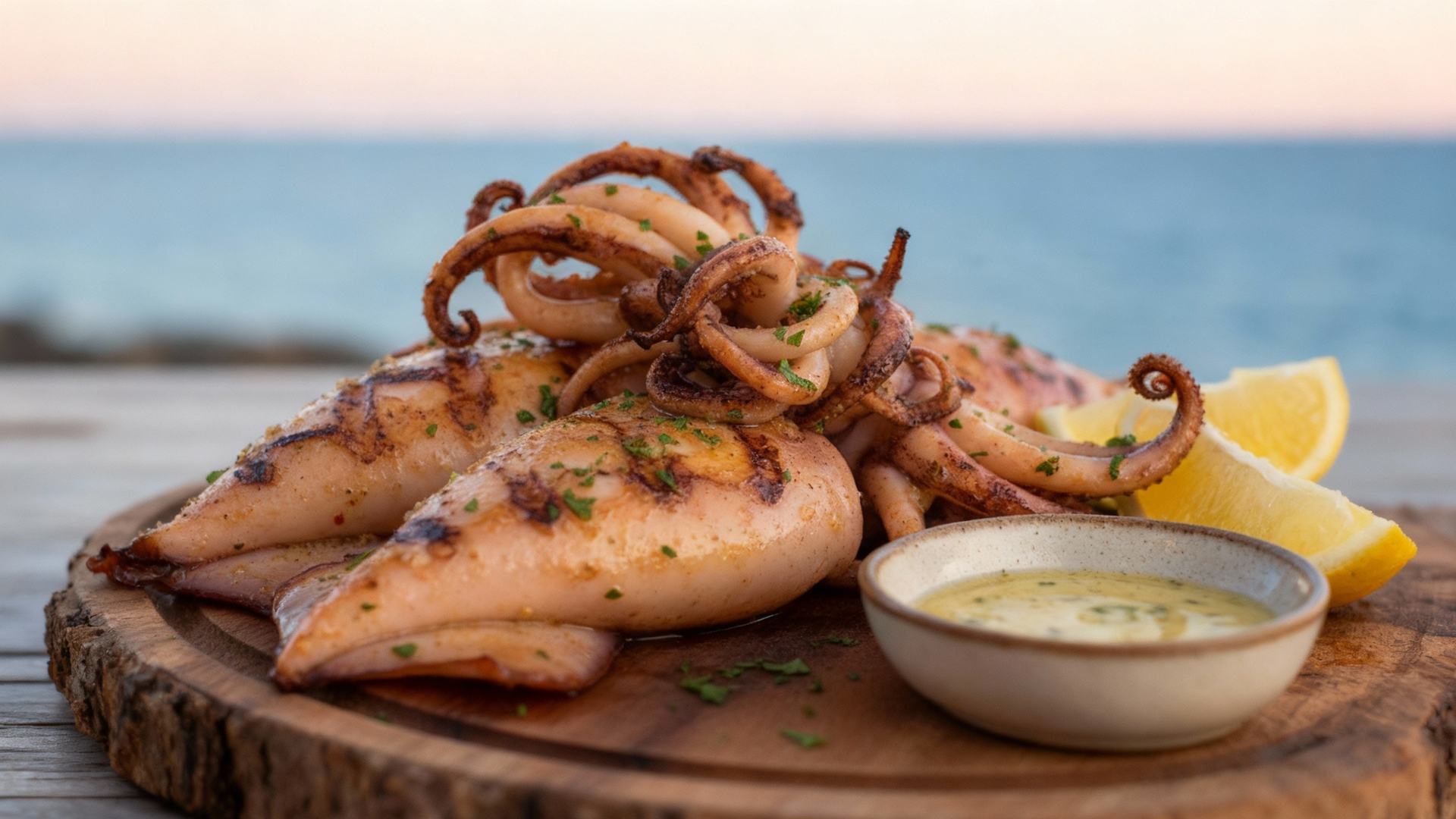
Grilled squid can seem tricky to cook at home.
You are worried about overcooking it and ending up with rubbery, chewy pieces. I get it, getting that perfect tender texture feels like guesswork.
You can make restaurant-quality squid in just 10 minutes. No complicated techniques needed.
This blog shares four simple recipes that work every time.
You’ll learn the basic prep steps, cooking times, and flavor combinations that make squid taste incredible.
Are Squid and Calamari the Same?
Yes, they’re the same thing.
Calamari is just the Italian word for squid. When you see it on a restaurant menu, it usually means fried squid rings. But the creature itself is identical.
Calamari can refer to the cooking style, too.
Chefs use “calamari” when the squid is breaded and fried. “Squid” often describes grilled or sautéed preparations. Same animal, different cooking methods.
Tips for Purchasing Squid
Fresh squid cooks better and tastes sweeter than old or poorly stored seafood. Here’s what to look for at the market.
Look for clear, bright eyes
Fresh squid have shiny, clear eyes that look almost alive. Cloudy or sunken eyes mean the squid has been sitting around too long.
This is one of the easiest ways to judge freshness at a glance.
Smell before buying
Good squid smells like the ocean, clean and slightly briny.
If it smells fishy, sour, or like ammonia, walk away. Your nose is the best tool for detecting seafood that’s past its prime.
Feel the texture
Press the squid gently with your finger. It should feel firm and spring back immediately. A mushy or slimy texture indicates the squid is old.
Fresh squid has a tight, almost rubbery feel that holds its shape well.
Ask about frozen options
Flash-frozen squid can be excellent quality, sometimes better than “fresh” squid that’s been sitting on ice for days.
Check the skin color
The skin should have a slight purple or pink tint with some natural spotting. Avoid squid that looks dull, grey, or yellowish.
It has translucent, almost glossy skin that reflects light beautifully.
Cleaning the Squid Before Cooking (Don’t Skip)
Cleaning squid might seem intimidating and tough at first, but it’s actually quite simple once you know the steps. Fresh squid needs proper preparation to ensure the best texture and taste.
Start by rinsing the whole squid under cold running water. Then follow these key steps:
- Remove the head and tentacles: Pull the head away from the body tube gently. The innards will come out attached to it.
- Take out the clear quill: Reach inside the body and pull out the thin, plastic-like backbone.
- Peel off the skin: The purple-gray membrane rubs off easily under running water.
- Rinse everything thoroughly: Make sure no internal bits remain inside the tube.
Pat the cleaned squid completely dry with paper towels before cooking.
Delicious Grilled Squid Recipes
These recipes work for weeknight dinners or weekend gatherings. Each one takes about 10 minutes from prep to plate.
You’ll need basic ingredients you probably already have in your kitchen.
Recipe 1: Grilled Squid with Herb and Lemon
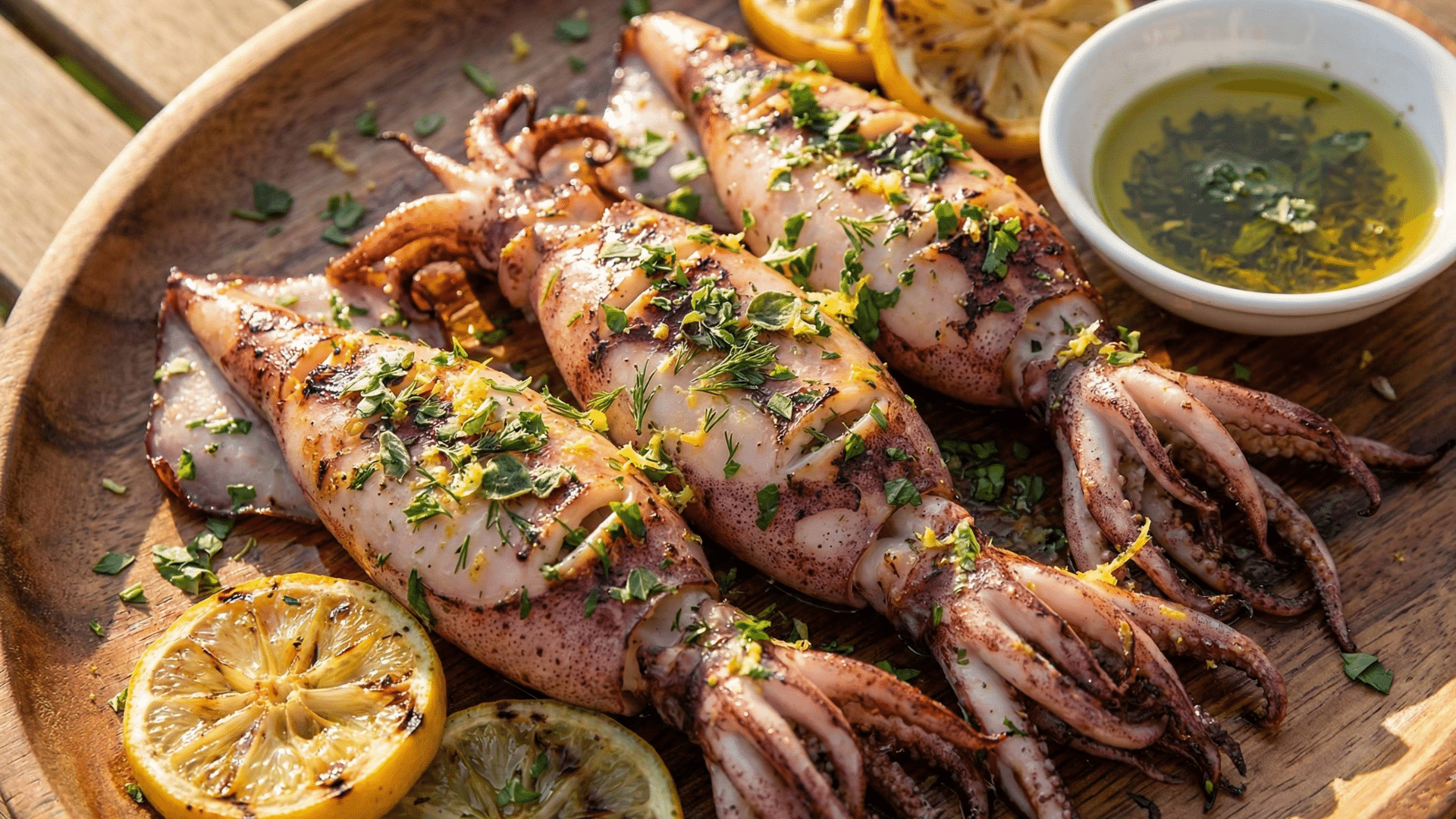
This recipe keeps things simple and fresh. The lemon brightens up the squid’s natural sweetness, while herbs add a pop of flavor.
It’s my go-to when I want something light and quick.
| Nutrient | Amount |
|---|---|
| Calories | 185 kcal |
| Protein | 28g |
| Fat | 6g |
| Carbohydrates | 3g |
| Fiber | 0.5g |
| Sodium | 320mg |
| Vitamin C | 15mg |
Step 1: Clean and prep the squid
Rinse the squid under cold water and pat it completely dry with paper towels. Remove the tentacles if they’re still attached.
Cut the body into flat pieces or rings, depending on your preference for presentation and easier grilling.
Step 2: Make the herb marinade
Mix olive oil, minced garlic, chopped fresh herbs like parsley and thyme, lemon zest, salt, and black pepper in a bowl. Whisk everything together until well combined.
The oil helps the herbs stick to the squid while adding moisture during cooking.
Step 3: Marinate the squid
Toss the squid pieces in the herb mixture and let them sit for 5 minutes. Don’t marinate longer than 10 minutes, or the acid from the lemon will start cooking the squid.
You want it fresh and tender, not tough from over-marinating.
Step 4: Heat your grill
Preheat your grill to high heat, around 450-500°F. Make sure the grates are clean and lightly oiled to prevent sticking.
A hot grill gives you those beautiful char marks and seals in the juices. Wait until you see light smoke rising from the grates.
Step 5: Grill the squid quickly
Place the squid pieces on the hot grill and cook for 2 minutes per side. Don’t walk away, squid cooks fast, and overcooking makes it rubbery.
You’ll see the flesh turn opaque and slightly charred. That’s your signal to flip and finish cooking the other side.
Step 6: Finish with fresh lemon
Remove the squid from the grill immediately and transfer to a serving plate. Squeeze fresh lemon juice over the top and sprinkle with extra chopped herbs.
Serve right away while it’s still hot and tender. The residual heat will release more of those herb flavors.
Click here to download the recipe card.
Recipe 2: Grilled Squid Steaks with Garlic Sauce
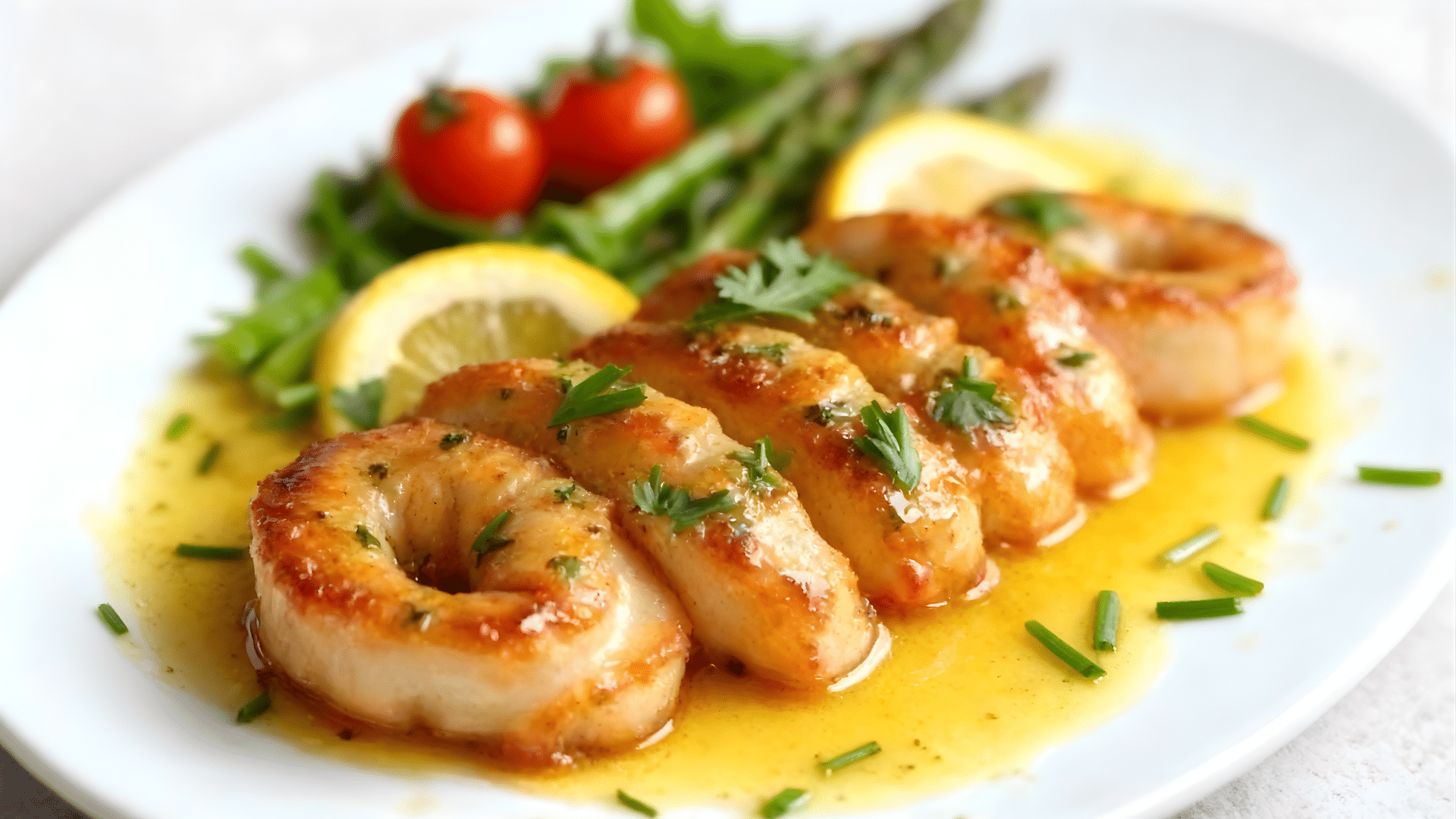
Squid steaks are thicker cuts that hold up beautifully on the grill.
The garlic sauce adds richness without overpowering the seafood. This one feels a bit fancier but takes the same amount of time.
| Nutrient | Amount |
|---|---|
| Calories | 210 kcal |
| Protein | 26g |
| Fat | 9g |
| Carbohydrates | 5g |
| Fiber | 0.3g |
| Sodium | 380mg |
| Vitamin A | 120 IU |
Step 1: Score the squid steaks
Use a sharp knife to make shallow diagonal cuts across each steak in a crosshatch pattern. This helps the squid cook evenly and allows the garlic sauce to penetrate the meat.
Don’t cut too deep, just score the surface about 1/8 inch down.
Step 2: Season the steaks
Rub both sides of each steak with olive oil, salt, and freshly ground black pepper.
Keep the seasoning simple at this stage because the garlic sauce adds plenty of flavor later. The oil prevents sticking and helps achieve that nice golden color on the grill.
Step 3: Prepare the garlic sauce
Mince 4-5 garlic cloves very finely and sauté them in butter over low heat until fragrant but not browned.
Add a squeeze of lemon juice, a pinch of red pepper flakes, and chopped parsley. Keep the sauce warm on low heat while you grill the squid steaks.
Step 4: Grill the steaks
Place the squid steaks on a preheated hot grill and cook for 2-3 minutes per side.
The steaks are thicker than rings, so they need slightly more time. Look for firm texture and light char marks.
Use tongs to flip them gently to avoid tearing the delicate flesh.
Step 5: Rest briefly
Transfer the grilled steaks to a cutting board and let them rest for 1 minute. This brief rest helps the juices redistribute throughout the meat.
It also gives you time to arrange your serving plates and get the garlic sauce ready for drizzling over the top.
Step 6: Serve with garlic sauce
Slice the steaks into strips if you prefer, or serve them whole. Spoon the warm garlic sauce generously over each steak. Garnish with lemon wedges and extra parsley.
The buttery garlic sauce soaks into those score marks you made earlier, making every bite incredibly flavorful.
Click here to download the recipe card.
Recipe 3: Garlic, Chilli and Parsley Grilled Squid
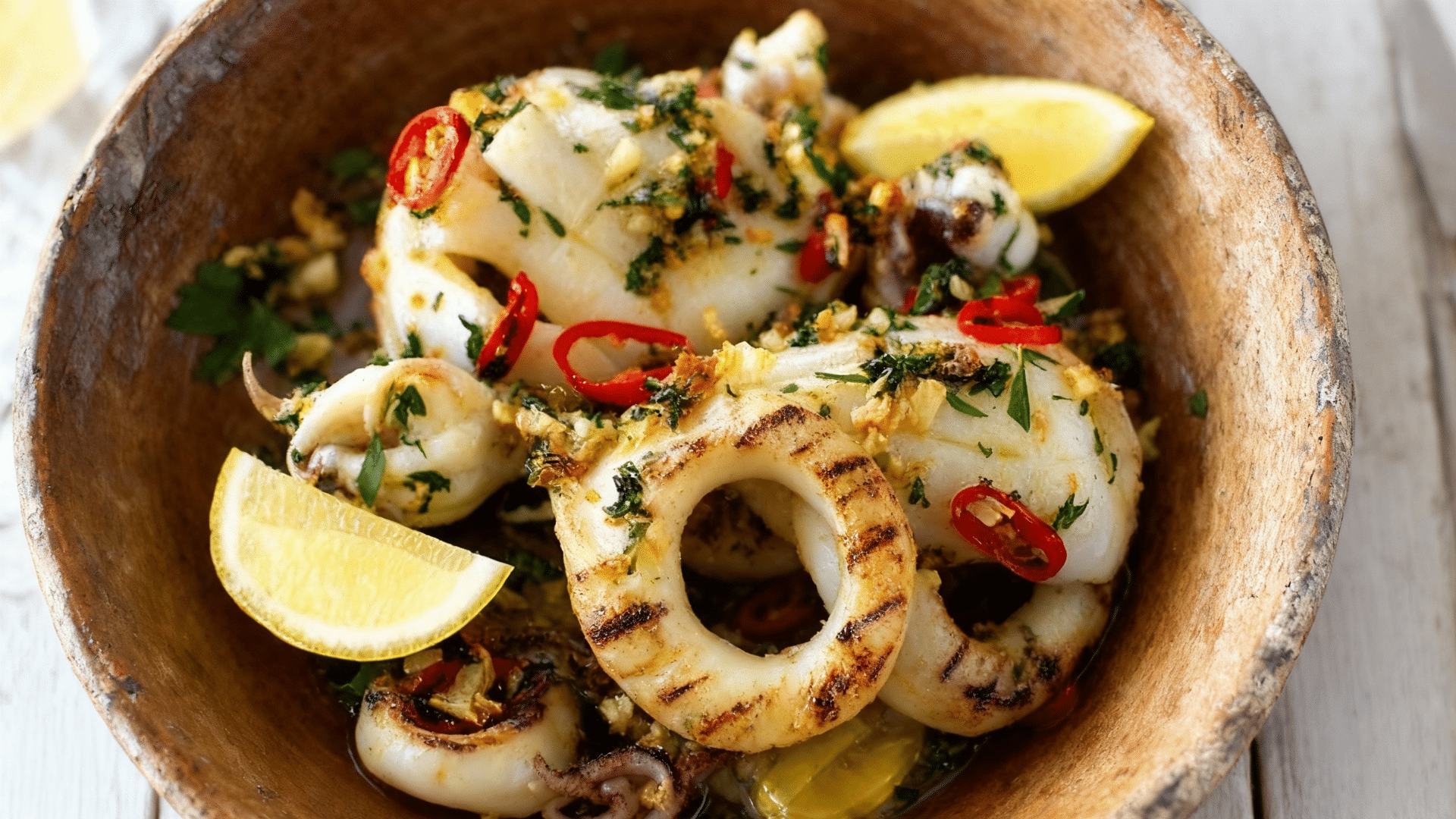
This recipe brings heat and bold flavors to your plate. The chili adds a nice kick without being overwhelming.
It’s perfect if you like your seafood with a bit of spice.
| Nutrient | Amount |
|---|---|
| Calories | 195 kcal |
| Protein | 27g |
| Fat | 7g |
| Carbohydrates | 4g |
| Fiber | 0.8g |
| Sodium | 340mg |
| Vitamin C | 18mg |
Step 1: Prepare the squid tubes
Clean the squid and separate the tubes from the tentacles. Cut each tube open lengthwise to create a flat piece.
Use the back of your knife to gently scrape away any remaining membrane.
This ensures the marinade sticks better and the squid cooks evenly across the entire surface.
Step 2: Make the spicy marinade
Combine olive oil, crushed garlic, finely chopped red chili, fresh parsley, salt, and a splash of white wine vinegar in a bowl.
Mix thoroughly until all ingredients are well incorporated.
Taste and adjust the heat level by adding more or less chili depending on your preference for spiciness.
Step 3: Coat the squid
Add the squid pieces to the marinade and toss to coat every surface. Let it sit for just 5 minutes at room temperature.
The acid and oil work together to tenderize slightly while the garlic and chili infuse their flavors. Don’t skip this step; it makes a noticeable difference.
Step 4: Preheat the grill
Get your grill screaming hot; you want temperatures around 500°F or higher.
Clean the grates well and brush them with oil using a folded paper towel held with tongs. High heat is essential for squid.
It cooks the outside quickly while keeping the inside tender and preventing that rubbery texture nobody wants.
Step 5: Grill fast and hot
Lay the squid flat on the grill, scored side down first. Cook for 90 seconds, then flip and cook another 90 seconds.
Watch closely because timing is everything here. The squid should curl slightly and develop nice char marks.
Any longer and you’ll end up with tough, chewy pieces instead of tender bites.
Step 6: Garnish and serve immediately
Remove from heat and place on a warm serving platter.
Sprinkle with fresh chopped parsley and a drizzle of extra olive oil. Add lemon wedges on the side for squeezing. Serve right away while the squid is hot.
The flavors are brighter, and the texture is best when eaten immediately after grilling.
Click here to download the recipe card.
Recipe 4: Korean Grilled Squid Using Gochujang Sauce
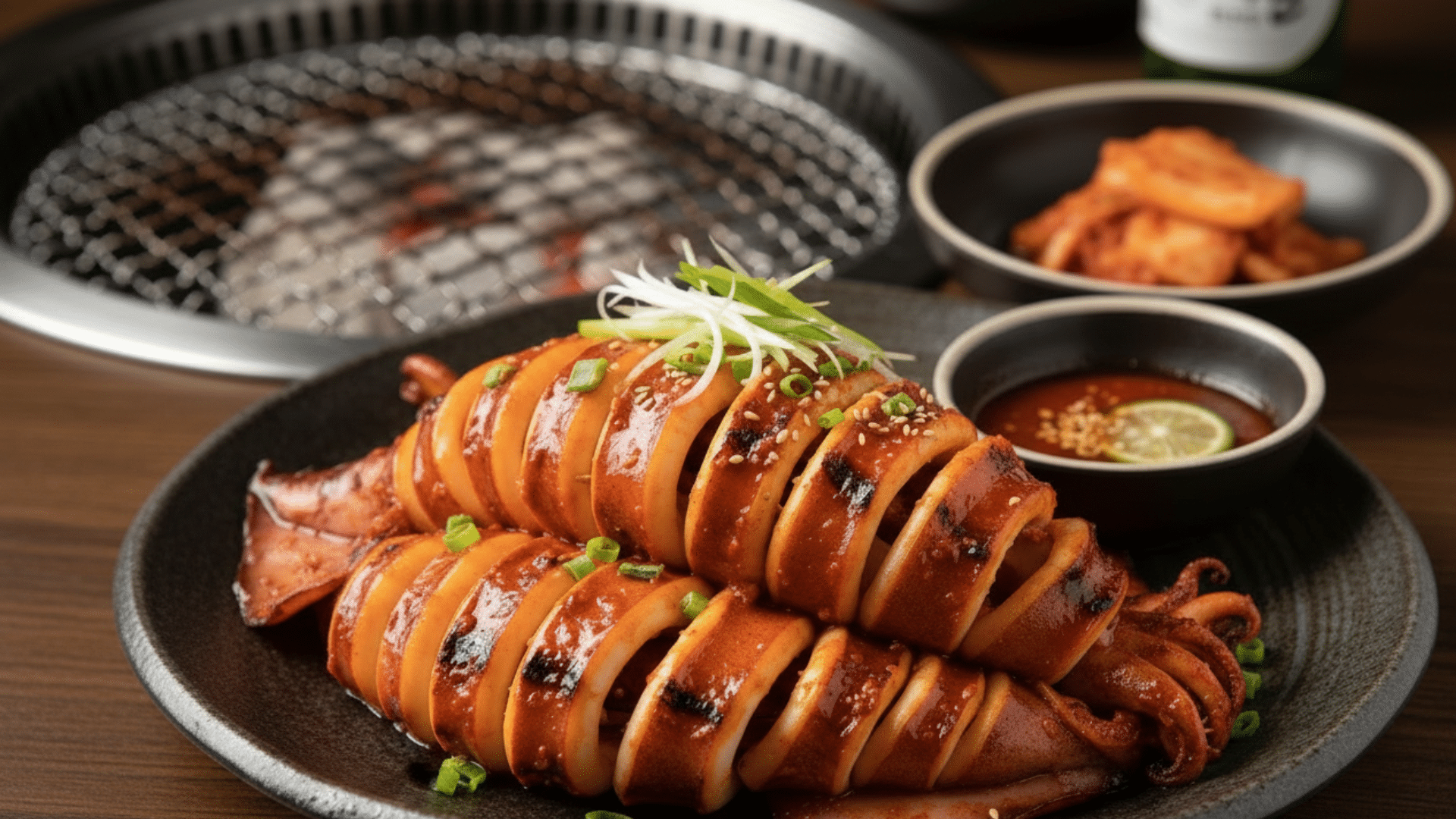
Korean flavors change grilled squid into something special. The gochujang sauce brings sweet, spicy, and savory notes all at once.
| Nutrient | Amount |
|---|---|
| Calories | 210 kcal |
| Protein | 25g |
| Fat | 7g |
| Carbohydrates | 12g |
| Fiber | 1.2g |
| Sodium | 520mg |
Step 1: Prepare the squid
Clean the squid bodies and tentacles, removing any internal parts that remain. Cut the bodies into rings or leave them whole, depending on your preference.
Pat them completely dry with paper towels. Korean-style grilled squid often uses whole bodies, but rings work fine too.
Step 2: Make the gochujang marinade
Mix gochujang paste, soy sauce, sesame oil, minced garlic, grated ginger, and a spoonful of honey in a bowl. Stir until smooth and well combined.
This sauce balances spicy, sweet, and umami flavors perfectly. Adjust the honey if you prefer it sweeter or spicier to your taste.
Step 3: Coat the squid generously
Add the squid to the gochujang mixture and toss until every piece is covered in the red sauce. Let it marinate for 8-10 minutes while the grill heats up.
The sauce is thick, so it clings well to the squid. Don’t marinate too long or the flavors become overwhelming.
Step 4: Heat the grill hot
Set your grill to high heat, aiming for 475-500°F.
Make sure the grates are spotless and well-oiled. Korean grilled squid needs intense heat to caramelize the sauce slightly while cooking the squid through.
Medium heat won’t give you that characteristic char and sticky glaze.
Step 5: Grill until caramelized
Place the marinated squid on the grill and cook for 2-3 minutes per side. The gochujang sauce will darken and caramelize, creating a sticky glaze.
Watch carefully since the sugar in the sauce can burn quickly. Flip once and remove when you see nice char marks forming.
Step 6: Finish with toppings
Remove the squid from the grill and place it on a serving platter. Sprinkle with toasted sesame seeds and sliced green onions for freshness and crunch.
Serve immediately with steamed rice or as an appetizer.
Click here to download the recipe card.
Storing and Reheating
Proper storage keeps your grilled squid fresh and safe to eat later.
Reheating requires a gentle touch to avoid turning tender squid into rubber.
Follow these guidelines for the best results.
- Refrigerate within two hours – Put leftover grilled squid in an airtight container and refrigerate immediately after cooking. It stays good for up to 2 days in the fridge at 40°F or below.
- Reheat gently on low heat – Use a skillet on low heat with a bit of olive oil. Warm the squid for just 1-2 minutes per side. High heat will make it tough and chewy.
- Avoid the microwave if possible – Microwaves heat unevenly and make squid rubbery fast. If you must use one, heat in 15-second intervals on medium power. Stop as soon as it’s warm, not hot.
- Add moisture when reheating – Drizzle a little lemon juice or olive oil over the squid before warming. This prevents it from drying out and adds back some of that fresh flavor you want.
- Eat cold as an alternative – Grilled squid tastes great cold in salads or with pasta. Skip reheating altogether and slice it thin over greens. This preserves the tender texture you worked hard to achieve
What to Serve Along
Grilled squid tastes incredible on its own, but pairing it with the right sides takes your meal to the next level.
These serving ideas complement the smoky, tender squid perfectly and create a complete, satisfying dinner.
| Side Dish | Best Paired With |
|---|---|
| Steamed White Rice | Korean Grilled Squid, Garlic Chilli Parsley Squid |
| Grilled Vegetables | Herb and Lemon Squid, Garlic Sauce Squid Steaks |
| Fresh Green Salad | All recipes, especially herb-based ones |
| Garlic Bread | Garlic Sauce Squid Steaks, Garlic Chilli Parsley Squid |
| Lemon Wedges | All recipes, particularly important for simple preparations |
| Roasted Potatoes | Garlic Sauce Squid Steaks, Herb and Lemon Squid |
| Kimchi | Korean Grilled Squid exclusively |
To Wrap Up
Squid doesn’t have to be complicated or time-consuming.
These four recipes prove that anyone can make restaurant-quality seafood at home.
Start with whichever recipe appeals to you most. Once you nail the basic technique, you’ll feel confident experimenting with your own marinades and seasonings.