

Every recipe I make starts with an onion.
So growing my own just made sense. When I first tried to grow onions from bulbs, I honestly expected it to be complicated.
First batch? Half of them barely made it. A couple just sat in the soil and gave up.
Mistakes have a funny way of teaching what instructions never could. My harvests got better every single time.
That is why I put this guide together.
Everything I know about how to grow onions from bulbs is laid out simply below.
How Long Does it Take to Grow Onions?
Patience is part of the process here.
Onions are not a quick crop, but knowing what to expect at each stage makes the wait much easier.
Most varieties take 90 to 120 days from planting to harvest, roughly three to four months, depending on the variety and your growing conditions.
Onion Growth Stages
| Stage | Timeframe | What Happens | What To Do |
|---|---|---|---|
| Sprouting | Week 1 to 2 | Green shoot pushes above the soil | Keep soil moist, not waterlogged |
| Leaf Development | Week 3 to 8 | The plant builds leaves to feed the bulb | Full sun and steady watering |
| Bulb Formation | Week 9 to 14 | The base starts swelling above the soil line | Stop fertilizing |
| Maturity | Weeks 15 to 17 | Tops fall over and turn yellow | Time to harvest |
How to Grow Onions From Bulbs
To be fair, knowing how to grow onions from bulbs comes down to a few things done consistently and in the right order.
Nothing complicated, just a little attention at each stage.
Everything You’ll Need to Get Started
| Item | Purpose |
|---|---|
| Garden fork or trowel | Loosening soil before planting and lifting onions at harvest without bruising them |
| Small metal shovel | Mixing compost into the soil and breaking up compacted ground |
| Onion sets (plus a few extras) | Firm, marble-sized, dry bulbs with no soft spots |
| Compost | Enriching the soil before planting for better bulb development |
| Nitrogen-rich fertilizer | Early-stage feeding to support healthy growth |
| Watering can or hose | Gentle, controlled watering especially in the early stages |
| Straw or dry leaves | Mulching to suppress weeds and retain soil moisture |
| Fine mesh netting | Keeping pests away from young plants |
| Wooden garden box or garden bed | A contained space with good drainage for planting |
| Warm, dry storage area | Curing harvested onions for two to three weeks before storing |
Step 1: Choose the Right Onion Bulbs
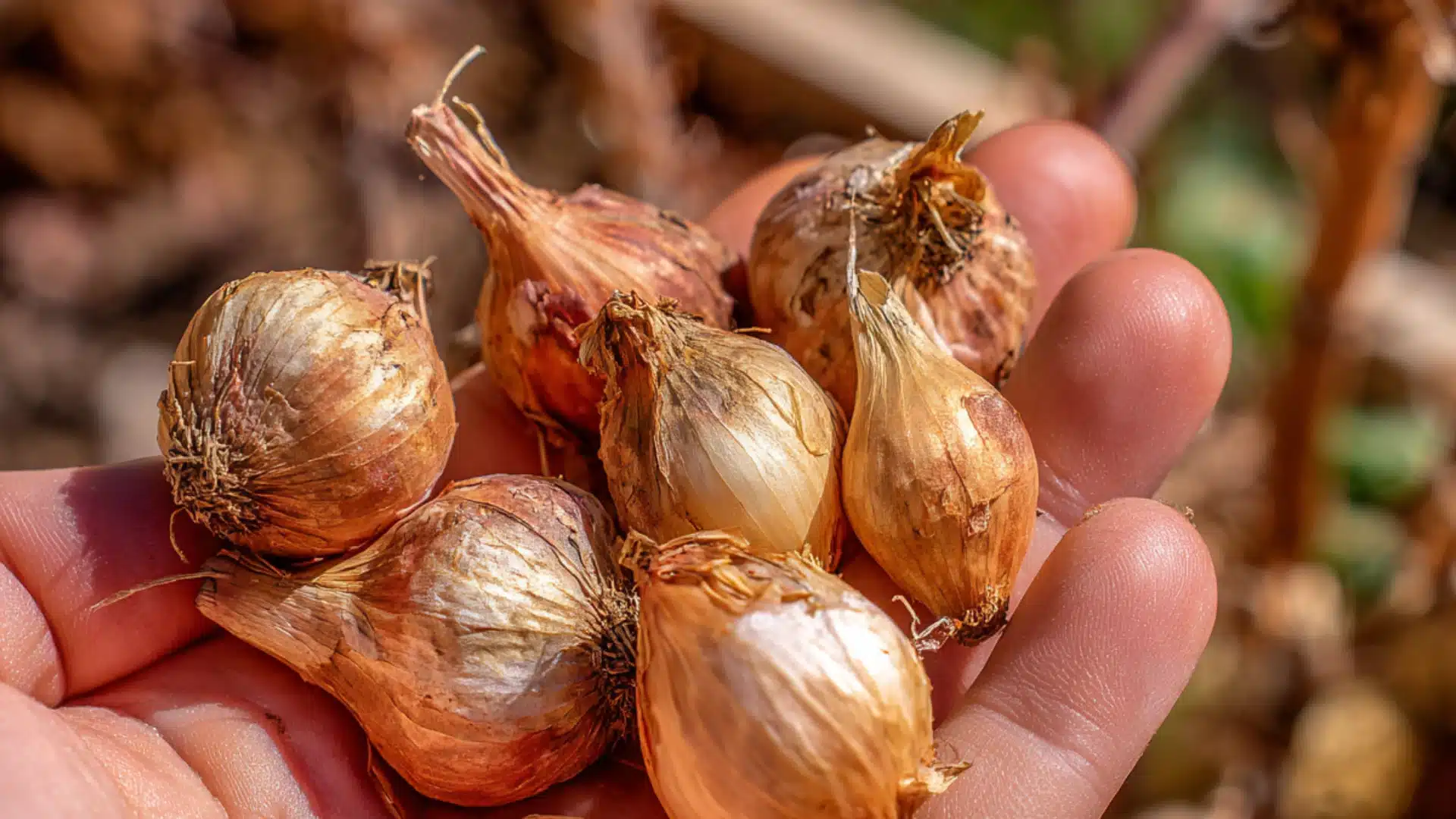
Onion sets are small, dried bulbs, and the easiest starting point for anyone learning how to grow onions from bulbs.
Skip the seeds. Sets are faster and far more forgiving.
When picking them out, look for firm, dry bulbs with no soft spots or mold. And go small.
Marble sized sets grow better bulbs than oversized ones, which tend to flower early and skip bulb development completely.
Quick tip: I always buy a few extra sets than I need. Some will not sprout, and having backups saves the trip back to the store.
Step 2: Prepare the Soil and Plant Properly
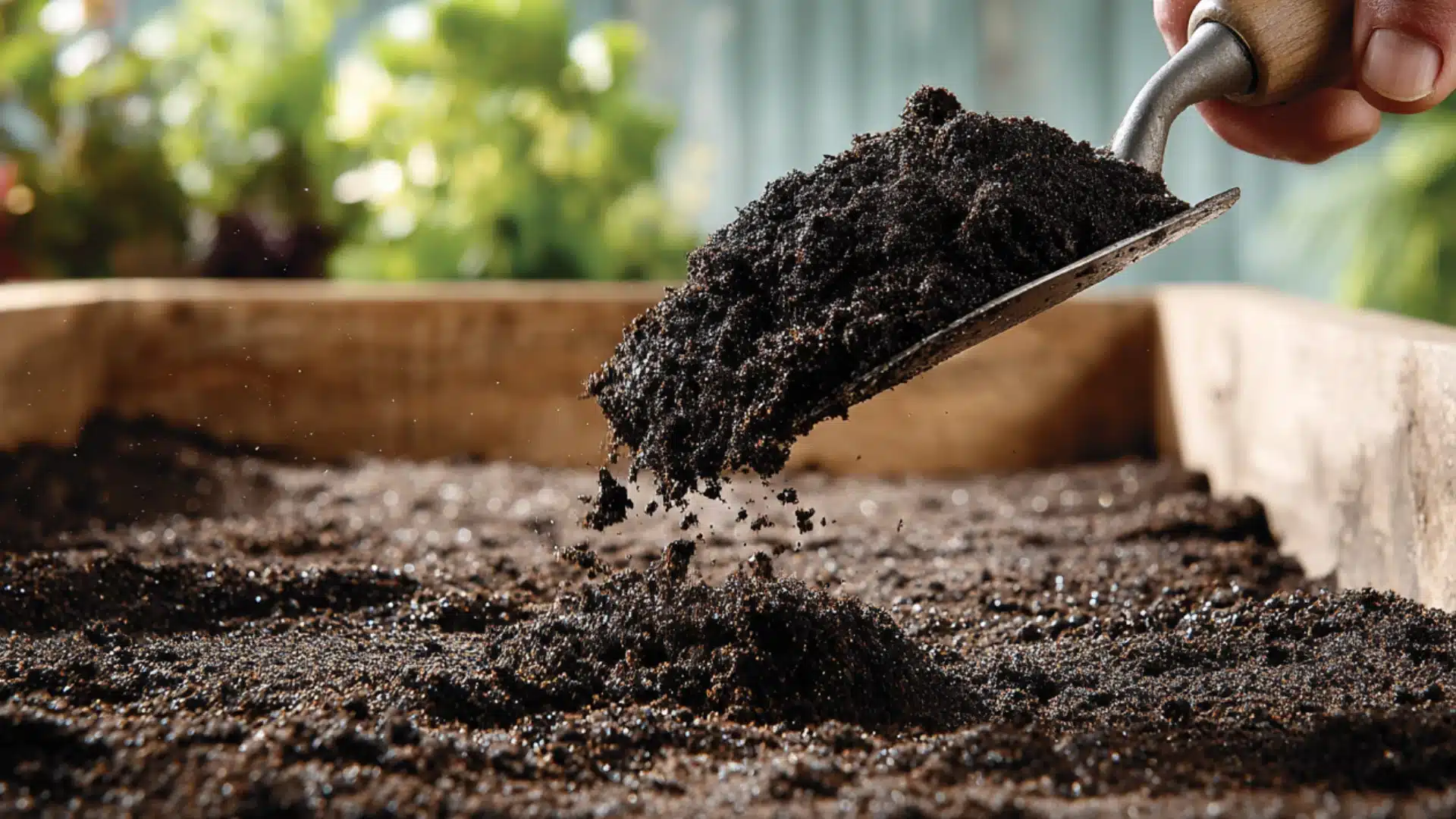
Onions need loose, well draining soil. Compacted ground slows everything down.
Before planting, mix in compost and break up any clumps you find.
Plant each set about one inch deep, four to six inches apart, pointed side facing up. Water gently right after.
Too much water at the start can rot the bulb before it even sprouts.
Personal note: The first time I planted, I skipped the compost. The bulbs grew, but they were small and took longer than expected. That one change made a noticeable difference the following season.
Step 3: Sunlight, Water, and Basic Feeding
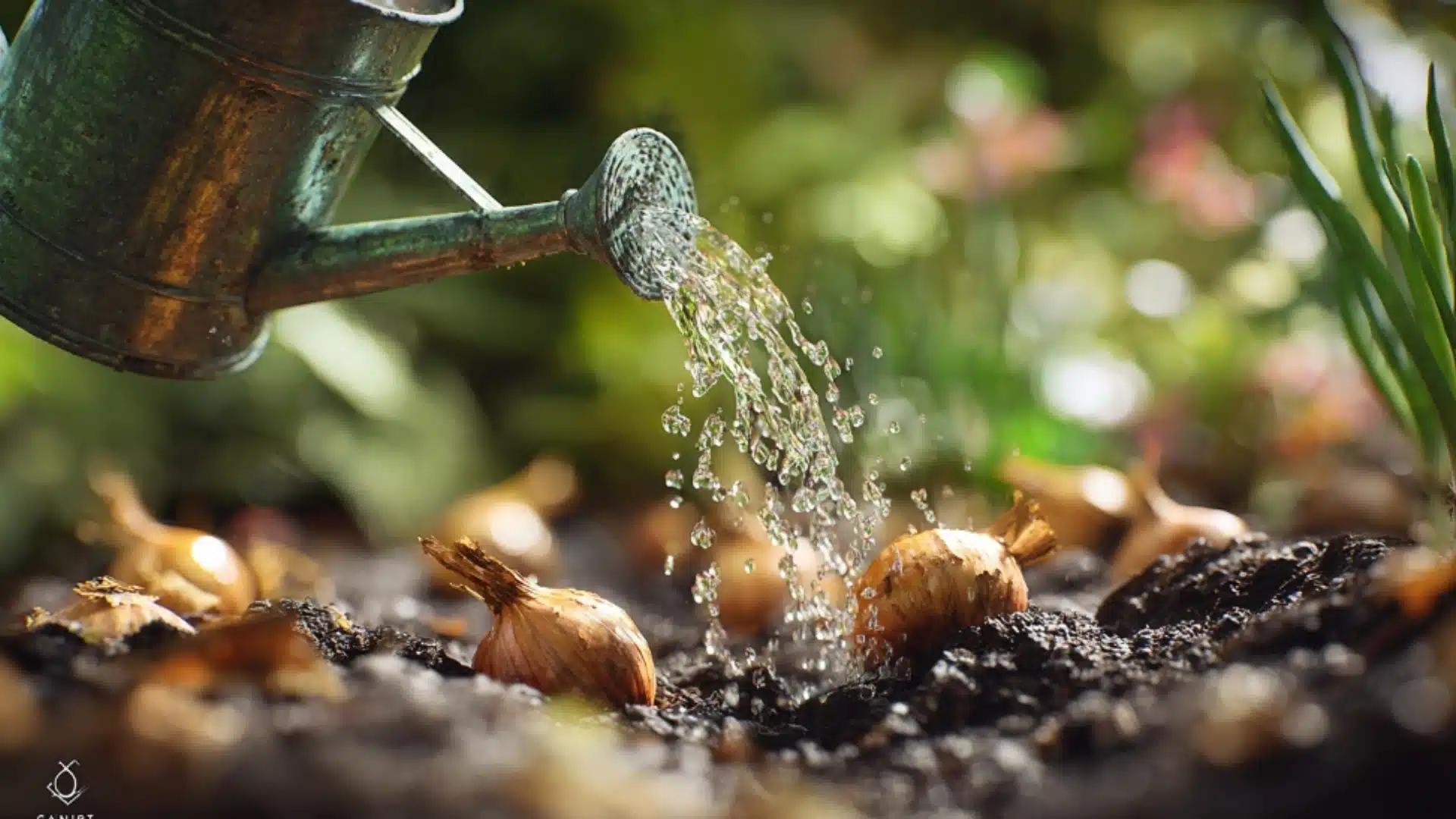
Full sun is non-negotiable. Aim for at least six to eight hours of direct light daily. Anything less and the bulbs stay small.
For watering, check the soil before reaching for the hose. Push a finger an inch into the ground.
Dry at that depth means it is time to water. Still moist means wait.
Feed with a nitrogen rich fertilizer early on. But stop once the bulbs start swelling. Late feeding softens the bulb and works against you.
Step 4: Weed Control and Common Problems
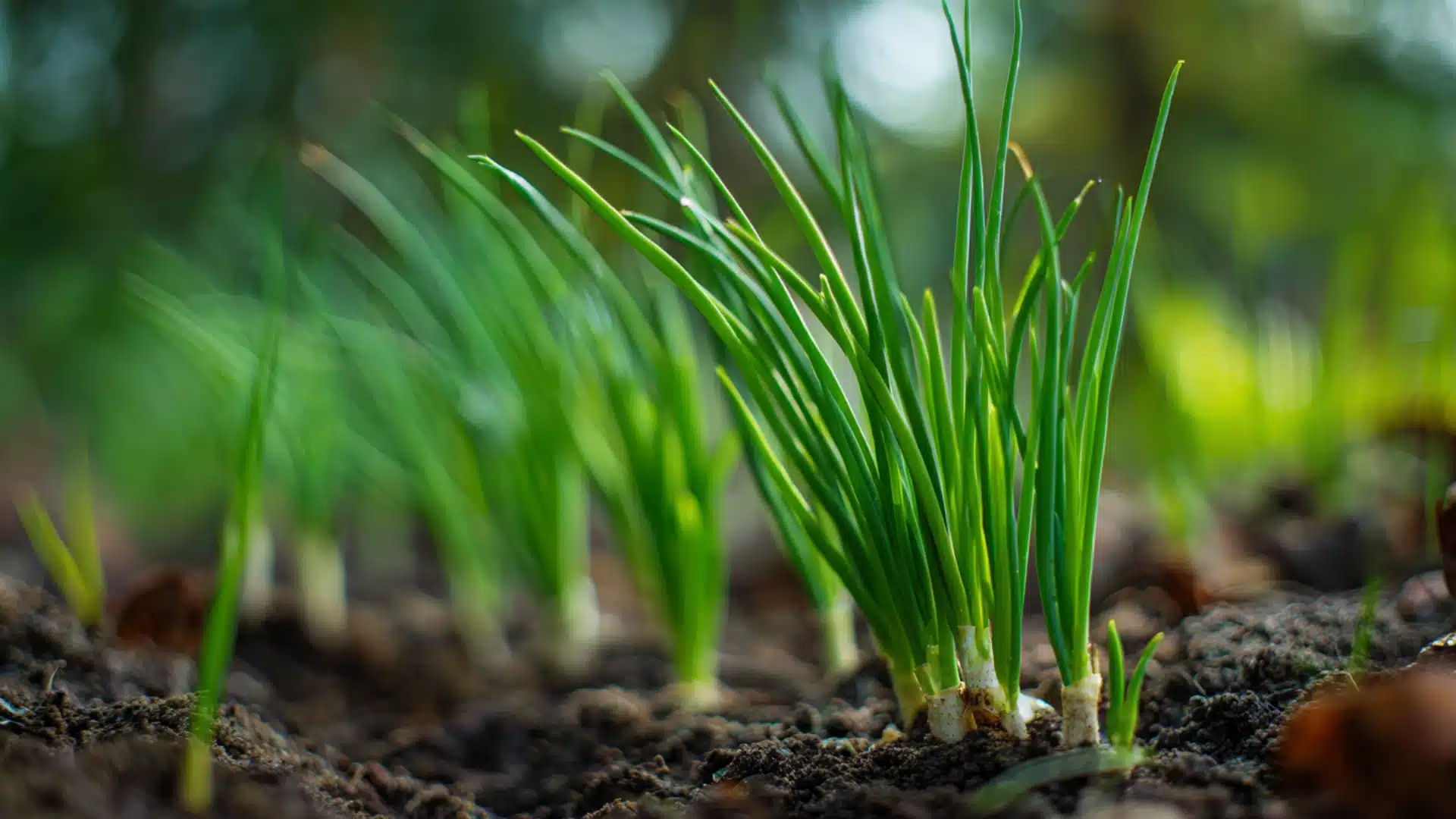
Onions have shallow roots and cannot compete with weeds.
Mulching with straw or dry leaves keeps weeds down and holds moisture in at the same time.
Keep an eye out for:
- Rot: Usually from overwatering. Let the soil dry between waterings
- Small bulbs: Often a sunlight or spacing issue
- Bolting: Happens with oversized sets or sudden temperature changes
- Pests: A fine mesh over young plants keeps most of them away
Step 5: Harvest and Cure Correctly
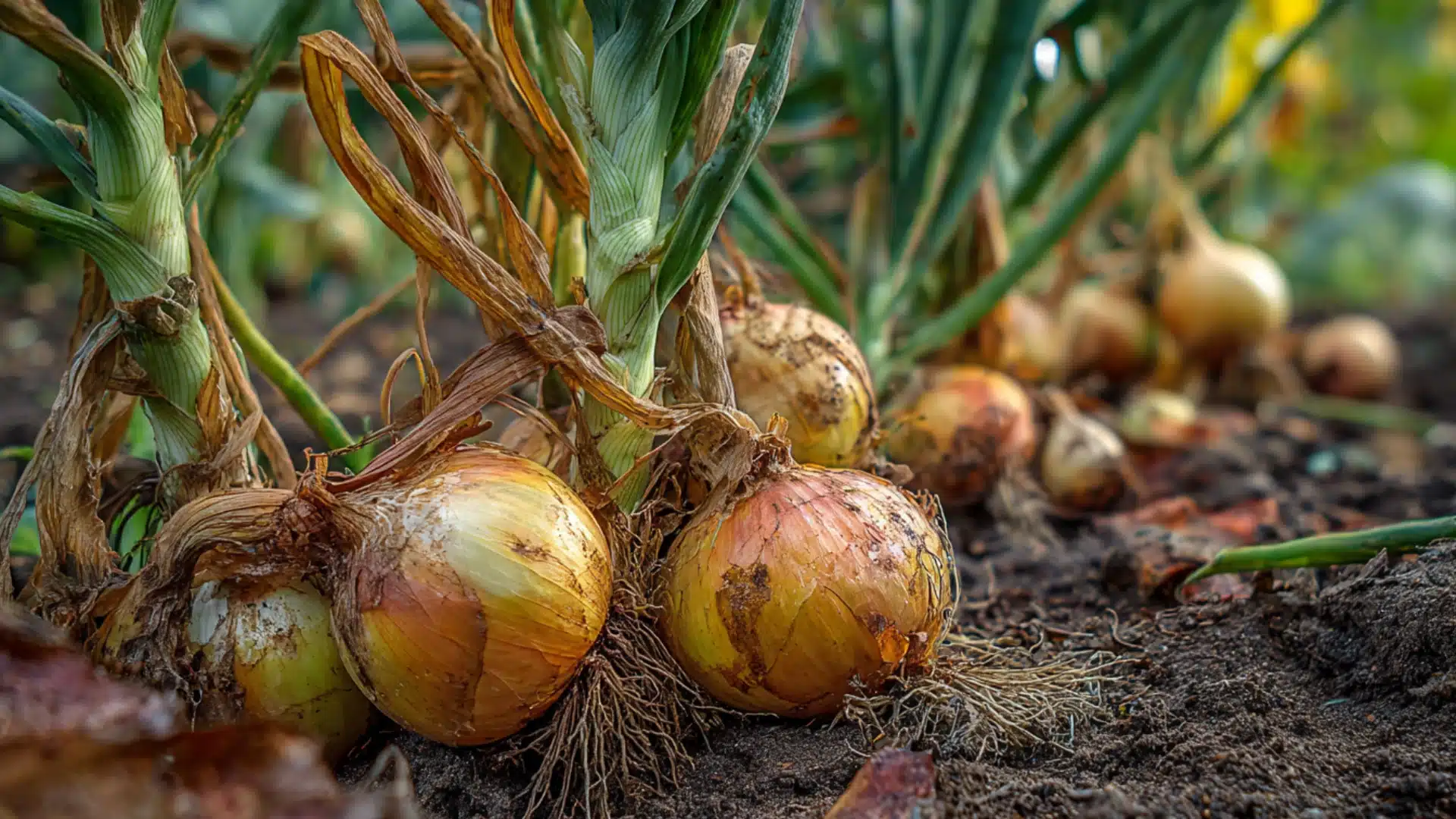
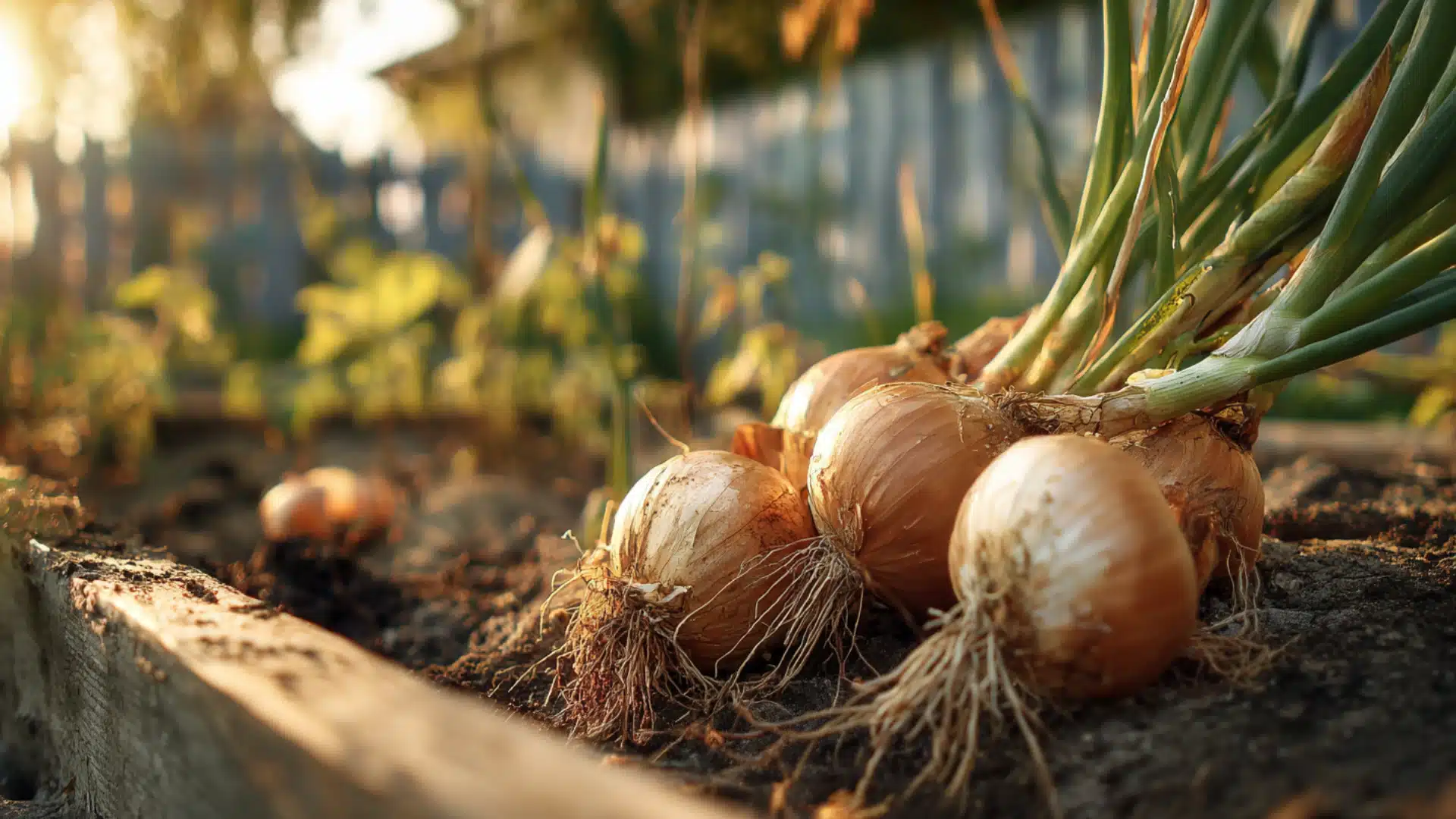
When the tops fall over and turn yellow on their own, the onions are ready.
Loosen the soil with a fork before pulling to avoid bruising.
After harvest, lay them in a single layer in a warm, dry spot with good airflow. Keep them out of direct sunlight.
Give them two to three weeks to cure until the outer skin turns papery.
Stored properly in a cool, dry place, onions last anywhere from one to six months.
Yellow and red varieties tend to last the longest.
Personal note: I once pulled my onions too early because the tops were only halfway down. They shriveled up within weeks. Waiting that extra time made all the difference.
Benefits of Growing Onions at Home
Once I started growing my own onions, buying them from the store felt pointless.
And honestly? The difference was obvious from the very first harvest.
Fresher flavor
Homegrown onions taste sharper and stronger. The kind of flavor that store-bought ones just cannot match.
Saves money
A bag of onion sets costs very little. But the yield you get back is worth several grocery runs.
Easy to store long term
Cure them right, and they last for months. I kept a batch going well into winter last year.
Less waste
You harvest only what you need. No more throwing out half a bag that went soft in the fridge.
Here is the rewritten section:
Growing Onions in Different Spaces
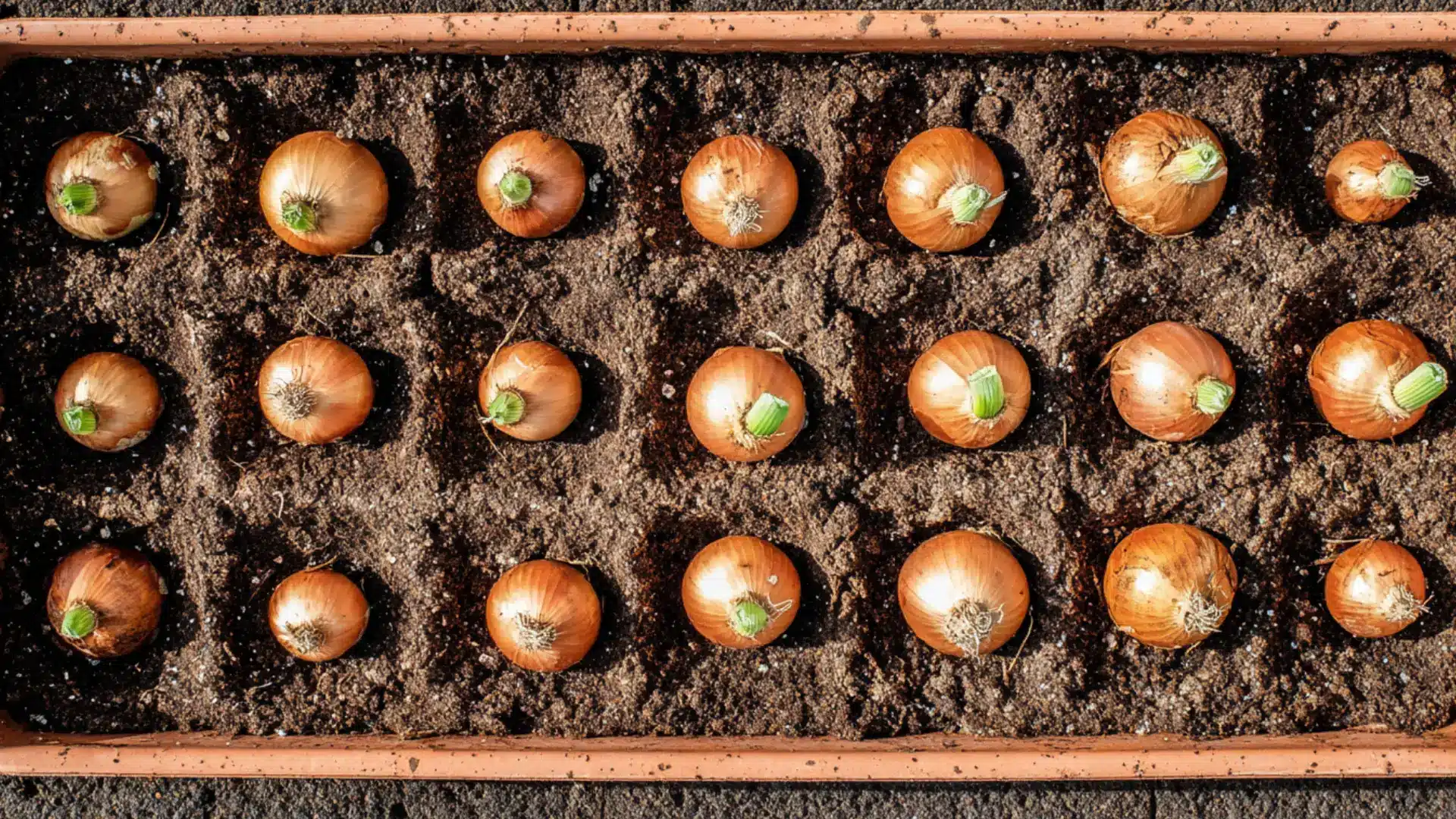
No garden? Not a problem.
Knowing how to grow onions from bulbs does not require a big outdoor plot.
A sunny balcony, a windowsill, even a glass of water can get the job done depending on what you are after.
1. In Pots
A pot at least 10 inches deep with good drainage holes is all that is needed.
Fill it with loose potting mix, set the plants about four inches apart, and find the sunniest spot available.
The one thing to stay on top of is watering. Pots dry out faster than garden beds.
Checking the soil every couple of days becomes a habit pretty quickly.
2. In Water
This method works best for growing green tops, not full bulbs.
Set the base of an onion in a shallow glass with just enough water to cover the roots. Place it near a sunny window and change the water every two days.
Fresh green shoots appear within a week and can be snipped and added to meals.
Quick tip: This is a great way to get extra mileage out of an onion that is already been harvested. Just do not expect a full bulb to form this way.
3. In Containers
Containers are a solid option for patios and balconies.
Wide and shallow works better than deep and narrow since onion roots stay close to the surface.
Mix in some compost with the potting soil, space sets four to six inches apart, and make sure drainage is solid.
Water pooling at the bottom of a container is the fastest way to lose a batch.
Always check that the drainage holes are clear and never let the container sit in standing water.
4. Indoors
Light is the real challenge here!
Onions need a lot of it, and most indoor spaces lack natural sunlight.
A south facing window is the best option, but a grow light running about 14 hours a day works even better.
Indoor onions tend to grow more slowly and produce smaller bulbs, but for fresh green tops to snip for cooking, the setup works well enough to be worth trying.
Final Thoughts
And that is really all it comes down to! Good soil, steady watering, full sun, and a little patience at harvest time.
Those four things carry the entire process of how to grow onions from bulbs from start to finish.
The first season might not be perfect, and that is fine.
Every batch, good or bad, points to something worth fixing next time.
Pick up a bag of sets, find the sunniest spot available, and give it one season.
Share in the comments how it goes!
Frequently Asked Questions
1. Can I Regrow Onions from A Store Bought Onion?
Yes, but results are inconsistent since most store-bought onions are treated to prevent sprouting.
2. Do Onions Grow Back Every Year?
No, onions are annual plants, meaning a fresh batch of sets is needed each growing season.
3. What Happens if I Plant Onion Sets Too Deep?
Planting too deeply slows sprouting and can cause the bulb to rot before it establishes properly.
4. Can I Plant Onions Next to Any Vegetable?
Onions grow well next to Carrots and Lettuce, but Should Be Kept Away from Beans and Peas.
5. Why Are My Onion Tops Turning Yellow Early?
Early Yellowing Usually Points to Overwatering, Nutrient Deficiency, or A Pest Problem Worth Investigating.
6. Do Onions Need a Lot of Fertilizer?
Only in the early growth stages. Too much feeding later in the season actually softens the bulb.