


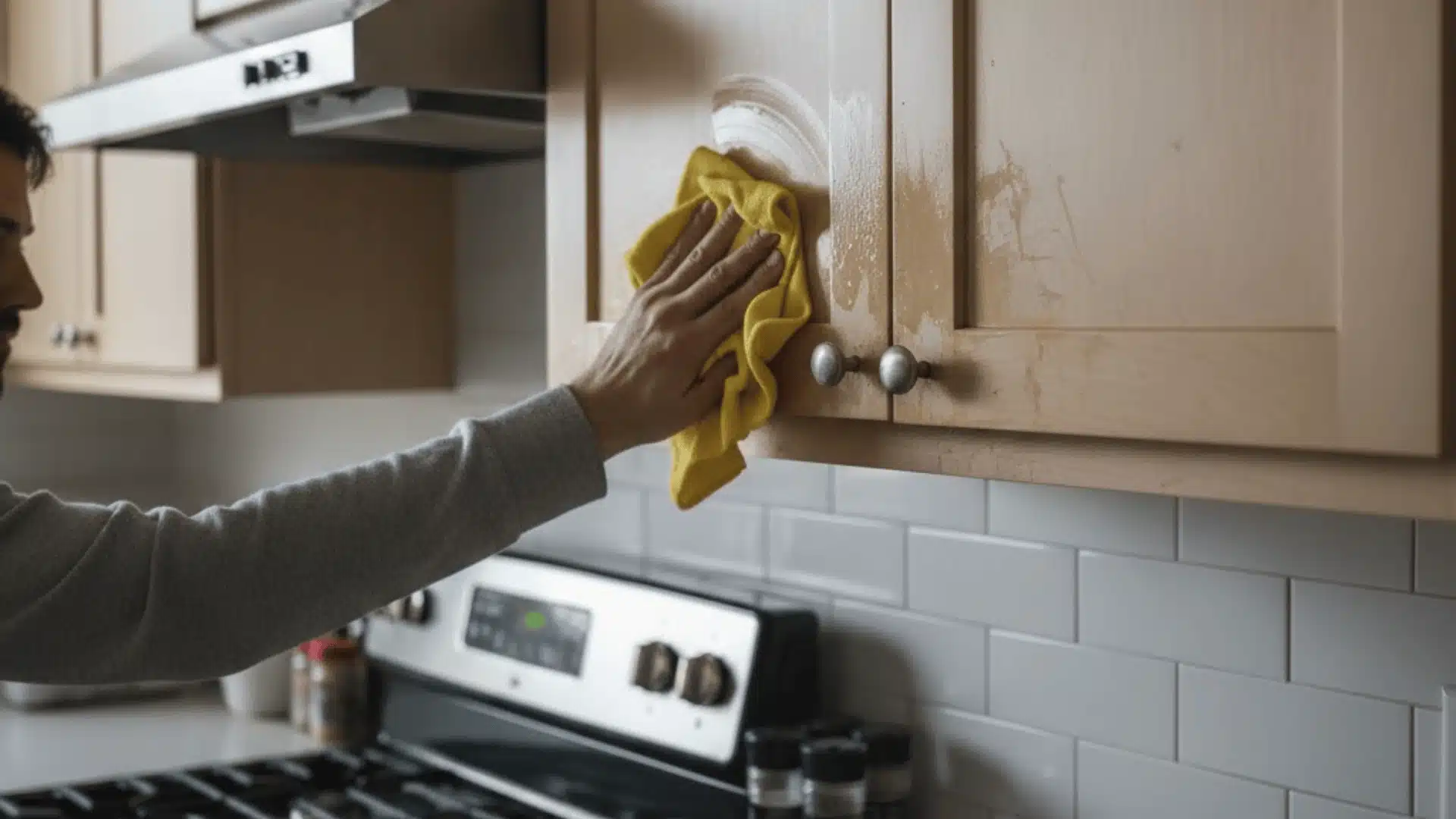
You wipe your cabinets, and your cloth comes back yellow. They look fine from a distance, but touch them once… sticky.
I noticed it one afternoon when sunlight hit the cabinets just right, revealing a greasy film I had ignored.
What surprised me most? I don’t even cook heavy meals daily. So why does grease rise and settle there?
And why does it keep building up so quickly?
Now I will help you to figure it out.
Why do Cabinets Above the Stove Get so Sticky?
Every time you fry, sauté, or even boil something, tiny oil particles float up into the air. And where do they go? Straight to the cabinets sitting right above your stove.
Heat naturally pushes warm air upward. That warm air carries oil particles. They land on your cabinet surface and stick.
Over time, dust mixes in too. That combination creates a thick, stubborn layer that gets harder to clean the longer you ignore it.
Most people don’t know this: you don’t need to cook oily meals for grease buildup to happen.
Even steaming vegetables sends moisture and tiny particles into the air. That means your cabinets are collecting residue every time you cook, no matter what’s on the stove.
What that Sticky Layer Really is and Why Water Alone Won’t Fix it?
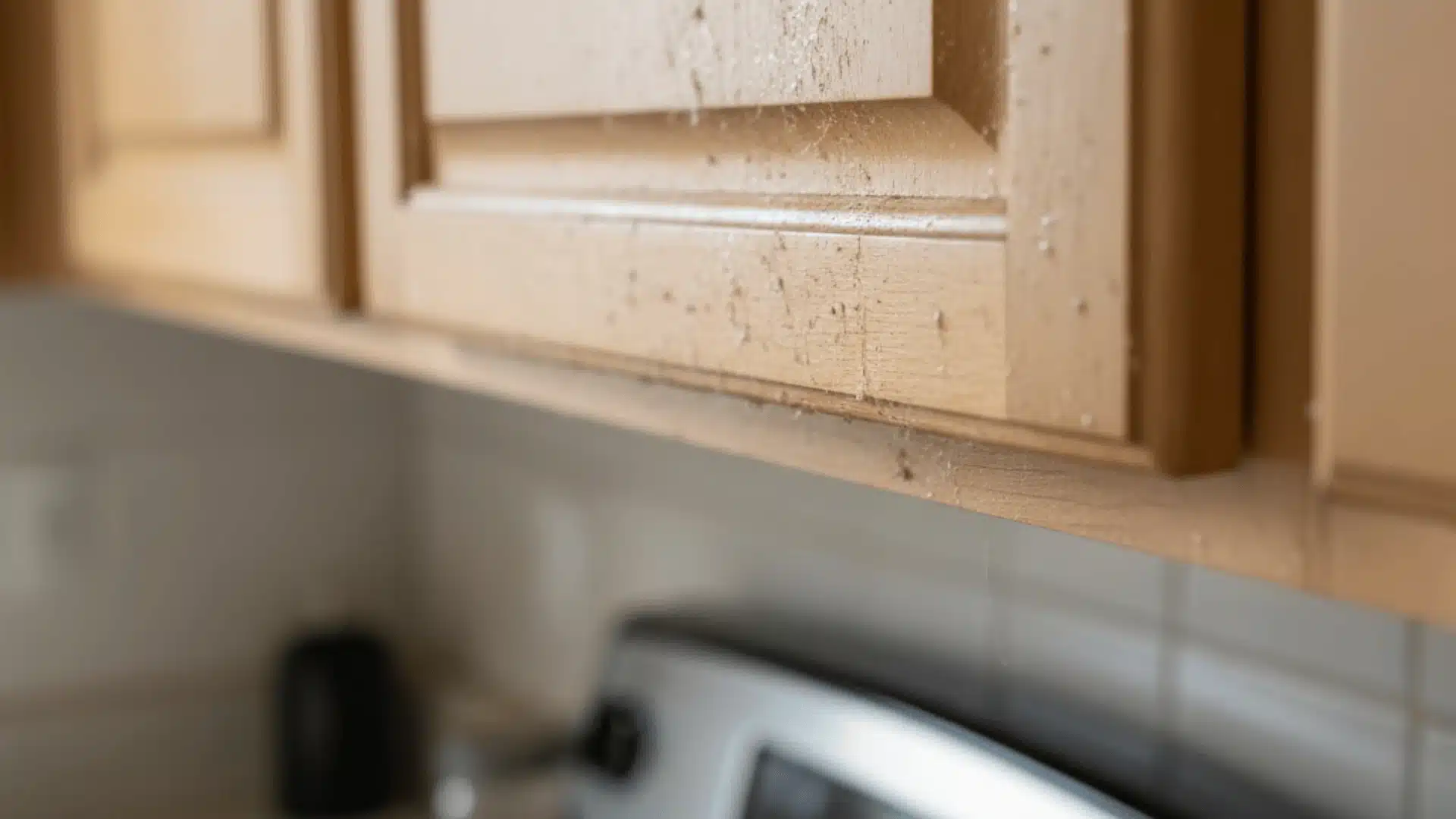
That sticky film on your cabinets is not just grease. It is a mix of aerosolized cooking oil, dust, and heat residue.
Warm air rises due to convection, carrying oil droplets upward. They settle on your cabinet surface and bond there.
Over time, grease oxidizes, meaning it reacts with air and hardens.
The longer it sits, the thicker and stickier it becomes.
So why does plain water not work? Oil and water do not mix. Wiping with a wet cloth only spreads the grease around.
You need something that actually breaks down oil. I tried wiping with a damp cloth and only ended up with smeared, sticky cabinets.
Humidity and poor ventilation also make grease build up faster. And do not assume that if it looks clean, it is clean.
Grease can look fine under normal light, but feel sticky the moment you touch it.
Before You Start: What Type of Cabinets do You Have
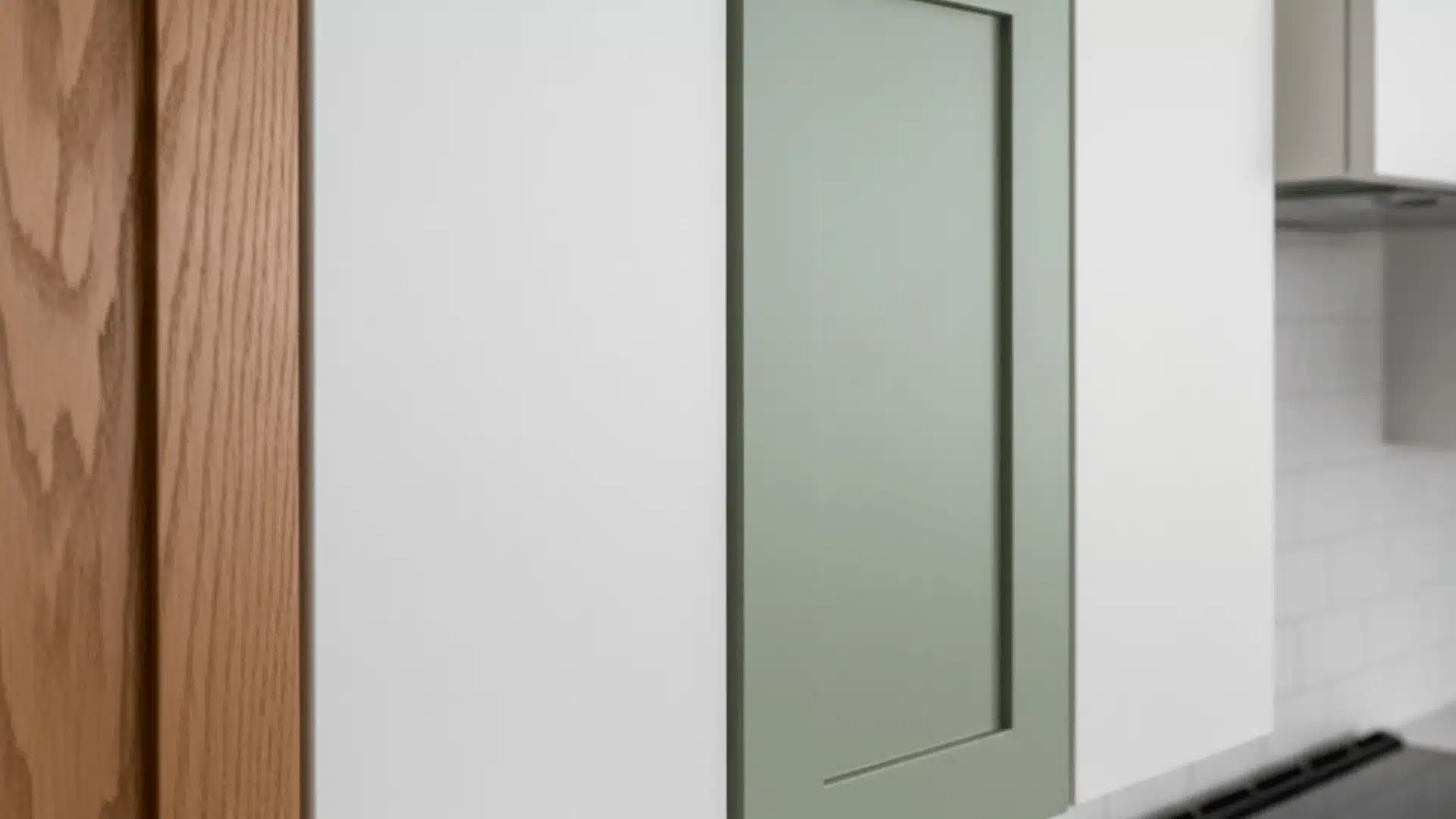
Not all cabinets are the same.
Using the wrong product on the wrong surface can do more damage than the grease itself.
I made that mistake once and ended up with a dull, patchy finish that was hard to fix. So figure out what you are working with first.
Wood Cabinets
Sealed wood cabinets can handle mild cleaners fairly well. Unsealed wood is a different story, though. It absorbs moisture easily, and excessive moisture can cause warping or swelling.
Laminate Cabinets
Laminate handles most mild cleaners without any issues. Just avoid anything too abrasive. Scratches on the laminate are hard to fix and very noticeable.
Painted Cabinets
Painted cabinets need extra care. Harsh cleaners can strip the paint right off. Stick to mild solutions and soft cloths only.
MDF Cabinets
MDF does not handle water well at all. Too much moisture causes it to swell and bubble. Use as little liquid as possible and dry it immediately.
Always Do a Patch Test
Test your cleaner on a small hidden area first and wait a few minutes for any discoloration. Skip rough scrubbers a soft microfiber cloth is all you need.
How to Remove Grease from Cabinets Above Stove: Best Way
To remove grease from cabinets above stove, begin by wiping the surface with a dry microfiber cloth to remove loose dust.
Next, mix a few drops of dish soap with warm water, dampen a soft cloth, and gently clean the area. Dish soap is effective because it cuts through oil.
For stubborn buildup, apply a mild baking soda paste.
Avoid harsh scrubbers and too much water, as moisture can damage finishes over time
My Tried and Tested Ways to Remove Grease from Cabinets Above the Stove
Let me take you through exactly what I do.
These methods work well, and they will not damage your cabinets if you follow them carefully.
Quick Comparison: Which Cleaning Method Should You Use
Not sure which method is right for your situation? Use this as a quick reference the next time you are wondering where to start.
| Cleaning Method | Best For | Safe for Wood? | Safe for Laminate? | Safe for Painted Cabinets? | Effort Level |
|---|---|---|---|---|---|
| Dish Soap and Warm Water | Light and fresh grease | Yes | Yes | Yes | Low |
| Baking Soda Paste | Thick and stubborn spots | With caution | Yes | Avoid | Medium |
| Diluted White Vinegar | Moderate grease buildup | Avoid | Yes | Avoid | Low |
| Commercial Degreaser | Heavy and old buildup | Check the label. | Yes | Check label | Medium |
| Dry Microfiber Wipe | Loose dust before cleaning | Yes | Yes | Yes | Very Low |
Always start with the gentlest method first and only move on to stronger options if needed. Do a patch test before trying any new product on your cabinets.
Method 1: Dry Wiping to Prevent Smearing
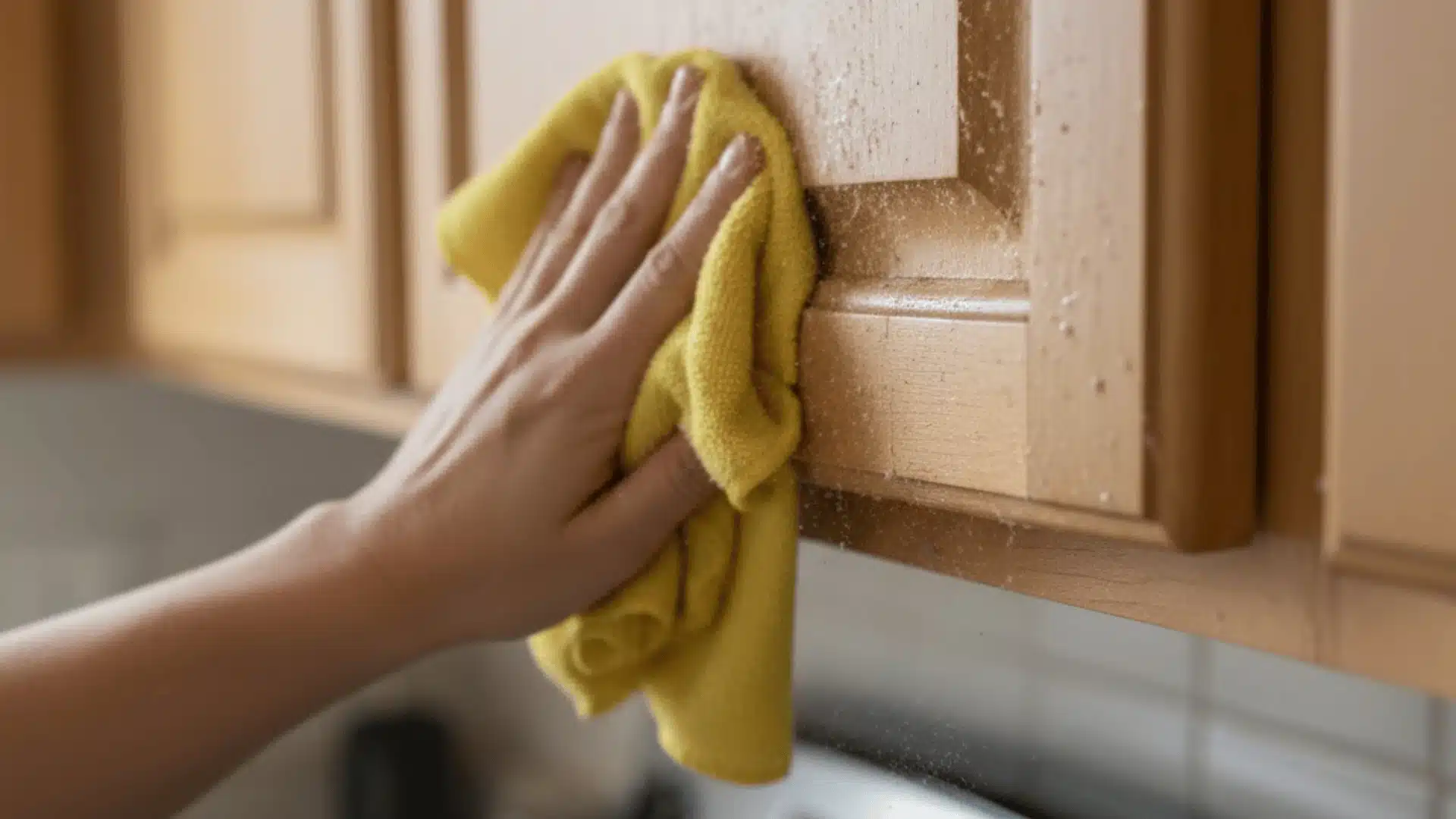
Before anything else, take a dry microfiber cloth and wipe down the cabinet surface after every time you cook. This removes loose dust and debris sitting on top.
If you spray a cleaner onto dusty cabinets, you end up with a muddy smear.
A quick dry wipe first saves you a lot of trouble later.
Method 2: Dish Soap and Warm Water
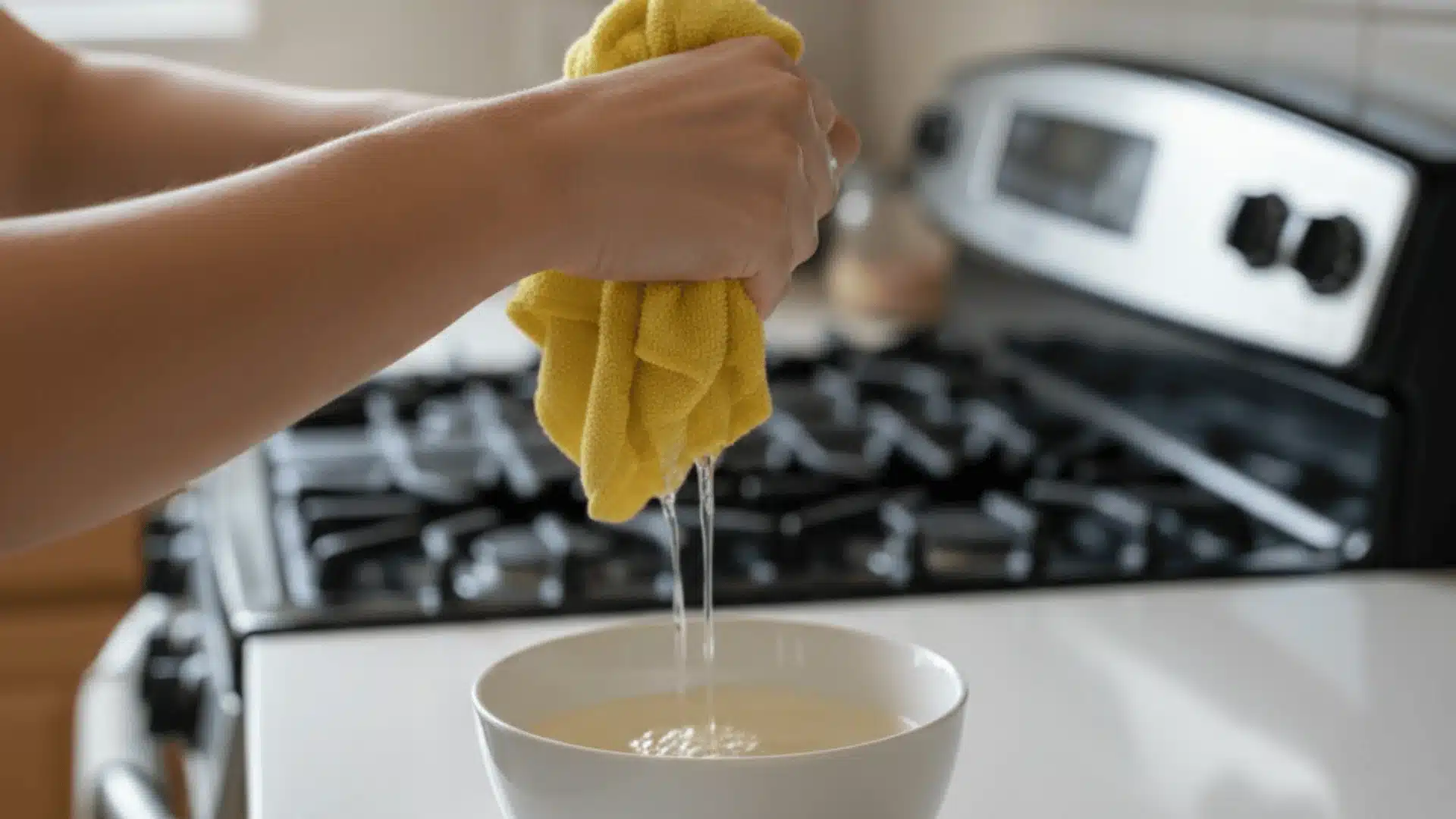
Dish soap is designed to break down fat and oil. That is exactly why it works so well here.
Mix a few drops into a bowl of warm water.
Dip your cloth in, wring it out well, and apply it to the greasy area. Let it sit for about 30 to 60 seconds. Then wipe gently in a circular motion.
Method 3: Baking Soda for Thick and Stubborn Spots
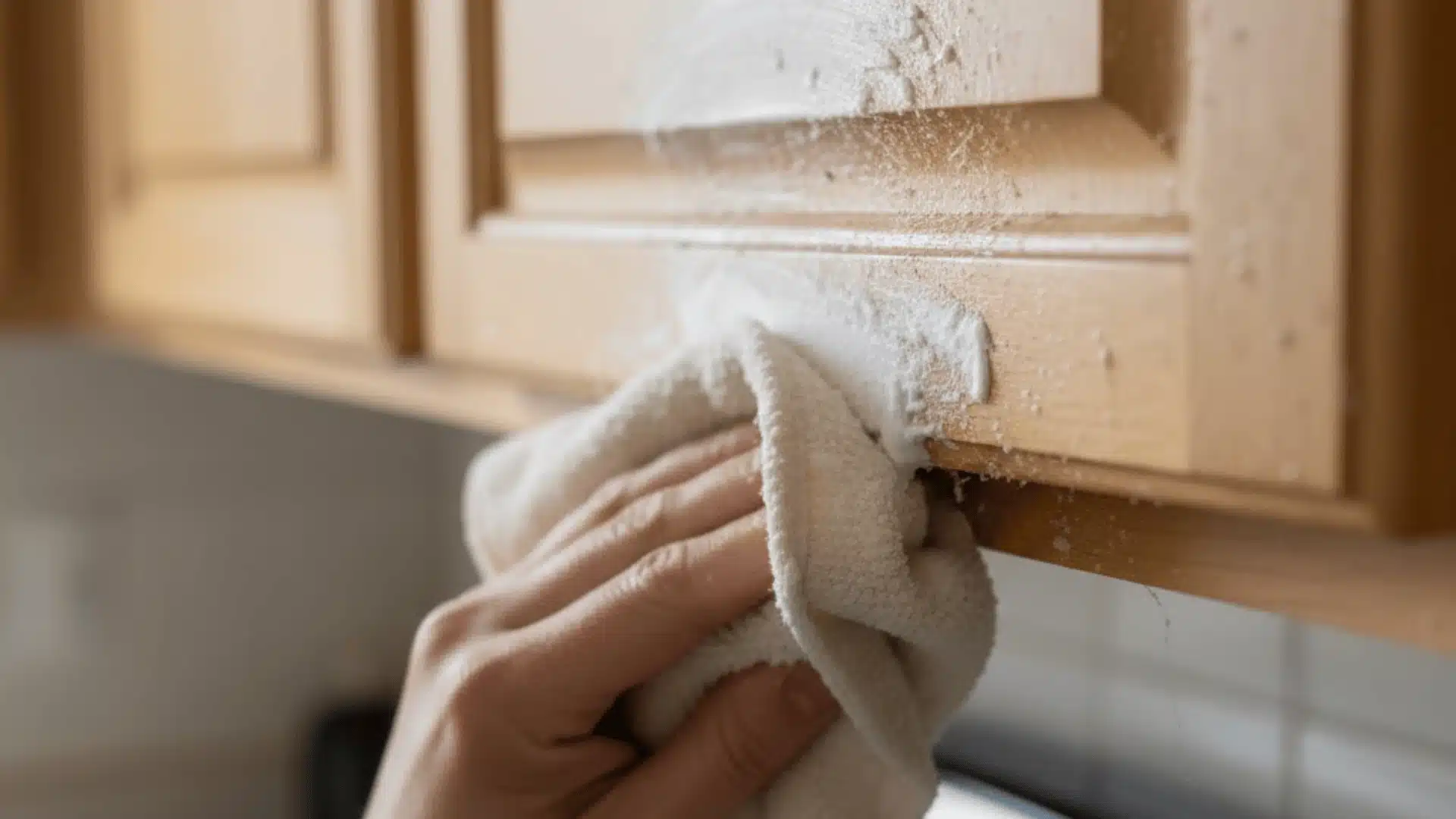
Some spots just will not budge with soap alone.
Baking soda works as a mild abrasive, scrubbing without scratching most surfaces. Make a paste by mixing baking soda with a little water.
Apply it directly to the sticky spot, let it sit for a minute or two, then gently scrub with a soft cloth. Rinse the area with a damp cloth afterward.
Avoid using baking soda on delicate paint finishes as it can dull the surface over time.
Method 4: Vinegar for Laminate and Sealed Surfaces
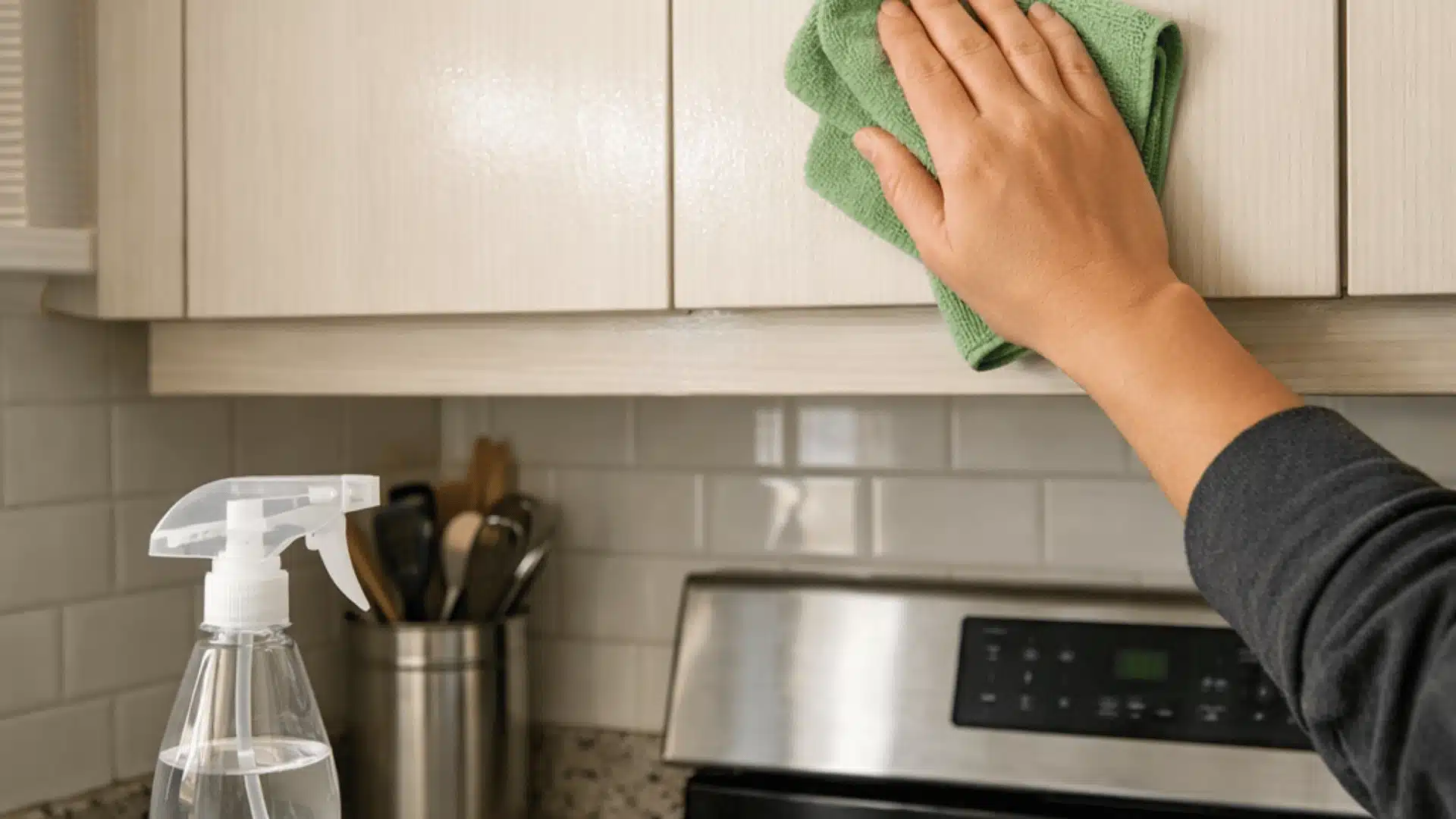
Vinegar cuts through grease well, but it is not for every cabinet type. Avoid it on wood or painted surfaces, as it can damage the finish.
For laminate or sealed cabinets, dilute white vinegar with equal parts water and apply with a soft cloth.
Always dilute it. Never use vinegar straight from the bottle on your cabinets.
Method 5: Commercial Degreasers for Heavy Buildup
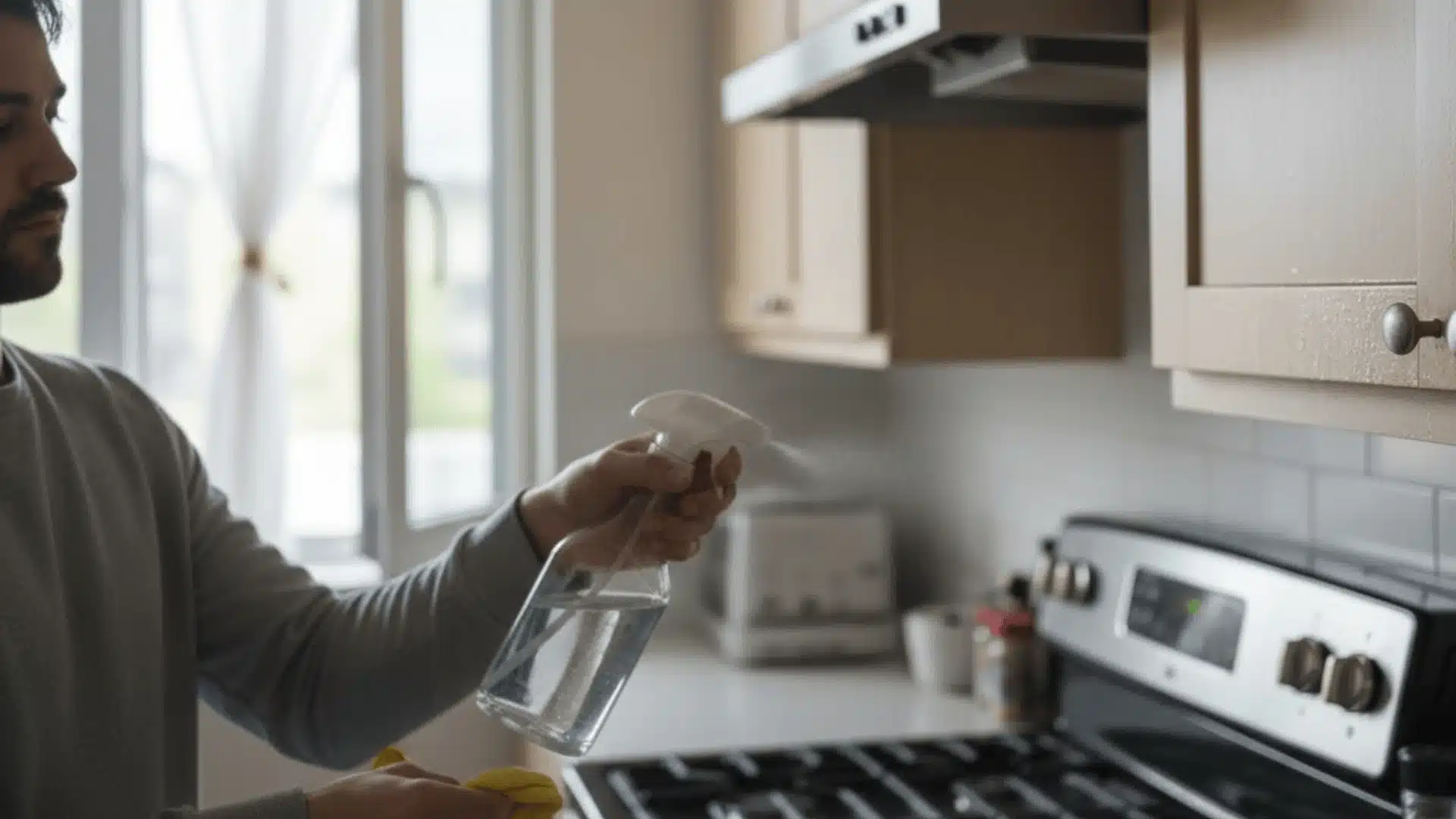
If your cabinets have not been cleaned in a long time, a commercial degreaser is your best option. Read the label carefully and look for products that are safe for kitchen surfaces.
Avoid formulas that are heavy in ammonia, especially on wood cabinets. Ammonia can dry out and damage wood finishes.
Make sure your kitchen is well ventilated when using a degreaser. Open a window or turn on your exhaust fan.
Want Less Grease? Start With Better Ventilation
Cleaning grease is important, but preventing it is even better.
When you cook, oil particles rise into the air and settle on cabinets above the stove. Proper ventilation helps reduce these airborne particles.
The U.S. Environmental Protection Agency (EPA) notes that cooking releases indoor air pollutants.
Using your range hood regularly and keeping filters clean can slow grease buildup and make cleaning much easier
How Often Should You Clean Cabinets Above the Stove?
The answer depends on how much you cook. There is no single rule that works for everyone. Here is the simple guide I personally follow.
Light cooking (a few times a week): Wipe down once a month with a damp, soapy cloth to prevent buildup.
Daily cooking: Clean every two weeks. More cooking means more oil particles in the air and faster grease buildup.
Deep clean: Every 3–4 months, clean thoroughly, and don’t forget the tops of the cabinets.
After frying: Do a quick 2-minute wipe. Frying releases the most grease into the air.
Grease oxidizes and hardens over time, so frequent light cleaning is much easier than heavy scrubbing later.
Do You Get the Question in Your Mind: What if the Grease Has Turned Yellow?
A yellowish tint on your cabinets means grease has been sitting there for a long time. Cooking oil exposed to repeated heat and air breaks down and changes color.
That yellow or brown tone is aged, hardened oil bonded to your cabinet surface.
Can You Still Clean It?
In many cases, yes. A baking soda paste or a commercial degreaser works best here.
Apply it, let it sit for a few minutes, and scrub gently with a soft cloth. You may need to repeat this two or three times for really stubborn spots.
When Cleaning Is No Longer Enough
Sometimes the yellowing goes deeper than the surface. If the surface still looks patchy or dull after cleaning, the finish may be permanently damaged.
At that point, repainting or refinishing is likely your best option
Final Thoughts
Grease never shows up overnight. It builds slowly, layer by layer, until one day you finally notice it.
But once you understand how to remove grease from cabinets above stove, it stops feeling like a major task
A simple wipe every couple of weeks can make a huge difference. Trust me, staying ahead of it feels much better than tackling months of buildup.
What’s one small cleaning habit you’re starting this week
Drop it in the comments below!
Frequently Asked Questions
How do You Get Grease Off Wood Cabinets Above the Stove?
Mix dish soap with warm water, apply with a soft cloth, let it sit, then wipe gently.
How do I Clean the Grease That is Above my Stove?
Start with a dry wipe, then use dish soap and warm water for best results.
Does Murphy’s Oil Soap Remove Grease from Wood Cabinets?
Yes, Murphy’s Oil Soap is safe for wood cabinets and works well on light grease buildup.
What Dissolves Built-Up Grease?
Dish soap, baking soda paste, and commercial degreasers all break down and dissolve built up grease effectively.