
My grandmother had a rhubarb patch in her back garden for over 30 years.
She never measured the stalks or checked a calendar. She’d just walk past, grab one, bend it slightly, and know.
I never understood that as a kid. I thought she was just guessing. Then I planted my own rhubarb three years ago, and after one disastrous harvest, I finally got what she meant.
Rhubarb has its own rhythm. Pull it at the wrong time, and it fights back bitter, limp, and not worth the crumble.
Get the timing right, though? Totally different plant.
This blog defines when to harvest rhubarb and shares what I wish I’d known before my one poor harvest.
When to Harvest Rhubarb?
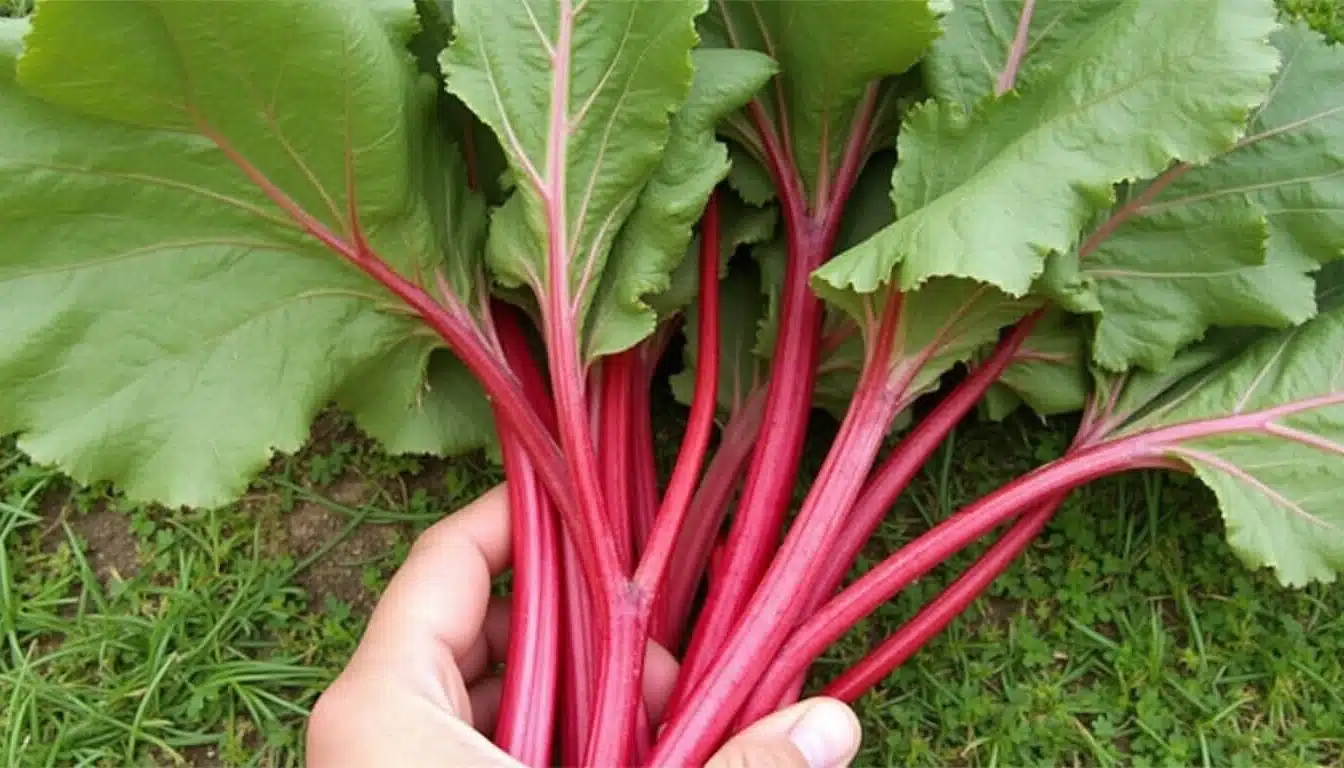
Rhubarb is ready to harvest when the stalks are between 10 and 15 inches long.
That usually happens in late spring, around April to June, depending on where you live. The stalks should feel firm when you grip them. Not floppy, not rubbery.
Colour varies; some stay green when ripe, so don’t wait for deep red if that’s not your variety.
In the first year, leave the plant alone. The second year, pull just a few stalks. By the third year, it’s fair game.
Your plant needs that time to build strength.
Rush it, and you’ll end up with a weak plant that barely produces.
How to Tell Rhubarb is Ready to Pick
The base of the stalk is thick: roughly the width of your finger or wider.
If you find yourself squinting and convincing yourself a spindly stalk counts, it probably doesn’t. Give it more time.
The leaves are fully open and large, showing the plant has drawn up enough energy to put real effort into its stalks. Small or curled leaves are a sign it’s still finding its feet.
The stalk snaps cleanly when bent, rather than flopping reluctantly.
That crisp break is one of the most satisfying signals rhubarb is genuinely ready, and hard to mistake once you’ve felt it.
Colour has deepened to a rich red or pink, though green varieties can be perfectly ripe without ever blushing.
Colour alone isn’t the whole story; texture and firmness matter just as much.
Finally, and this one requires patience, the plant should be at least two years old and have had at least one full growing season to establish itself properly.
Picking too early in a plant’s life weakens it for years to come, so restraint in those first seasons pays off handsomely in the long run.
Soil pH and Fertility for Strong Rhubarb Growth
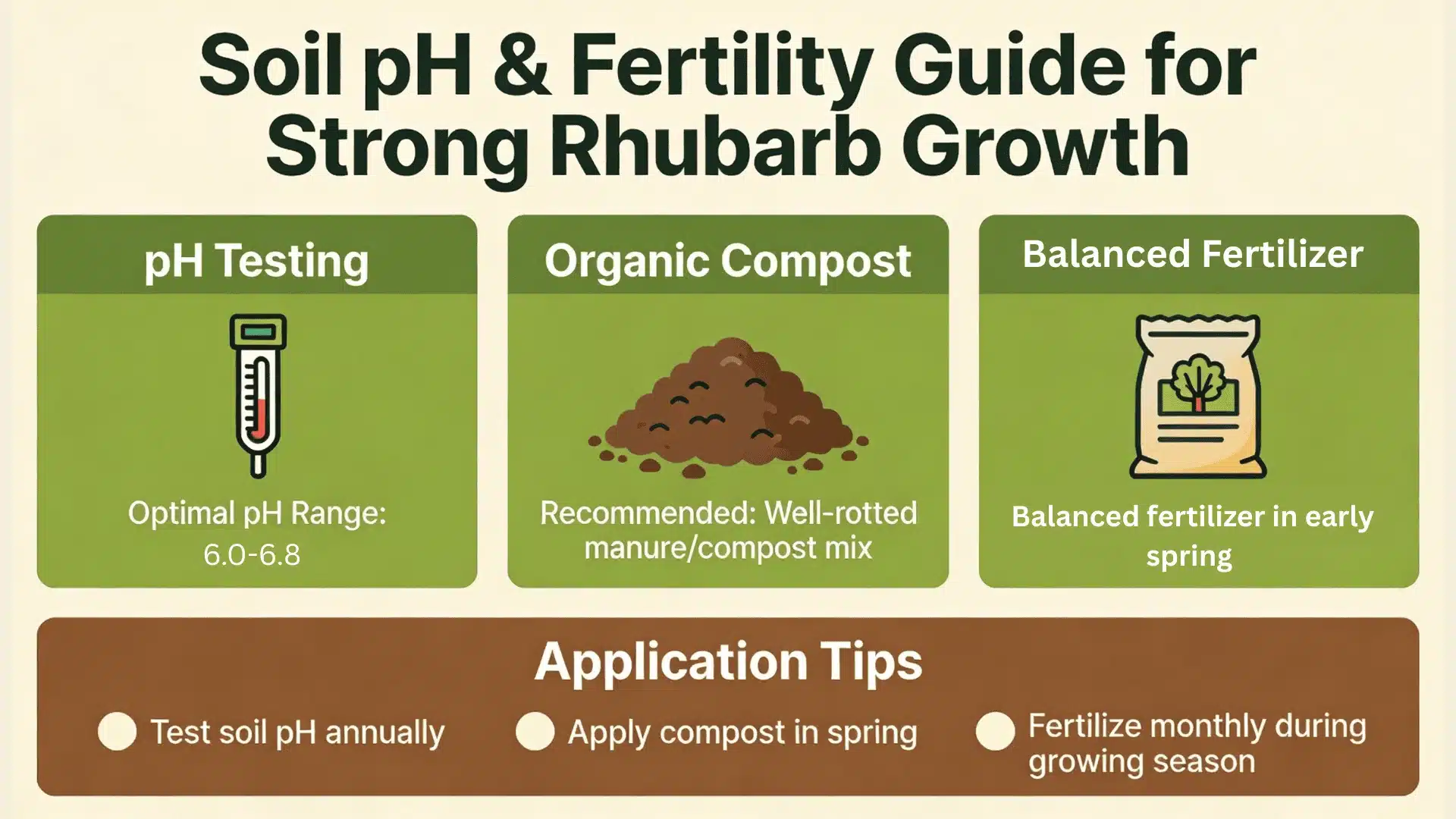
Rhubarb is a hungry plant that lives for a long time, so getting your soil right is the secret to those thick, tart stalks.
It thrives best in slightly acidic soil, ideally with a soil pH of 6.0-6.8. If your soil is too sour or alkaline, the plant won’t be able to absorb the nutrients it needs.
Before you plant anything, mix in plenty of old manure or compost.
Since rhubarb is a heavy feeder, a balanced fertilizer in early spring helps keep it strong for years to come.
How to Test Your Soil?
Testing your soil is actually an important part of having the right growth, and you can do it right in your kitchen.
You don’t need fancy tools to see if your ground is acidic or alkaline.
- Scoop two samples of dry soil into separate bowls.
- Add vinegar to the first bowl: If it bubbles, your soil is alkaline.
- Add water and baking soda to the second bowl: If it fizzes this time, your soil is acidic.
If neither one bubbles?
You have neutral soil, which is great news for most plants. This simple trick helps you know exactly what your rhubarb needs before you start digging.
How to Harvest Rhubarb the Right Way
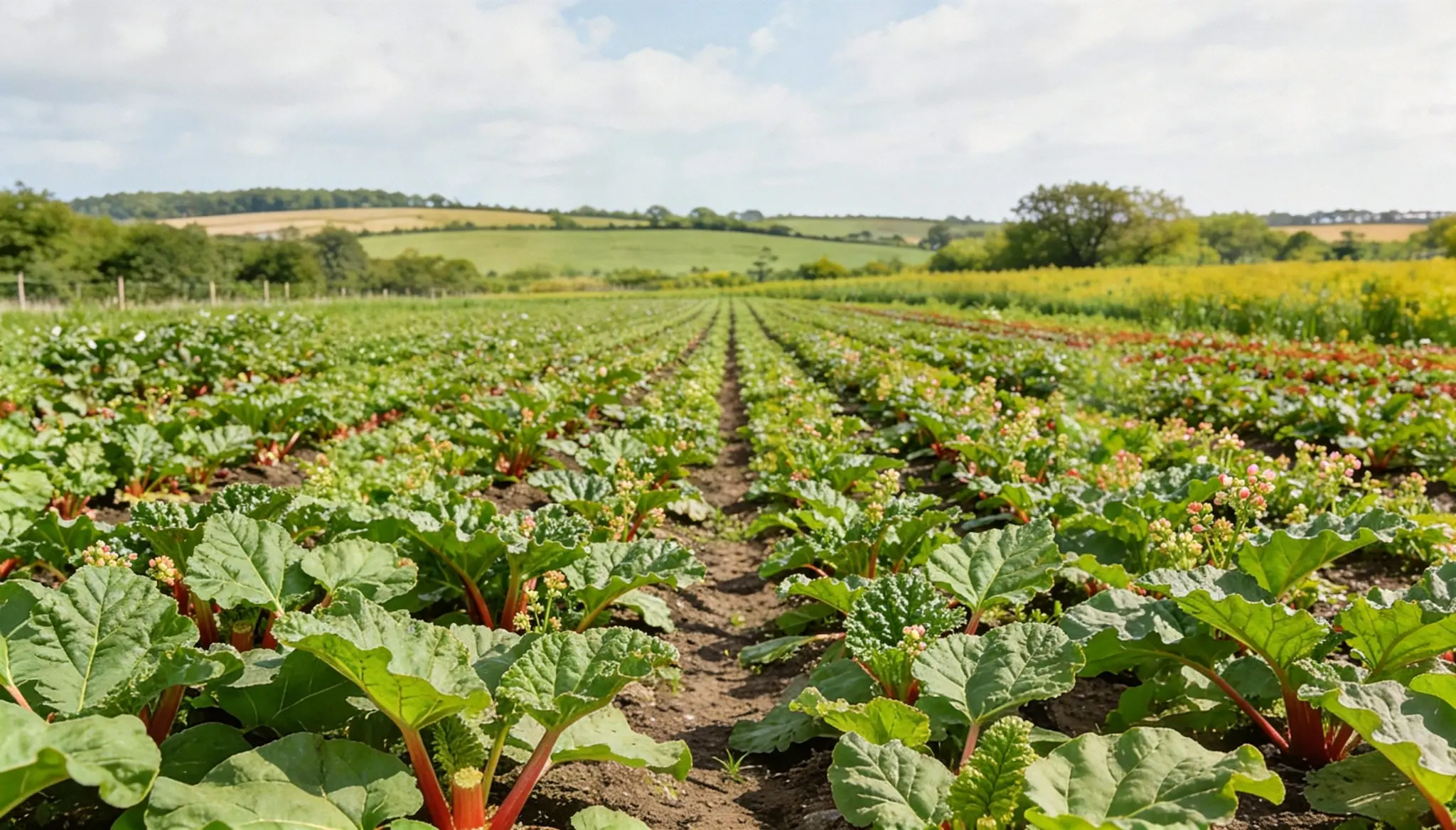
Harvesting rhubarb is clear once you know the steps.
Here’s exactly how to do it:
Step 1: Wait until stalks are at least 10 inches long.
Step 2: Grip the stalk firmly at the base.
Step 3: Twist slightly and pull downward in one clean motion.
Step 4: Never use a knife, as cutting encourages rotting.
Step 5: Remove the leaf immediately, it’s toxic, bin it straight away.
Step 6: Leave at least two to three stalks on the plant each time.
Step 7: Clean your hands after handling the leaves.
Best Time to Harvest Rhubarb for Good Flavor
April through June is your best spot.
Morning is the best time to pick crisp, well-hydrated stalks before the afternoon heat sets in. Stop harvesting by midsummer.
Picking too late pushes the plant into survival mode, and flavor drops noticeably in stalks pulled after July.
Growing and Harvesting Rhubarb in Different Zones
Your harvest timing depends on your zone.
Zones 3 to 4 start in May. Zones 5 and 6 begin mid-April. Zone 7 kicks off in early April. Zones 8 and above struggle with winters; there simply aren’t cold enough.
A quick overview of different zones:
| Zone | Winter Temp | First Harvest | Notes |
|---|---|---|---|
| Zone 3 | -40°F to -30°F | Late May | Short season, but rhubarb thrives here |
| Zone 4 | -30°F to -20°F | Early May | Strong growth, great yields |
| Zone 5 | -20°F to -10°F | Late April | Reliable harvests every year |
| Zone 6 | -10°F to 0°F | Mid April | Hot springs can speed things up |
| Zone 7 | 0°F to 10°F | Early April | Monitor closely, season moves fast |
| Zone 8 | 10°F to 20°F | March | Struggles without enough winter chill |
| Zone 9+ | 20°F and above | Not ideal | Too warm, the plant rarely goes dormant |
Common Harvesting Mistakes to Avoid
- Harvesting in the first year permanently weakens the plant.
- Pulling stalks without twisting can damage roots below the surface.
- Leaving toxic leaves attached to stalks after picking is dangerous.
- Harvesting past mid-July stops the plant from recovering before winter.
- Ignoring thin, spindly stalks and continuing to pick damages long-term yield.
- Confusing green varieties for unripe stalks and waiting too long to pick them.
- Forgetting to remove flower stalks early causes the plant to divert energy to seeding rather than growth.
When to Stop Harvesting Rhubarb
Stop harvesting by mid-July at the latest.
Your plant needs the second half of summer to recover and store energy for next year. If you keep pulling stalks past this point, the plant weakens over time and produces less each season.
Watch for thinner stalks appearing; that’s your plant showing it’s done for the year.
When you see that, put the fork down and walk away.
Toxicity Concerns You Should Know About Rhubarb
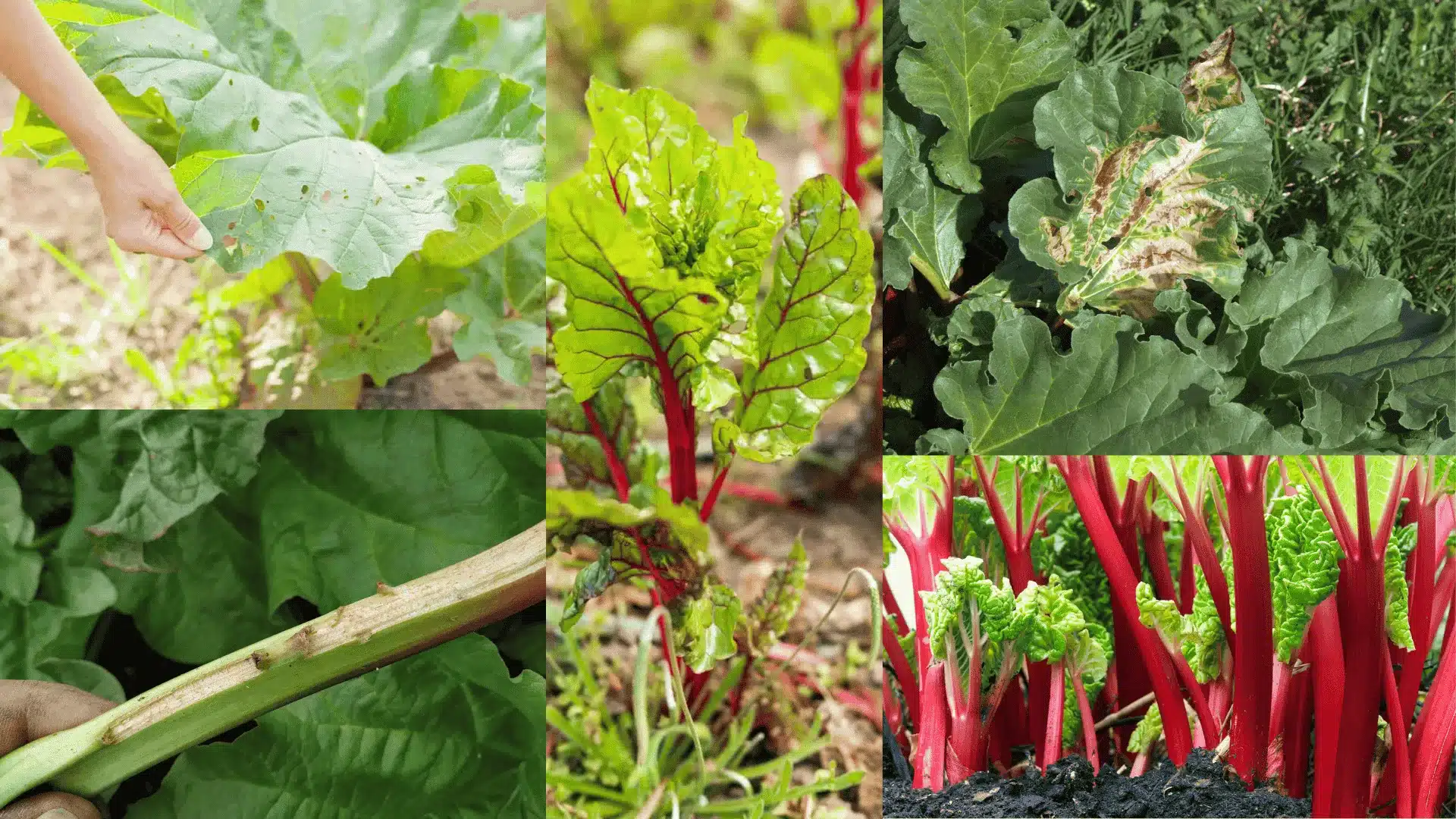
This is a great garden plant, but there are a few things you really need to know before eating or growing it.
Leaves are highly toxic
Its leaves contain oxalic acid. Never eat them; you can add them to compost. Bin them straight away.
Stalks are safe, leaves are not
Only the stalks are edible. Even a small amount of leaf can cause serious illness in both humans and pets.
Aphids can attack young stalks
Small clusters of aphids gather near the base. A strong blast of water or neem oil spray sorts them out quickly.
Slugs love young rhubarb crowns
Slugs target new growth in spring.
Use copper tape or organic slug pellets around the base to keep them out.
Crown rot is a real threat
Overwatering or poor drainage causes this; if the base turns soft and smells bad, the plant probably won’t recover.
Botrytis or grey mould can spread fast
Damp, cold conditions promote mould on stalks. Remove affected parts and improve airflow.
Why is Rhubarb Poisonous?
Rhubarb leaves contain high levels of oxalic acid.
This is a naturally occurring compound that is toxic to humans and animals. When oxalic acid is ingested, it binds to calcium in the body, preventing its proper absorption.
This can lead to kidney stones, kidney failure, and in serious cases, death.
The stalks contain oxalic acid, too, but in much smaller amounts, low enough to be safe to eat.
The leaves, however, have concentrations far too high to be safe under any circumstances.
Cooking the leaves does not make them safe either. Heat does not break down oxalic acid. Always handle rhubarb leaves with care and dispose of them responsibly.
Selecting the Right Rhubarb Variety for Your Garden
| Variety | Stalk Color | Flavor | Best Zone | Notes |
|---|---|---|---|---|
| Victoria | Green-pink | Mildly tart | Zones 3-8 | Most common, very reliable |
| Crimson Red | Deep red | Sweet-tart | Zones 3-7 | Stays red when cooked |
| Canada Red | Dark red | Sweeter | Zones 3-6 | Great for jams and pies |
| Glaskin’s Perpetual | Green | Sharp | Zones 4-8 | Harvests faster than most |
| Champagne | Pale pink | Mild | Zones 4-7 | Good for beginners |
| Holstein Bloodred | Bright red | Rich, tart | Zones 3-6 | Attractive colour, strong yield |
| Timperley Early | Light pink | Mild-tart | Zones 4-7 | The earliest variety to harvest |
| MacDonald | Red | Sweet | Zones 3-6 | Handles cold winters well |
Storing Freshly Harvested Rhubarb
- Trim the leaves off immediately after harvesting, before storing.
- Wrap stalks loosely in a damp paper towel to keep them fresh.
- Place wrapped stalks in the refrigerator; they last up to two weeks.
- Never store rhubarb with the leaves attached, even briefly.
- For longer storage, chop stalks into chunks and freeze them raw.
- Frozen rhubarb keeps well for up to one year without losing flavor.
- Avoid washing stalks before refrigerating, as moisture can speed spoilage.
- Use airtight freezer bags when freezing to prevent freezer burn.
- Check refrigerated stalks every few days and use them before they go limp.
Key Takeaway
My first rhubarb harvest was a bit of a disaster. But once I slowed down and paid attention, everything changed.
Rhubarb is one of those plants that rewards patience more than anything else.
If you take one thing away from this manual, let it be this: patience with rhubarb always pays off.
Get the timing right, pick the correct variety for your zone, and stop harvesting at the right point, and you’ll have a reliable, productive patch for years.
The mistakes are easy to avoid once you know what to watch for. Now that you know when to harvest rhubarb.
Head out to your garden, check those stalks, and see where your plant is at.
Frequently Asked Questions (FAQ’s)
1. Why is Rhubarb Picked at Night?
Cooler temperatures keep stalks crisp and firm after picking.
2. When Should You Not Eat Rhubarb?
Avoid eating rhubarb after frost, as it can increase oxalic acid levels in the stalks.
3. What Should Not be Planted Next to Rhubarb?
Keep dock weed, sunflowers, and fennel well away from rhubarb.
4. What to do with an Abundance of Rhubarb?
Freeze it, make jam, use it in crumbles, pies, sauces, and chutneys.
5. When to Harvest Rhubarb for the First Time?
Wait until the second year for light harvesting.