

Property restoration projects that involve both roofing and landscaping face a sequencing challenge that’s rarely discussed upfront but consistently affects both the cost and the outcome of each scope when the order of operations isn’t deliberately planned. The instinct to address the most urgently visible problem first, whether that’s a deteriorated roof or a landscape that needs significant restoration, doesn’t always align with the sequencing that produces the best combined outcome for the least total cost.
Understanding how roofing and landscaping work interact when they happen on the same property, why the order they’re executed in affects the results of each, and what the optimal sequence looks like for different project combinations helps homeowners and property managers make decisions that serve both scopes rather than prioritizing one at the expense of the other.
What Roofing Work Does to Established Landscapes
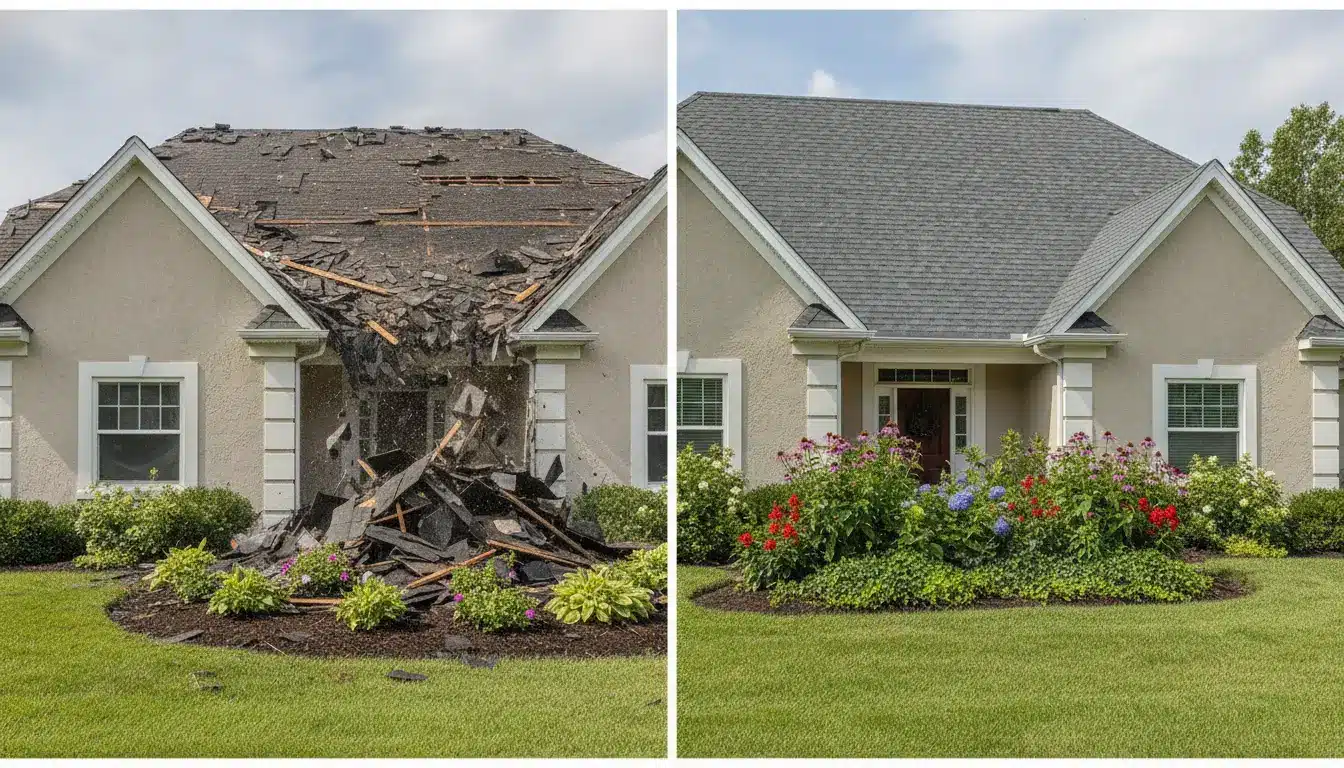
Roofing projects introduce conditions to a property’s exterior environment that established landscapes aren’t designed to accommodate. The debris generated by roofing removal and replacement, including old shingles, fasteners, underlayment material, and the general detritus of roofing work, falls from roof level to the ground below and lands on whatever is beneath the roofline.
Established planting beds adjacent to the home’s foundation, which are exactly the area where roofing debris lands most densely, are the most directly affected. Shingle fragments and nails that land in planting beds require careful removal that can disturb plants and soil structure. Roofing debris that lands on perennial plants can cause physical damage that affects the plant’s health and appearance. Metal fasteners in lawn areas adjacent to the work zone create ongoing safety concerns that require systematic collection before the area is safe for normal use.
Beyond debris, roofing projects require workers to move around the building’s perimeter continuously, which creates foot traffic through landscape areas that weren’t designed for this level of use. Plants along foundation beds get stepped on, soil gets compacted in areas around the perimeter, and mulch in foundation beds gets displaced by activity and equipment positioning.
Why Landscaping Before Roofing Creates Specific Problems
The project sequence that creates the most direct problems is significant landscape installation followed shortly by roofing work. A landscape that was recently installed, particularly one with new plantings that haven’t fully established their root systems, is significantly more vulnerable to roofing project impacts than an established landscape with mature plants and consolidated soil.
New plantings that haven’t established adequate root systems can’t recover from physical damage, soil compaction, and root zone disruption the way established plants can. Irrigation systems installed for a new landscape are particularly vulnerable to damage from the equipment access and ground-level work that roofing projects require. Freshly laid sod adjacent to the building, which is one of the most expensive and delicate landscaping components in terms of establishment requirements, is easily damaged by roofing project activity in ways that require significant repair.
The cost of landscape damage caused by subsequent roofing work isn’t always fully recovered through careful roofing contractor practice. Even attentive roofing contractors cause some level of landscape disruption as an inherent consequence of the work, and a landscape installed immediately before roofing work absorbs that disruption at its most vulnerable stage.
The Optimal Sequence for Combined Projects
When both roofing and landscape restoration are needed on the same property, the sequencing that produces the best outcome for both scopes in most circumstances is roofing first, landscaping second. This sequence means the roofing project’s impacts fall on a landscape that hasn’t yet received its restoration investment, avoiding the damage to established planting that the reverse sequence creates.
Expert roof repairs completed before landscape restoration also reveal conditions that inform the landscape design and planning in useful ways. Drainage modifications that roofing projects sometimes require affect where water is discharged at the building’s perimeter, which is directly relevant to landscape grading and planting placement. Downspout locations established or modified during roofing work determine where concentrated water discharge occurs in the landscape, which affects plant selection and placement in those specific areas.
A landscape design developed after roofing work is complete can account for the actual drainage conditions around the building’s perimeter rather than planning around assumed conditions that the roofing project may have modified. This means the landscape design is based on accurate existing conditions rather than conditions that were subsequently changed by roofing work.
When Landscape Work Must Precede Roofing
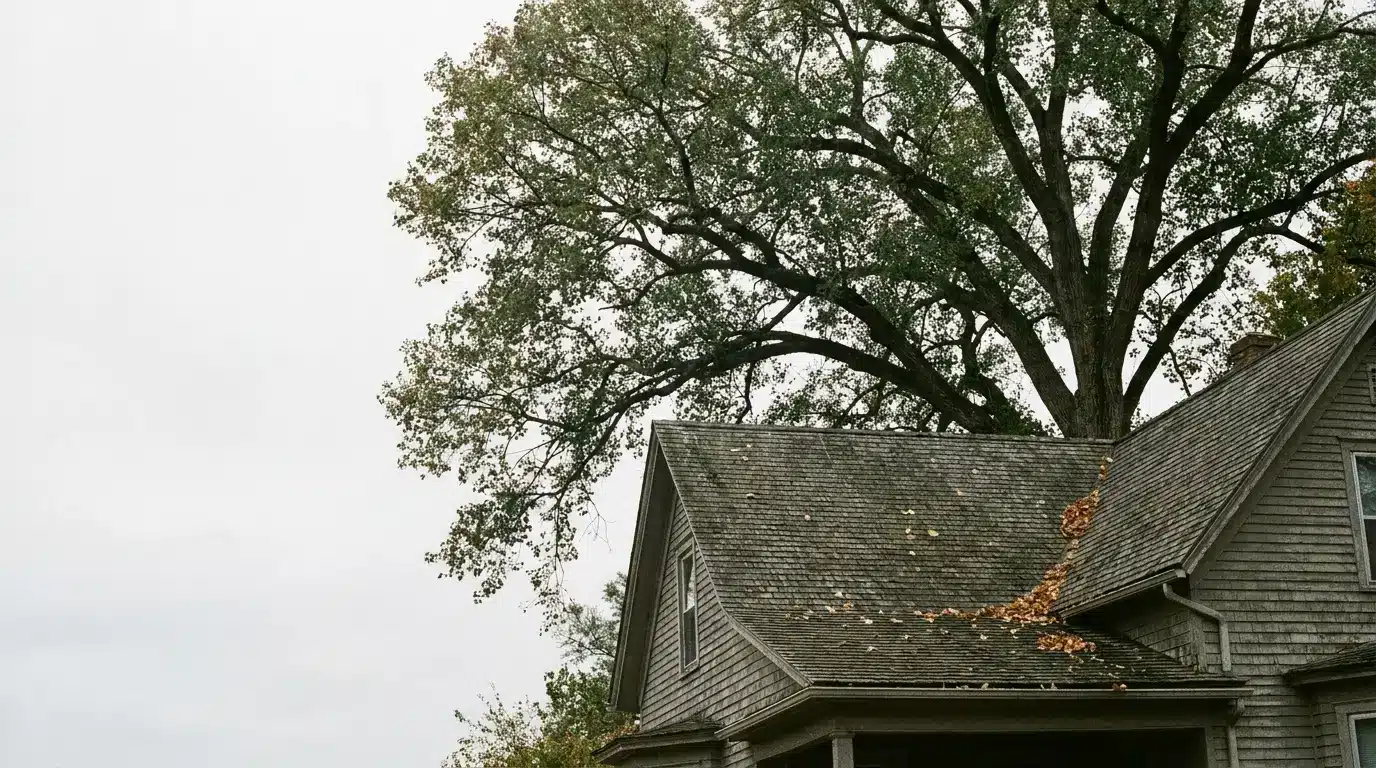
There are specific circumstances where landscape work appropriately precedes roofing even though the general sequencing argument favors the reverse. When mature trees adjacent to the building create roofing access challenges, roof surface damage from overhanging branches, or debris accumulation that accelerates roof deterioration, addressing those tree conditions before roofing work begins produces a better roofing project outcome.
Tree pruning that removes branches overhanging the roofline eliminates ongoing debris accumulation that reduces new roofing’s service life from the day it’s installed. Removing trees that are too close to the building to allow safe roofing access, or that create root intrusion risks to foundation drainage systems being modified as part of the roofing project, requires landscape intervention before the roofing scope begins.
Similarly, drainage grading corrections that affect how water approaches the building’s foundation may need to precede roofing work when the roofing project involves foundation-level waterproofing elements whose performance depends on the site’s drainage patterns. Ottawa landscapers who understand how site drainage affects building envelope performance can identify these sequencing requirements during the planning phase rather than discovering them after roofing work has begun.
Protecting the Landscape That Exists During Roofing Work
When an established landscape must be maintained during roofing work, specific protective measures reduce the damage that roofing activity causes and the remediation required after roofing completion. These measures are worth planning and budgeting before the roofing project begins rather than addressing the damage afterward.
Temporary protective covers over established planting beds adjacent to the work zone intercept roofing debris before it reaches plants and soil. These covers need to be permeable enough to prevent heat buildup under direct sun but substantial enough to stop debris from reaching the plants beneath them. They require installation before roofing work begins and careful removal and inspection of covered areas afterward to confirm what debris was collected and what reached the plants.
Established pathways through the landscape to the work zone’s perimeter reduce the foot traffic that occurs across the landscape generally by concentrating movement along specific routes. Laying temporary pathway material over existing lawn and ground cover along these routes protects the underlying material from the compaction and wear that repetitive foot traffic creates, and it provides a defined access route that roofing workers can follow without needing to navigate through planting areas.
Planning Both Scopes Together Even When They Execute Sequentially
The optimal approach to combined roofing and landscape restoration isn’t just determining the right sequence. It’s planning both scopes together from the beginning even when they’ll be executed sequentially, so that each scope’s design accounts for the other’s requirements and the transition between them is managed rather than improvised.
A landscape restoration plan developed with full knowledge of the roofing project’s timeline, access requirements, and drainage outcomes produces a design ready to execute immediately after roofing completion rather than one that needs to be developed after the roofing project reveals conditions the landscape design needs to account for. A roofing project executed with awareness of the landscape restoration plan that follows takes specific steps to minimize the remediation that landscape restoration will need to include.
This coordinated planning approach treats the two scopes as phases of a single property restoration project rather than independent projects that happen to share a property, which is the framing that produces the most efficient combined execution and the most complete combined outcome for homeowners investing in both their roof and their landscape simultaneously.