

You open your fridge and see that perfect steak from last night staring back at you. Your stomach growls, but you hesitate.
What if it turns out dry and tough?
Most people mess this up and wind up with chewy, flavorless meat. But it doesn’t have to be that way. When you use the right technique for reheating steak, you can bring back all that juicy goodness and rich flavor.
No disappointment, no wasted food. Just tender, delicious steak that tastes like you cooked it yourself.
Why Reheating Steak the Right Way Matters?
Steak isn’t cheap, so tossing leftovers feels like throwing money away.
The problem? Most people crank up the heat and end up with dry, chewy meat that tastes nothing like the juicy cut they enjoyed before.
Here’s what happens when you get it wrong. High heat causes the proteins to tighten up fast, squeezing out all the moisture.
You’re left with something gray and rubbery. But when you take your time and use gentle, even heat, the results are completely different.
Your steak stays tender and juicy. The flavors come back to life, and you actually want to eat those leftovers.
Is it Safe to Eat Reheated Steak?
Absolutely, as long as you follow proper food safety practices.
The main concern is bacterial growth, which happens when meat sits at unsafe temperatures.
Refrigerate leftovers within two hours and store them in an airtight container. When you’re ready to eat, heat the steak to an internal temperature of 165°F to eliminate any potential bacteria.
Avoid cycling between hot and cold temperatures multiple times. Once you’ve warmed your steak, eat it or discard it. This prevents harmful bacteria from thriving and keeps your meal safe.
Preparing Your Steak for Reheating
A little prep work makes all the difference when reheating steak. Follow these quick steps to set yourself up for success.
Step 1: Bring It to Room Temperature
Take your steak out of the fridge 20 to 30 minutes before reheating. Cold meat heats unevenly, leaving you with a warm outside and a cold center.
Step 2: Pat It Dry
Use a paper towel to remove excess moisture. This prevents sogginess and helps maintain the texture.
Step 3: Add Fat
Brush both sides with olive oil or melted butter. This locks in moisture and brings back richness.
Now you’re ready to choose the best reheating method for your leftover steak.
The Best Ways to Reheat a Steak
Not all reheating methods work the same. Some keep their steak juicy, while others dry it out fast. The trick is using low, gentle heat that warms the meat without cooking it further. Here are your best options.
Reheat Steak in the Oven
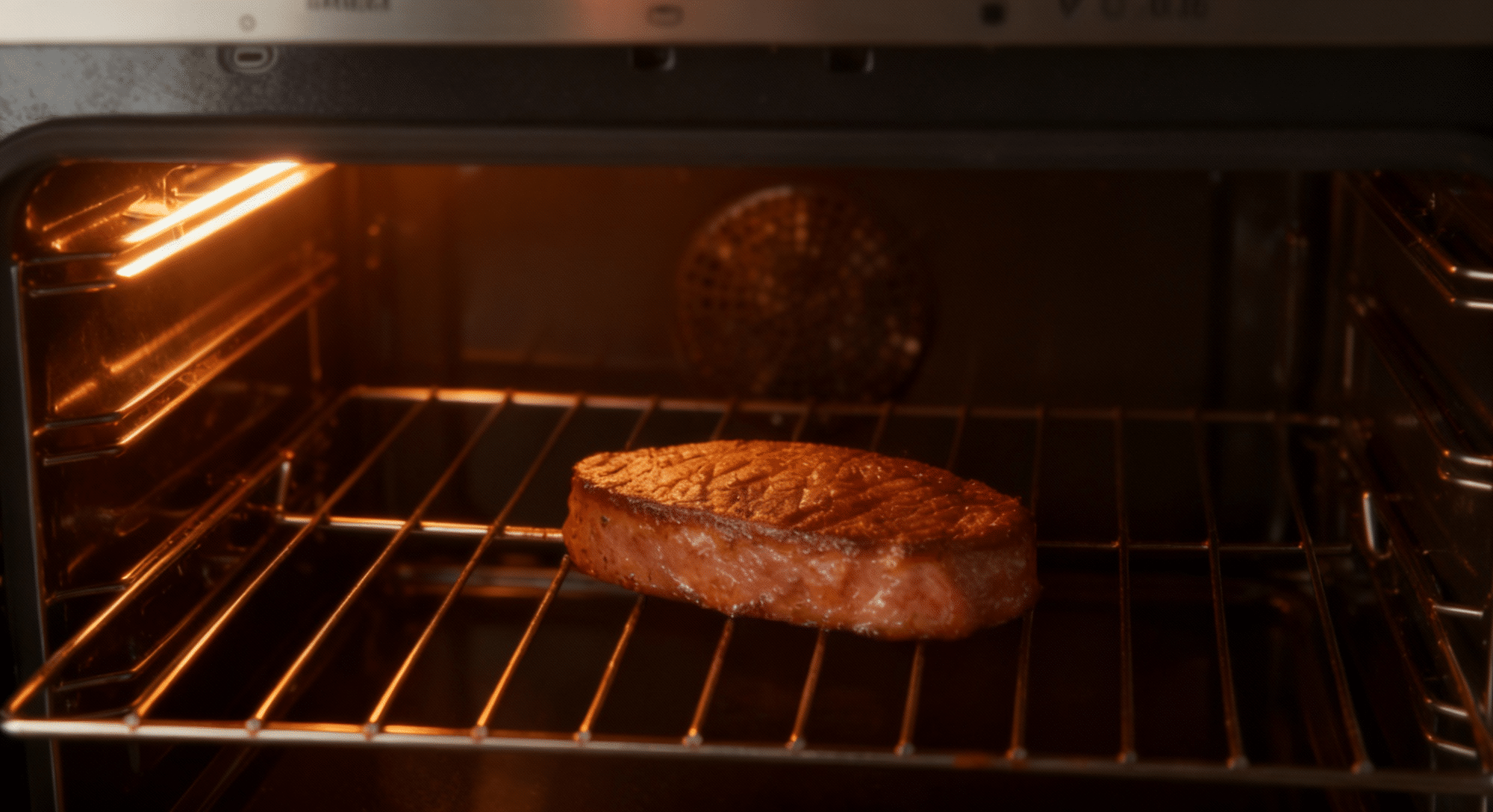
The oven gives you the best control and most even heating.
How to Do It:
- Preheat oven to 250°F
- Place the steak on a wire rack over a baking sheet
- Heat for 20 to 30 minutes until the internal temperature hits 110°F
- Optional: Sear in a hot skillet for 60 seconds per side for a crispy crust
This method takes longer but delivers restaurant-quality results.
Reheat Steak on the Stovetop
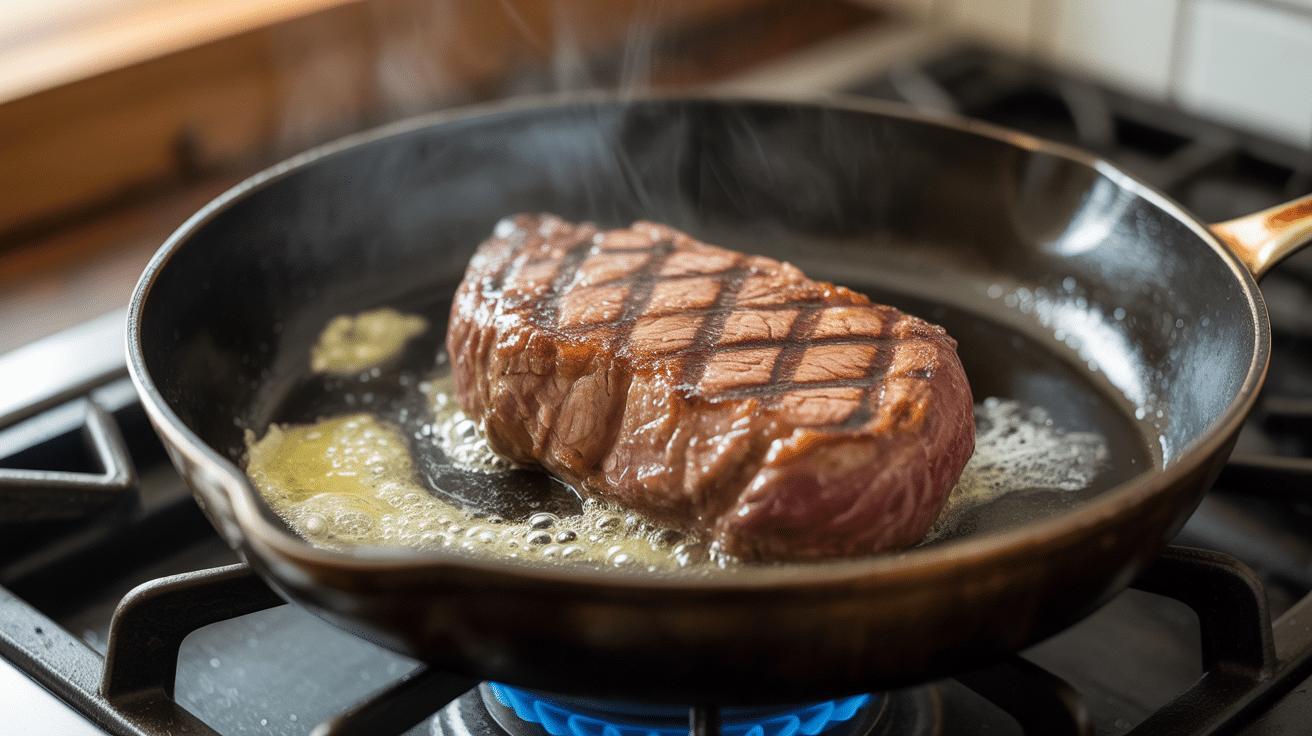
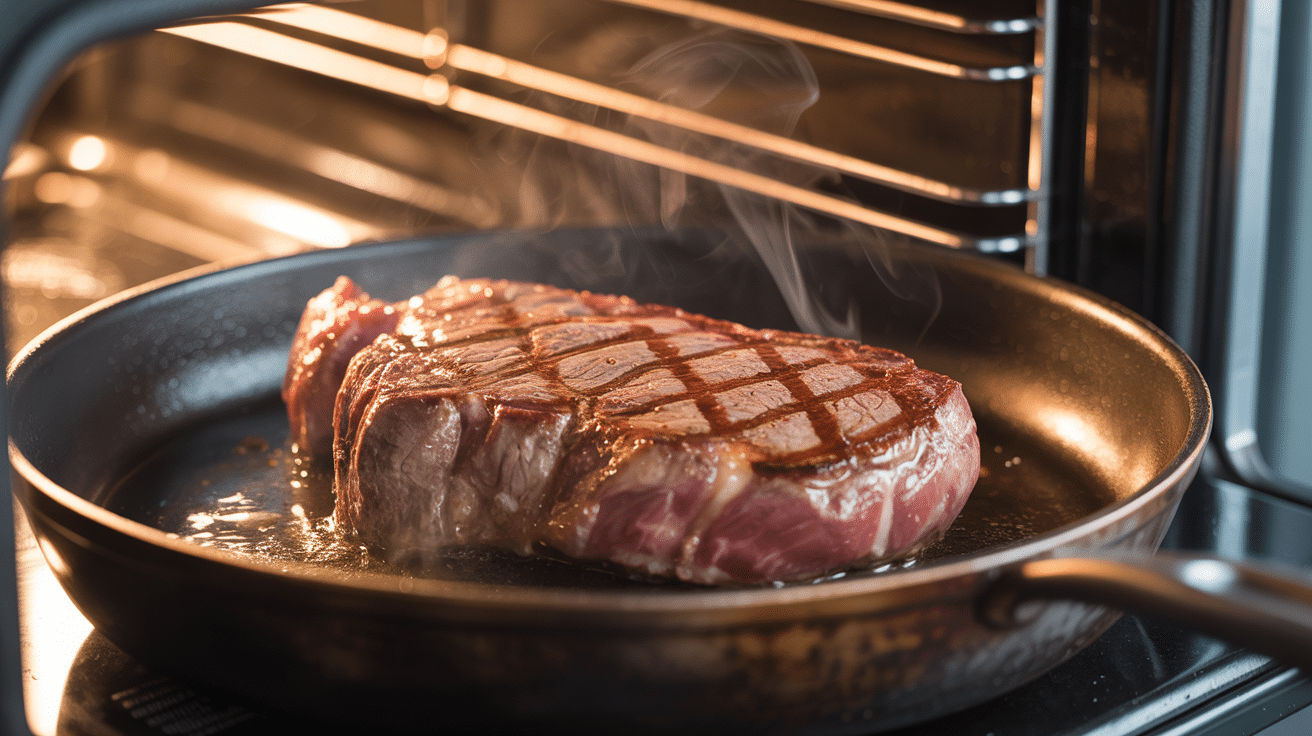
The stovetop is faster and still gives you great control over the heat.
How to Do It:
- Set a heavy skillet over low heat
- Add butter or oil and let it melt
- Place the steak in the pan
- Flip every couple of minutes for 5 to 7 minutes total
- Pull off heat when it reaches 110°F
Keep the heat low, and you’ll have tender, juicy steak ready in minutes.
Reheat Steak in the Air Fryer
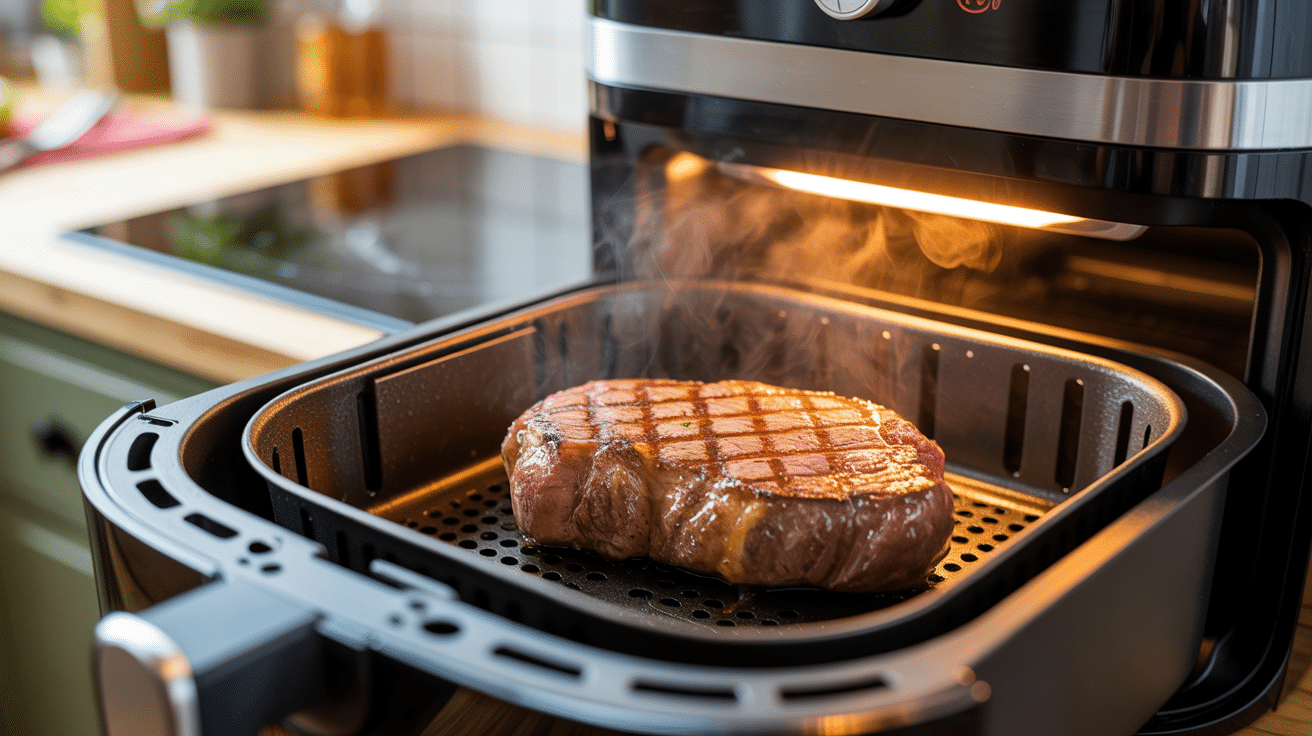
The air fryer offers speed without totally sacrificing quality.
How to Do It:
- Preheat air fryer to 350°F
- Brush the steak lightly with oil on both sides
- Cook for 3 to 5 minutes, flipping halfway through
- Check internal temperature to avoid overdoing it
It’s not quite as good as the oven or stovetop, but it’s fast and convenient when you’re pressed for time.
Reheat Steak in the Microwave (Last Resort)
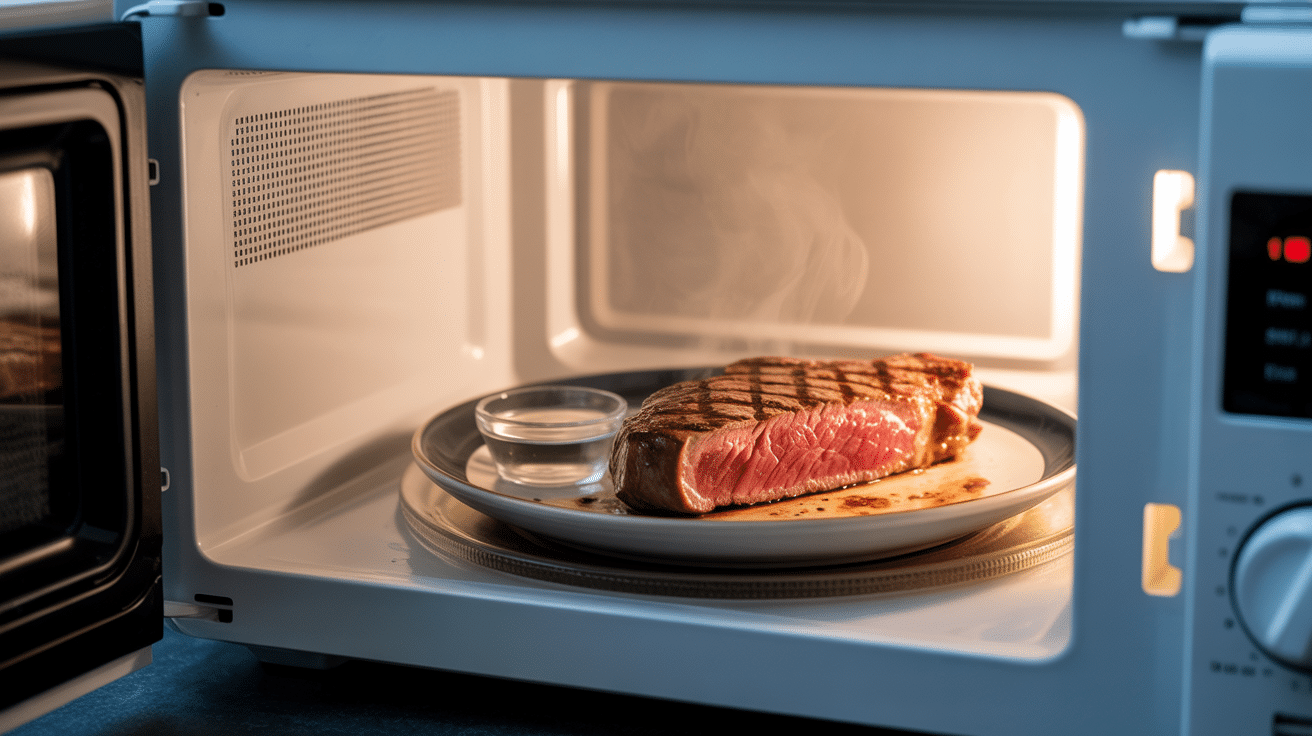
The microwave isn’t ideal, but it works in a pinch.
How to Do It:
- Place the steak on a microwave-safe plate
- Set a small bowl of water next to the plate in the microwave
- Set power to 50%
- Heat in 30-second intervals, flipping between rounds
- Stop as soon as it’s warm
The microwave will never give you perfect results, but keeping the power low helps prevent total disaster.
Reheating Steak without Overcooking
Overcooking ruins leftover steak, and there’s no fixing it once it happens. Here’s how to avoid that.
Use a Meat Thermometer: Stop guessing. Pull your steak at 110°F for medium-rare or 120°F for medium. The meat keeps cooking after you remove it, so always stop a few degrees early.
Keep the Heat Low: High heat dries out your steak fast. Use low, gentle heat whether you’re working with the oven, stovetop, or air fryer. Patience pays off here.
Let It Rest: Give your steak two minutes to rest before cutting. This keeps the juices inside the meat instead of all over your plate.
Signs Your Leftover Steak Has Gone Bad
Leftover steak doesn’t last forever, and eating spoiled meat can make you sick. Watch for these warning signs.
1. Check the Smell
If your steak smells sour, rotten, or just off, toss it. Trust your nose on this one.
2. Look at the Color
Cooked steak should be brown or grayish-brown. Green, yellow, or moldy spots mean it’s gone bad.
3. Feel the Texture
A good steak feels firm and slightly moist. Slimy or sticky meat with a weird film? That’s bacteria, and you don’t want them.
4. Consider Storage Time
Cooked steak lasts 3 to 4 days in the fridge. Beyond that, throw it out. Can’t remember when you cooked it? Don’t risk it.
When in doubt, toss it out. A fresh meal beats food poisoning every time.
Common Mistakes when Reheating Steak
Even with the best intentions, it’s easy to ruin leftover steak.
Here are the biggest mistakes to avoid.
- Using Too Much Heat: High heat dries out your steak and keeps it cooking. Stick with low, gentle heat instead.
- Skipping the Resting Period: Cutting in right away lets the juices escape. Let it rest for two minutes first.
- Not Bringing It to Room Temperature: Cold steak heats unevenly. Take it out 20 to 30 minutes before reheating.
- Reheating Multiple Times: Each reheat removes more moisture, increasing the risk of bacterial growth. Only warm what you’ll eat now.
Conclusion
Reheating steak doesn’t have to mean settling for dry, flavorless leftovers.
When you use the right technique and pay attention to temperature, your second serving can rival the first. Whether you choose the oven for precision or the stovetop for speed, the key is patience and gentle heat.
Store your meat properly, avoid common mistakes, and you’ll never waste a good steak again.