

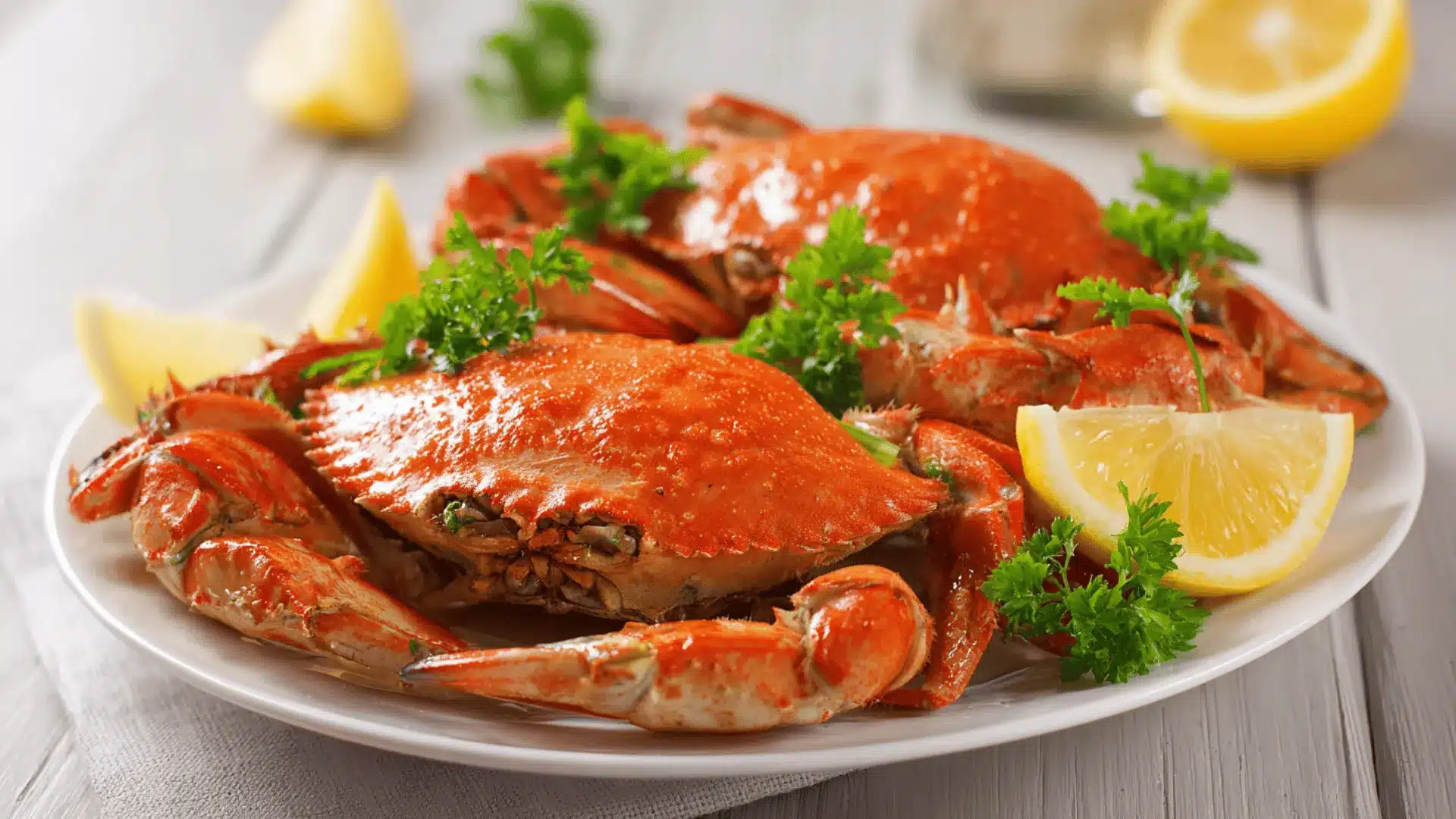
Many people love eating crab at restaurants or special dinners. But they’re not sure if it’s good for their body.
Some worry about cholesterol. Others wonder if crab has protein.
Crab is packed with protein and important nutrients your body needs, and to be fair, it can be a part of a healthy diet when you eat it the right way.
And it’s lower in calories than many other proteins.
Let me walk you through the health benefits of crabs and how to eat them properly.
What is so Good About Crabs?
Crab is a type of shellfish that lives in oceans and freshwater. It has a hard shell and walks sideways on the seafloor.
Crab is loaded with protein.
A 3-ounce serving gives you about 15-20 grams. Blue crab tends to give 16g, while Dungeness crab is also healthy, giving almost 19-20. That’s a lot for such a small portion.
Crab is also low in fat and calories. Plus, it contains vitamins and minerals, helping your body function better and stay healthy.
When buying fresh crab, look for a mild ocean smell. Anything ammonia-like means it’s past its best.
Does Crab Have Protein?
Yes, crab has plenty of protein. A 3-ounce serving of crab meat contains about 16-20 grams of protein.
This protein has all nine essential amino acids your body can’t make on its own. These amino acids help build and repair muscles, skin, and other tissues.
Compared to other proteins, crab is an excellent choice. It has more protein per calorie than beef or pork.
And, it’s lean and low in fat.
The protein in crab also keeps you full longer, helping control hunger and preventing overeating.
Nutritional Benefits of Crab
Crab has more than just protein. Crab isn’t as omega-3-dense as salmon, but a 3-oz serving still delivers roughly 300-400mg.
| Nutrient | Benefit |
|---|---|
| Vitamin B12 | Keeps your nerves and blood cells healthy |
| Selenium | Protects your cells from damage |
| Omega-3 Fatty Acids | Supports heart health and lowers inflammation |
| Zinc | Strengthens your immune system |
| Copper | Helps your body absorb iron and form red blood cells |
| Phosphorus | Builds strong bones and teeth |
| Low Calories | Only 80-100 calories per serving |
| Low Fat | Lower in fat than red meat |
Crab is low in calories, with only 80-100 per serving.
How is Crab Good for You: Health Benefits
Crab supports your health in many ways, from building muscles to protecting your heart. Let’s look into it.
Health Benefits of Crab for Males
Men can benefit highly from crab’s zinc content. The nutrients effectively target male health needs.
- Supports testosterone: Zinc helps maintain healthy hormone levels.
- Improves muscle recovery: Protein speeds up healing after exercise.
- Enhances prostate health: Selenium may reduce prostate problems.
- Boosts fertility: Zinc and omega-3 fatty acids support reproductive health.
Health Benefits of Crab for Females
Women need iron, and crab provides a good amount. It addresses common female health concerns naturally.
- Prevents anemia: Iron keeps blood healthy and energy levels stable.
- Supports pregnancy: Protein and nutrients help the baby’s development.
- Improves skin and hair: Vitamin B12 promotes healthy, glowing skin.
- Eases menstrual cramps: Omega-3 fats reduce period pain and discomfort.
- Maintains bone health: Phosphorus and calcium keep bones strong.
Overall
Crab is a nutritional powerhouse that supports your overall health.
It provides important nutrients that support your body’s function, such as protein, zinc, and selenium. It also has Vitamin B12, which improves your energy levels and helps your brain work better.
Omega-3 fatty acids in crab promote heart health and lower inflammation.
Is crab good for you to lose weight?
YES, it is perfect. Because of its high protein-to-calorie ratio, crab scores well on satiety index studies, meaning it keeps you fuller per calorie than most other proteins.
Disadvantages of Eating Crab
Crab is healthy, but it’s not perfect for everyone.
It is always advised that people with a history of kidney issues closely monitor sodium intake from shellfish, not just added salt.
- It can cause allergies, which have serious effects and can be fatal.
- Crab naturally has sodium. Steamed blue crab has around 300mg of sodium per serving, before any added sauces or seasoning.
- Crab can contain mercury and other toxins from polluted waters.
- Fresh crab are expensive than other protein sources.
- It can be quite difficult to prepare. If you’re buying pre-cracked or pasteurized crab meat, check that it’s been kept below 40°F.
- Crab contains 152mg of purines per 100g. Those with gout should limit shellfish to once a week or less.
Alternatives to Crab
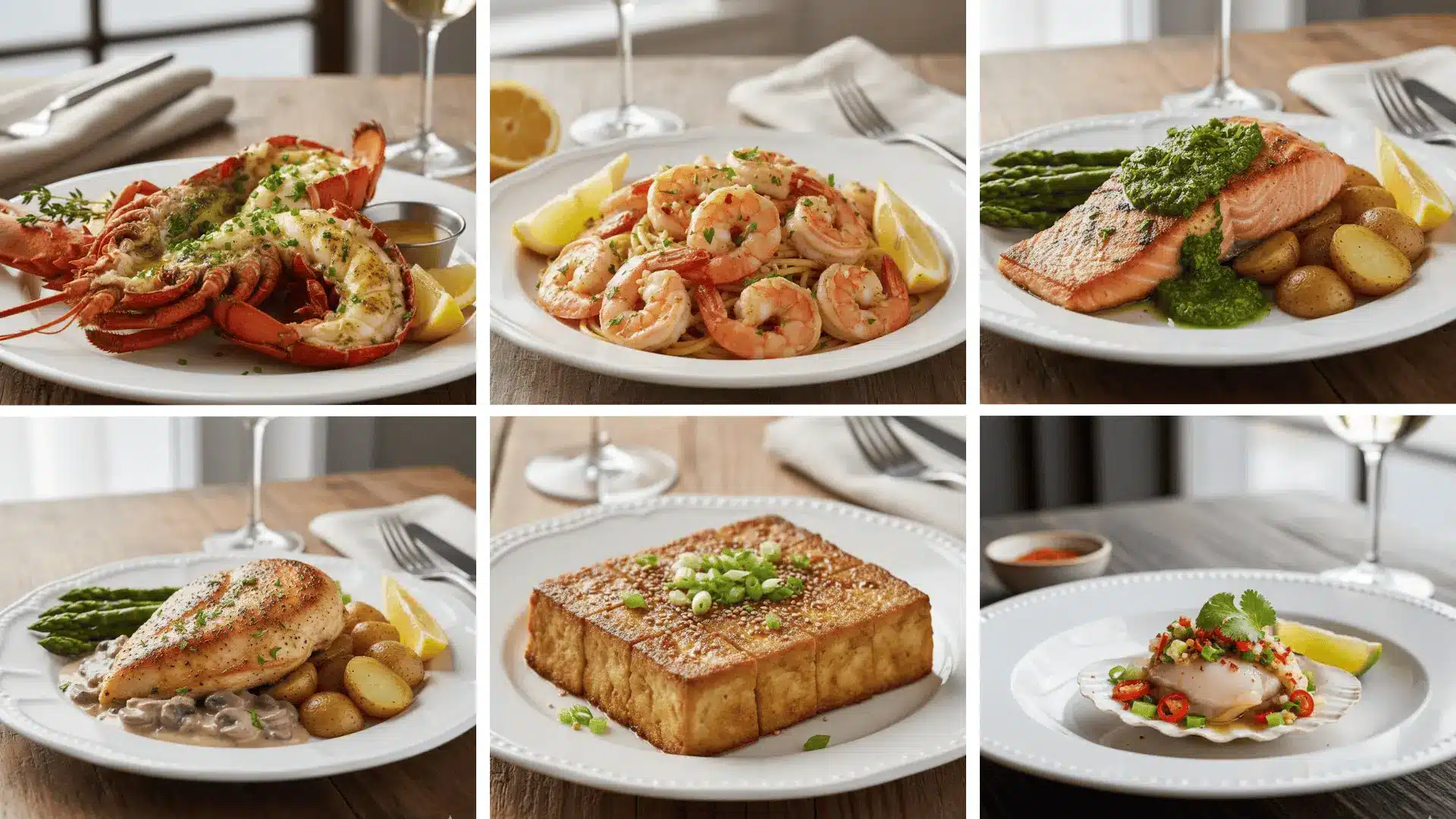
Crab has a perfect balance of protein and low calories.
Crab is generally considered a low-to-moderate mercury seafood by the FDA, safer in this regard than tuna or swordfish.
Lobster
Lobster tastes similar to crab and has almost the same nutrition. It’s high in protein and low in fat. The texture is slightly firmer but just as sweet.
Shrimp
Shrimp is easier to find and costs less than crab. It has even more protein per serving. Plus, it cooks faster and needs less preparation.
Fish (Salmon or Cod)
Fish gives you similar omega-3 benefits. Salmon has a richer flavor, while cod tastes mild like crab. Both are heart-healthy and packed with protein.
Chicken Breast
If you have shellfish allergies, chicken is a safe choice. It’s high in protein and low in fat. The taste is different, but the nutrition is comparable.
Tofu
For a plant-based option, try tofu. It absorbs flavors well and provides protein. It’s perfect if you’re vegetarian or vegan.
Raw Clams
Clams are high in protein and iron. They’re great for building blood cells and boosting energy levels. They have more protein than crab and taste briny and fresh.
So, is Crab Healthy to Eat?
Yes, it is healthy and has real benefits for your body.
In practice, most people underestimate how filling a crab-based meal is until they try it regularly.
Crab is really tasty, but watch out for potential allergies, high cholesterol, and its high sodium content. If you have gout or shellfish allergies, talk to your doctor first.
Is crab good for you? Definitely a big YES.
Try including crab once or twice a week and see how your body responds.
Frequently Asked Questions (FAQs)
1. Does Artificial Crab Have Protein?
Yes, but not much. Imitation crab has about 6 grams of protein per 3-ounce serving.
2. Is Crab Healthier than Fish?
Crab has more minerals, like zinc and selenium. Fish like salmon contain more omega-3 fatty acids.
3. Does Crab Meat Build Muscles?
Yes, crab helps build muscle. It’s high in protein, which your body needs for muscle growth and repair.