

I used to avoid cooking catfish on busy days because it felt easy to mess up. Too much heat would burn the outside, and too little would leave it bland.
One evening, I kept things simple with a quick skillet method and a basic spice mix.
It turned out better than expected.
Since then, this easy blackened catfish skillet has become a reliable option when I want something quick and satisfying.
How This Recipe Brings Out the Best in Catfish
What I’ve noticed while making this a few times is how well catfish responds to simple cooking.
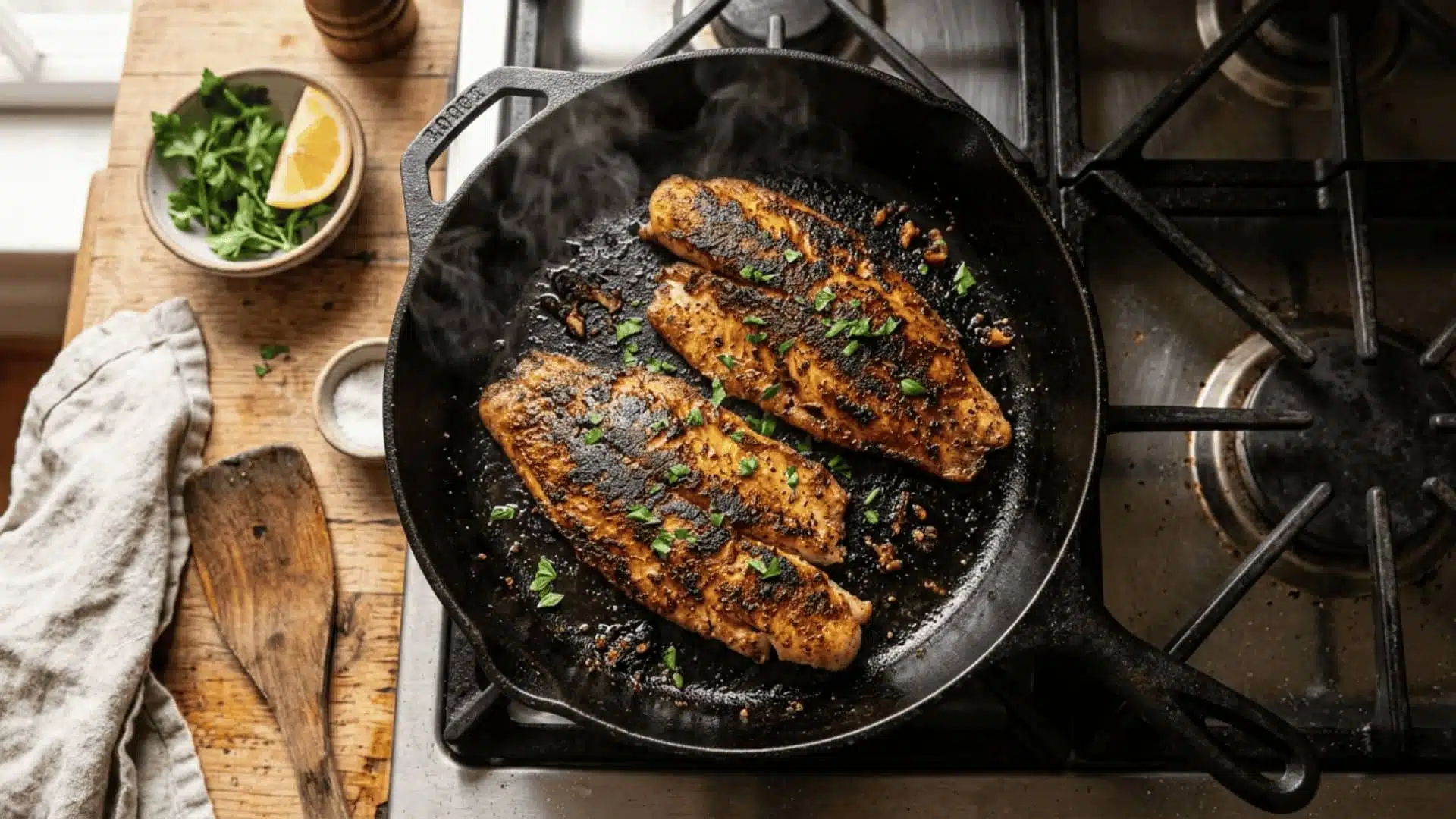
The moment the seasoned fillets hit a hot skillet, the spices start forming that dark crust on the outside.
That’s where most of the flavor comes from. You don’t need anything complicated to get that result.
I also like how forgiving catfish is. Even if I’m not paying perfect attention, it still turns out soft and flaky inside. It holds the seasoning well without becoming too strong.
If you’re trying to include more healthy fish dishes in your routine, this is one of those options that feels balanced without needing extra effort.
Ingredients Required
These are pantry-friendly ingredients that come together quickly:
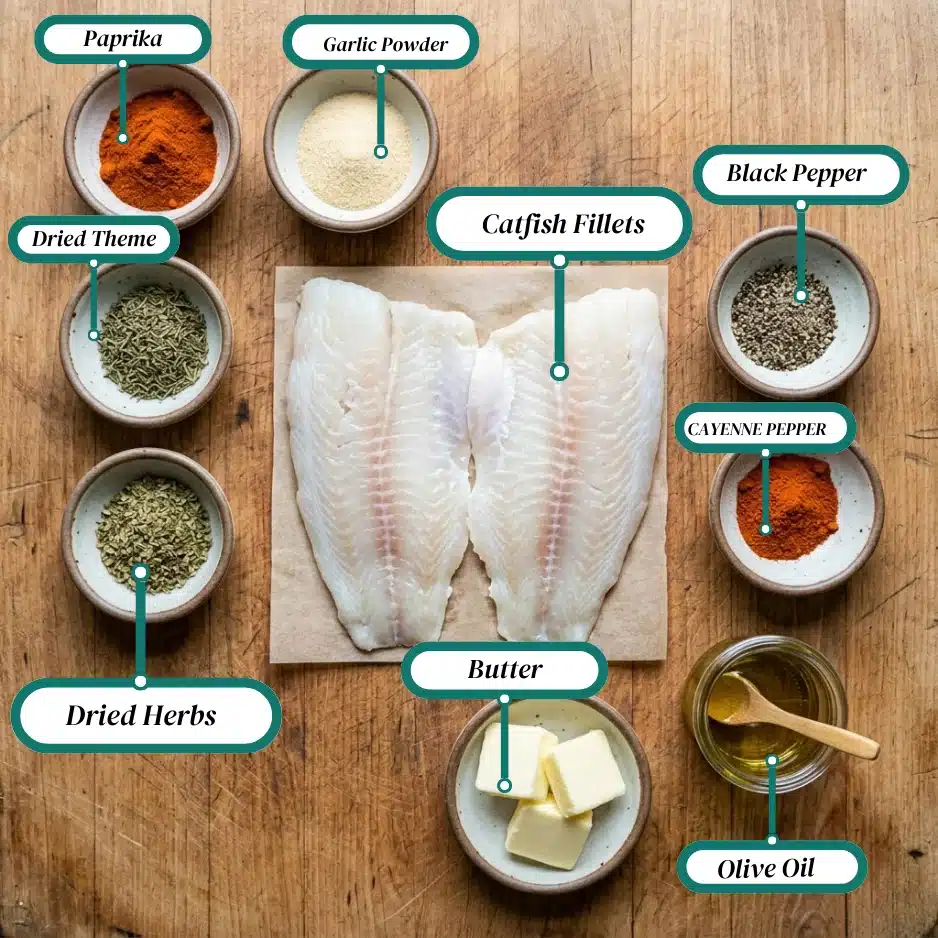
- 2 catfish fillets
- 1 tablespoon olive oil
- 1 tablespoon butter
For the Blackened Seasoning:
- 1 teaspoon paprika
- 1/2 teaspoon garlic powder
- 1/2 teaspoon onion powder
- 1/2 teaspoon dried thyme
- 1/2 teaspoon dried oregano
- 1/2 teaspoon black pepper
- 1/2 teaspoon salt
- 1/4 teaspoon cayenne pepper (adjust based on heat preference)
Optional:
- Lemon wedges
- Fresh parsley
Let’s Start Cooking
If you’re new to cooking catfish, these step-by-step instructions will help you get it right on your first try.
Step 1. Prepare the Catfish Properly
Start by placing the catfish fillets on a plate and patting them dry with a paper towel.
This step may seem small, but it makes a big difference. Removing extra moisture helps the seasoning stick better and allows the surface to form a proper crust instead of steaming in the pan.
Step 2. Mix the Seasoning Evenly
In a small bowl, combine paprika, garlic powder, onion powder, thyme, oregano, black pepper, salt, and cayenne.
Stir well so that the spices are evenly distributed. This ensures every bite has balanced flavor instead of certain spots tasting stronger than others.
Step 3. Coat the Fish with Seasoning
Sprinkle the seasoning over both sides of the fillets.
Use your fingers to gently press the spices onto the fish. This helps them stay in place while cooking.
Make sure the surface is fully covered, but avoid using too much at once. A thin, even layer works better than a thick coating.
Step 4. Heat the Skillet Correctly
Place a heavy skillet on medium-high heat. Add olive oil and butter, and let it heat until the butter melts and starts to foam slightly.
This stage is important. If the pan is not hot enough, the fish will not develop that dark crust. If it is too hot, the spices can burn quickly.
A steady medium-high heat works best for control.
Step 5. Cook the First Side without Moving
Place the fillets in the skillet gently, laying them away from you to avoid splatter.
Once the fish is in the pan, leave it undisturbed for about 3 to 4 minutes.
This is where many people go wrong. Moving the fish too early prevents the crust from forming. Let it cook fully on one side before checking.
You will know it is ready to flip when it releases easily from the pan.
Step 6. Flip and Finish Cooking
Carefully flip the fillets using a spatula.
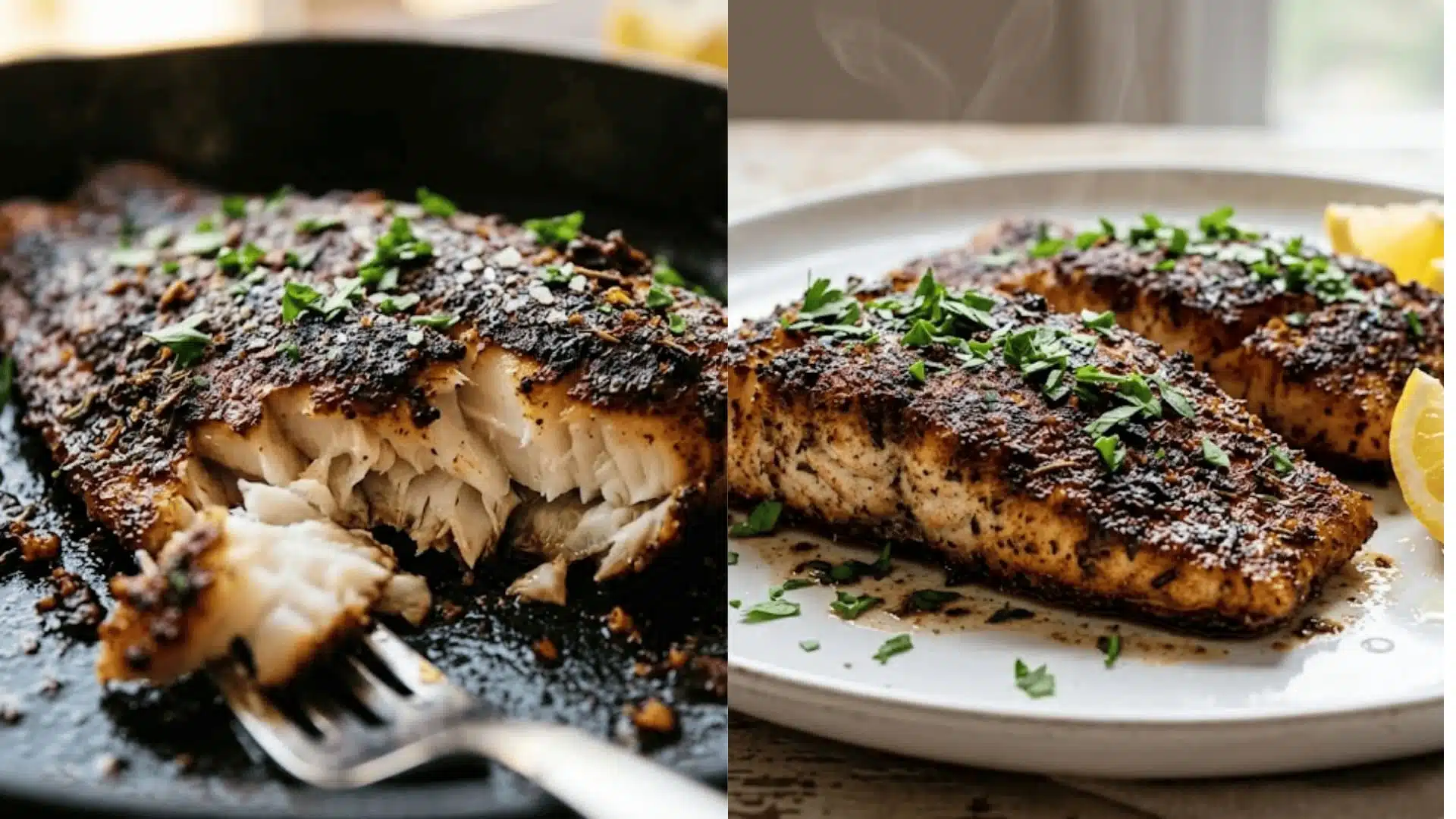
Cook the second side for another 3 to 4 minutes. The fish should turn opaque and flake easily when tested with a fork.
If your fillets are thicker, give them an extra minute, but avoid overcooking, as that can dry them out.
Step 7. Serve While Hot
Remove the fish from the skillet and serve immediately.
A squeeze of fresh lemon over the top adds brightness and balances the spices. You can also sprinkle a little parsley for a fresh touch.
Your Blackened Catfish Skillet Is Ready to Eat.
Final Thoughts
The more I make this blackened catfish skillet, the more I appreciate how simple it really is.
It doesn’t ask for much, just a few spices, the right heat, and a bit of attention. Once you get a feel for the timing, it becomes one of those recipes you don’t have to think twice about.
For me, it’s the kind of meal I turn to when I want something quick but still satisfying.
And after a couple of tries, it starts to feel just as easy in your kitchen, too.
Frequently Asked Questions
1. Can I Use Other Fish Instead of Catfish?
Yes, this method works well with tilapia, cod, or any firm white fish. Just adjust cooking time based on thickness.
2. How do I Know When Catfish is Fully Cooked?
The fish should turn opaque and flake easily with a fork. If it still looks translucent, give it another minute.
3. Why is my Seasoning Burning too Quickly?
This usually happens if the heat is too high. Keep it at medium-high so the crust forms without burning.
4. Can I Make This Recipe Less Spicy?
Yes, simply reduce or skip the cayenne pepper. The other spices will still give plenty of flavor.
Seafood Recipes You Should Try Next
If this teriyaki salmon recipe hit the spot, these recipes are worth adding to your list, too.
Maple Dijon Salmon Bites: Bite-sized salmon pieces coated in a sweet-and-tangy maple-Dijon glaze, great as an appetizer or a quick, protein-packed dinner.
Lemon Pepper Tilapia in a Pan: A light, zesty tilapia recipe cooked in one pan with fresh lemon and cracked pepper, ready in under 15 minutes.
Dungeness Crab: Sweet, tender, and full of natural flavor, Dungeness crab is a West Coast favorite that is surprisingly simple to prepare at home.
Quick Teriyaki Glazed Salmon: Sticky, golden, and full of flavor, this 15-minute salmon recipe is one of the easiest fish dinners you will ever make.
Light Creamy Tuscan Fish Skillet: A one-pan fish dish with a creamy tomato-and-spinach sauce that feels indulgent yet comes together with little effort.