

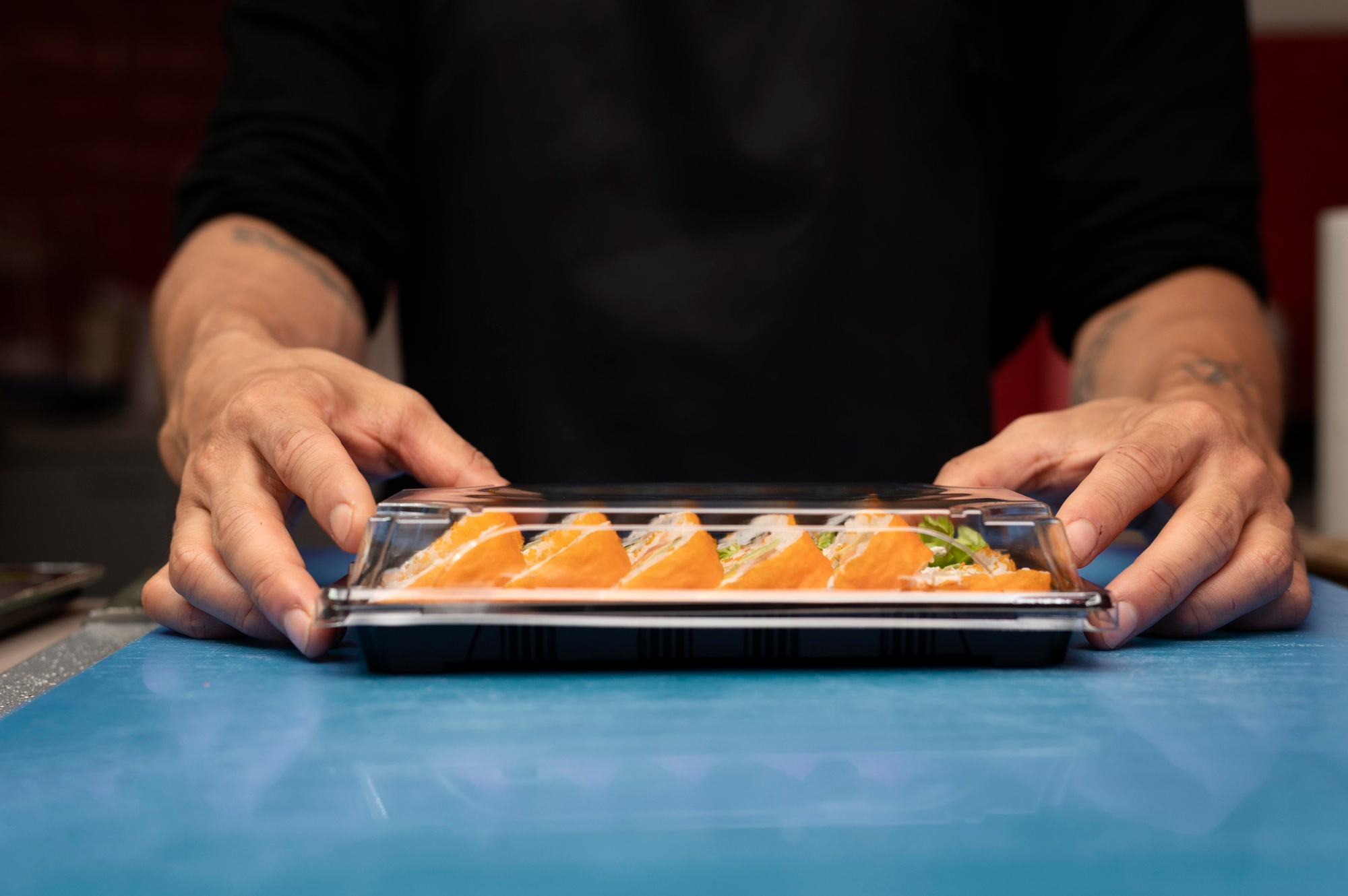
Most people still think that chef jobs are all about cooking: they organize the working process, control the results, and come up with new picks in the menu. In reality, their job begins before the team even picks up the knife. They are the masters of fresh ingredients and rare products on the table. And when it comes to sushi, this is what impacts the results, and guests review the most.
If we’re talking about the entire hierarchy in the kitchen, then the sushi chef is near the very top. You’re responsible for a popular part of the menu, or even the entire menu if you work with a sushi restaurant team.
Any management role requires accountability, control, and a systematic approach, no less than culinary mastery. Food sourcing, in your case, is about quality control and the ability to cook with the best ingredients.
You Can’t Hide Behind Technique If the Fish Isn’t Perfect
Even top kitchens can make mistakes: overcooked vegetables, improper techniques, and much more. Many of these can be covered, especially if you’re in a rush, with spices, sauce, or presentation. This is the beauty and challenge of working with fish: sushi leaves no room for error. Even signature recipes emphasize the fish – and it has to be perfect.
Tuna loses its flavor after freezing, and scallops become rubbery if improperly stored or transported, and that’s just the tip of the iceberg.
So even if you’re a master knifesmith and the city’s best chef, your skills won’t be able to compete with imperfect ingredients. And that’s where your main job lies: fresh, high-quality fish speaks for itself.
Keeping People Safe is the Most Important Part of Your Job
Once you understand your responsibility, another side task surfaces: making things not only tasty, but also safe. Sushi is working with raw fish, and it requires the kitchen to adhere to temperature regulations, storage guidelines, and transportation procedures to avoid food poisoning and other problems.
This is another reason to carefully select your supplier: they must guarantee freshness and sanitary compliance before your team can assume responsibility.
Building Relationships with Suppliers Who Won’t Let You Down
Speaking of suppliers: finding a quality option isn’t easy, especially if you’re not located in a major city or offer rare fish. In the US, there’s a well-established system with standards, and you can’t simply build communication on words and trust. Pay attention to the following:
- Product traceability. Reliable suppliers provide information about the origin of the fish: catch region, date, and processing conditions. Ideally, they can confirm this digitally, such as with a QR code.
- Compliance with safety standards. The modern market employs systems like HACCP, which record and document all product manipulations. This is the best quality control option, one that functions as a genuine market requirement rather than a mere formality.
- Failure-free cold chain management. If the temperature control wasn’t recorded along the way, you have every right to reject the delivery. For a sushi chef, this is one of the most important points.
- Documentation and transparency. If you’re ordering fish from a specific region or catch date, the supplier must provide the necessary documentation. Also, check their certificates and permits to ensure you’re receiving legal products.
- Prompt feedback. We’re not in the 90s, waiting for phone calls and letters. A supplier who responds to your inquiries, urgent orders, and feedback is ideal.
Customers trust you with their health when they come to your restaurant. And the guarantee of quality is yours: so try to double-check certificates and be confident you’re getting the perfect product for your kitchen.
How Mastering the Supply Chain Helps You Land Better Roles
If you can cook well and know all the standards, you’re a good cook. If you can cook, understand the standards, the specifics, and work well with suppliers and produce, you’re a good chef. Do you feel the difference? It’s in the leadership qualities and level of responsibility. And there’s always a demand for such a specialist.
Restaurants increasingly look for chefs who understand both culinary execution and operational excellence. For professionals exploring new opportunities, reviewing current sushi chef positions can provide insight into the skills and responsibilities employers value most.
When you work as a chef, you don’t just manage a team and are responsible for dishes: you manage the entire system. The deliveries you set up demonstrate your soft skills: professional communication, attention to detail, and time management.
And knowledge of the best suppliers in the city gives potential employers a turnkey chef – you know how to work with products and where to find the best ones. This is what you can offer to restaurants while looking for sushi chef jobs on Jooble.
Moving Your Career to the US and Finding the Right Support
Working in the US remains one of the most attractive destinations for sushi chefs. Here, you’ll discover higher standards, stable conditions, and access to projects where restaurants value your understanding of the process.
Employers expect chefs to be able to manage traceable supplies, adhere to strict safety standards, and understand how to control product at all stages. Competition is high, and regular kitchen experience may not be enough to become a chef. How can you improve your chances?
In this case, support and the right approach to your job search will be very helpful. Foreign specialists are valued, but it’s important to find a restaurant that is prepared for your adaptation needs. If you want to find verified openings, try a reliable job aggregator: Jooble offers chef sponsorship jobs where you’ll find support during the initial stages.
Buying Smarter to Run a More Profitable Kitchen
Smart purchasing directly impacts kitchen profits, and this is especially true in sushi restaurants: products are expensive, shelf life is limited, and any errors quickly result in write-offs. As a chef, purchasing control should be your number one priority.
You can do this in two main ways: buy less and spend wisely. Try to be flexible in your purchasing, using different supply channels and managing volumes accurately and deliberately. To minimize write-offs, you must understand the lifespan of each product and train your team to do the same.
As a result, you’ll have a sustainable and profitable kitchen where ingredients stay fresh, and you waste minimal amounts of food. This statistic will be your trump card as a worker. Be mindful of your food choices and sourcing, and you’ll get the best ingredients for your kitchen.