

Seafood can make lunch feel more put-together than it really is. A scoop of tuna salad, yesterday’s salmon, or a handful of chilled shrimp already gives you a strong start. The part that usually needs work is everything around it.
That’s where lunch gets a little wobbly. A soft side here, a random snack there, maybe crackers straight from the box. Nothing wrong with easy, but seafood tastes better when the rest of the meal has some contrast.
Think protein, crunch, freshness, and a small sweet finish. Simple enough to remember. Flexible enough to use all week.
Pick Seafood That Holds Up
Some seafood makes more sense for lunch than others. Tuna salad is the classic, but leftover salmon, chilled shrimp, crab cakes, smoked trout, sardines, and firm white fish can all work if they’re packed well.
Texture is the thing to watch. Flaky fish wants something sturdy beside it. Creamy seafood salads need crisp vegetables, crackers, or greens with a little bite. Shrimp can handle bold dips, but it also plays nicely with rice, slaw, or sliced cucumbers.
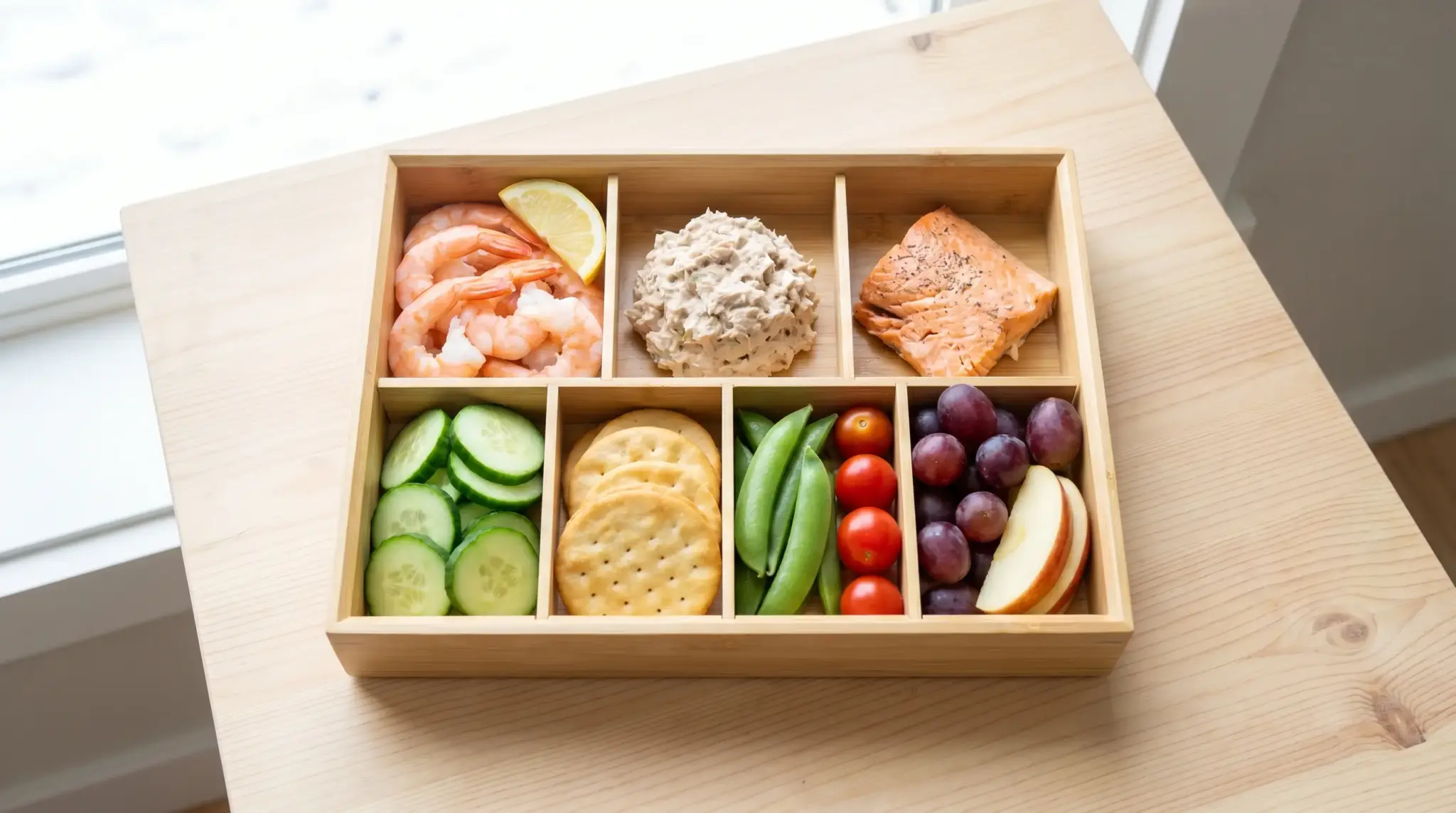
A balanced lunch box might look like salmon, cucumber, crackers, grapes, and probiotic yogurt bites for a small sweet finish. Nothing fussy. Just enough variety to keep lunch from feeling flat.
Give the Meal Some Crunch
Seafood tends to be tender, creamy, or flaky. That’s part of the appeal, but a whole lunch built around soft textures can get boring by the third bite.
Crunch helps right away. Crackers, celery sticks, cucumber slices, toasted pita, snap peas, roasted chickpeas, shredded cabbage, and crisp lettuce all bring the meal back to life. They also make seafood easier to eat when lunch is coming out of a container instead of off a plate.
Tuna salad is easiest with crackers or crisp vegetables that can scoop it up without crumbling. Salmon feels more balanced with something cool and fresh, like slaw, cucumber, or a piece of pita. Shrimp can stay simple with carrots, celery, or a handful of crisp chips on the side.
Add Something Fresh
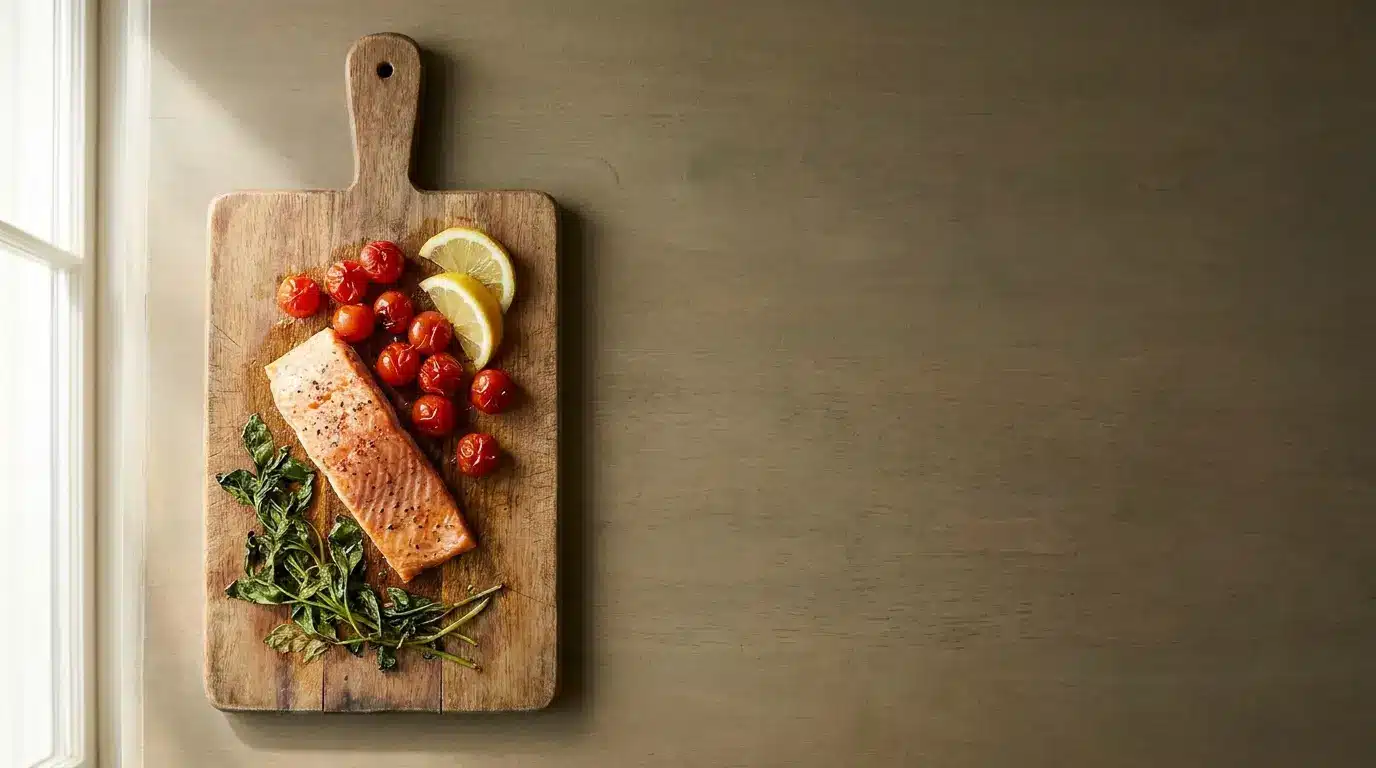
Seafood loves a bright bite. Lemon, cherry tomatoes, sliced apples, pickled onions, grapes, fresh herbs, or a small green salad can make the whole meal feel cleaner.
This matters most with richer seafood. Salmon, crab cakes, smoked fish, and creamy tuna salad all benefit from something sharp or juicy nearby. Even a handful of greens tossed with lemon juice and olive oil can make leftovers feel like an actual lunch instead of a fridge clean-out.
Use the seafood as your guide. Rich fish usually tastes better with something bright, like lemon or pickled onions. Mild fish can handle fresh herbs or a little fruit, while saltier seafood works well with a crisp, juicy side.
End With a Small Sweet Bite
A seafood lunch often leans salty, smoky, briny, or rich. A little sweetness at the end makes sense, but it doesn’t have to turn into dessert.
Grapes, apple slices, berries, dried mango, or yogurt-covered fruit bites can round out the meal without weighing it down. This works especially well for packed lunches, where one small sweet item can make the whole box feel more complete.
Keep it modest. The sweet bite should feel like a finish, not a second meal hiding in the corner.
Pack Seafood With Care
Seafood lunches need a bit of temperature common sense. Use sealed containers, pack cold items with an ice pack, and keep creamy or cooked seafood chilled until it’s time to eat.
If you’re turning leftovers into lunch, check a reliable cold-food storage chart before stretching them into another meal. Tuna salad, cooked fish, shrimp, crab, and other seafood all have limits. Guessing is a bad lunch strategy.
Warm seafood should be reheated before it goes into an insulated container. Cold seafood should stay cold from the fridge to lunchtime. That’s the difference between a lunch you look forward to and one you start questioning.
Try Three Easy Combos
You don’t need a new recipe every time you pack seafood for lunch. A few dependable combinations can do most of the work.
Try tuna salad with crackers, cucumber slices, cherry tomatoes, and something sweet on the side. Pack leftover salmon with rice, slaw, lemony greens, and apple slices. Pair chilled shrimp with celery, carrots, cocktail sauce, grapes, and something crisp.
The same approach works for casual snack-style meals at home. When you’re putting together a bigger spread, these ideas fit well with tips for serving seafood during a gaming night, where low-mess food matters more than fancy plating.
Make the Pattern Fit Your Lunch
If the seafood is soft, add crunch. If it’s rich, bring in something bright. If the whole lunch leans salty, finish with a small sweet bite. Once you think about lunch in those simple contrasts, the combinations start to come together more naturally.
Use leftovers, open a tin, cook a little extra shrimp at dinner, or grab smoked fish when you want something easy. The formula still works.
A Lunch Worth Repeating
A good seafood lunch should feel fresh, filling, and easy to put together. It doesn’t need a long ingredient list, matching containers, or a plan that takes half the morning. The best versions are simple: something tasty from the sea, something crisp, something bright, and a small sweet bite to finish.
Once you get used to that rhythm, lunch becomes much easier to build. Leftover salmon feels more complete with cucumber, rice, and fruit. Tuna salad works better with crackers, vegetables, and a little freshness on the side. Shrimp can turn into a full meal with a dip, a crunchy snack, and something juicy.
That’s the whole idea. Start with seafood, add the pieces that make it taste balanced, and keep it easy enough to repeat tomorrow.