

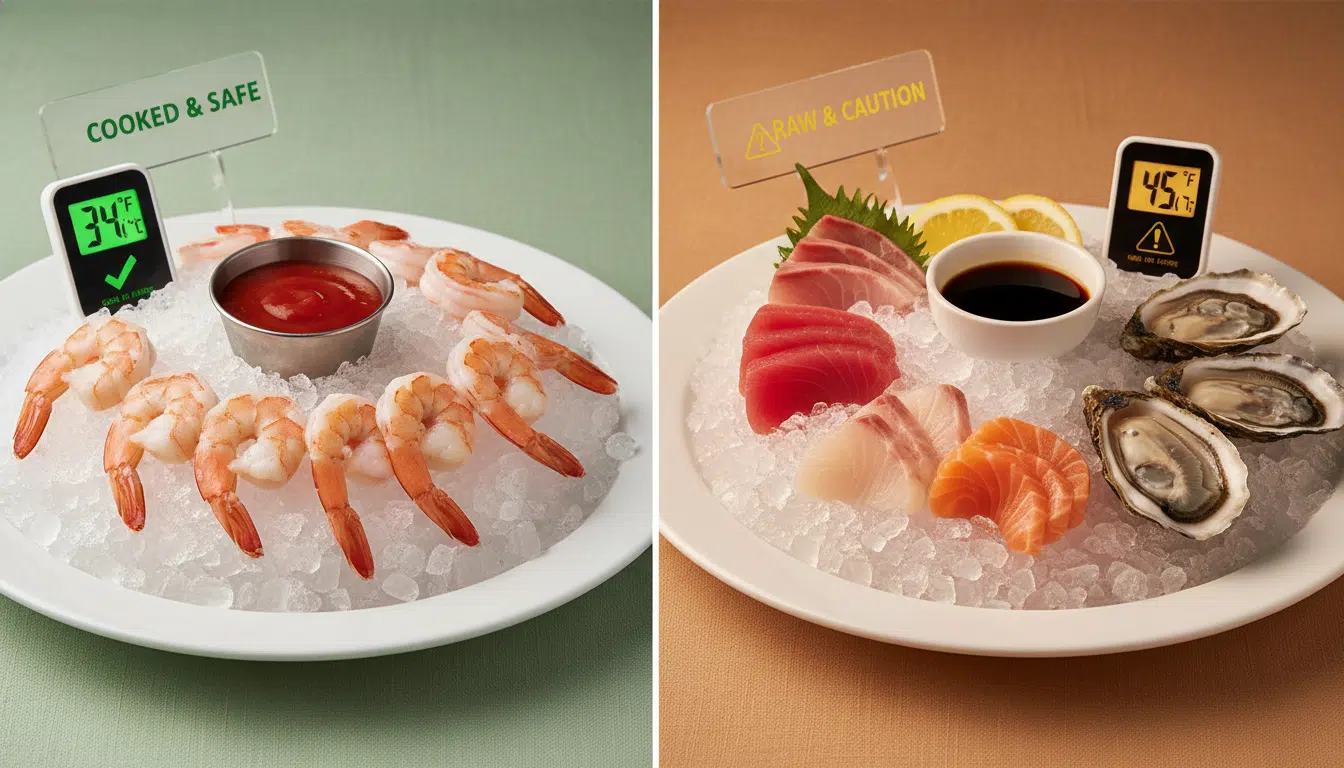
Seafood Safety: What Most Party Hosts Get Wrong (Yes, Even With “Cooked” Shrimp)
Let me say something that will either calm you down or ruin your appetite (sorry): seafood is one of those foods that can go from “fancy party platter” to “group text from your guests at 2 a.m.” if you get sloppy with temperature.
And here’s the thing I see all the time: people assume shrimp cocktail is basically invincible because it’s already cooked. Like, “It’s pink! It’s chilled! It’s fine!”
It can be fine. But seafood safety isn’t about whether something was cooked once upon a time. It’s about what happens after how cold you keep it, how long it sits out, and whether Uncle Dave uses the oyster fork to spear a shrimp and then puts it back (I love Uncle Dave, but he’s a menace).
So if you’re hosting and seafood is on the menu cooked platters, raw oysters, sushi night, whatever here’s the stuff that actually matters. Not the fear mongering. Not the “sniff it and pray.” Just the real rules that keep everyone happy and upright.
The #1 Rule: Seafood Lives and Dies by Temperature
Bacteria love the “danger zone,” which is 40°F to 140°F. In that range, bacteria can multiply fast like, “why is this happening” fast. The basic rule is:
- Max 2 hours total in the danger zone
- Max 1 hour if it’s over 90°F outside (hello, summer patio party)
And yes, the timer starts when the seafood leaves cold storage. Not when you remember to set a timer. (Ask me how I know. Actually don’t. I still feel guilt.)
If you do nothing else from this post: keep it cold, and don’t let it lounge on the counter.
Shopping: “Fresh” Isn’t a Force Field
I love a good fish counter moment. The crushed ice! The little lemon wedges! The illusion that I’m the kind of person who buys whole branzino on a Tuesday!
But here’s the truth: freshness helps with quality, but it’s not a safety guarantee. Some contamination doesn’t smell like anything. That said, there are still some hard no’s.
What I look for at the store
- Smell: mild ocean/clean smell. Not sour. Not ammonia. Not “something’s off.”
- Texture: fish should be firm and spring back, not mushy or slimy.
- Whole fish: clear, bright eyes (not cloudy and sad).
- Live shellfish: shells should be tightly closed, or close when tapped. If it stays open? Leave it.
Also: buy seafood as close to serving time as possible. Seafood is not your “I’ll just grab it Monday for Saturday’s party” item. That’s a leafy greens level of optimism.
Pro move: bring a cooler bag/ice packs if it’s a long drive or a hot day. The cold chain matters. You don’t want to be the one breaking it on the way home because you “just had one more errand.”
Your Fridge Should Be Colder Than You Think
Seafood needs your fridge at 40°F or below. And I’m begging you: don’t trust the little dial that says “colder / coldest” like it’s 1997. Get a cheap fridge thermometer and toss it in there. It’s the easiest adulting upgrade you’ll ever make.
Cold smoked seafood (like cold smoked salmon) is pickier store it at about 38°F if you can, because Listeria can grow at regular fridge temps. Fun fact! (Not fun. But useful.)
How long can seafood hang out in the fridge?
I’m going to keep this simple, because no one wants to consult a spreadsheet while holding a bag of shrimp.
- Most raw seafood (fish, shrimp, scallops): 1-2 days
- Most cooked seafood: 3-4 days
- Live mussels/clams: 2-3 days
- Live oysters: 7-10 days (still keep them cold and properly stored)
- Live lobster/crab: same day (they’re not a “later this week” situation)
If you’re already side-eyeing the calendar, here’s my hosting philosophy: when in doubt, don’t gamble cook it or ditch it. Your party is not a science experiment.
Cooked Seafood Still Needs to Cool Fast (No Countertop “Resting”)
If you cook seafood ahead of time (like boiling shrimp for cocktail, shrimp cocktail side ideas, poaching salmon, steaming crab, etc.), you need to cool it down quickly.
The food safety guideline is: cool from 135°F to 70°F within 2 hours, then down to 41°F within 4 more hours.
Translation: the “just leave it on the counter until it’s room temp” method is… not the vibe.
What actually works: shallow containers + an ice bath. I’ll literally set the container in a larger bowl of ice water and stir/rotate as needed. It feels extra, but it’s way less extra than food poisoning.
Thawing Seafood: Please Don’t Do the Sink Overnight Thing
Frozen seafood is awesome, honestly. It can be super high quality, and it’s a lifesaver for last minute plans. The danger is how people thaw it.
The safe thawing methods
- In the fridge (best option): slow, safe, and it keeps your options open. If you’re planning something like sushi/sashimi, fridge thawing is the route (assuming the fish meets raw safety requirements more on that below).
- Cold water thaw (fast option): put it in a leak proof bag, submerge in cold water, and change the water every 30 minutes. Most fillets thaw in about 1-2 hours.
Important: if you thaw this way, cook it afterward. Don’t thaw in cold water and then serve it raw.
Two big safety notes I don’t mess around with:
- Never thaw seafood at room temp. The outside warms up into the danger zone while the inside is still frozen. It’s basically inviting bacteria to a block party.
- Always open vacuum packed seafood before thawing. In low oxygen packaging, botulism toxin can form if it’s mishandled. So: open it, rewrap, then thaw safely.
Cooking Seafood: Yes, Use a Thermometer (You’re Not a Bad Cook)
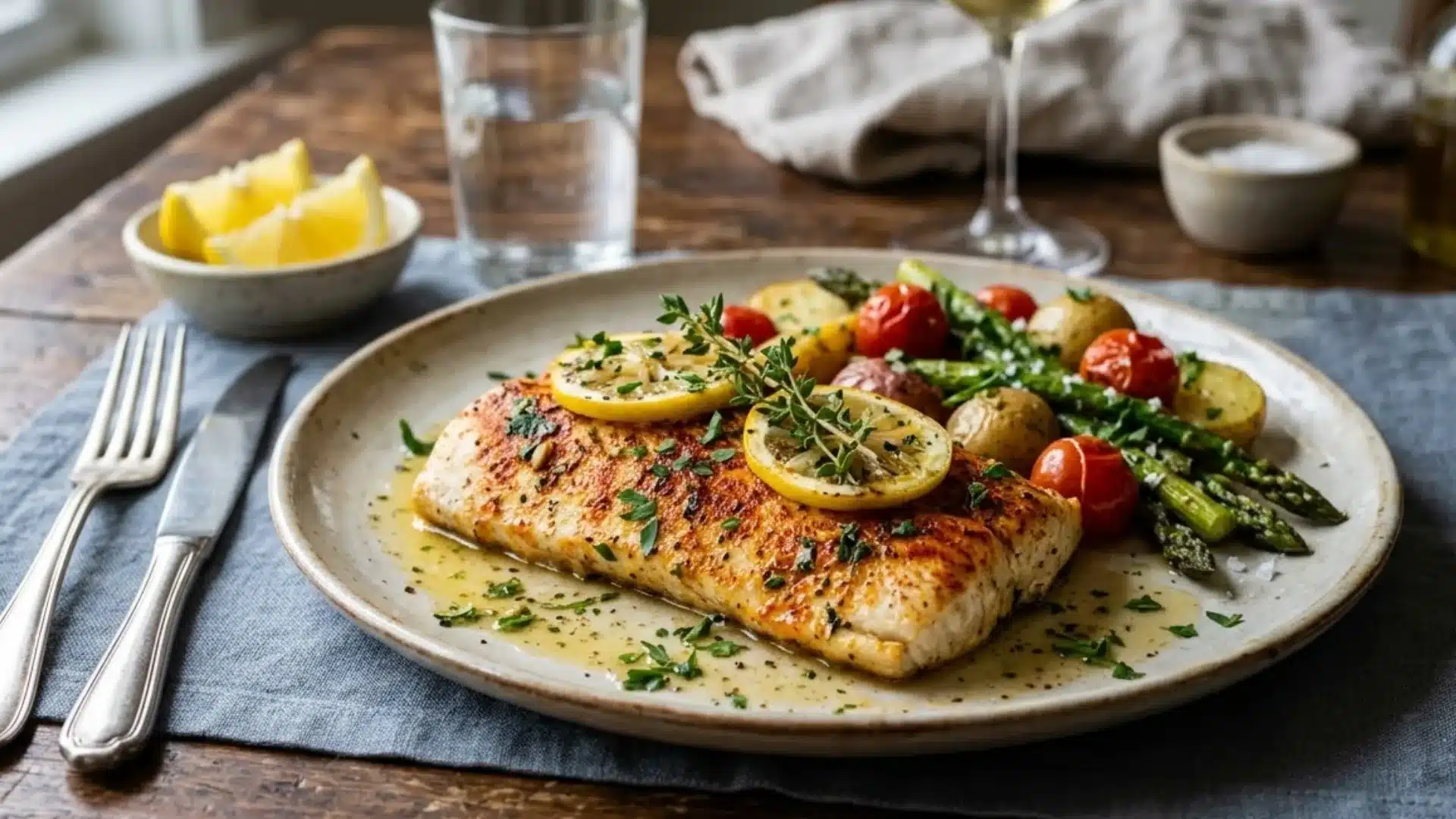
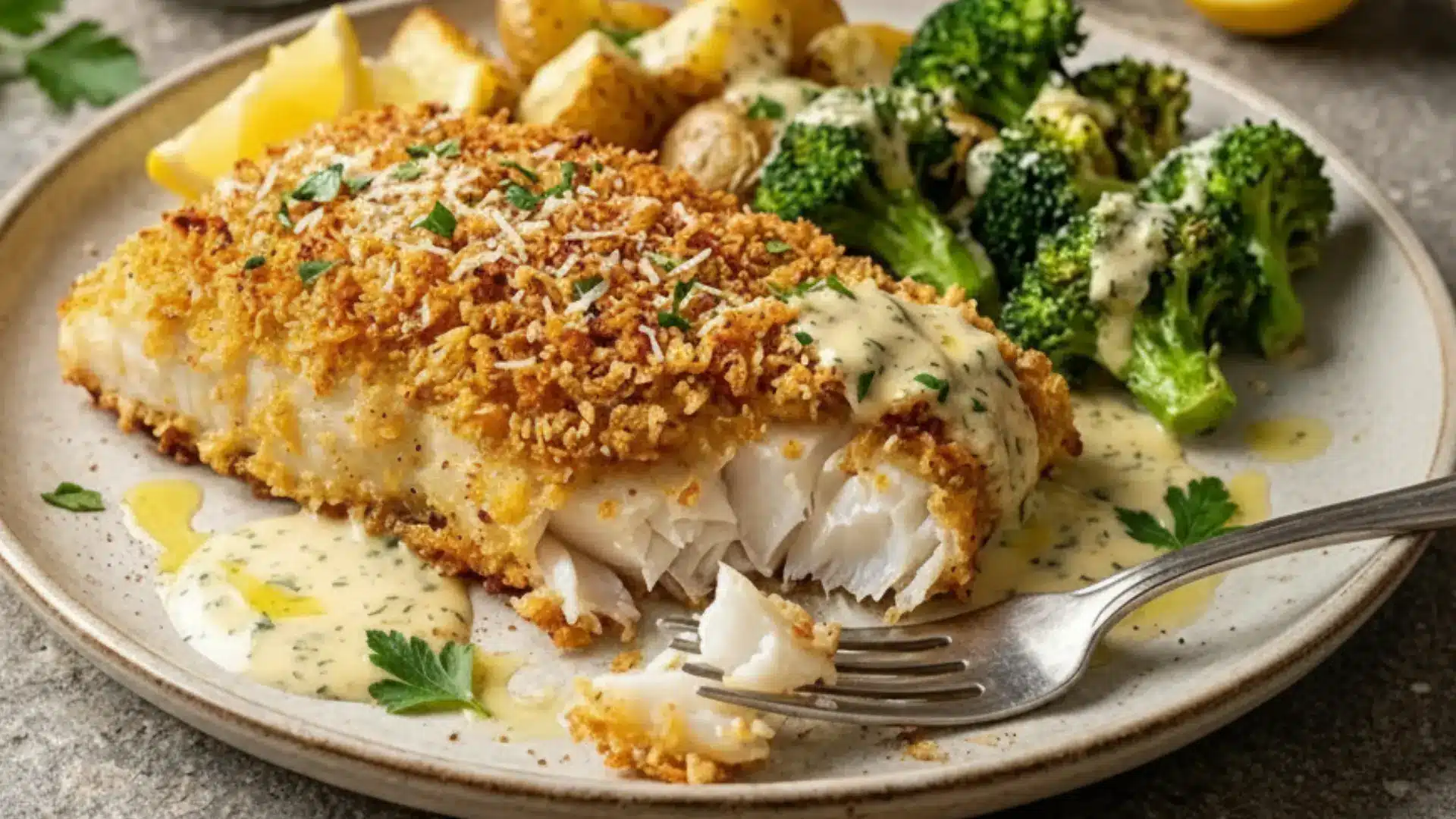
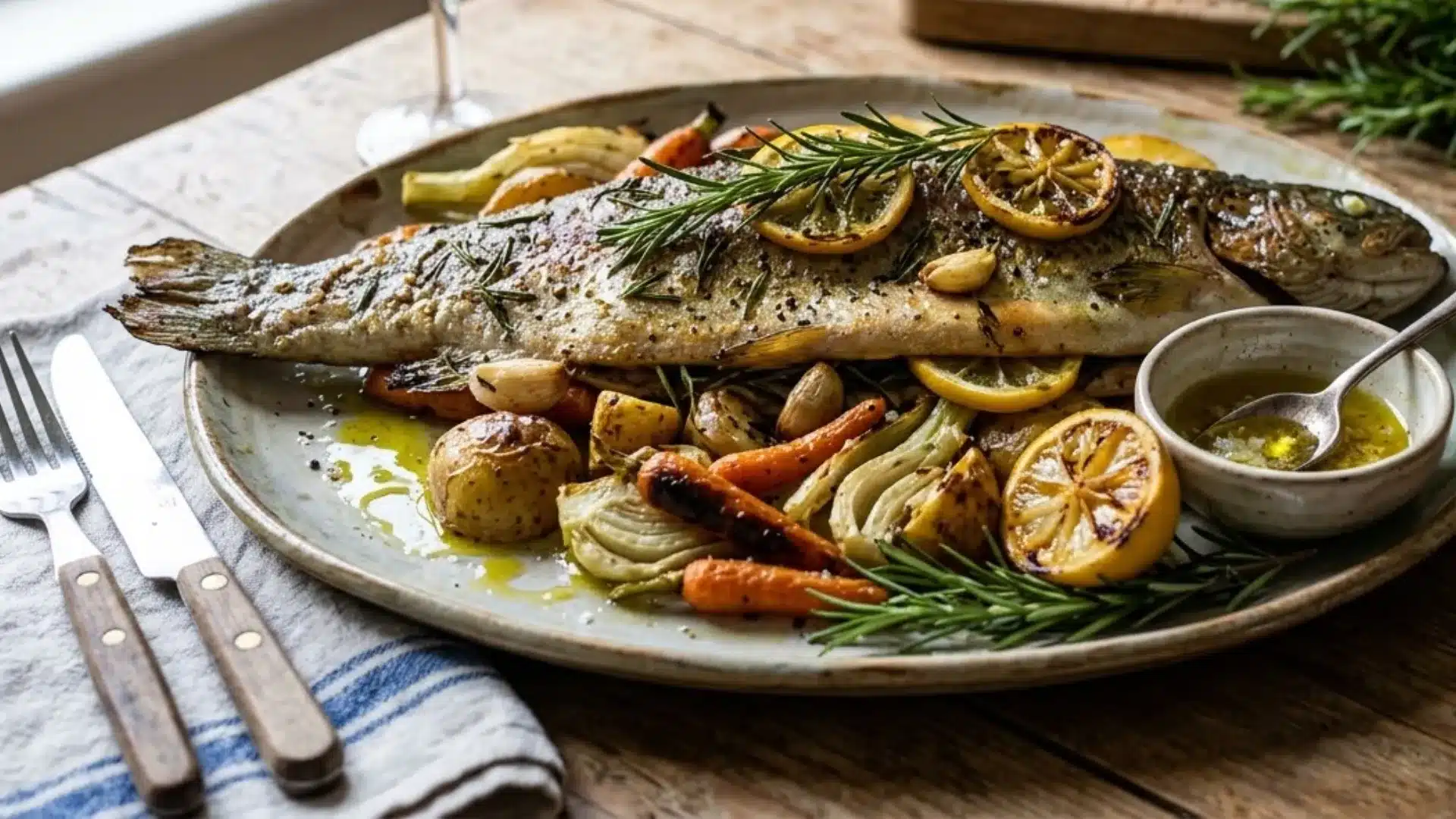
If you’re cooking seafood for your gathering, the target is 145°F for 15 seconds. That knocks out the big bacterial risks (and it also takes care of parasites in the flesh).
Could you go by looks? Sometimes. But if you’ve ever overcooked salmon into dry heartbreak, you already know why I like thermometers: they save dinner.
Quick visual cues (as a backup):
- Fish: opaque and flakes easily
- Shrimp: firm and C shaped (tight O shape can mean overcooked)
- Scallops: opaque throughout
- Clams/mussels/oysters: shells open while cooking
One more shellfish rule: if a shell stays closed after cooking, toss it. It was likely dead before cooking, and you don’t want to play “maybe it’s fine.”
Also keep in mind: seafood keeps cooking for a minute after you pull it off the heat. Scallops especially can climb in temp fast. (They’re dramatic like that.)
Serving Seafood at a Party: The Ice Tray Is Not Decorative
This is where most party hosts blow it not because they’re careless, but because they’re busy refilling drinks, using smart appetizer cocktail matches, answering the door, and trying to act like they’re not sweating.
Here’s what I do when seafood is out:
- Use ice like you mean it: set the serving dish into a bigger tray of ice, or nestle seafood on ice with a barrier so it’s not sitting in meltwater. A bed of ice = good. A sad lukewarm puddle = no.
- Rotate platters: don’t “top off” a platter that’s been sitting out. That’s like adding fresh laundry onto a pile of dirty laundry and calling it folded. Swap the whole platter with a cold backup from the fridge.
- Separate utensils: raw and cooked items get their own tongs/forks. If someone cross contaminates (it happens), replace the utensil. Yes, it’s annoying. No, I don’t care do it anyway.
If you’re outside
Use a pre-chilled cooler, keep it closed as much as possible, park it in the shade, and don’t put seafood in there unless it’s already properly cold. And remember the 1-hour rule if it’s blazing hot out.
Raw Seafood: Not Automatically “Bad,” Just Way Less Forgiving
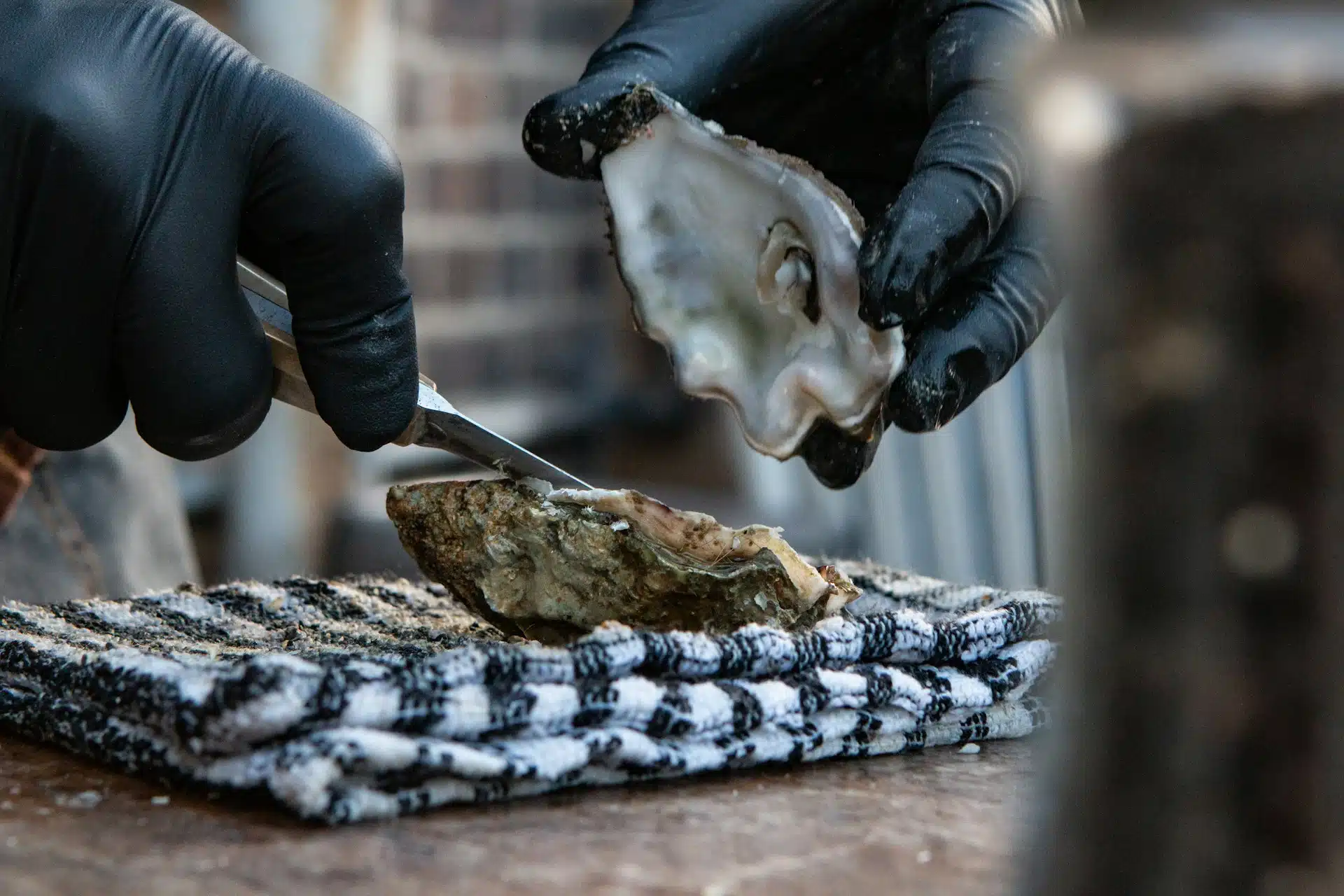
I’m not here to clutch pearls about raw seafood. I like sushi. I get the appeal of oysters. I have, on occasion, made ceviche and felt extremely coastal and mysterious.
But raw service has tighter rules. The three buckets:
- Cooked then chilled (most party platters): cook to 145°F, cool quickly, keep cold, serve within the safe window.
- Truly raw (sushi/sashimi/some ceviche): needs excellent sourcing, strict cold control, and (usually) parasite freezing standards.
- Cold smoked seafood: not fully cooked during processing, so treat it like raw from a safety standpoint.
Cold smoked salmon: the sneaky one
Cold smoked fish is smoked at temps that don’t kill germs. Hot smoked products are actually cooked during processing (big difference). Because Listeria can grow in the fridge, cold smoked stuff needs extra care: keep it very cold (around 38°F) and don’t let it sit out.
If you have vulnerable guests (more on that in a second), the safest move is to skip cold smoked or heat it to 165°F before serving. (Yes, I know. It’s not the same. But neither is a hospital visit.)
“Sushi grade” is… marketing
I hate to be the one to say it, but “sushi grade” has no legal meaning. It’s not a regulated label. What matters is how the fish was handled and whether it meets freezing standards to reduce parasite risk.
Some species are considered low parasite risk and are often exempt (like certain tuna species). But for many fish, the FDA parasite destruction standard is along the lines of freezing to very cold temps for set times (commercial processes can do this quickly; home freezers are typically around 0°F and require longer).
My real life advice if you want to serve raw fish at home: buy from a fishmonger you trust, ask questions, serve it the same day, and don’t wing it.
Who Should Skip Raw Seafood (No Debate, Just Safety)
If any of these people are at your gathering, keep it cooked:
- Pregnant or breastfeeding guests
- Kids under 5
- Adults 65+
- Anyone immunocompromised
- People with liver disease, diabetes, or iron overload disorders
And especially: raw oysters can be very risky for vulnerable folks due to Vibrio. If you’re hosting and you’re not 100% sure who’s in what category, it’s perfectly okay to choose the safer menu. Your friends will survive without the raw bar. (And if they won’t, they can host next time.)
My “Don’t Panic” Party Checklist
- Fridge at 40°F or below (thermometer, not vibes)
- Seafood out no more than 2 hours (1 hour if it’s over 90°F)
- Serve on ice and rotate platters don’t top off
- Thaw in the fridge (or cold water + cook afterward)
- Open vacuum packed seafood before thawing
- Cook to 145°F (and shellfish that don’t open after cooking get tossed)
- Skip raw if vulnerable guests are present
If you take nothing else away: seafood is not hard, it’s just picky. Keep it cold, keep it clean, and don’t let it sunbathe on your kitchen island while you “just do one more thing.”
Now go be the party host with the gorgeous seafood spread and the excellent life choices. That’s my favorite kind.