

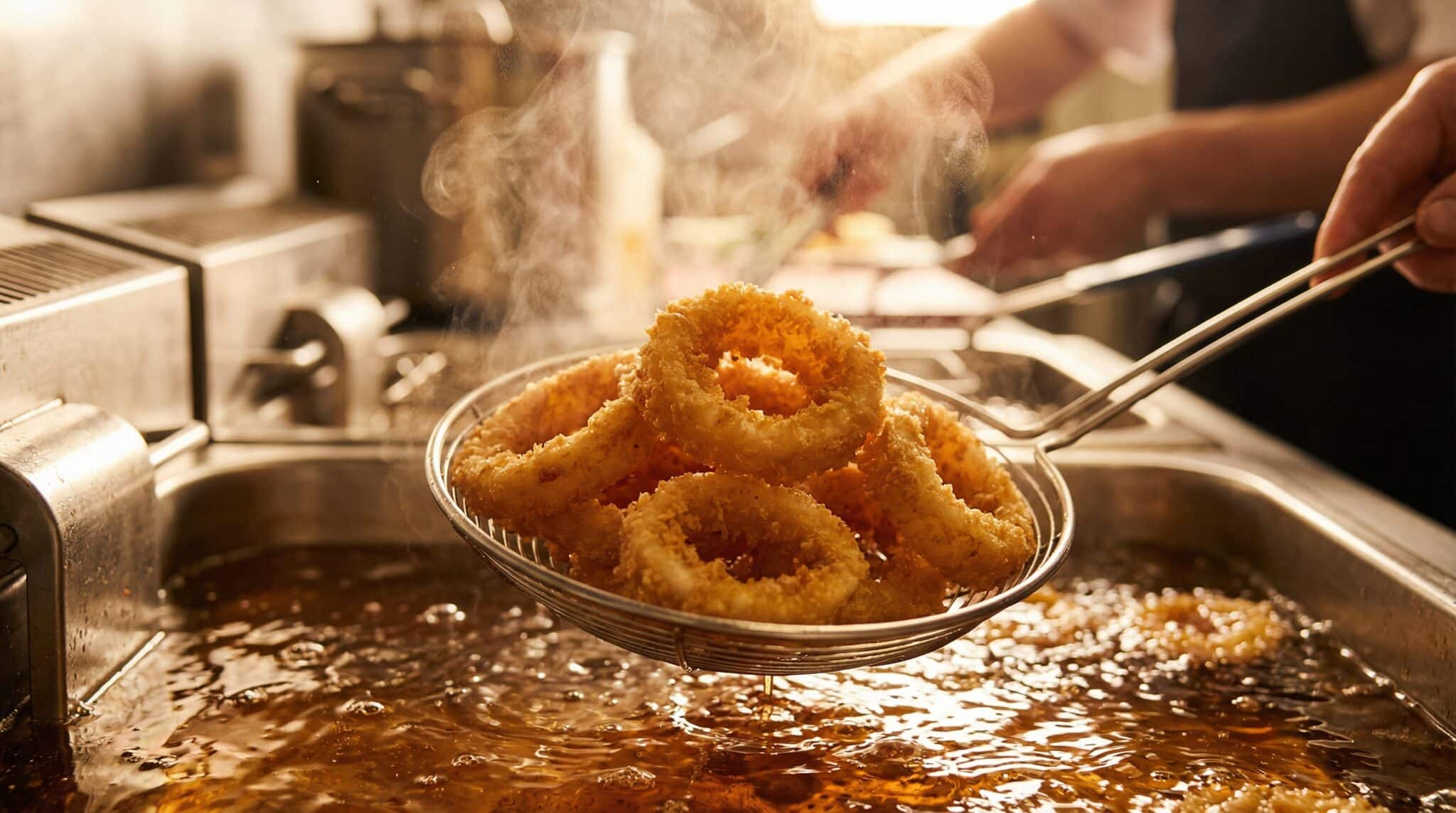
Crispy Calamari in 90 Seconds (Yes, Really): How to Avoid the Rubbery Doom Zone
Let me paint you a painfully specific picture: you make calamari at home, it comes out looking so legit golden, crunchy, restaurant vibes and then you take a bite and it chews like a pencil eraser wearing a winter coat.
If that’s happened to you, congratulations: you’ve met the squid’s one true personality trait it goes from tender to rubber in the time it takes to answer a text. And no, it’s not because you’re “bad at cooking.” Squid is just dramatic.
Here’s the secret: fried calamari is a timer sport. Not a “vibes” sport. Not a “just one more minute” sport. A timer sport.
The “Squid Clock” (aka why 30 seconds ruins everything)
Squid doesn’t cook like fish. Fish is like, “Hi, I’m delicate, be gentle.” Squid is like, “I will be perfect for 90 seconds and then I will punish you.”
Here’s the basic timing truth that changed my life:
- Quick cook zone (about 60-120 seconds): tender, lovely, easy to bite.
- Rubber doom zone (about 2-25 minutes): tight, chewy, makes you question your choices.
- Long cook zone (about 40-45 minutes): it relaxes again (great for braises and stews).
So when people cook calamari for 3-5 minutes because it “seems safer”… that’s literally the worst possible window. Pulling it at 90 seconds isn’t undercooking. It’s escaping.
Step 1: Buy the squid that won’t sabotage you
Hot take: frozen squid is often better than “fresh.” A lot of “fresh” seafood has had a long emotional journey to the display case. Flash frozen squid is usually processed quickly and stays in better shape.
If you buy frozen:
- Thaw it in the fridge overnight (12-18 hours), or do a cold water bath for 1-2 hours.
- Don’t microwave thaw it unless you enjoy mystery textures.
If you buy fresh:
- Look for flesh that’s shiny/translucent and springs back when you press it.
- It should smell like the ocean, not like a dockside argument.
Step 2: Prep it like you mean it (dry squid = crisp squid)
This is the unsexy part that makes or breaks the whole thing:
Dry it thoroughly
Pat it down with paper towels like you’re trying to get it ready for a passport photo.
Why? Because water + hot oil = splatter city, and moisture also makes your coating slide off like a bad peel and stick wallpaper situation.
Cut rings the “not too thin, not too thick” size
I like rings around ¾ inch wide (pinky-ish width).
- Too thin = they overcook before the coating even turns golden.
- Too thick = the outside browns while the inside is still figuring itself out.
And yes, remove the weird plastic-y “pen” if you’re working from whole bodies. (The first time I pulled that thing out, I truly thought I’d discovered a secret squid artifact.)
Optional: Do you need to tenderize?
If your squid seems decent and you’re frying it properly, skip tenderizing. Timing beats gimmicks.
But if you’ve had tough squid before (or you’re nervous), a buttermilk soak is the gentle, low drama option:
- Soak 30 minutes to 2 hours (up to 6 hours in the fridge if life happens)
It can take the edge off and helps with any strong smell. I’m not saying it’s magic. I’m saying it’s insurance.
Step 3: The coating that actually stays crispy
My go to simple mix:
- 1 cup all purpose flour
- 3 tablespoons cornstarch (this is the crisp maker)
- 1 teaspoon salt
- ½ teaspoon black pepper
Toss the dried squid in it, then shake off the excess. Big clumps seem fun until you realize they insulate the squid and push you right into the rubber zone. We do not visit the rubber zone.
Want extra crunch? Do a double dredge (dry → buttermilk/egg → dry). I do this when I’m trying to impress someone or when I’m feeling emotionally fragile and need a win.
Step 4: Oil temp + small batches = your whole personality now
If you take nothing else from this post, take this:
Oil needs to be 350-375°F
- Too cool (<340°F) = greasy coating, longer cook time, sadness.
- Too hot (>375°F) = outside burns while the squid turns into a bouncy ball inside.
Use a thermometer if you can. They’re cheap and they save you from “Is this hot enough?” spiraling.
Fry in small batches
Crowding the pot drops the temperature fast, and that’s how people accidentally cook calamari for too long trying to “get the color.”
So: small batches, strong sizzle. Wait a couple minutes between batches so the oil can recover.
The Actual 90 Second Secret (set the timer, don’t freestyle)
Once your squid not octopus hits the oil, start a timer immediately.
- Most rings: 90 seconds to 2 minutes max
- Tentacles: usually around 90 seconds
You’re looking for pale to medium gold, not deep “I got distracted and reorganized my spice drawer” gold.
Pull it fast, drain it on a wire rack (paper towels trap steam and soften the crust), and salt it immediately. Then serve right away. Calamari is not a “we’ll eat in 45 minutes” appetizer. Calamari is a “gather round while it’s still crispy” moment.
If something goes wrong, here’s the diagnosis (no panic)
- Rubbery/chewy: cooked too long. Next time: shorter time or hotter oil.
If it’s already rubbery? Don’t keep frying. Braise it (tomato sauce, garlic, simmer) and it’ll eventually soften. - Greasy/spongy: oil too cool or pot too crowded.
- Coating sliding off: squid was wet. Dry it like you mean it.
Most calamari texture and chew heartbreak is caused by one of three things: moisture, low oil temp, or “just one more minute.”
Want to skip frying? Totally fair.
Not everyone wants to deep fry on a Tuesday (or ever).
- Air fryer: 375°F for about 8-10 minutes. Spray with a little oil and don’t expect identical results, but it’s a solid option.
- Braising: the most forgiving method. Squid + sauce + time = tender.
- Pasta/risotto: add squid at the very end (last 2 minutes) and serve immediately.
My final pep talk (because squid is bossy)
Calamari isn’t hard, it’s just unforgiving. The window is tiny, but once you respect it, you’ll get that crisp, tender, “wait you MADE this?” result at home.
So: dry it, coat it, hot oil, small batches, timer on, and pull it at pale gold like you’re stealing it from the pan.
And if you do accidentally make rubber rings? Congratulations, you’ve got the perfect excuse to simmer them in sauce and pretend you meant to make something rustic.