

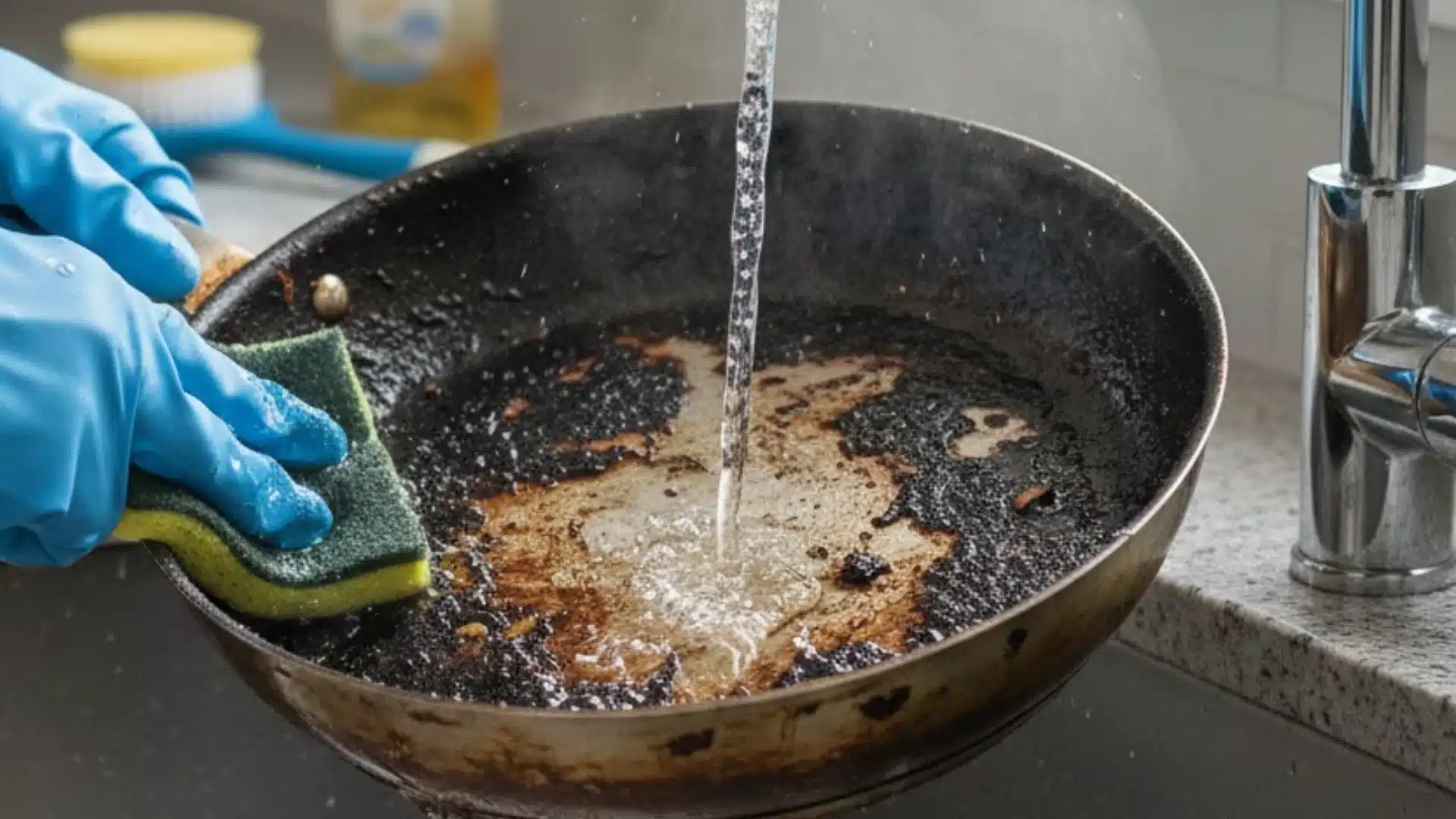
So, a few years back, I left a pan on the stove a little too long. What came back to me was a layer of black crust I was convinced would never come off.
It sat in the sink for a day before I finally dealt with it.
Most people go straight for the scrubber, but there is a lot more to cleaning a burnt pan than that (trust me).
Let me walk you through the right way to do it.
Why are Burnt Pans so Hard to Clean?
When food burns, it goes through a chemical change.
The sugars, proteins, and fats break down under high heat and fuse to the surface of the pan.
Regular dish soap and a sponge just don’t have what it takes to break that bond.
A badly burnt pan isn’t irreversible; it just needs hot water.
Just soak it first with hot water, add a squirt of dish soap, and let it sit for at least 30 minutes. This loosens the burnt layer.
Let me tell you about this in detail.
How to Clean Burnt Pan (Step-By-Step)
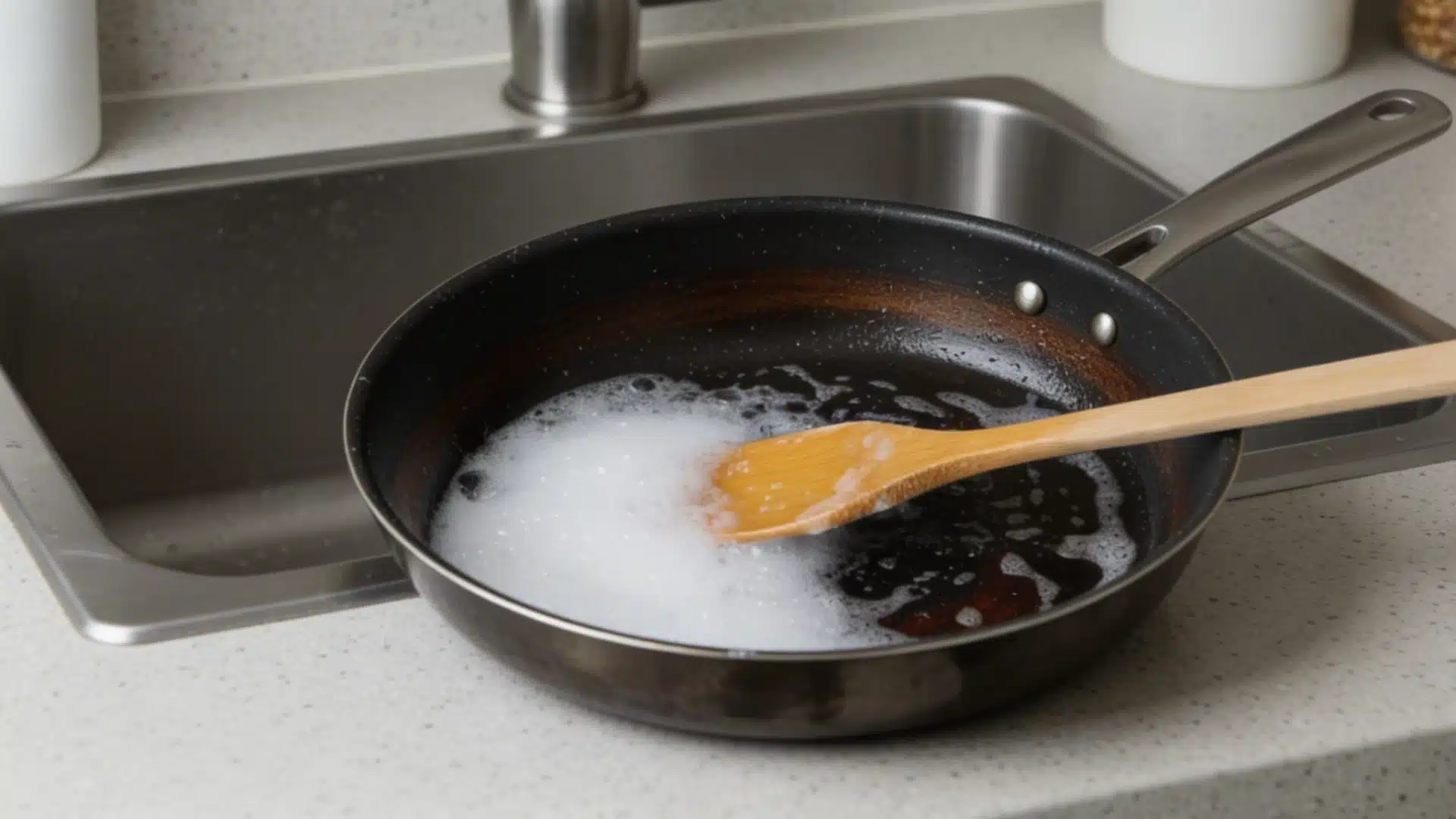
This cleaning process is my go-to.
Step 1: Let the Pan Cool Down: I never start scrubbing a hot pan. I let it cool completely first.
Remember, a hot pan can warp if you pour cold water on it suddenly. So give it at least 15–20 minutes to cool completely before you start scrubbing.
Step 2: Remove Loose Debris: Once it’s cool, you can scrape off what you can with a wooden spoon or a plastic scraper.
When you start with scrapping, you’d notice how magically it worked.
My tip: Avoid using metal, as it scratches the pan.
Step 3: Soak the Pan: Don’t wash it immediately. Fill it with hot water and a few drops of dish soap.
Let it sit for at least 30 minutes.
For really bad burns, I leave mine soaking for a couple of hours, which helps soften the residue.
Step 4: Apply Your Cleaning Agent and Scrub: Now, throw the water away, and put dishwashing liquid on it.
Depending on your cookware, take either a cloth or a non-scratch sponge. Spread the liquid and let it sit for at least 15 minutes before scrubbing.
My tips: Remember to work in circular motions and do not rush.
Step 5: Rinse and Repeat if Needed: Now rinse thoroughly with mild water. Some burns might need two rounds.
Just reapply the dishwashing liquid and give it another go.
It’s much cleaner by the second attempt.
Step 6: Dry Immediately: This is non-negotiable, especially when you have a cast-iron pan and a carbon steel pan.
I always keep a dry kitchen towel nearby just for this.
Leaving a pan wet can lead to rust and water stains that can be irritating to deal with.
Did you know? A burnt nonstick pan can release harmful gases, so try to avoid burning it.
Other Tricks on How to Clean a Burnt Pan
These alternatives have been tried and tested by me over the years. You don’t need to buy anything. Get it done with things you already have in your kitchen.
1. Using Baking Soda
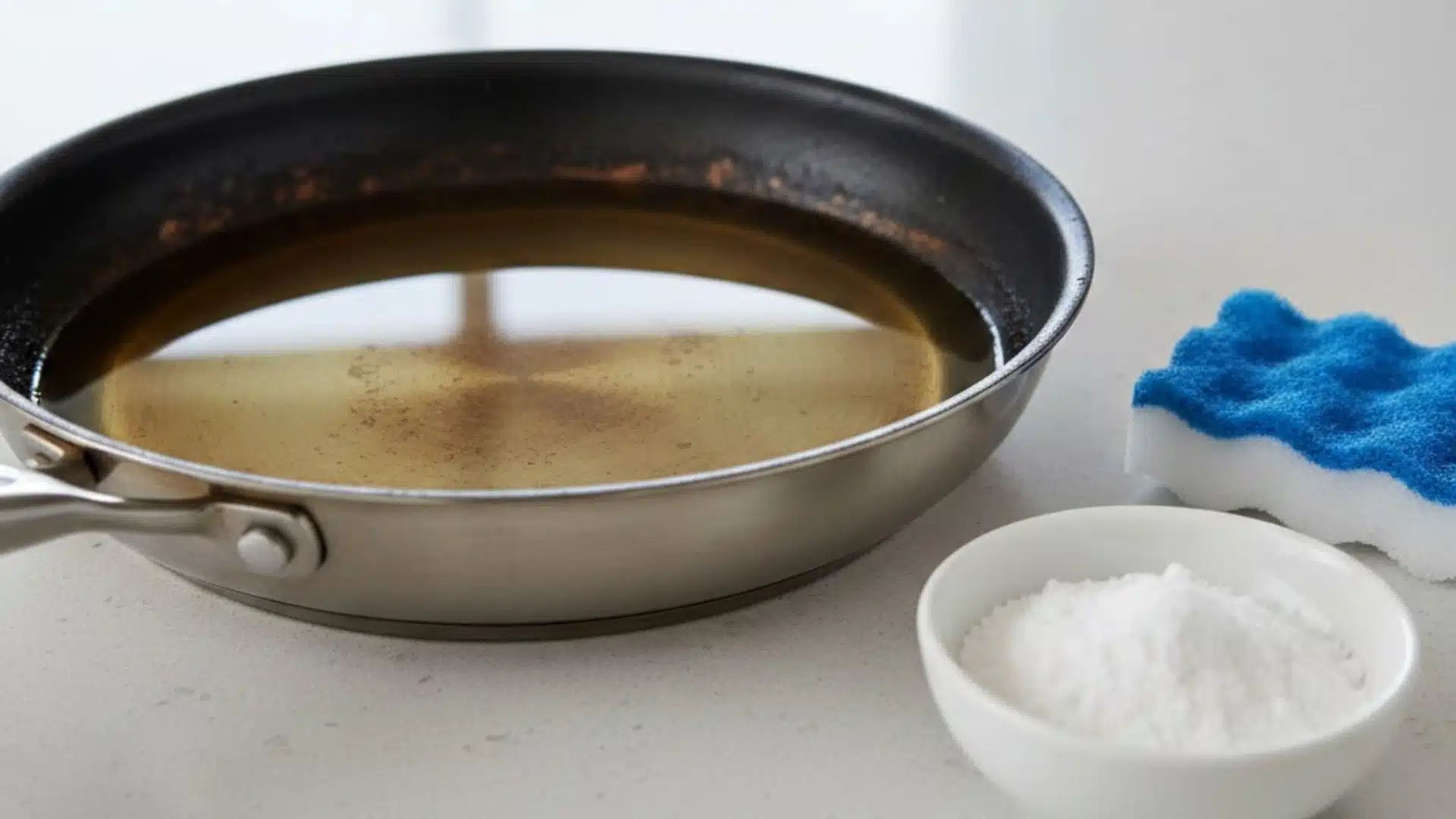
Baking soda is mildly alkaline, which helps break down acidic, burnt food and grease stuck to the pan surface.
Instructions:
1. Sprinkle a layer of baking soda directly onto the burnt area, making sure it covers every spot.
2. Add just enough water to turn the baking soda into a thick paste. I add water slowly and mix as I go, because too much water makes it runny and less effective.
3. Leave the paste for 15–20 minutes or more. The baking soda breaks down the burnt residue and loosens it.
4. Now its time to scrub. I start by scrubbing with a non-scratch sponge in circular motions.
5. After the scrubbing, rinse with mild water, and then if there’s still any residue, reapply the paste, rinse it clean, and pat dry.
2. Using Salt
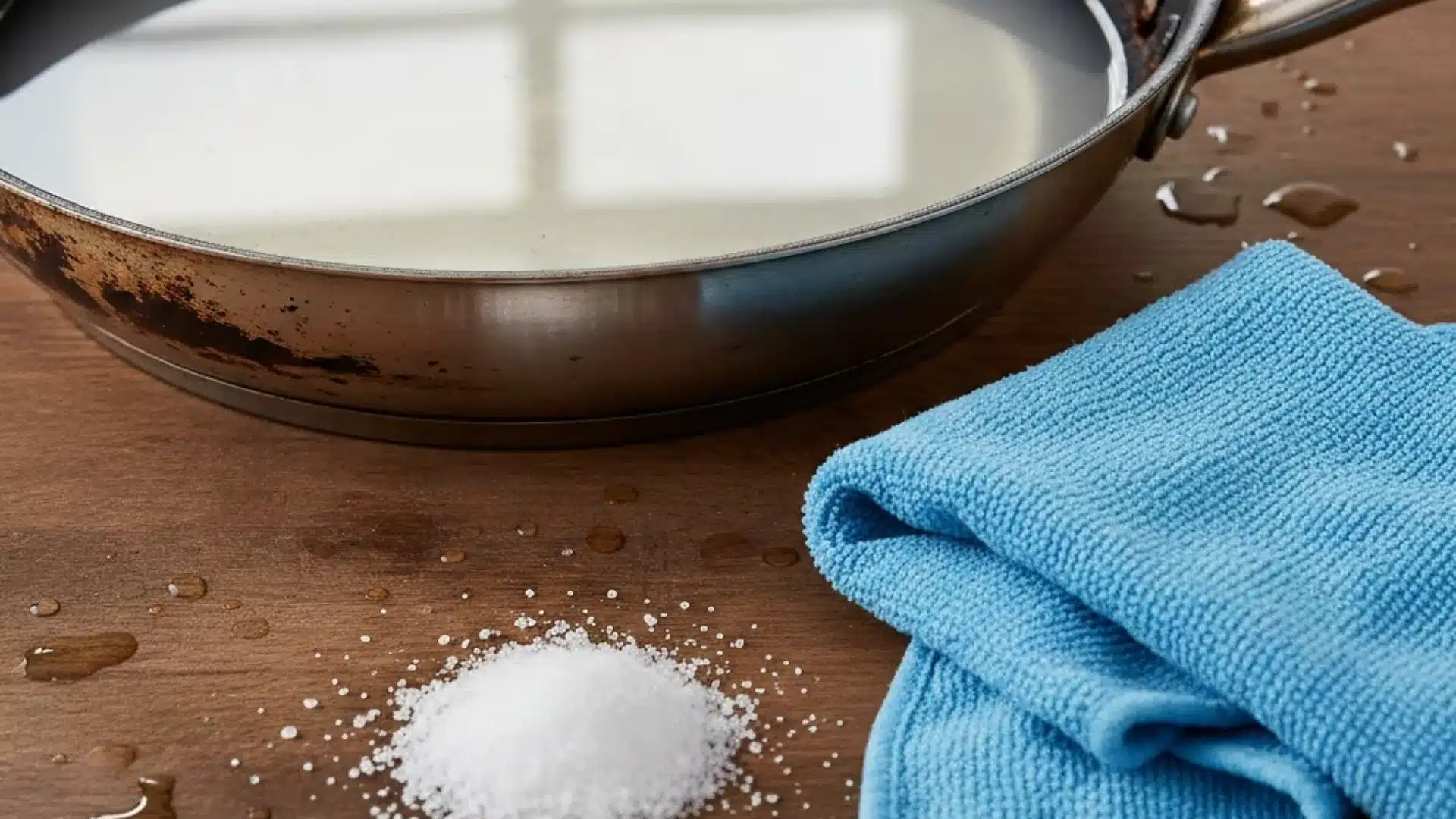
The texture of salt acts as a natural abrasive.
When mixed with a little water, it forms a paste that loosens up even the stubborn burns.
Instructions:
1. Start by pouring coarse salt directly onto the burnt surface while the pan is still slightly heated, as it helps the salt penetrate the residue.
2. Add a little water to create a paste. Make it thick enough to help you scrub, and not watery, as it won’t work.
3. What I do is use a folded paper towel or soft cloth to scrub the burnt areas. The salt acts as a natural abrasive, removing the burnt bits without scratching the surface.
4. At last, rinse thoroughly with mild water. And make sure to dry the pan immediately.
Remember, cast iron rusts faster, so dry it ASAP.
3. Using Vinegar and Baking Soda
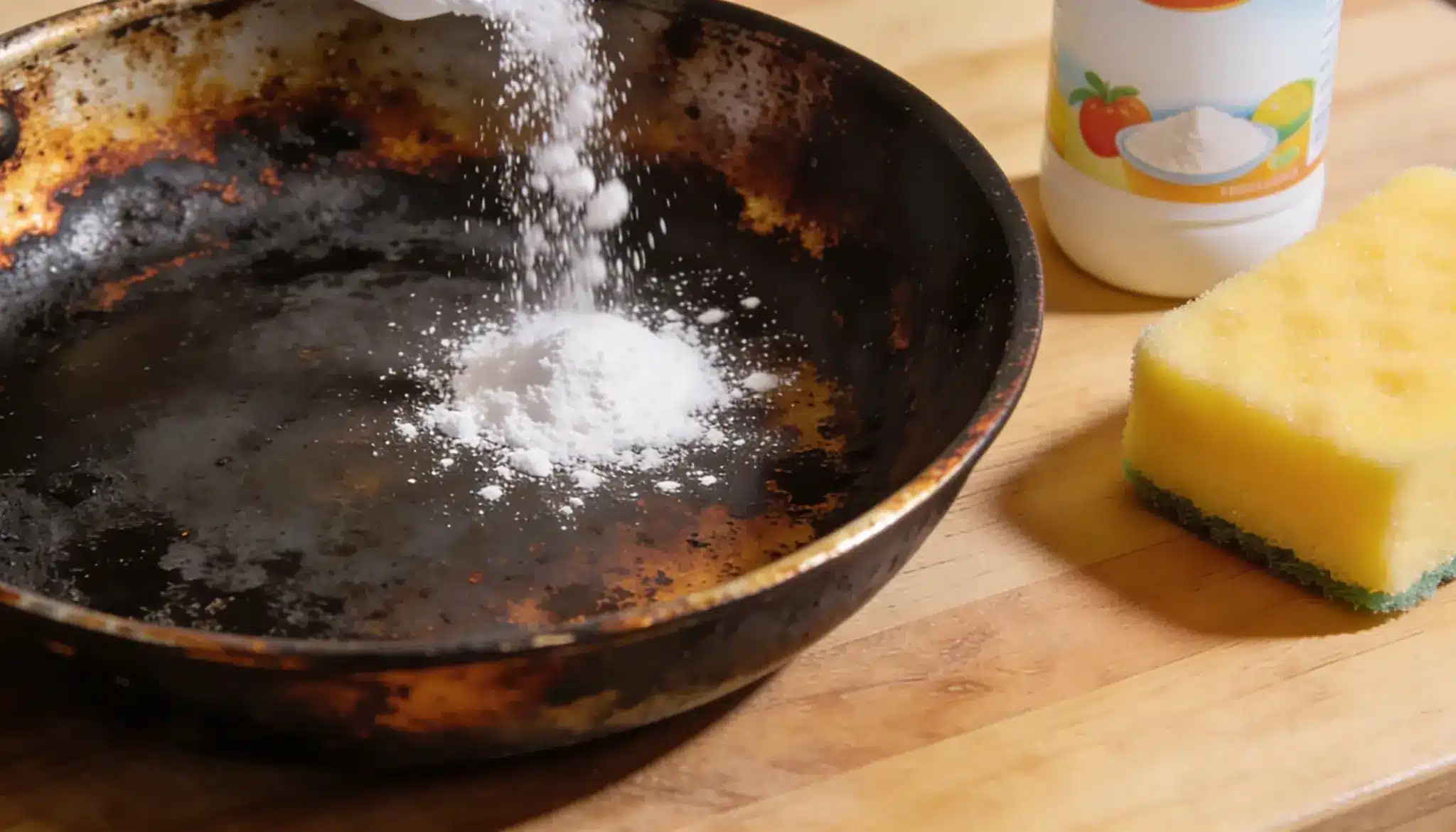
White vinegar is acidic, and baking soda is alkaline.
When combined, they react and fizz, separating the burnt residue from the pan.
Instructions:
1. Take your white vinegar and pour a thin layer into the pan. Cover the burnt bottom completely.
2. Now place the pan on the stove and heat it until it starts to simmer, helping the vinegar penetrate the burnt layer.
3. Remove the pan from the stove and add two tablespoons of baking soda. It’ll fizz up immediately. And that’s when the burnt residue separates from the pan surface.
4. Leave the baking soda for about 15 minutes or more. Don’t skip this step, the longer it sits, the more effective.
5. I use a non-scratch sponge for scrubbing, then rinse it with hot water and pat it dry.
My tip: Avoid cleaning aluminium pans using vinegar, it can cause damage.
4. Lemon and Boiling Water
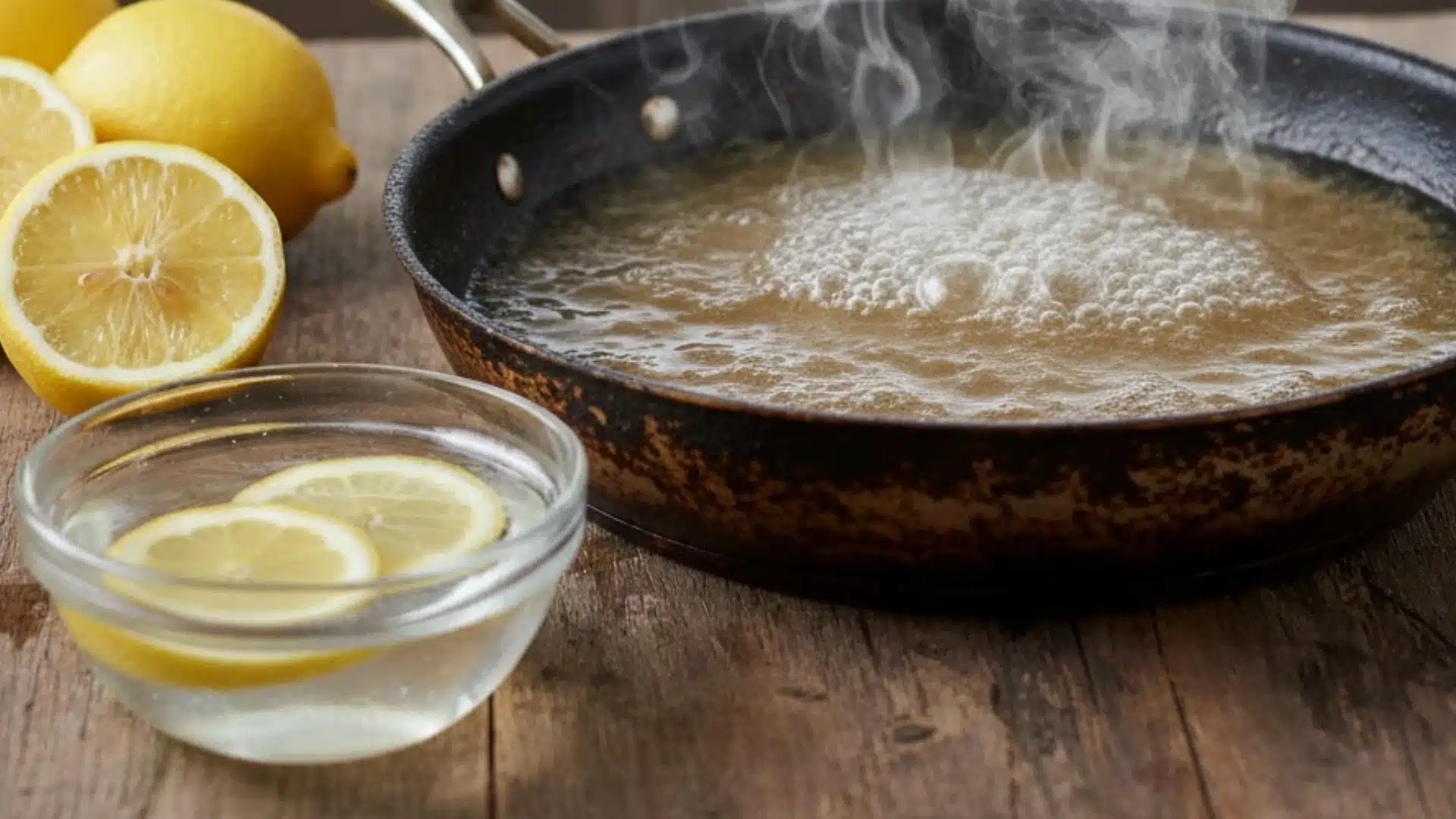
Lemon is known to remove various stains, and it also removes stains from a burnt pan.
Instructions:
1. Take some lemons, slice them, and place them directly into the burnt pan. The citric acid in the lemons removes the tough, burnt stains.
2. Fill the pan with water, then bring it to a good boil on the stove. Let it simmer for 5–10 minutes so the lemon water penetrates the burnt residue.
3. Now remove the lemons and carefully pour out the hot water.
4. While the pan is still a little hot, scrub with a soft sponge. The residue comes away much more easily than before.
5. Rinse well with mild water and dry immediately.
5. Dryer Sheet
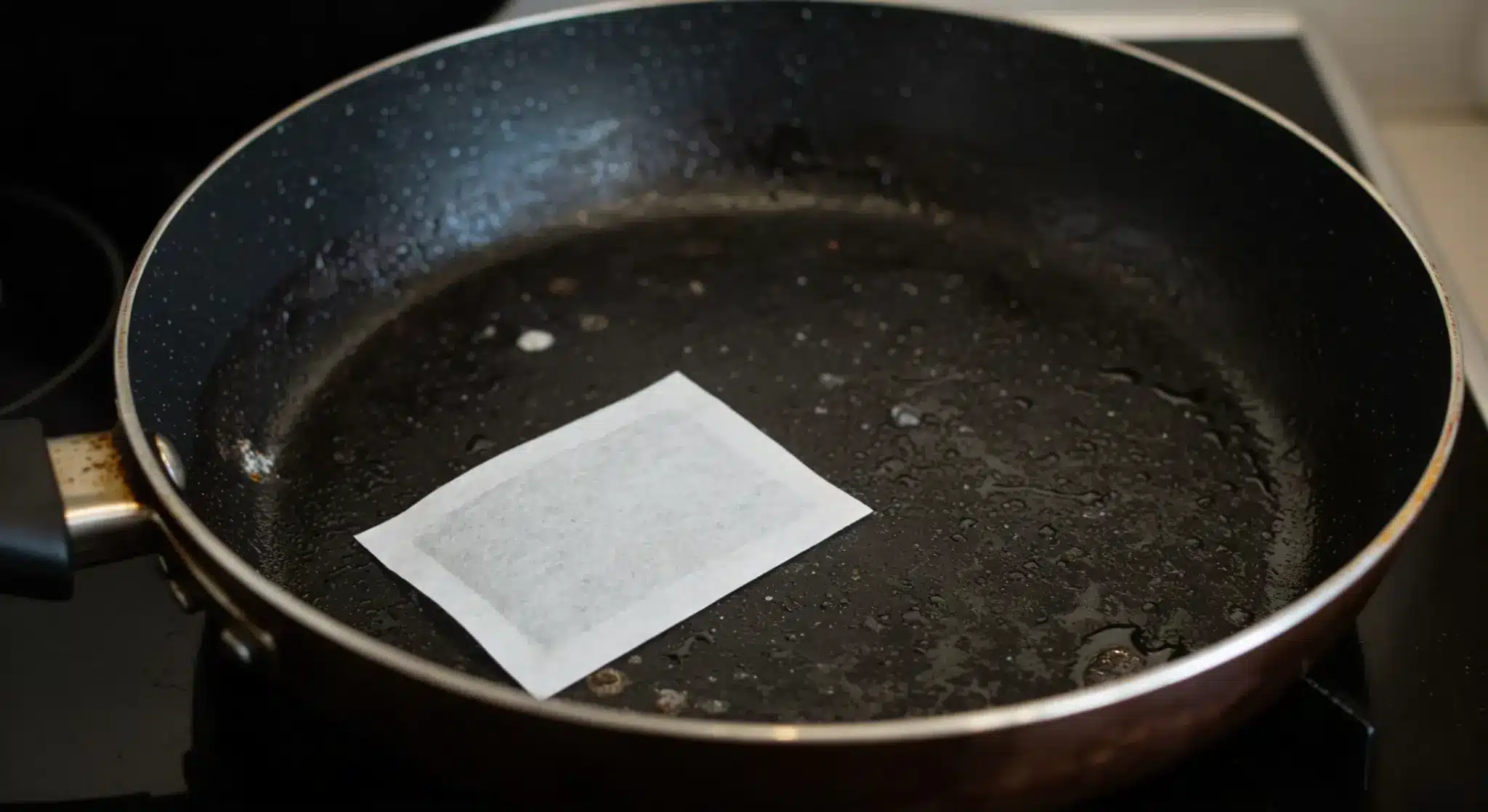
Dryer sheets contain fabric softener, which, when activated by hot water, breaks down and loosens burnt grease and food residue from the bottom of the pan.
Instructions:
1. Firstly, place one dryer sheet flat inside the burnt pan, covering all the burnt areas.
2. Fill the pan with hot water to cover the dryer sheet and burnt areas. The water activates the fabric softener, and then it spreads evenly throughout the pan.
3. I let it soak overnight or for at least 4–6 hours. The longer you leave it, the more the residue softens.
4. Now remove the dryer sheet, wipe the pan clean with a soft sponge, then wash with dish soap and mild water. Rinse and dry straight away.
6. Deglazing Method
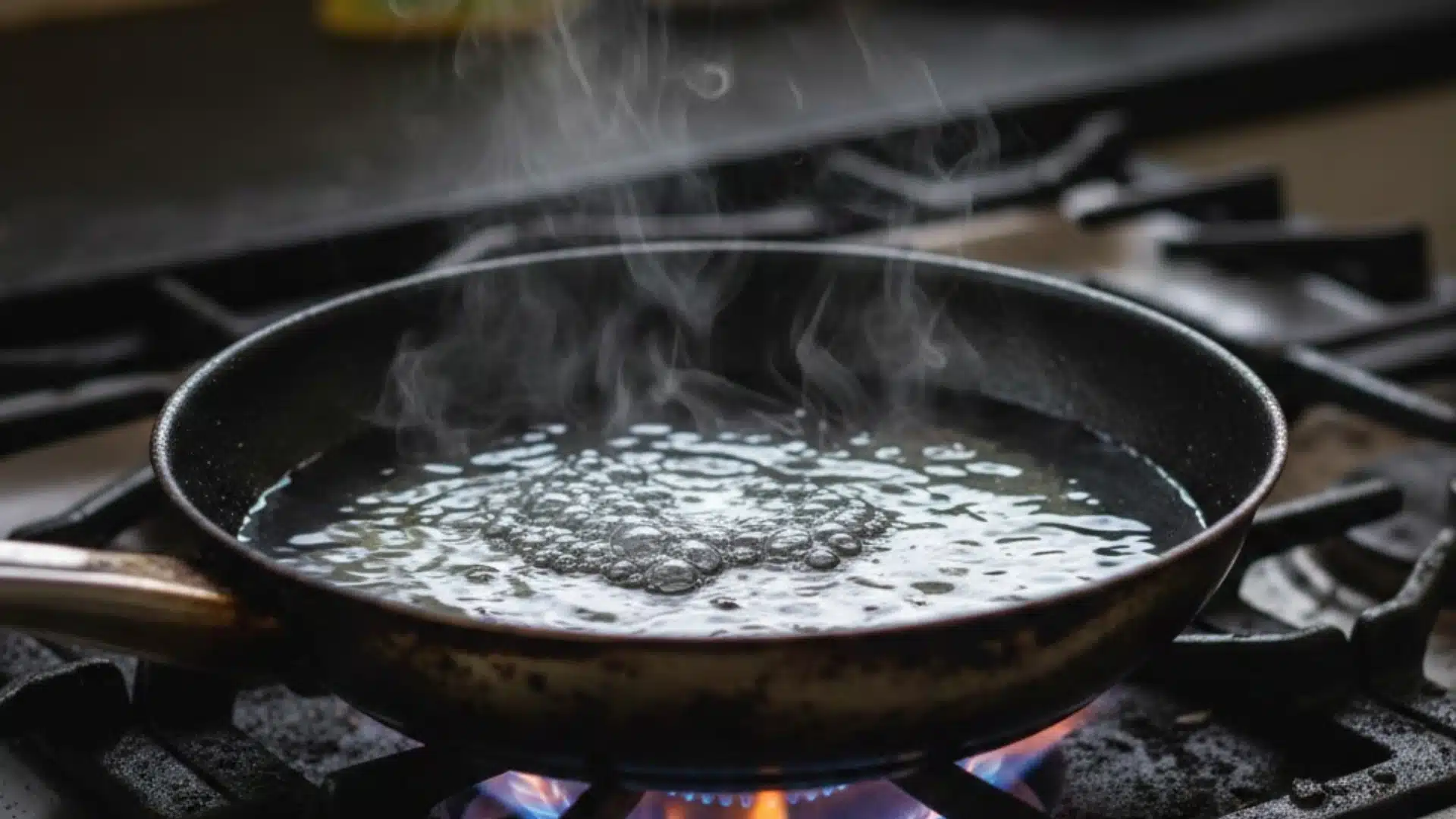
Deglazing is adding liquid to a hot pan to loosen all the burnt bits from the bottom.
The heat helps to remove the residue, making it easier to scrape.
Instructions:
1. Place the pan on the stove over medium heat for a minute or two until it’s hot.
2. Pour in a cup of water and simmer. As the liquid heats up, use a wooden spoon to scrape the burnt bits.
3. Now pour out the liquid carefully and let the pan cool off. Give it a final scrub with a soft sponge, rinse, and dry immediately.
Water, broth, or even wine work well for deglazing.
7. Dishwasher Tablet
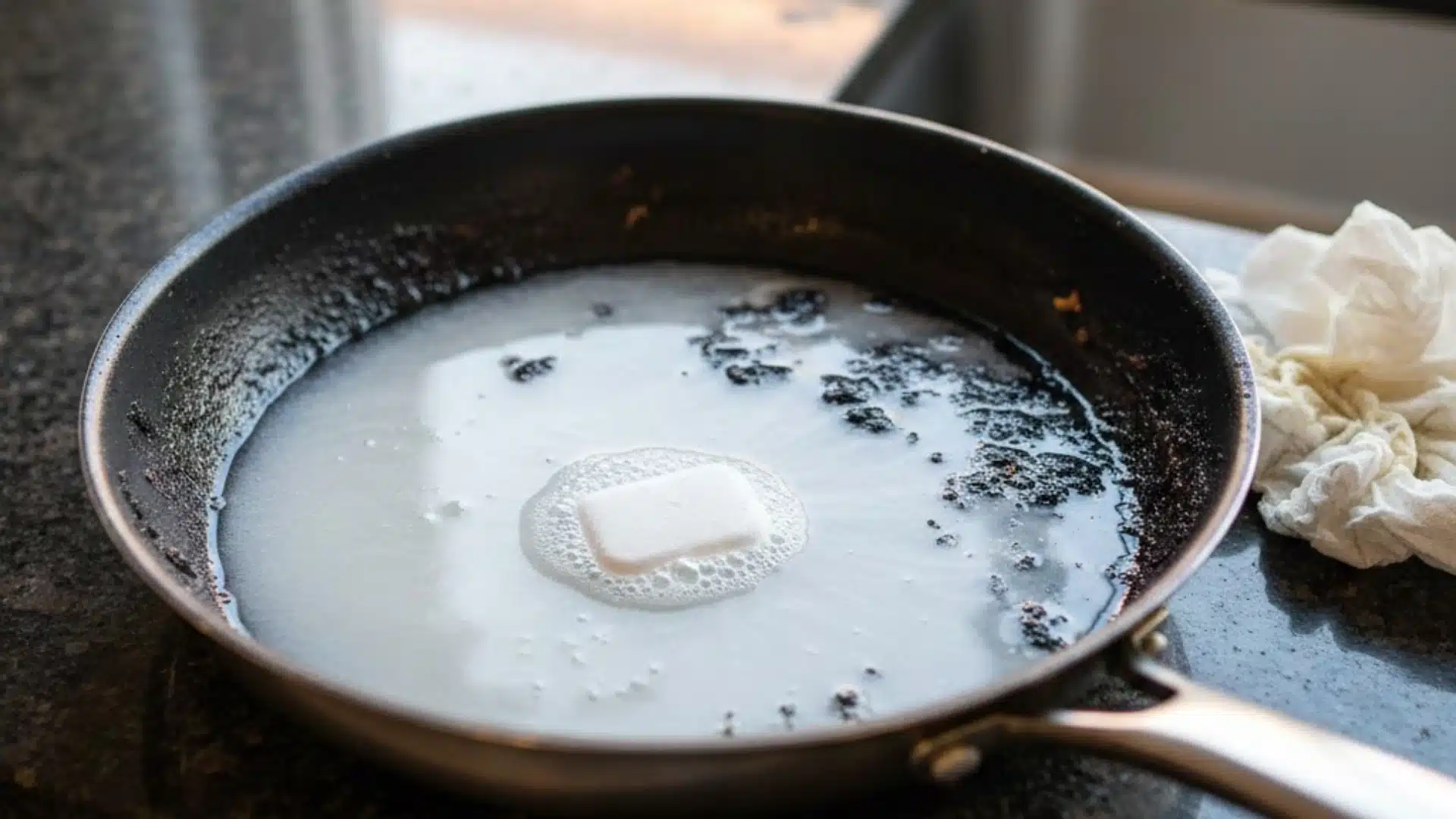
Dishwasher tablets contain powerful enzymes that break down tough grease and stains.
When put in hot water and scrubbed, it works better.
Instructions:
1. Add hot water to the pan, covering the burnt surface. The water softens the tablet and evenly distributes it across the burnt area.
2. Take another dishwasher tablet and scrub it directly onto the burnt area while it’s wet.
It’ll start to dissolve, foam, and remove the residue.
3. I leave the dissolved residue in the pan for 5–10 minutes to finish breaking down the burnt layer. Then scrub with a soft sponge, rinse thoroughly, and dry right away.
How to Clean Burnt Pan (Based on Types)
If you scrub aggressively, you lose a good pan.
My favourite non-stick pan was ruined because I was too aggressive while washing it. It’s important that you know your pan and what it actually needs.
| Pan Type | Best Cleaning Method | What to Avoid |
|---|---|---|
| Stainless Steel | Vinegar and baking soda Baking soda paste Dishwasher tablet | Steel wool Harsh scrubbers |
| Non-Stick | Warm soapy water soak | Baking soda paste Salt scrub, Dishwasher tablet |
| Cast Iron | Coarse salt scrub Deglazing method | Soaking in water Vinegar Lemon method |
| Carbon Steel | Coarse salt scrub Deglazing method | Soaking in water Vinegar Lemon method |
| Aluminium | Lemon and boiling water Baking soda paste | Straight vinegar Dishwasher tablet |
What NOT to Do
- Soak Cast Iron: Left my cast iron pan soaking overnight once. The next day, rust spots covered it.
- Use Harsh Chemicals on Non-Stick: Strong cleaners strip the coating right off. Once that’s gone, the pan becomes useless.
- Skip the Cooling Step: Pouring cold water into a hot pan can warp it. I let it cool down first.
- Use Straight Vinegar on aluminium: The acid reacts with the metal, causing discolouration.
- Leave Any Pan Wet: I forgot to dry my pans, and now two of them have spots.
Wrapping Up
After trying pretty much every method, the deglazing method is quick, easy, and it works every time.
We now know various ways to do it otherwise, like using a dryer sheet soak, or a quick deglaze, or using vinegar.
But while doing that, remember your pan type, as each needs different care.
I’ve been through enough burnt pans and salvaged most of them. It’s you who needs to do it now.
If you’ve got any questions, drop them in the comments and let’s figure it out together.
Frequently Asked Questions (FAQs)
1. Can I Salvage a Badly Warped Pan?
A badly warped pan is very difficult to salvage, so replace it. Warping is the the metal expansion due to temperature changes.
2. Is It Safe to Use a Pan That Has Been Burned?
A burnt stainless steel or cast iron pan is usually fine after cleaning. But a burnt non-stick pan can release harmful fumes.
3. How to Clean Burnt Pan with Coca Cola?
Pour Coca Cola to the pan and bring it to a simmer on the stove. Then let it cool, then scrub it clean and rinse.