

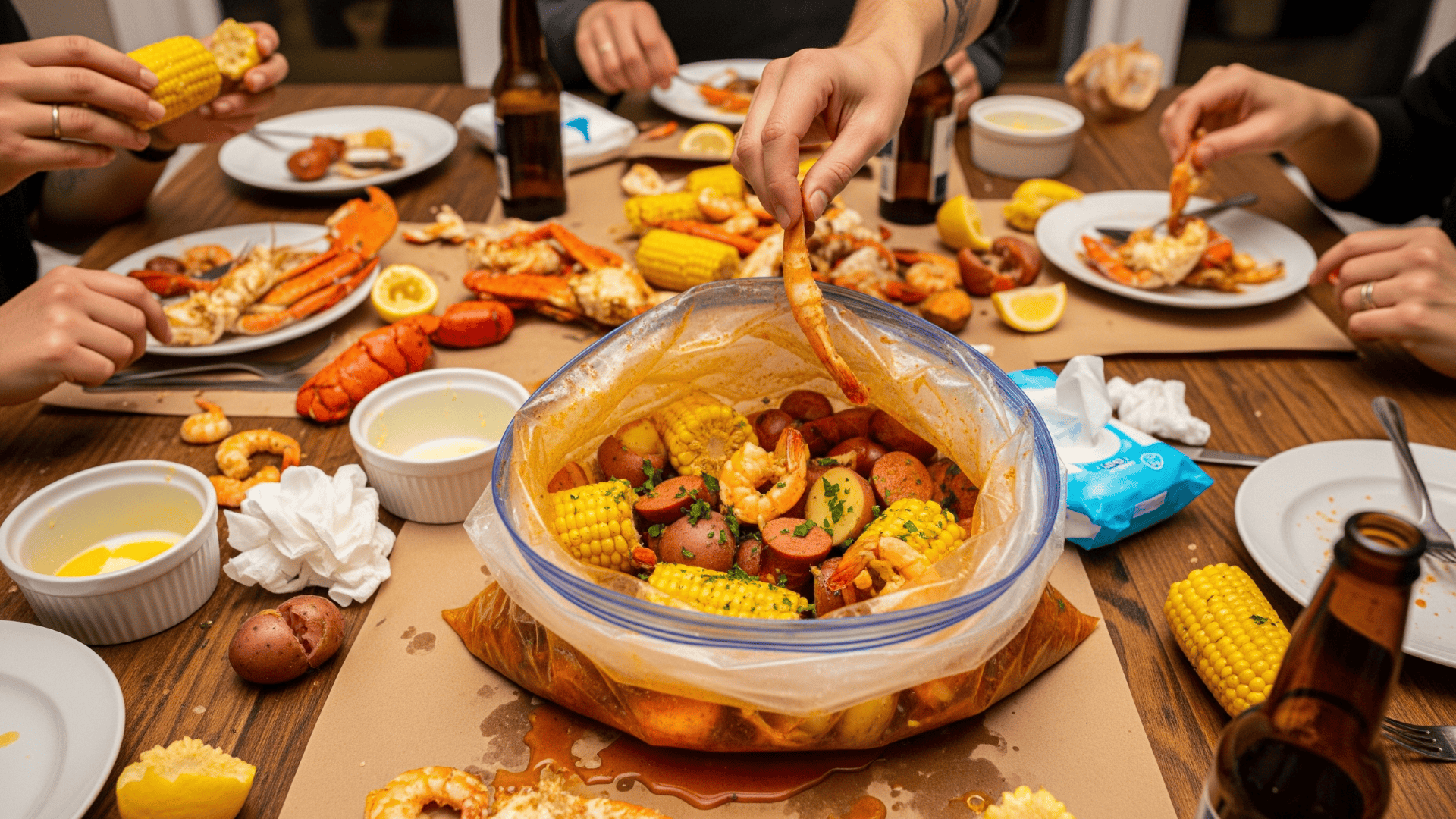
Seafood boils are one of those meals I truly look forward to, especially when they’re packed with shrimp, crab, corn, potatoes, and sausage coated in a rich, buttery spice blend.
When I first learned how to make a seafood boil at home, I was amazed at how simple the process was: just a big pot, some water, and the right seasoning blend.
The only downside is dealing with leftovers.
After a few disappointing reheating attempts that left my shrimp rubbery and crab legs dry, I decided to stop guessing and start testing.
I tried multiple reheating methods using the same batch of leftovers to see which ones actually worked.
Through trial and error, I learned what preserves flavor and what ruins it.
This blog is based on hands-on testing and shows exactly how to reheat a seafood boil bag while keeping it juicy, flavorful, and worth eating again.
Can You Reheat a Seafood Boil Bag?
Yes, you definitely can!
A seafood boil can be just as tasty the second time around if you reheat it the right way. But be careful.
If you don’t use the right method, your shrimp might get chewy, and your crab legs can dry out. That’s not fun.
So, if you want to enjoy your leftovers, it’s a must to know how to reheat seafood boil the right way. There are a few good methods, and we will go over each one.
Best Ways to Reheat a Seafood Boil Bag
Let’s start with answering the most common question: how to reheat a seafood boil bag if it’s still sealed and full of delicious juices.
1. Boiling Water Method (Best for Bagged Seafood)
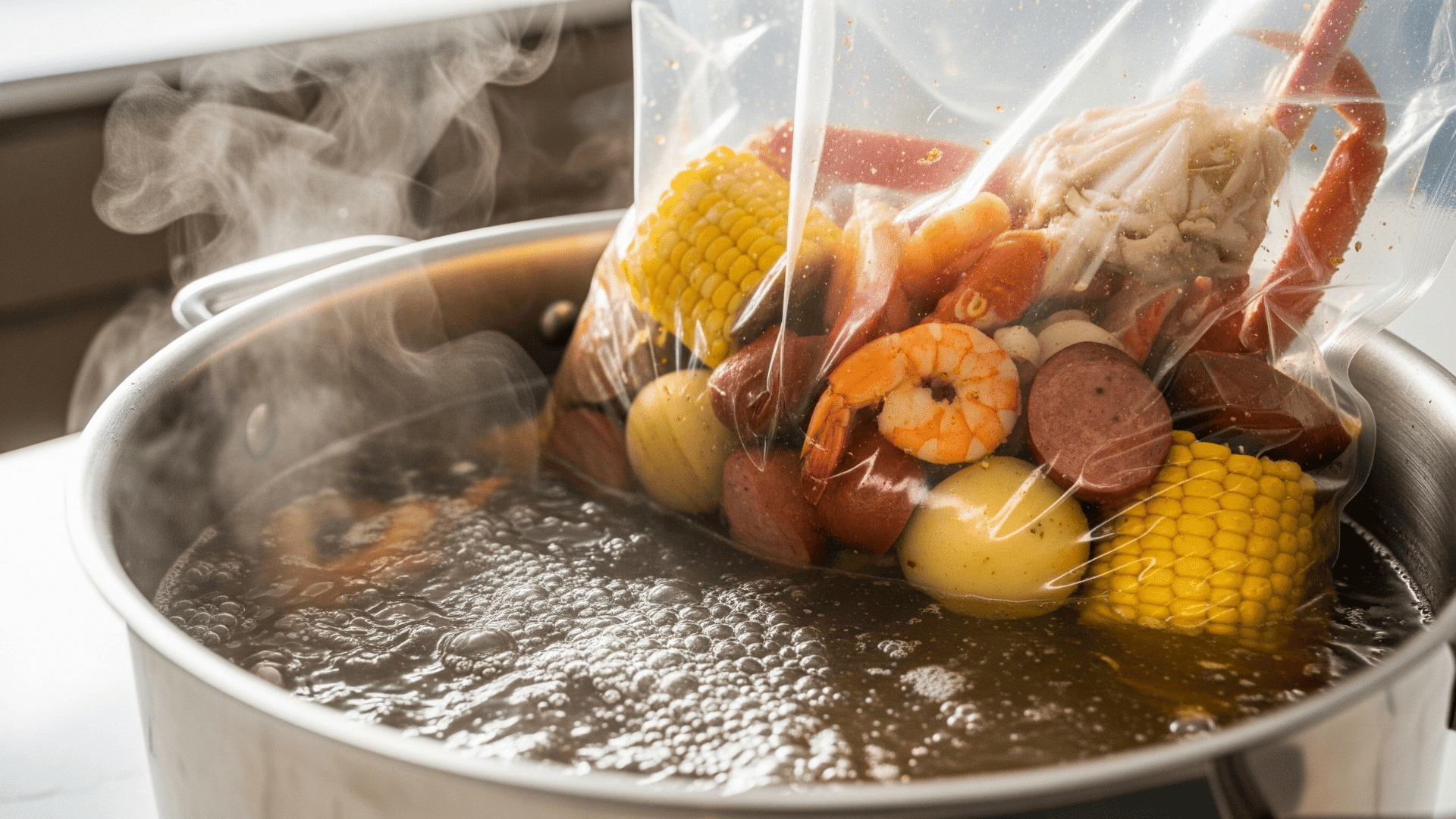
If your seafood boil is still sealed in a plastic bag, reheating it in boiling water helps retain its moisture and flavor.
This method is simple, mess-free, and ideal for keeping everything juicy without drying out the delicate ingredients.
You will need a large pot of water, tongs, and your sealed seafood boil bag.
Time Needed: 10–15 minutes
How to Do It
- Fill a large pot with water and bring it to a boil
- Reduce to a simmer (not a rolling boil)
- Place the sealed seafood bag into the water using tongs
- Let it warm for 10–15 minutes
- Carefully remove and open the bag
- Serve hot and enjoy
If you want to boost the flavor while reheating, I sometimes add a tablespoon of my Old Bay substitute to the boiling water.
Quick tip: Never let the plastic touch the pot—keep water levels high enough to float the bag.
2. Steaming Method (Best for Flavor Preservation)
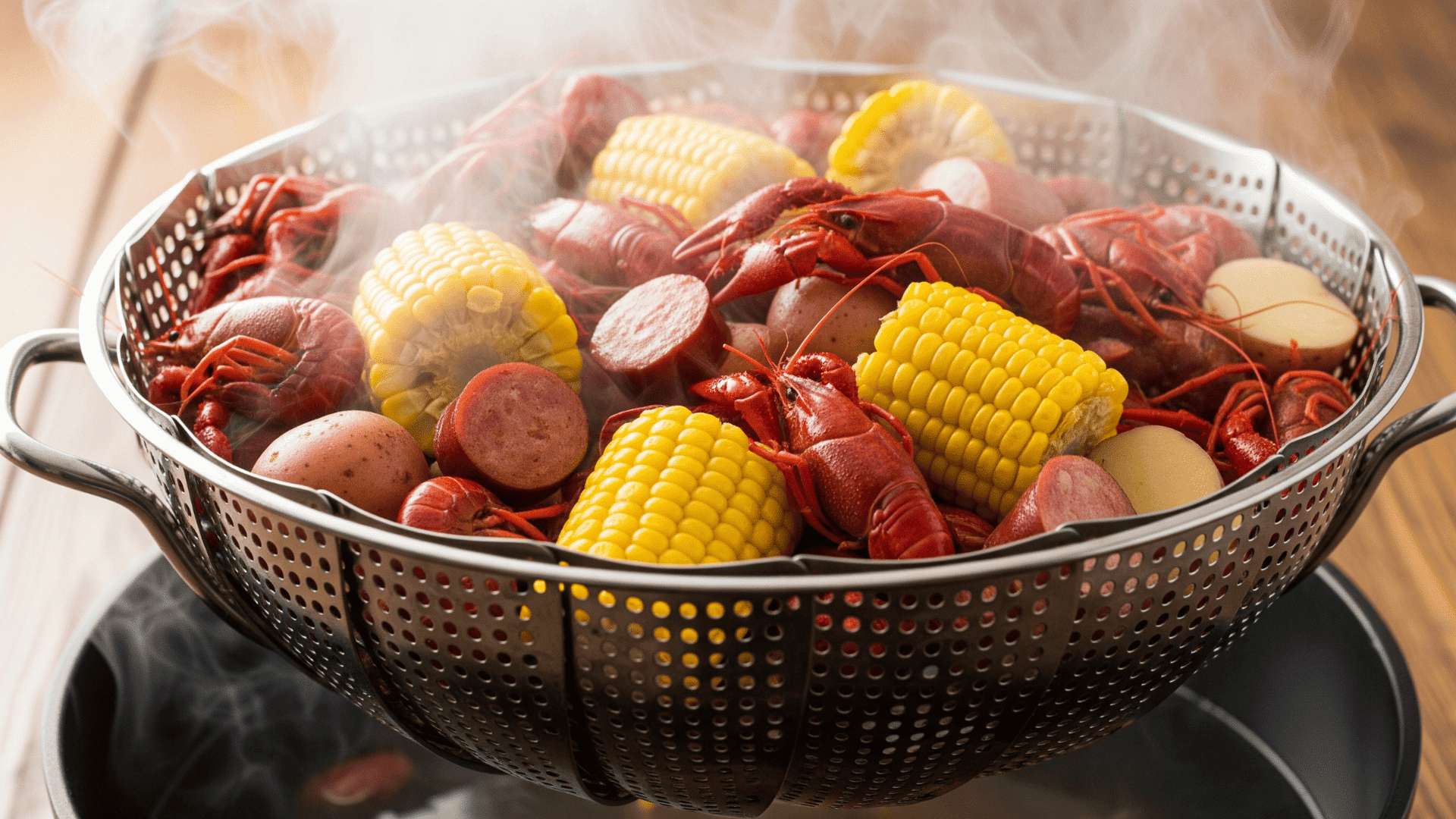
Steaming is a gentle way to reheat seafood without overcooking it.
It preserves flavor, keeps shellfish juicy, and avoids the rubbery texture you’d get from harsher methods. Perfect for de-bagged leftovers.
You will need a steamer pot or metal colander, a lid, and foil or parchment paper.
Time Needed: 5–10 minutes
How to Do It
- Bring an inch of water to a boil in a pot
- Place seafood in a steamer basket or colander
- Cover with a lid or foil to trap steam
- Steam for 5–10 minutes
- Stir halfway through for even heating
- Serve while hot
Quick tip: Use lemon or garlic in water to infuse aroma during steaming.
3. Oven Method (Best for Larger Portions)
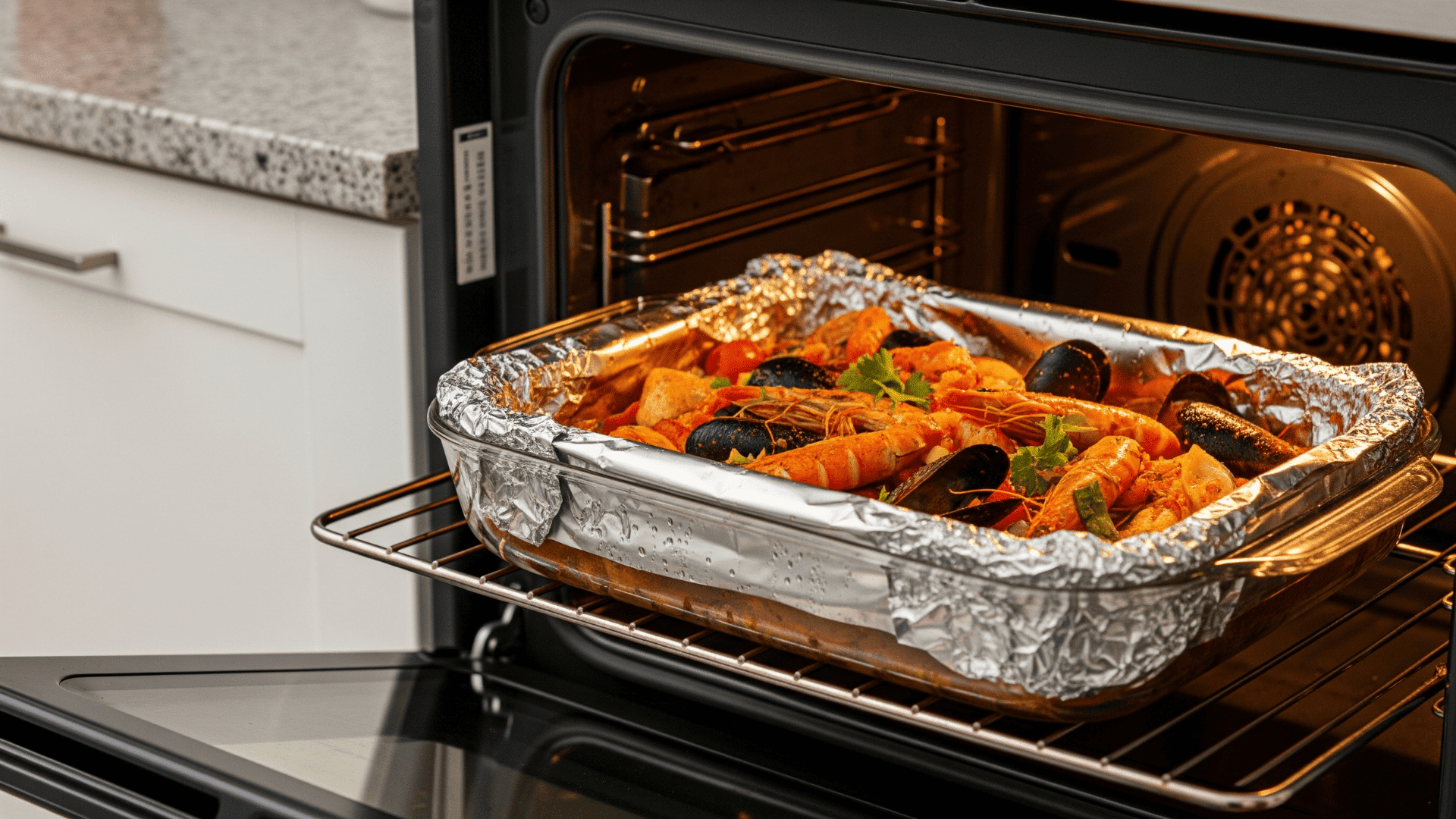
Reheating your seafood boil in the oven is great for larger servings or when you want everything warmed evenly.
It avoids the harsh direct heat of stovetops and offers more control.
And, you will need an oven-safe dish, aluminum foil, and butter or broth for added moisture.
Time Needed: 10–15 minutes
How to Do It
- Preheat oven to 300°F (150°C)
- Place seafood and extras in a baking dish
- Drizzle with broth or melted butter
- Cover tightly with foil
- Bake for 15–20 minutes
- Check halfway through for even heating
Quick tip: Add a few ice cubes before sealing the foil; it creates steam for extra moisture.
4. Microwave Method (Quickest for Small Portions)
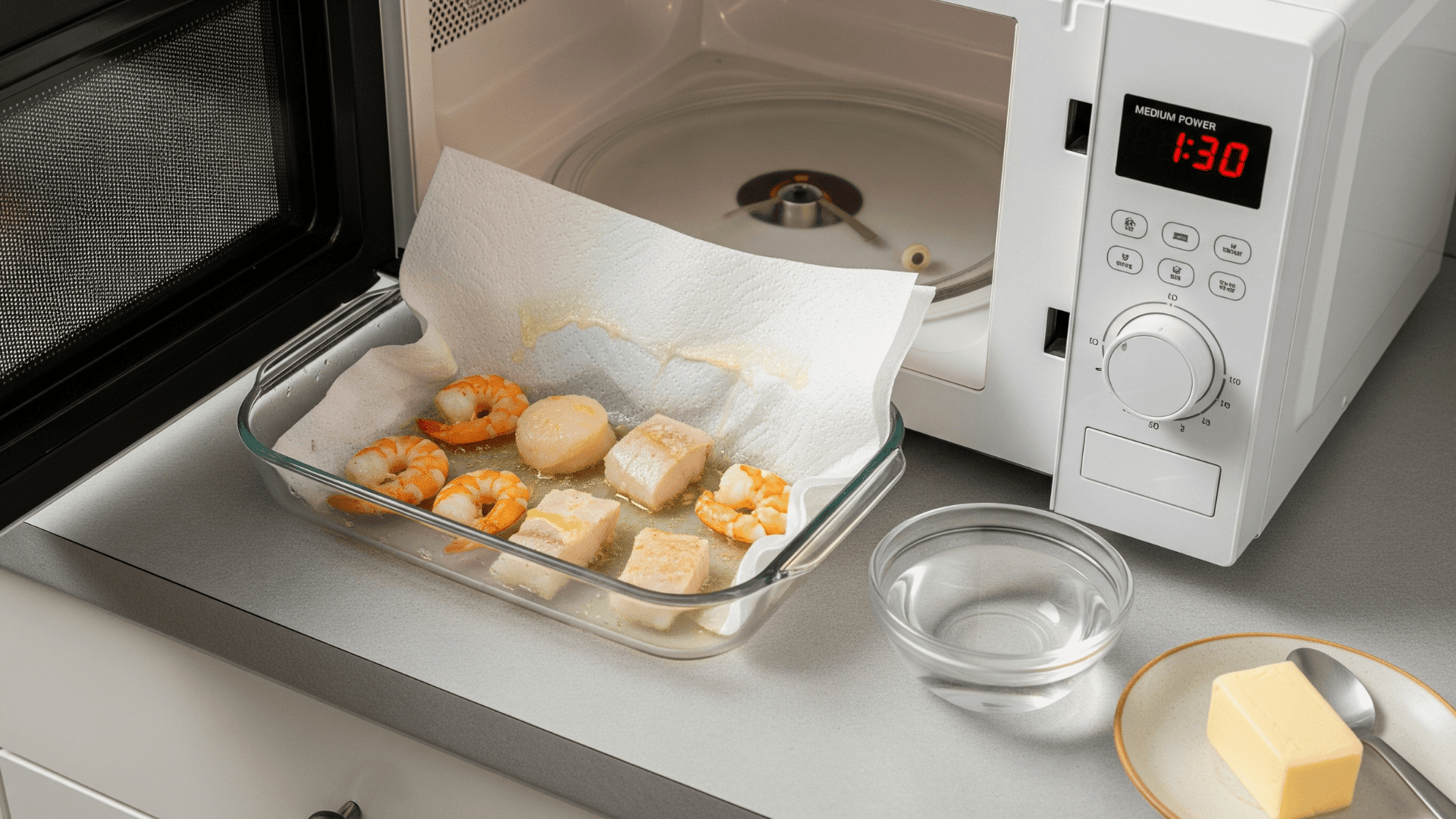
If you are in a hurry, the microwave can work, but it’s best for smaller portions and delicate items.
You will need a microwave-safe container, a damp paper towel, and a bit of caution to avoid rubbery results.
Time Needed: 1–2 minutes
How to Do It
- Place seafood in a microwave-safe dish
- Add a splash of water or butter on top
- Cover with a damp paper towel
- Microwave on medium for 1–2 minutes
- Check and stir gently if needed
- Microwave in 30-second bursts until hot
Quick tip: Use medium power and a damp paper towel to protect the texture.
Pros and Cons of Each Boiling Method
| Reheating Method | Pros | Cons |
|---|---|---|
| Boiling in the Bag | Retains moisture, locks in flavor, heats evenly without drying seafood | Requires a large pot and takes more time |
| Steaming | Gentle on shrimp and crab, preserves texture and flavor | Not ideal for very large portions, needs a steamer setup |
| Oven Baking | Great for reheating big servings, heats food evenly | Slower method and can dry food if not covered properly |
| Microwave | Fast and convenient for small portions | Easy to overcook and may make seafood rubbery |
Which Method Works the Best for me?
When choosing the reheating method that works best for me, it really depends on convenience, portion size, and how the seafood was stored.
If my seafood boil is still sealed in the bag, I boil it in water because it keeps everything moist and evenly heated.
For leftovers already out of the bag, I prefer steaming because it’s gentle and helps preserve the shrimp and crab’s natural texture.
When I’m reheating a large portion for family or guests, the oven works best because it warms everything evenly.
However, on busy days, I usually use the microwave for small portions because it’s the fastest option, as long as I set it to low power and add moisture.
Personally, I usually use the microwave to reheat small portions because it’s the quickest option, especially on busy days, as long as I’m careful with the heat and timing.
Reheating Seafood Boil Without Losing Flavor
Reheating a seafood boil without losing flavor takes a little care. I focus on keeping the seafood moist, evenly heated, and packed with that original buttery spice.
Use Low and Gentle Heat
Following the FDA food safety guidelines, I always reheat on low heat because high heat quickly dries out shrimp and makes crab legs tough.
Add Moisture Before Reheating
I add a splash of broth, water, butter, or leftover boil sauce to keep everything juicy and flavorful.
Cover to Lock in Steam
Covering the seafood with foil or a lid traps steam, which helps prevent moisture loss.
Avoid Overheating
I stop reheating as soon as everything is warm, since overcooking is the fastest way to lose flavor.
Stir or Turn for Even Heating
Gently stirring or flipping ingredients helps heat them evenly and preserves their texture.
Here’s What NOT to do When Reheating Seafood Boil Bag
Reheating a seafood boil the wrong way can quickly ruin both flavor and texture. I have learned that avoiding these common mistakes helps keep my leftovers safe, juicy, and delicious.
1. Do Not Use High Heat – High temperatures dry out seafood fast and make shrimp and crab tough.
2. Do Not Reheat More Than Once – Multiple reheats ruin texture and increase the risk of foodborne illness.
3. Do Not Skip Adding Moisture – Without broth, butter, or sauce, the seafood loses its rich, juicy flavor.
4. Do Not Leave It Uncovered – Reheating without a lid or foil allows steam to escape and causes dryness.
5. Do Not Microwave on Full Power – Using high microwave power leads to uneven heating and rubbery seafood.
6. Do Not Mix Frozen and Thawed Seafood – Reheating mixed temperatures causes uneven cooking and texture issues.
7. Do Not Ignore Bad Smells or Texture – If it smells off or feels slimy, I always throw it away to stay safe.
Specific Safety Tips to Follow for Reheating Seafood
Seafood is delicate, so make sure it’s safe to eat:
- Fridge Time:Eat your seafood boil within 2 to 3 days (FDA guidelines).
- Freezer:You can freeze leftovers for up to 2 months.
- One Time Only:Don’t reheat more than once.
- Temperature:Seafood should be 145°F (63°C) inside (USDA) when reheated.
- Smell Check:If it smells bad, toss it.
How to Reheat Seafood Boil Leftovers (Out of the Bag)?
When your seafood boil is already out of the bag and stored in a container, reheating it properly means treating each component differently for the best texture and flavor.
- For shrimp, crab, and lobster, a steamer works well, or you can sauté them gently in butter for 3–5 minutes until warmed through.
- Corn and potatoes do best when wrapped in foil and baked, or microwaved with a splash of water to prevent drying.
- For sausage, a quick sear in a hot pan for 2–3 minutes gets it just right. Handling each ingredient separately ensures everything stays tender, juicy, and flavorful.
Making a Good Meal Out of the Seafood Boil Leftovers – Seafood Skillet Bowl
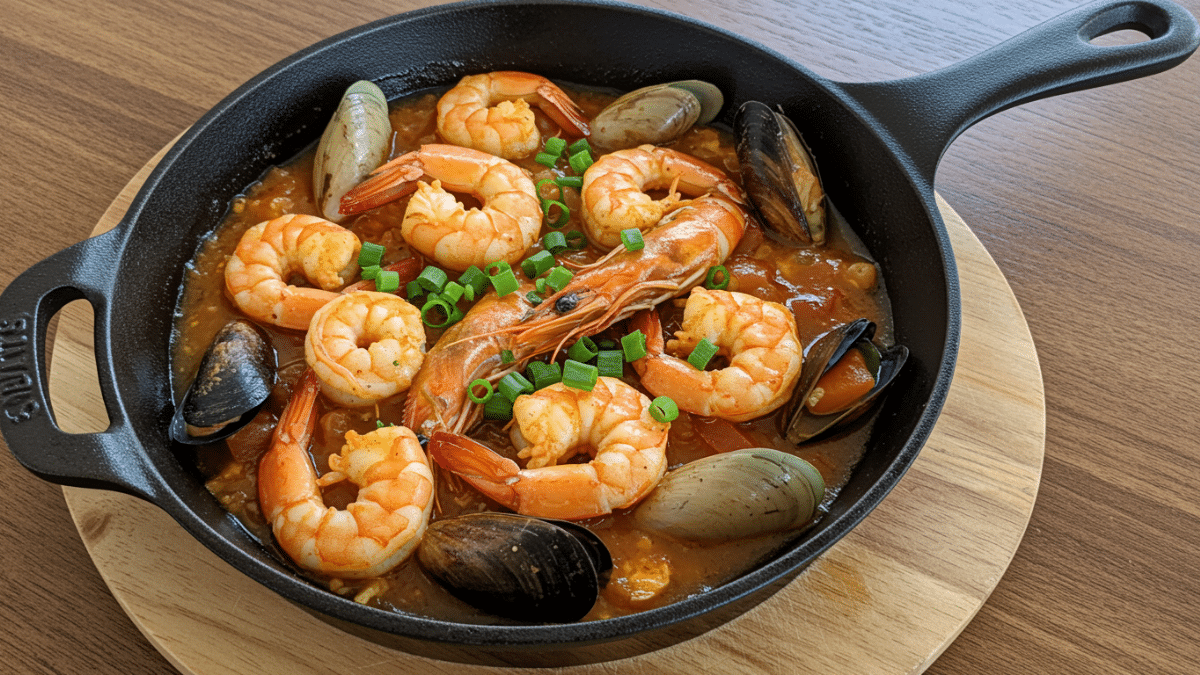
Let me show you a quick and easy meal I make with seafood boil leftovers.
It’s simple, flavorful, and perfect when I want something fast without much cleanup.
Total Time Breakdown
- Prep Time: 5 minutes (chopping potatoes, slicing sausage, cutting corn)
- Cook Time: 8–10 minutes
- Total Time: 13–15 minutes
Ingredients Needed
| Ingredient | Amount |
|---|---|
| Leftover shrimp | 1 cup |
| Crab meat or crab legs | 1 cup |
| Cooked sausage (sliced) | 1 cup |
| Boiled potatoes (chopped) | 1 cup |
| Corn on the cob (cut) | 1 cup |
| Butter or oil | 1–2 tablespoons |
| Leftover boiled sauce or broth | 2–3 tablespoons |
| Lemon juice | To taste |
| Extra seasoning (optional) | To taste |
Cooking Instructions
Heat a large skillet over medium heat and add butter or oil.
Add the potatoes and sausage and cook for 3–4 minutes, until lightly crisp.
Stir in corn and cook for another minute.
Add shrimp and crab, gently mixing to avoid breaking the seafood.
Pour in leftover boiled sauce or broth for moisture and flavor.
Cook for 2–3 minutes until everything is warmed through.
Finish with lemon juice and extra seasoning if needed.
Serve hot on its own or over rice for a filling, flavorful meal.
Dietary Considerations
- Gluten-Free: Yes (if sausage is gluten-free)
- Dairy-Free: Can be (use oil instead of butter)
- Low-Carb/Keto: No (contains potatoes and corn)
- Pescatarian: No (contains sausage)
- High Protein: Yes
- Contains Shellfish: Yes (shrimp and crab)
- Common Allergens: Shellfish, possible dairy (butter), possible gluten (sausage)
Tips to Keep It Juicy and Tasty
Want your reheated seafood to taste just as good as before? Here are some easy tips:
- Add Liquid: Use broth, water, or leftover boiled sauce to keep it moist.
- Cover It Up: Whether you’re steaming or baking, always use a lid or foil.
- Low and Slow: Don’t blast it with high heat. Warm it gently.
Pro Tip: Save some of the original boiled sauce when storing leftovers. It brings back all the original flavor when reheating!
Final Thoughts
After testing every reheating method myself, I’ve learned that leftovers don’t have to be a letdown.
When done correctly, reheated seafood can still taste rich, tender, and full of flavor. Boiling the sealed bag worked best overall, while steaming was my favorite option for leftovers out of the bag.
The oven handled large portions, and the microwave was only for quick, small servings. Knowing how to reheat a seafood boil bagcomes down to gentle heat, added moisture, and patience.
From my experience, slowing down the process makes all the difference between dry seafood and a satisfying second meal.
Frequently Asked Questions (FAQ’s)
1. Can I Add Fresh Seasoning when Reheating a Seafood Boil?
Yes, adding a small amount of fresh seasoning can refresh the flavor without overpowering the seafood.
2. Is it Safe to Reheat a Seafood Boil Straight from the Freezer?
Yes, but it’s best to thaw it in the refrigerator overnight for even and safe reheating.
3. Can I Reheat a Seafood Boil in an Air Fryer?
Yes, but only in small portions and at low temperatures to prevent the seafood from drying out.
4. Should I Separate Shellfish from Vegetables Before Reheating?
Yes, separating them helps prevent overcooking delicate seafood while vegetables heat evenly.
5. Does Reheated Seafood Lose its Nutritional Value?
No, reheating may slightly reduce nutrients, but it still makes for a healthy, protein-rich meal.