

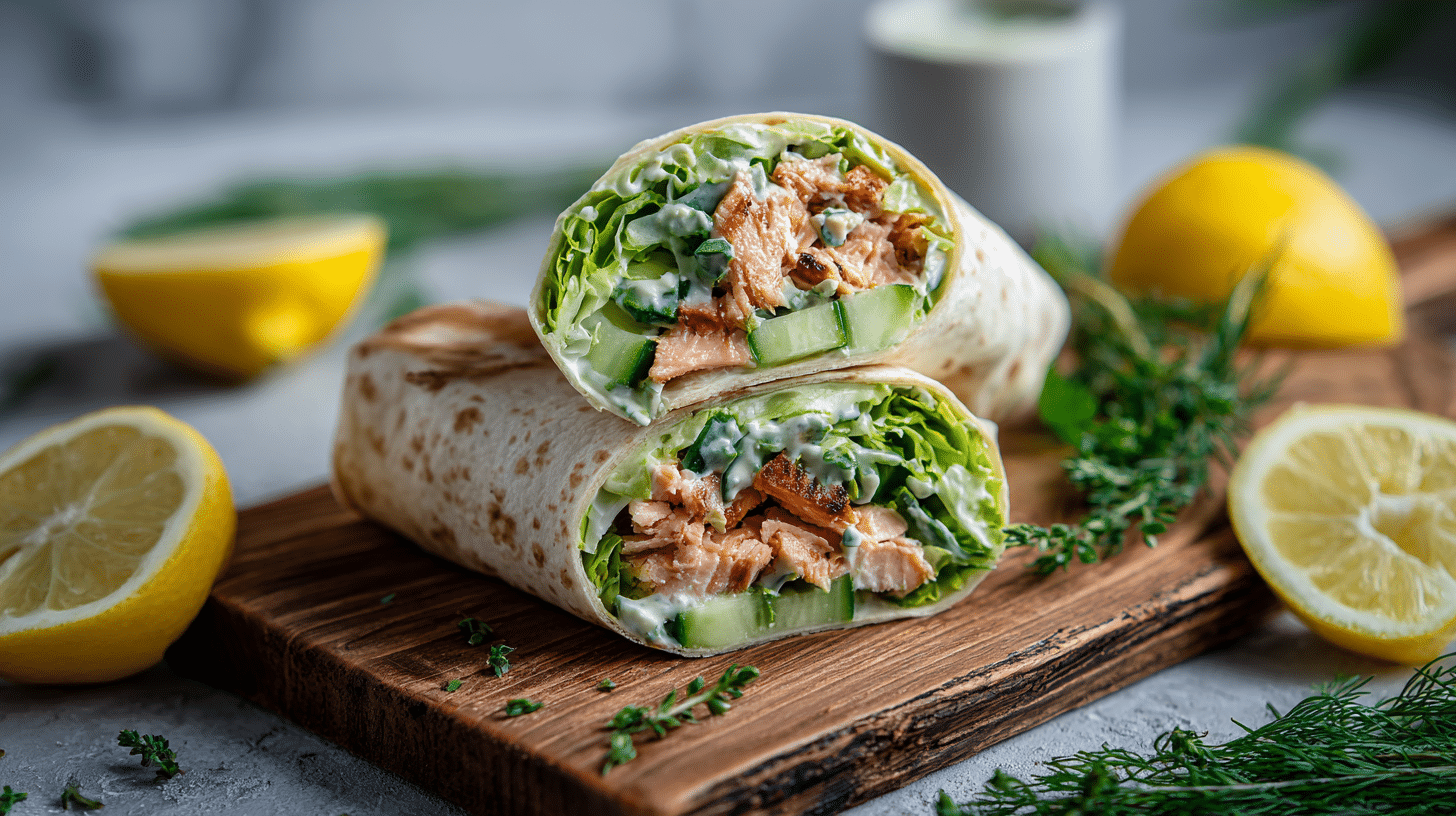
Got leftover salmon sitting in your fridge?
This blog will help you make wraps with leftover salmon that’ll have everyone intentionally cooking extra fish.
They’re ready in minutes, packed with flavor, and way easier than expected.
Let me show you how.
Why Salmon Wraps are so Great?
Just like any other leftover salmon recipes, Salmon wraps also take less than 10 minutes to make.
The fish is already cooked, so just flake it, add toppings, and roll.
They’re also practical:
- Work with grilled, baked, or pan-seared salmon
- Fill you up without feeling heavy
- Use ingredients already in the fridge
- Costs almost nothing
Kids actually eat them too. When salmon is wrapped up with cheese or ranch, even picky eaters give it a try.
Ingredients You’ll Need
Making a salmon wrap doesn’t require a long shopping list. Most ingredients are probably already in the kitchen.
For the wrap:
- 1 cup cooked leftover salmon, flaked
- 2 large flour tortillas (or whole wheat)
- 1/2 cup mixed greens or lettuce
- 1/4 cup diced tomatoes
- 1/4 cup sliced cucumber
- 2 tablespoons red onion, thinly sliced
For the sauce:
- 3 tablespoons mayonnaise or Greek yogurt
- 1 tablespoon lemon juice
- 1 teaspoon Dijon mustard
- Salt and pepper to taste
Salmon Wrap Recipe with Leftover Salmon
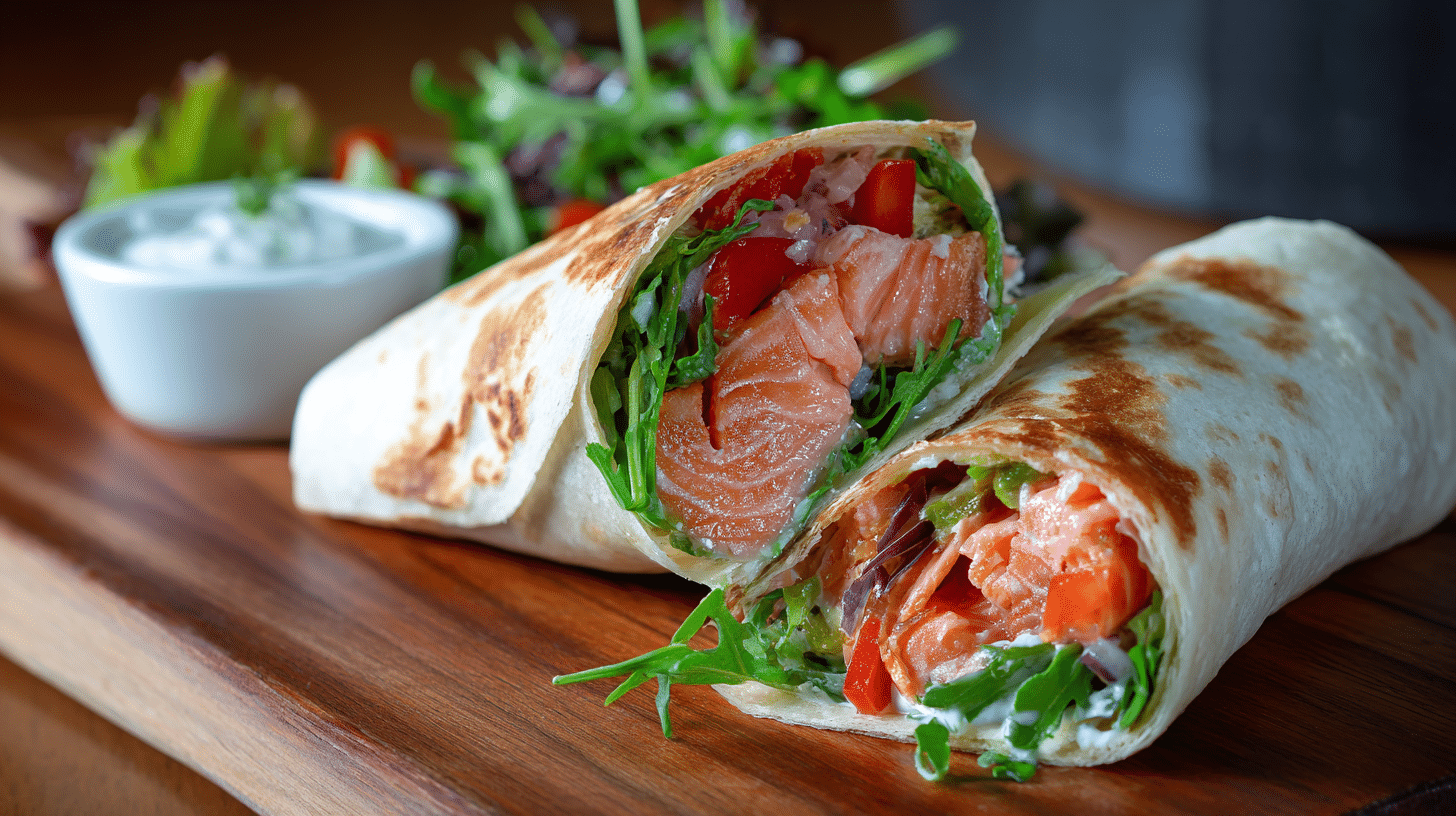
Getting everything ready takes just a few minutes.
Here’s how to prep and assemble the wraps from start to finish.
Step 1: Prepare the Salmon
Take the leftover salmon out of the fridge. Remove any skin if still attached. Use a fork to flake the fish into bite-sized pieces.
Check for bones while flaking and remove any that appear. Place the flaked salmon in a bowl and set aside.
Step 2: Make Sauce
Add mayonnaise, lemon juice, and Dijon mustard to a small bowl.
Whisk everything together until smooth and creamy. Add a pinch of salt and pepper, then taste it.
Adjust the lemon or mustard based on preference. Set the sauce aside.
Step 3: Prep Vegetables
Wash the lettuce or mixed greens under cold water and pat dry with paper towels.
Dice the tomatoes into small pieces, removing excess seeds if too watery.
Slice the cucumber into thin rounds or strips. Cut the red onion into thin strips.
If the onion flavor is too strong, soak the strips in cold water for a minute, then drain and pat dry.
Step 4: Warm the Tortillas
Heat the tortillas in the microwave for 15-20 seconds on a damp paper towel.
This makes them soft and easy to roll. Alternatively, warm them in a dry skillet over medium heat for about 10 seconds per side.
Don’t overheat or they’ll crack when rolled.
Step 5: Assemble Base
Lay one tortilla flat on a clean surface. Spread about half the sauce down the center, leaving 2 inches at each end empty.
This prevents the filling from spilling out when rolling.
Step 6: Layer the Greens and Salmon
Add a handful of greens over the sauce and spread them evenly. Don’t overstuff.
Layer the flaked salmon on top of the greens, using about half the prepared salmon for each wrap.
Step 7: Add Vegetables
Top the salmon with diced tomatoes, cucumber slices, and onion strips. Distribute them evenly across the filling.
Drizzle a bit more sauce over the vegetables if desired, but don’t overdo it.
Step 8: Roll the Wrap
Fold the bottom edge of the tortilla up over the filling. Fold in both left and right sides toward the center.
Roll the tortilla tightly from bottom to top, pressing gently as you go. The wrap should hold together without falling apart.
Step 9: Slice and Plate
Cut the wrap in half diagonally with a sharp knife.
This makes it easier to eat and looks more appealing. Place both halves on a plate with the filling visible.
Step 10: Serve or Store
Serve the wrap immediately for the best taste and texture. Or wrap it tightly in foil and refrigerate for up to 24 hours if making ahead for lunch.
Done. The wrap is ready to eat in under 10 minutes.
Tips for Serving Salmon Wraps
Serving salmon wraps the right way makes them taste even better.
Serve them fresh
Wraps taste best right after assembly. The tortilla stays soft, and the vegetables stay crisp.
If making ahead, add the wet ingredients, such as tomatoes, just before serving.
Make it look good
Arrange the halves on a plate so the filling is visible.
Add a lemon wedge on the side and sprinkle with fresh herbs, such as dill, if available.
Cut diagonally
Slice each wrap at an angle with a sharp knife. This creates two neat halves that are easier to handle.
Keep them cold or warm
For lunch later, wrap tightly in foil and refrigerate for up to 24 hours.
For a warm option, heat in a panini press for 2-3 minutes per side.
Add simple sides:
- Potato chips or veggie chips
- A small side salad
- Fresh fruit
- Pickle spears
Storing Salmon Wraps
Properly storing salmon wraps keeps them fresh and tasty for later.
1. Wrap them tightly
Use aluminum foil or plastic wrap to cover the entire wrap. No gaps.
This prevents the tortilla from drying out and keeps everything fresh inside.
2. Refrigerate promptly
Put wrapped salmon wraps in the fridge within 30 minutes of making them.
They stay good for up to 24 hours when stored in the refrigerator.
3. Keep wet ingredients separate
Making wraps the night before? Store wet items, such as tomatoes and sauce, separately. Add them right before eating.
This stops the tortilla from getting soggy overnight, which nobody wants.
4. Use airtight containers
Place wrapped salmon wraps in an airtight container for extra protection. This works better than foil alone.
5. Avoid freezing
Don’t freeze assembled wraps. The vegetables and sauce don’t thaw well, and the tortilla becomes mushy.
Only the plain cooked salmon can be frozen separately.
6. Check before eating
Smell the wrap before consuming it if it’s been stored for more than a day. Does it smell off? Are the vegetables wilted? Throw it out.
Better safe than sorry.
Conclusion
Leftover salmon doesn’t have to sit in the fridge until it’s too old to use. A salmon wrap turns yesterday’s dinner into today’s lunch in minutes.
There’s no complicated cooking involved. Just flake, layer, roll, and eat.
It works with any type of cooked salmon and whatever vegetables are on hand.
Try making one tonight with leftovers from dinner.
Once you’ve tasted it, cooking extra salmon on purpose becomes the new normal.