

If you’ve ever sliced into a chicken thigh or burger and seen pink, I know the feeling. Your brain instantly starts narrating a true crime podcast: “Tonight on Dateline: The Dinner That Looked Fine But Wasn’t…”
But here’s the plot twist: pink meat is often just chemistry doing chemistry things not a bacterial rave happening in your kitchen.
Color is honestly a terrible narrator. Sometimes meat turns brown before it’s safe. Sometimes it stays pink after it’s safe. Which is extremely rude behavior for an inanimate dinner item, but okay.
So let’s talk about what pink actually means, when it’s fine, when it’s not, and how to stop playing “Guess Who’s Food Poisoning Me?” every time you cook.
The only thing I trust: a thermometer (not vibes)
I love a cozy kitchen vibe as much as anyone, but don’t cook meat based on vibes. Cook it based on temperature.
Because:
- A burger can look brown-ish and still be undercooked.
- A piece of chicken can be pink-ish and still be totally safe.
Memorable truth: Color is gossip. Temperature is receipts.
If you don’t own an instant read thermometer yet, put it on your “tiny purchases that make me feel like a competent adult” list. It’s right up there with a good can opener.
The only numbers you actually need (save these)
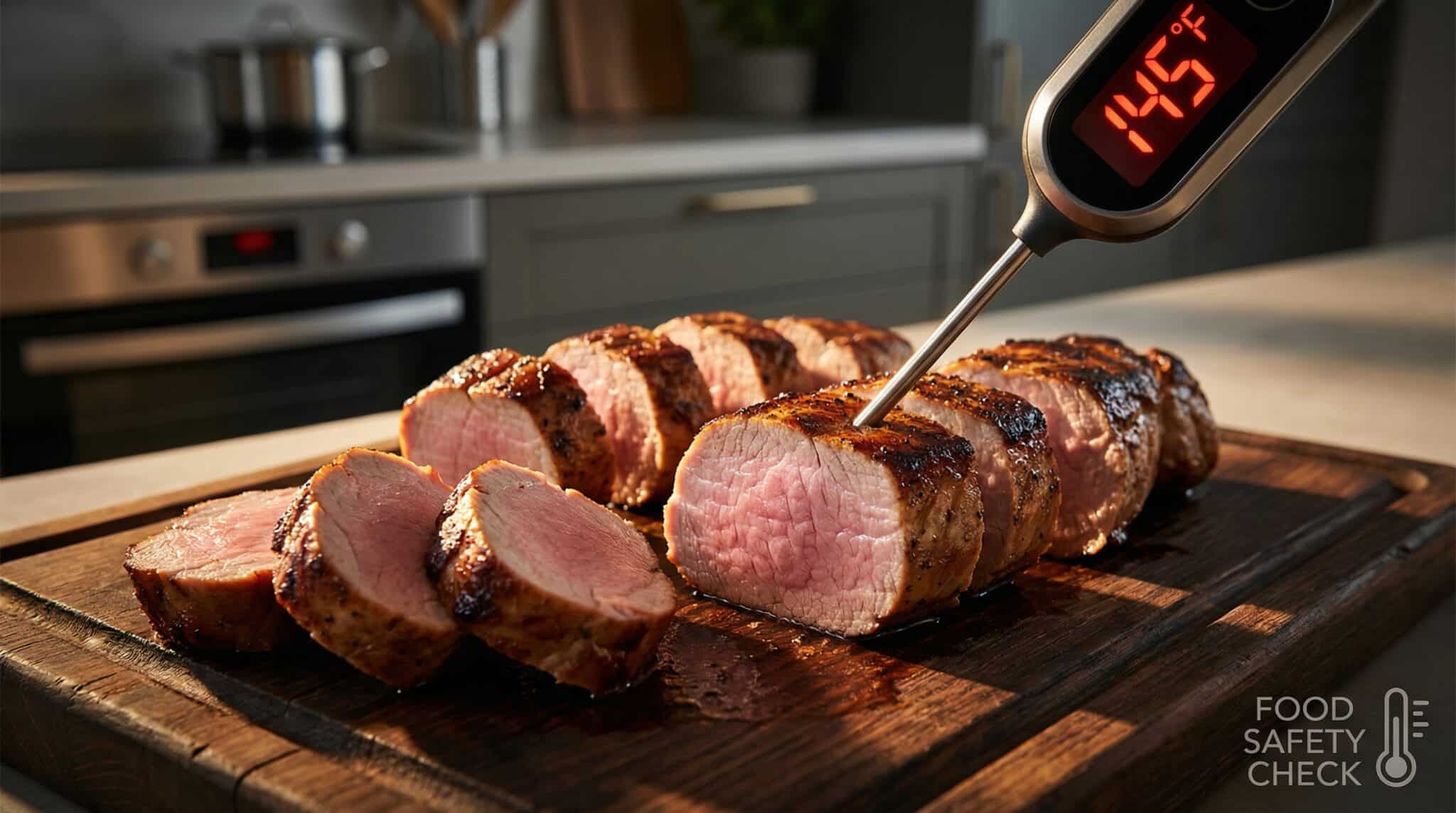
These are the USDA minimum internal temps. Measure in the thickest part, in the coldest spot (aka the part that’s most likely to betray you).
- Ground beef / ground pork / ground lamb: 160°F
- Poultry (any kind) + ground poultry: 165°F
- Steaks, roasts, chops (beef/pork/lamb): 145°F + a 3 minute rest
That “rest” isn’t a cute suggestion. For whole cuts, it’s part of the safety rule: once it hits 145°F, it needs 3 minutes staying at or above that temp (which usually happens while it rests on the counter).
Quick carryover cooking note (aka: meat keeps cooking after you pull it)
Sometimes your meat temp will keep rising a few degrees after you take it off the heat. That’s normal. What’s not normal is assuming it happened and serving it like a gambling hobby.
If you want to rely on carryover cooking, cool cool just re-check the temp before you declare victory.
Why meat stays pink (even when it’s cooked)
Pink can happen for a bunch of totally harmless reasons. Here are the ones I see most, minus the science lecture that makes your eyes glaze over.
1) “It’s pink all the way through” (especially in burgers)
Sometimes meat stays pink because of how it naturally is things like pH and muscle chemistry vary. Translation: your meat can be fully cooked and still look pink.
This is where the thermometer saves your sanity.
2) Low and slow cooking (aka “I cooked it gently like a loving parent”)
If you cook meat slowly at a lower temp, you may not get that obvious brown/gray “DONE” look. The heat does its job. The color just doesn’t put on a show.
3) The grill/smoker “smoke ring” (the pink outline)
That pink ring around the edge of grilled or smoked meat? Usually gases from combustion reacting with the meat. It’s a surface thing. It can look like rawness, but it’s not.
(Barbecue people will fight wars over smoke rings. I just want you to eat safely.)
4) Nitrites (aka: bacon and some veggies meddling with your dinner)
Cooking meat with bacon, ham, or anything cured can keep it pink. Certain veggies (like celery/spinach) can also contribute to that reaction.
If you slice it and the pink fades as it sits exposed to air for a bit, that can be a clue it’s a pigment thing not an undercooked thing.
5) Freezer weirdness
Meat that’s been frozen, thawed, refrozen (or just frozen poorly) can cook up mottled or patchy in color. Texture can be softer too.
Safe? Often yes (if it’s at temp). Delicious? Sometimes… less yes.
6) Pink near the bone in chicken
This one freaks people out constantly. Chicken can be pink near the bone even at 165°F. Especially younger birds, because their bones are more porous and pigments can move into the surrounding meat.
If the thickest part is 165°F, you’re good even if the drumstick is giving you a little strawberry tinted attitude by the bone.
7) “It was fine, then it looked pink later” (storage can do that)
Cooked meat can shift color in low oxygen storage (like tight containers). It can look pink again without being unsafe. Chemistry is messy and loves jump scares.
Okay, but how do I check temperature correctly?
Because yes, you can own a thermometer and still accidentally lie to yourself with it. (Ask me how I know.)
Here’s how to get a real reading for salmon translucency safety tests:
- Hit the thickest part, aiming for the center.
- Avoid bone (it heats differently and can give you a falsely high number).
- Avoid huge fat pockets (also misleading).
- Thin cuts (under ~¾ inch): slide the probe in from the side so the tip lands in the middle.
- Check more than one spot on big pieces. The cold spot is what matters, not the easiest spot.
Poultry tip I swear by:
Check the temp where the thigh meets the body. That area loves being the last to get with the program.
If you want to be extra (in a good way): quick calibration
Once in a while, stick your thermometer in a glass of ice water (lots of ice, a little water). It should read about 32°F. If it’s way off, it’s time for a new one.
“What I’m seeing is…” a quick cheat sheet
If your meat hits the safe temp, then:
- Pink throughout: often just meat chemistry or gentler cooking. Usually fine.
- Pink ring around edges: grill/smoke reaction. Fine.
- Patchy pink + slightly sad texture: freezer damage. Fine (but meh).
- Pink near chicken bones: extremely common. Fine (if 165°F).
If your meat is below the safe temp:
- Put it back on the heat. No pep talk needed. Just do it.
- Re-check in a few minutes in the coldest spot.
And remember: the sneaky danger isn’t always pink. Ground meat can look brown before it’s actually safe. That’s why this whole post exists.
When I would actually toss it (the “nope” list)
Color alone doesn’t make me toss meat. These do:
- It didn’t reach the safe internal temp
- It sat out at room temp for over 2 hours
- It smells sour/off (trust your nose your nose is not dramatic like meat color)
- You’re genuinely not sure how long it was in the “danger zone” and you don’t want to gamble with your evening
When in doubt, toss it out. Not because you’re precious because food poisoning is a full body hobby you do not want.
Bottom line: stop interrogating the color and start checking the temp
If you take one thing from this, let it be this: pink doesn’t automatically mean unsafe. Sometimes it’s just myoglobin being weird, smoke doing smoke things, or your chicken bones trying to ruin your confidence like a doneness color guide for salmon.
Get the thermometer. Use it right. Check more than one spot.
Then eat your dinner without staring at it like it’s hiding secrets.
Now go forth and gently stab your meat with science.