

Squid Nutrition: What Most People Get Wrong (Yes, I’m Talking About Calamari)
Squid is one of those foods that gets treated like a guilty pleasure… even when it’s not. Like, somehow it ended up in the same mental category as mozzarella sticks just because you’ve mostly met it deep fried with marinara and a lemon wedge.
But here’s the plot twist: plain old squid is ridiculously nutrient dense. It’s also one of those foods people avoid for outdated reasons (hello, cholesterol panic), while totally ignoring the real “gotcha” (spoiler: it’s usually sodium, not cholesterol).
So if you’re bored to death with chicken, trying to eat more seafood, or you just want to feel smug while ordering something other than salmon for the 400th time let’s talk squid.
Squid’s secret superpower: B12 for days
A single serving of squid can deliver over 200% of your daily vitamin B12. That’s not a typo. That’s “why is this not on more menus?” levels of B12.
B12 matters for nerve function, making healthy red blood cells, and generally keeping your body from running like a phone on 1% battery. And yes, getting enough can get trickier as you age (or if you don’t eat much animal protein).
Also: squid has taurine (around 410 mg per serving), which doesn’t show up on most labels but is commonly associated with heart and metabolic health. No, it’s not magic. But it’s a nice little bonus that makes squid feel less like “weird sea creature” and more like “quiet overachiever.”
“But isn’t squid high in cholesterol?” (The real story.)
This is the part where everyone side eyes the calamari and whispers, cholesterol like it’s a curse word.
Yes, squid has dietary cholesterol roughly ~200 mg in a 3-ounce serving. If you’re still living by the old “300 mg per day” rule, that sounds terrifying.
But nutrition science has largely moved on. The 2015-2020 Dietary Guidelines dropped that hard cholesterol cap, and the bigger driver for blood cholesterol (for most people) is usually saturated fat, not dietary cholesterol.
And squid is actually low in saturated fat about 0.3 grams per serving. So for many people, squid isn’t the villain it was made out to be.
That said (because I’m not trying to fight your cardiologist on the internet):
- If you have familial hypercholesterolemia or existing cardiovascular disease, ask your doctor what makes sense for you.
- For most of us, the bigger “oops” with squid isn’t cholesterol… it’s what happens when squid gets turned into a salty, breaded bar snack. Which brings us to…
Sodium: the sneak attack nobody talks about
Fresh squid is basically innocent. We’re talking ~44 mg sodium per 100g (raw), which is nothing in the grand scheme of your day.
But sodium can skyrocket depending on what you buy and how it’s prepared:
- Dried squid: around 744 mg per 100g. It’s basically the squid version of beef jerky easy to over-snack, weirdly addictive, and suddenly you’ve eaten a third of your sodium limit while standing in your kitchen.
- Fried calamari: the sodium adds up fast (the squid + seasoned breading + restaurant level salting). A typical appetizer portion can hit ~700 mg sodium before you even touch your entrée.
If you’re watching your blood pressure, sodium is the part to keep an eye on not the squid itself.
The nutrients squid brings to the party (besides B12)
Here’s the “why should I bother” list, without turning this into a spreadsheet:
In a standard serving, squid is a lean protein that also brings:
- High quality protein with all nine essential amino acids
- Copper (about 95% of your daily value) great for iron absorption and immune support
- Selenium (roughly 64-88% DV) thyroid + antioxidant roles
- Omega-3s (EPA + DHA) yes, squid has them too (amount varies by species and prep)
It’s not salmon (salmon will always be the omega-3 showoff), but squid is leaner and still brings a lot to the table.
Who squid is great for… and who should be cautious
Squid can fit into a lot of eating styles, but it’s not for absolutely everyone.
Squid is a solid choice if you’re:
- Pregnant or breastfeeding: squid is listed by the FDA as a “Best Choice” (low mercury), and DHA is helpful for fetal brain development.
- Trying to manage weight: high protein, low fat, low carbs.
- Eating low carb/keto: the macros are basically made for you.
You should limit/avoid squid if you have:
- Shellfish allergy: squid is a mollusk, and cooking doesn’t “fix” allergens. Skip it completely.
- Kidney disease: squid has phosphorus (around 22% DV per serving) and sodium can be an issue depending on prep coordinate with your nephrologist/dietitian.
- Wilson’s disease or copper sensitivity: squid is high in copper, so it may not be a good fit.
- Sodium restrictions / high blood pressure: you can eat squid, just stick to fresh and go easy on added salt and restaurant fried versions.
The best (and worst) ways to cook squid, aka “Don’t turn it into a rubber band”
Squid’s nutrition lives or dies by how you cook it and honestly, so does its texture. Squid is dramatic: cook it quickly or gently, but if you casually overcook it “until it looks done,” it will punish you.
Here’s the quick breakdown:
Best options (for nutrients + everyday eating)
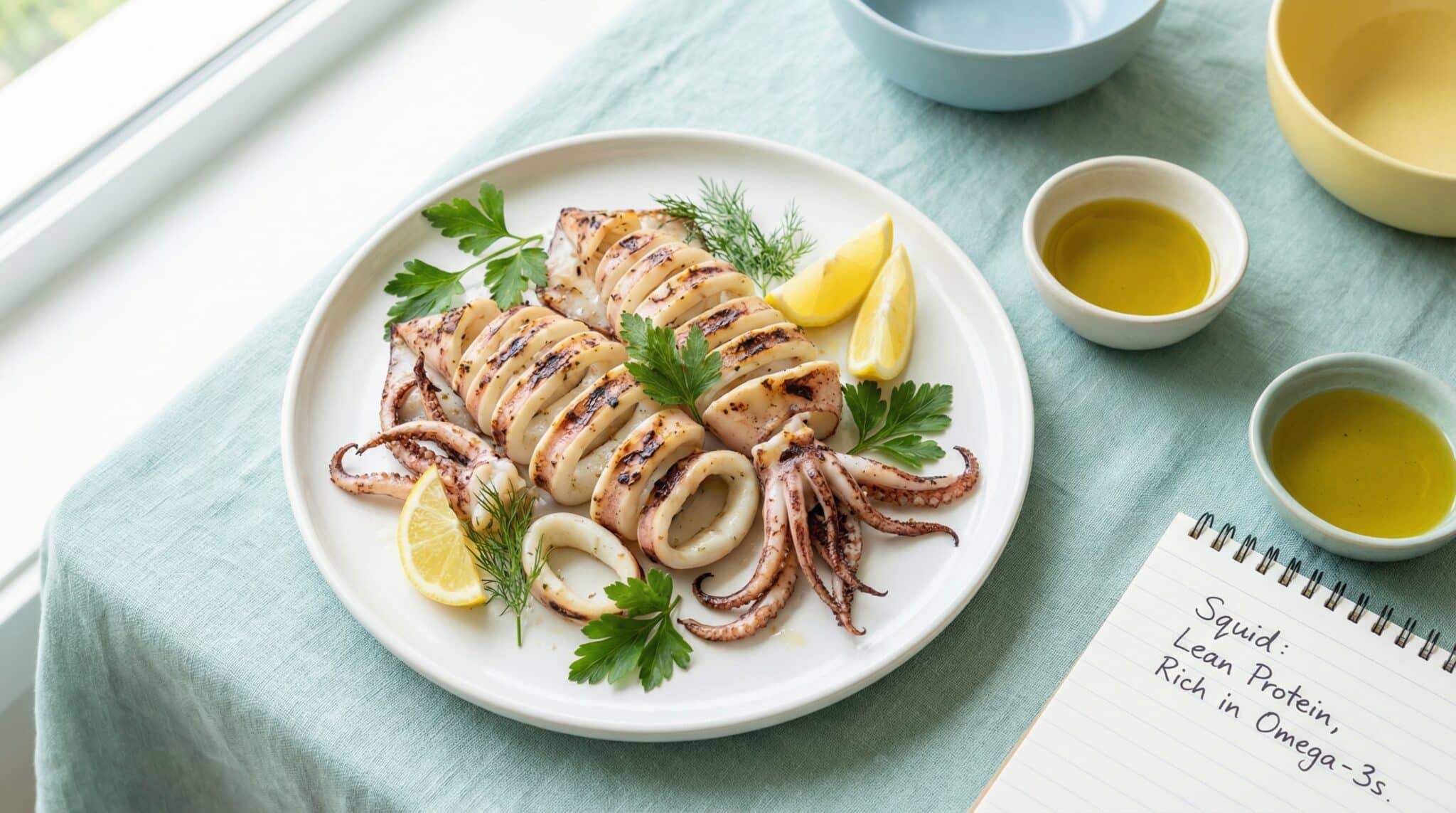
- Grilled or steamed: about 92-104 calories per 100g, low fat, nutrients mostly stay intact.
- Sautéed in olive oil: around ~120 calories per 100g, still great just a little richer.
“Fun, but not a health food” option
- Deep fried with breading: 150-200+ calories per 100g, much more fat, and high heat can reduce omega-3s and water soluble nutrients like taurine.
Am I saying “never eat fried calamari”? Please. I’m a normal person with the calamari ingredient debate settled. Eat it, love it, squeeze the lemon. Just don’t convince yourself it’s the same thing as tossing fresh squid on the grill on a Tuesday.
How much squid should you actually eat?
You don’t need to make squid your entire personality. (Unless you want to. No judgment.)
A realistic, sane guideline:
- Most healthy adults: 3-4 ounces, about 2-3 times per week is plenty.
- If you’re watching sodium (like a 1,500 mg/day goal): stick to ~2-2.5 ounces of fresh squid, cooked without added salt, and treat fried/dried squid as a “sometimes food.”
- If you’ve got cardiovascular concerns: you may want to keep it closer to once a week, and choose gentler cooking methods.
Buying tip from someone who likes convenience:
Fresh whole squid is often cheapest (Asian markets are amazing for this), but you have to clean it, and I’m just going to say it: cleaning squid is a whole experience.
Frozen pre-cleaned tubes and rings are a totally legit shortcut for safe raw squid prep and just as nutritious. This is one of those times I fully support the easy button.
The bottom line: squid deserves a spot in your rotation
Squid is one of those foods that looks “extra,” but it’s actually a lean protein loaded with B12 and other nutrients and the cholesterol fear around it is mostly outdated for the average person.
If you keep it fresh, watch the sodium trap (dried and fried versions), and cook it in a way that doesn’t transform it into chewy sadness, squid can be a genuinely smart addition to your dinner lineup.
And if nothing else? It’ll make you feel like the kind of person who has interesting dinners. Which, honestly, is half the battle some weeks.