

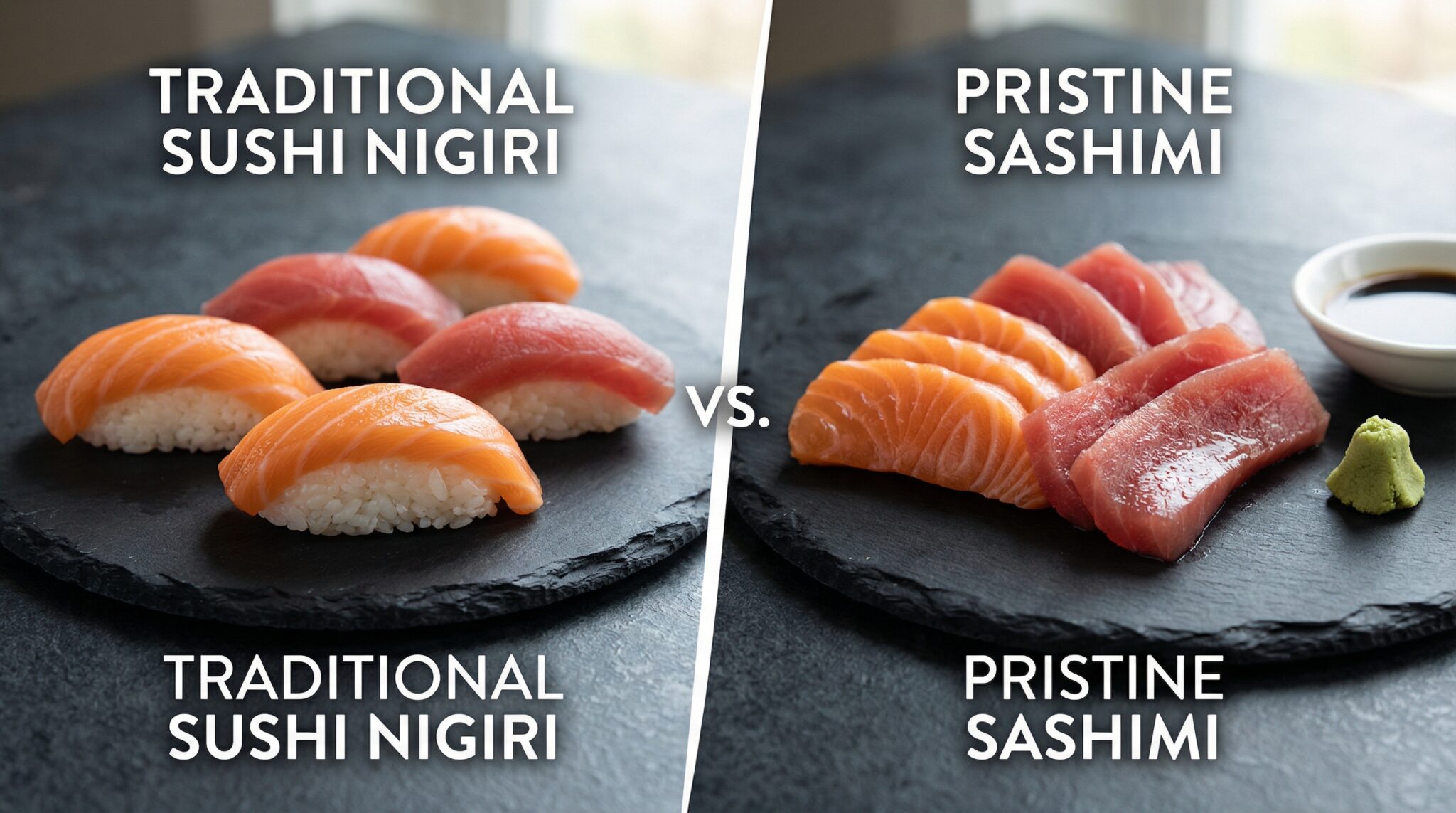
Sushi vs. Sashimi: The One Tiny Detail Everyone Mixes Up
Let me guess: you’ve said “I love sushi” when what you really meant was “I love raw fish.” Same. I did that for years confidently, loudly, like a person who has never been humbled by a menu.
Here’s the truth (and it’s so simple it’s almost annoying): the difference between sushi and sashimi is rice. That’s it. That’s the whole plot twist.
- Sushi = seasoned rice (always).
- Sashimi = sliced fish (no rice, ever).
Once you lock that into your brain, ordering gets way easier and you stop accidentally paying “pure fish prices” when you actually wanted something more filling.
The 3 Second “What Am I Looking At?” Test
Look at the plate.
- See rice? Sushi.
- See pretty slices of fish just… hanging out alone? Sashimi.
That’s the quick and dirty method. (And yes, it works even after one sake.)
Why Everyone Calls Raw Fish “Sushi” (And Why That’s Not Quite Right)
In a lot of Western conversations, “sushi” became shorthand for “raw fish,” which is like calling every sandwich “a panini.” Understandable! But not correct.
Sushi is about the rice. The word basically points back to the vinegared/seasoned rice situation. Which means you can have sushi that’s totally cooked shrimp, eel, egg, tempura things that crunch loudly in your happiness and it’s still sushi.
Sashimi is the fish (or seafood) sliced and served without rice. It’s its own thing, not “a type of sushi.”
If you want the overlap moment that confuses everyone: nigiri. It’s fish on top of rice. The fish looks sashimi-ish, but the rice underneath makes it sushi.
Okay, So What Counts as Sushi?
Sushi has one non-negotiable: seasoned rice. Good sushi rice is kind of a big deal sweet sour salty, not mushy, not cold, not clumpy. It’s the quiet supporting actor that makes the whole movie work.
Here are the sushi styles you’ll actually run into most:
- Nigiri: a little pillow of rice with a slice of fish on top. (Yes, you can eat it with your fingers. No, the sushi police will not tackle you.)
- Maki (rolls): rice + fillings wrapped up in nori. This is where your spicy tuna and California rolls live.
- Temaki: the hand roll cone you eat immediately before it turns into a sad, soggy seaweed triangle.
- Chirashi: a bowl of sushi rice with fish on top. Personally? This is the “I’m starving” order. Reliable. Filling. Zero rolling drama.
Sashimi: The “No Distractions” Option
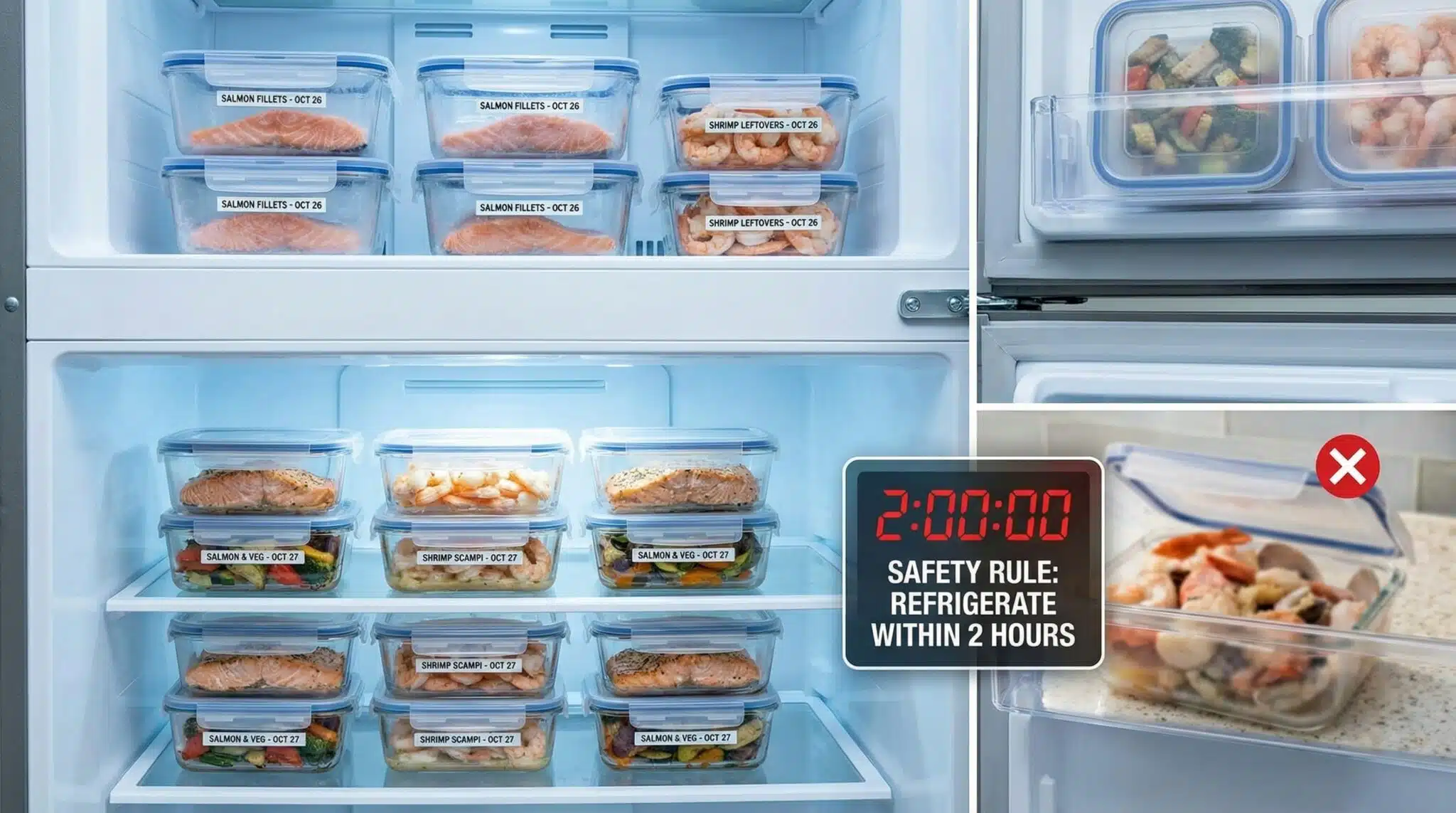
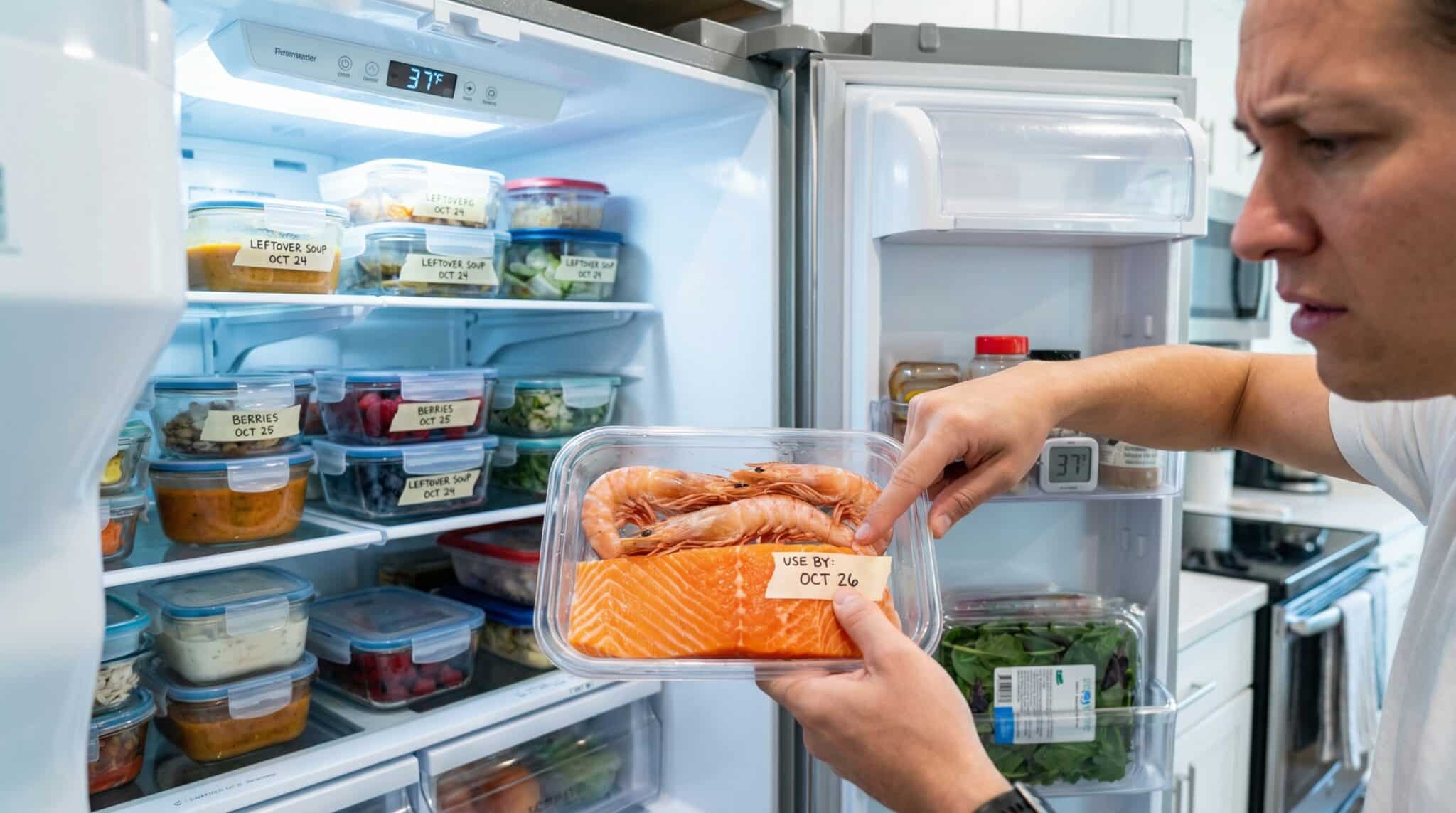
Sashimi is just clean slices of fish/seafood, usually with some daikon shreds and maybe a shiso leaf, because presentation matters and also because we’re fancy now and refrigerated sashimi shelf life matters if you bring some home.
And here’s the thing: sashimi doesn’t hide. No rice. No crunchy tempura. No spicy mayo spa day. It’s just you and the fish, meeting each other honestly.
If the restaurant has amazing fish, sashimi can be magical. If the restaurant has “fine” fish… sashimi will tell you immediately. (Sashimi is basically a truth serum.)
How I Decide What to Order (Steal This)
When you’re staring at the menu like it’s written in riddles, this is the simplest way to choose:
Choose sashimi if…
- you want pure fish flavor (and you trust the place)
- you’re not super hungry but want protein
- you’re watching carbs (sashimi is basically all protein, almost no carbs)
Choose sushi if…
- you want something more filling (hello, rice)
- someone at the table wants cooked options
- you want variety different textures, sauces, crunch, fun
Ordering both?
Do it. Live your life.
But eat sashimi first if you can rice, soy sauce, and all the bold roll flavors can steamroll your taste buds.
Freshness Clues (Because Nobody Wants Sketchy Fish)
You don’t need to be a fish sommelier. Just look for the basics.
For sashimi:
- Bright, even color (not dull, not blotchy)
- Smells clean (ocean-y is fine. “Fishy” is not a compliment)
- Looks fresh, not wet and weepy in a puddle
For sushi/rolls:
- The rice should be slightly warm or room temp, not fridge cold
- Rice should hold together but not be paste
- Nori should have some snap if it’s limp, the roll’s been sitting around thinking about its regrets
Dipping Without Making a Mess (A Tiny Tip That Helps a Lot)
If you’re eating nigiri, try to dip the fish side into soy sauce, not the rice side. Rice is basically a sponge with ambitions it’ll soak up soy sauce, fall apart, and then you’re doing that awkward “catch the sushi” move with your chopsticks.
With sashimi, just dip the slice directly. Easy.
Also: pickled ginger is meant to be a palate reset between bites, not a topping. (But if you love it on top, I am not coming to your table to confiscate it.)
“Is Raw Fish Safe?” (The Real Question)
This is the part where I gently step onto my sensible soapbox.
“Sashimi grade” isn’t some tightly regulated official label in the U.S. What actually helps make raw fish safer is proper freezing (at specific temps for specific times) to kill parasites. So when a restaurant says “fresh,” it often still means “previously frozen and handled correctly.” That’s normal.
That said: if you’re pregnant, immunocompromised, or feeding little kids, I’d stick to cooked options and watch for foodborne illness red flags. You can still have a great meal tempura rolls, eel, shrimp, veggie rolls, tamago (egg)… all the fun, less risk.
The Takeaway (So You Can Order Like You’ve Always Known This)
If you remember nothing else, remember this:
Sushi = rice. Sashimi = no rice.
Sashimi is the pure, simple, fish forward experience. Sushi is the more filling, more varied, rice and fish harmony moment.
Next time you’re ordering, decide what mood you’re in:
- Do you want “light and pristine”? Go sashimi.
- Do you want “feed me and make it fun”? Go sushi.
- Do you want both? Excellent choice. I support you fully.
And if you still accidentally call sashimi “sushi” at the table… congrats, you’re officially one of us.