

Have you ever wondered how long raw fish can stay safe to eat in your fridge?
Well, if you have tried sashimi before — those thin, tasty slices of raw fish — you know how fresh and delicate it feels.
But since it’s not cooked, sashimi doesn’t last as long as other foods. That’s why it’s important to know exactly how long you can keep it before it goes bad.
Whether you bought it from a store or made it at home, sashimi starts to lose its freshness the moment it’s prepared. And when it comes to raw fish, freshness isn’t just about flavor — it’s about safety, too.
So, in this guide, you will learn how long different types of sashimi last in the fridge, how to tell if it’s still good, and what you can do to store it the right way in detail.
Different Types of Sashimi that Last Longer in the Fridge
Sashimi can be served in several different ways — raw, marinated, or lightly seared — and each preparation affects its shelf life.
1. Raw Sashimi (Unseasoned)
This is the most traditional form of sashimi — thin slices of raw fish served plain. Because there are no preservatives or cooking involved, it has the shortest shelf life.
Fridge Life: 24 to 48 hours
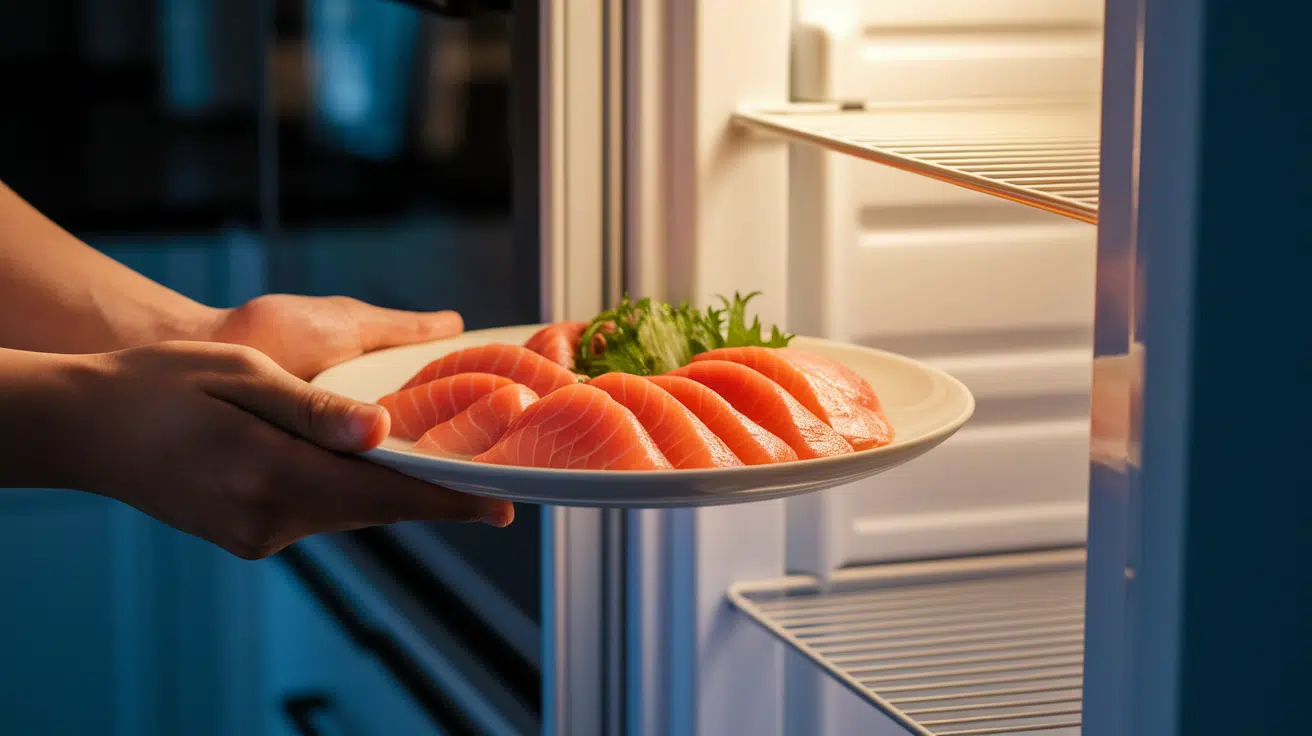
Tip: Store in a sealed container over ice or the coldest fridge spot
2. Marinated Sashimi
Some sashimi is served after being soaked in soy sauce, vinegar, or citrus juice. This type includes dishes like shime saba (vinegar-cured mackerel) or zuke maguro (soy-marinated tuna).
Fridge Life: 24 to 48 hours
Why It Lasts Longer: Acidic marinades help slow down bacterial growth
3. Cooked or Seared Sashimi (Tataki)
Tataki is sashimi that’s quickly seared on the outside and raw in the middle. Because part of it is cooked, it tends to stay fresh a bit longer.
Fridge Life: 2 to 3 days
Tip: Eat within 2 days for the best taste and texture
4. Thawed Frozen Sashimi
Eat within 2 days after thawing. Never refreeze sashimi once it’s been thawed.
| Sashimi Type | Fridge Life (at or below 4°C/40°F) |
|---|---|
| Raw | 24–48 hours |
| Marinated | 24–48 hours |
| Cooked/Fried | Up to 3 days |
| Thawed from Frozen | Up to 2 days |
Learning the refrigeration limits for various marine products helps preventwaste and illness.
Common Factors that Affect Sashimi’s Shelf Life
How long your sashimi lasts in the fridge isn’t just about counting hours. Several things can alter that timeline, sometimes significantly.
Here are the main factors that affect sashimi’s shelf life:
- Fridge Temperature: Your refrigerator should always stay at or below 40°F (4°C). Any warmer than that, and bacteria can grow much faster. It’s also a good idea to store sashimi in the coldest part of the fridge — usually the back of the bottom shelf — since fridge doors tend to be slightly warmer due to frequent opening.
- Freshness at the Time of Purchase: Not all sashimi starts at the same level of freshness. If you’re buying fish that’s already been on the shelf for a day or two, it won’t taste as good at home. Always look for “sashimi-grade”, which means the fish was handled properly from the start and flash-frozen to kill parasites.
- Type of Fish or Seafood: Some types of sashimi spoil faster than others. For example, oily fish like mackerel tend to spoil faster than leaner cuts like tuna. Similarly, shellfish like scallops and octopus might have slightly longer shelf lives, especially if they are cooked.
- Exposure to Air: Once sashimi is exposed to air, it begins to oxidize and lose its texture. That’s why storing it in airtight containers is important. Air not only dries out the surface of the fish but can also introduce bacteria and moisture imbalance.
- Handling and Cleanliness: How the sashimi was sliced, served, and stored plays a big role. Clean knives, cutting boards, and hands reduce the chances of contamination. If there was any cross-contact with raw meat or surfaces that weren’t clean, the fish may not last long at all.
Best Types of Fish and Seafood for Sashimi
| Fish Type | Shelf Life (Refrigerated) | Notes |
|---|---|---|
| Tuna (Maguro) | 1–2 days | Holds freshness well; commonly used |
| Salmon (Sake) | 24 hours max | Spoils faster due to high fat content |
| Yellowtail (Hamachi) | 1–2 days | Very popular and delicate |
| Mackerel (Saba) | Same day recommended | Spoils quickly, often served marinated |
| Scallops (Hotate) | 1 day | Soft texture, very temperature-sensitive |
| Octopus (Tako, cooked) | 2–3 days | Already cooked; lasts slightly longer |
The General Rule Is: The fattier the fish, the faster it spoils. That’s why salmon, while flavourful, doesn’t last as long as tuna.
How to Check If Sashimi Has Spoiled?
It’s not always obvious when sashimi has spoiled. Here’s how to use your senses to decide whether it’s still safe:
- Look: Check the color and texture. Fresh sashimi should look vibrant and glossy. If the fish appears dull, discolored, slimy, or has any white fuzz or spots, it’s no longer safe.
- Smell: This is your best warning system. Good sashimi smells like the ocean — fresh and clean. Bad sashimi has a sour, fishy, or ammonia-like smell. If the scent is even slightly off, don’t risk it.
- Touch: It should feel firm, slightly cool, and not sticky. If it feels slimy or mushy, it’s past its prime.
- Taste: If it looks, smells, and feels okay but you’re still unsure, it’s better to be cautious. Never taste sashimi that shows any signs of spoilage.
The Bottom Line
Always remember, Sashimi is meant to be eaten fresh, but storing it properly can help it stay safe for a short time.
If the fish looks dull, smells strange, or feels slimy, it’s best not to eat it. Trust your eyes, nose, and common sense.
In the end, it’s better to be careful than to risk getting sick.
Sashimi can be a tasty treat, but only if you handle and store it with care.
Frequently Asked Questions
Can I Eat Sashimi The Next Day?
Yes, but only if it was kept cold, sealed, and still smells and looks fresh. Ideally, eat it within 24 hours of preparing or buying.
What If I Accidentally Left Sashimi Out Overnight?
Unfortunately, sashimi that sits at room temperature for more than 2 hours should be thrown out. It’s not safe to eat.
Can I Store Sashimi with Other Food in The Fridge?
You can, but make sure it’s in a sealed, airtight container to avoid absorbing odors and flavors from other foods. Cross-contamination is also a concern, so don’t store it next to raw meat.
What’s the Difference Between Sushi and Sashimi Storage?
Sushi (with rice) can spoil even faster because rice can grow bacteria quickly. Sashimi, being just fish, is a bit safer, but both need to be eaten quickly.