

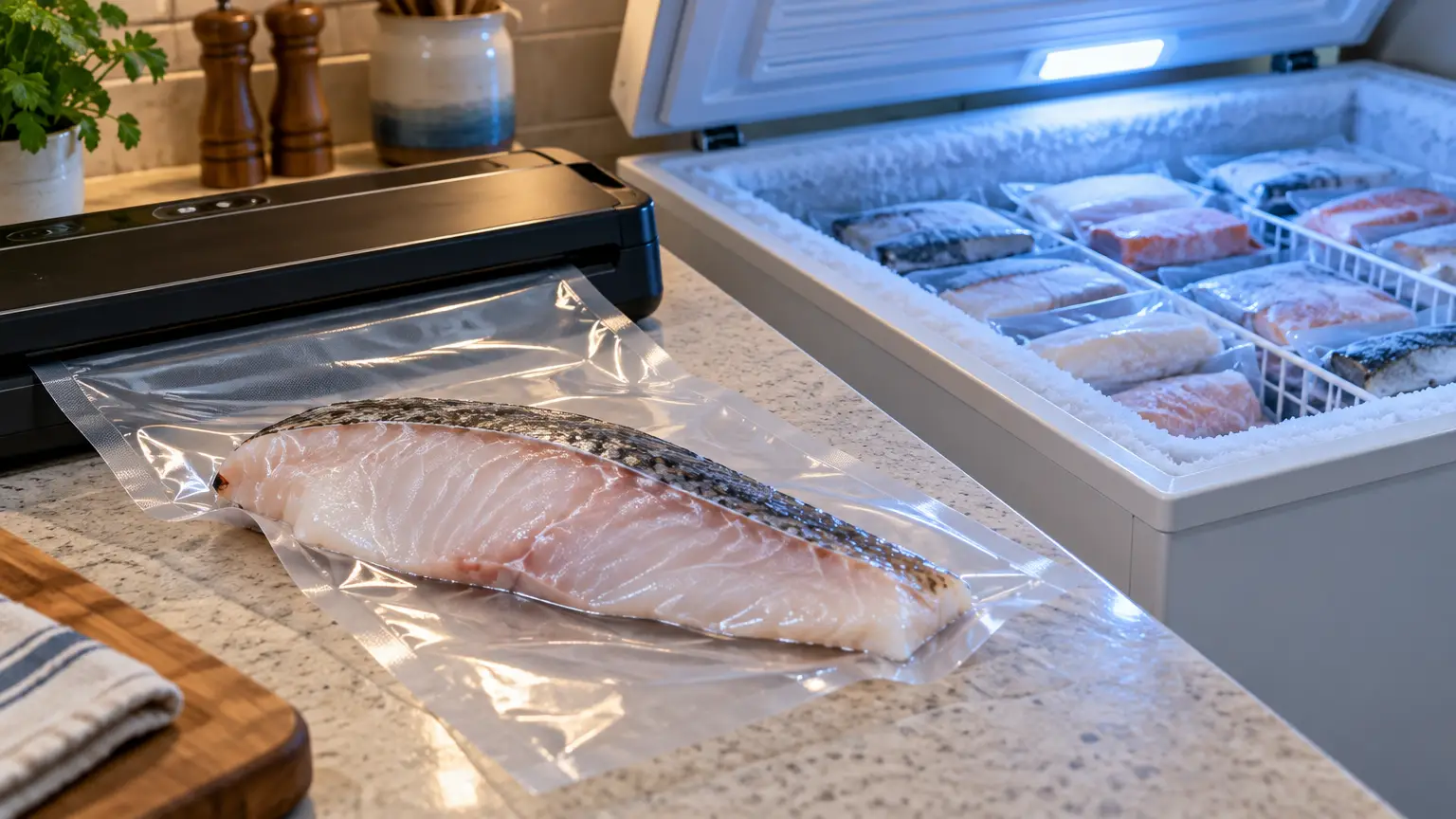
Fresh fish can survive the freezer remarkably well, but only if it goes in under the right conditions. Air exposure, excess moisture, fluctuating temperatures and slow freezing can all affect texture and flavor, turning a beautiful fillet into something dry or unpleasantly soft.
The best results start before the freezer door opens. Freeze fish while it is still fresh, package it carefully and keep it consistently cold. A little extra work on day one can mean the difference between a dinner that tastes freshly purchased and one that tastes unmistakably frozen.
Freeze It Fast
Fish should be frozen as soon as possible if you know you will not cook it while fresh. Waiting several days and then freezing it does not reset the clock. Freezing slows deterioration, but it cannot restore quality that has already been lost.
For households that regularly buy fish in bulk, you’ll want a stand up deep freezer because it can provide dedicated space for organizing individual portions rather than squeezing packages into an already crowded refrigerator freezer. Whatever freezer you use, avoid packing unfrozen fish into an area where cold air cannot circulate effectively.
Before freezing, portion larger fillets according to the meals you expect to prepare. Separating a large purchase into dinner-sized packages prevents you from having to thaw more fish than you need later.
Keep Air Away
Air is one of the biggest threats to frozen fish. Exposure encourages freezer burn, which removes moisture from the surface and can leave parts of a fillet dry, discolored and tough. The goal is therefore to create the tightest possible barrier between the fish and the freezer environment.
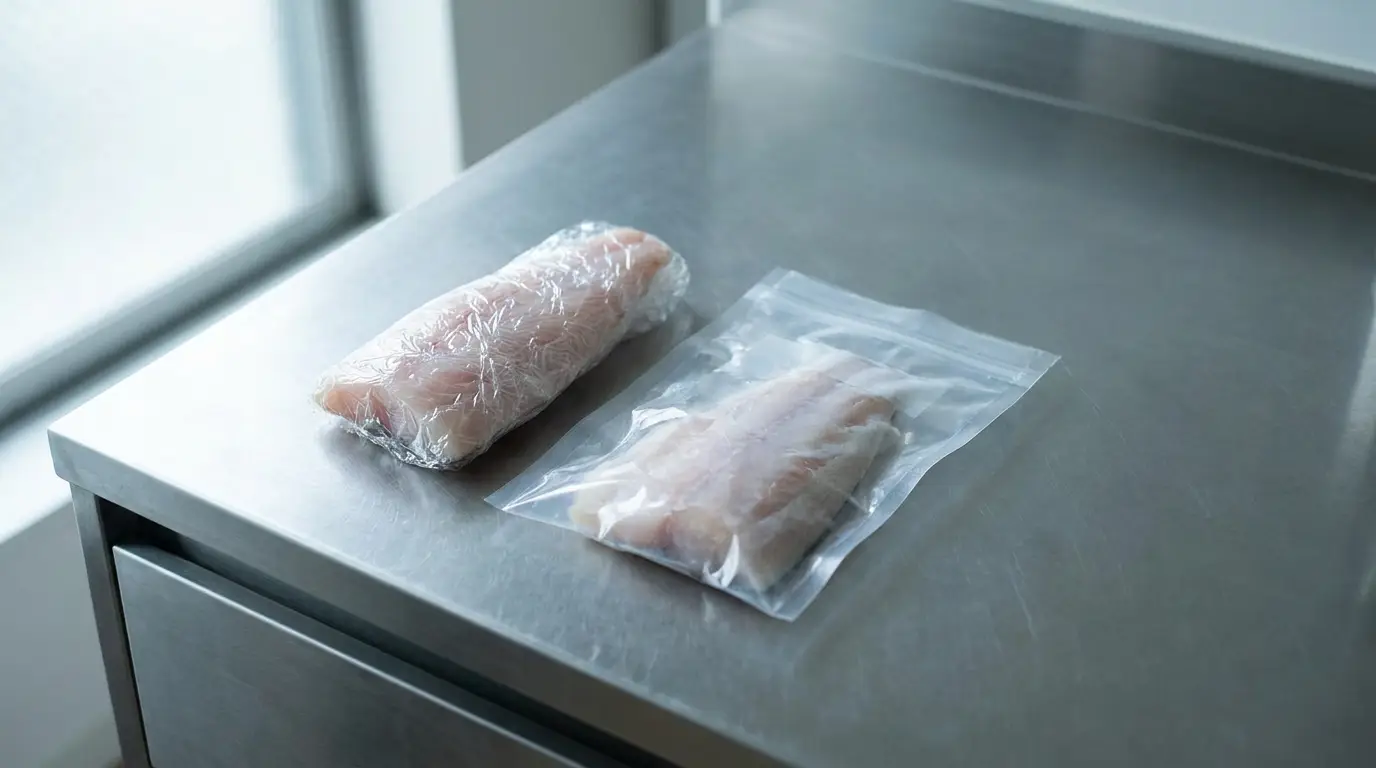
Vacuum sealing is particularly useful because it removes much of the air surrounding the fish. Without a vacuum sealer, wrap portions tightly in freezer-safe plastic wrap before placing them inside a freezer bag, pressing out as much air as possible before sealing it. Freezer paper can provide another protective layer.
Label each package with the type of fish and freezing date. This sounds painfully obvious until you are staring at three frosty mystery packages six weeks later wondering whether dinner is salmon, cod or an archaeological discovery.
Storage Conditions Protect Quality
Consistent temperature matters when properly storing seafood because repeated partial thawing and refreezing can damage texture and raise food safety concerns if fish spends too long at unsafe temperatures. The U.S. Food and Drug Administration recommends keeping a freezer at 0 degrees Fahrenheit or below.
Place newly packaged fish where it can freeze efficiently rather than leaving it near the door, where temperatures may fluctuate more as the freezer is opened. Once frozen solid, portions can be reorganized for easier access.
Quality also declines the longer fish remains frozen, even when it stays safe at a constant 0 degrees Fahrenheit. Fatty and lean fish have different recommended storage periods for best quality, so labeling packages and using older portions first is more reliable than relying on memory.
Thaw It With Patience
The refrigerator is generally the best place to thaw frozen fish because it allows the temperature to rise gradually while keeping the fish cold. Move the package from the freezer to the refrigerator ahead of the meal and place it on a plate or tray to catch any liquid.
For faster thawing, sealed fish can be submerged in cold water, with the water changed as needed to keep it cold. The microwave can also thaw fish when necessary, but the fish should be cooked immediately afterward because parts may begin warming or cooking during the process.
Do not leave frozen fish sitting on the counter for hours. The center may still feel frozen while the exterior reaches temperatures where bacteria can multiply more readily.
Cook With Texture in Mind
After thawing, remove excess surface moisture with paper towels before cooking. A wet fillet has a harder time browning properly in a hot pan and may steam instead of developing the exterior texture you intended.
Some fish can also be cooked directly from frozen, depending on the recipe and cooking method. When texture is the priority, however, controlled thawing generally makes it easier to season the fish evenly, remove surface moisture and judge cooking time accurately.
Freezing fresh fish successfully is less about complicated technique than controlling air, temperature and time. Freeze it early, package it tightly, keep it consistently cold and thaw it safely, and the fish waiting in your freezer can remain remarkably close to the one you originally brought home.