

Few commercial kitchens put cooking oil through more demanding conditions than a deep fried seafood restaurant. High-volume frying, heavy batters, and the protein content of fish all accelerate oil breakdown, which means fried fish operations change their oil more frequently than most other restaurant types. That turnover creates a steady, high-volume stream of used cooking oil that, handled correctly, becomes both a compliance asset and a recurring revenue source.
This post breaks down exactly how fish and seafood restaurants manage their used cooking oil, what happens to the oil after collection, and why getting this right matters more for seafood-focused operations than it does for most.
Why Fried Fish Operations Generate More Used Cooking Oil
Understanding the volume starts with understanding the cooking chemistry. Fish proteins break down in hot oil differently than starch-heavy foods like french fries. Moisture released during frying, combined with the proteins and natural fats in fish flesh, introduces contaminants into the oil that cause it to degrade faster. Battered fish introduces additional particulates that accelerate this process further.
Fried Seafood Restaurants
The result is that a fried seafood restaurant typically cycles through cooking oil faster than a burger chain or a chicken wing spot. Commercial cooking oil typically needs to be changed every one to two days in a busy restaurant, though this timeline varies based on kitchen operations and how well oil quality is maintained. For a dedicated fish fry operation running multiple fryers all day, oil changes may happen even more frequently during peak periods.
This higher turnover rate means more gallons of used cooking oil per week, per month, and per year than a comparable-sized restaurant running a less oil-intensive menu. For UCO collection purposes, that volume is an advantage. Higher volume typically means better rebate rates and more frequent collection schedules from professional providers.
The Used Cooking Oil Recycling Process for Seafood Restaurants
Once cooking oil reaches the end of its useful life in the fryer, it enters a recycling chain that begins at the restaurant and ends as renewable fuel or other products.
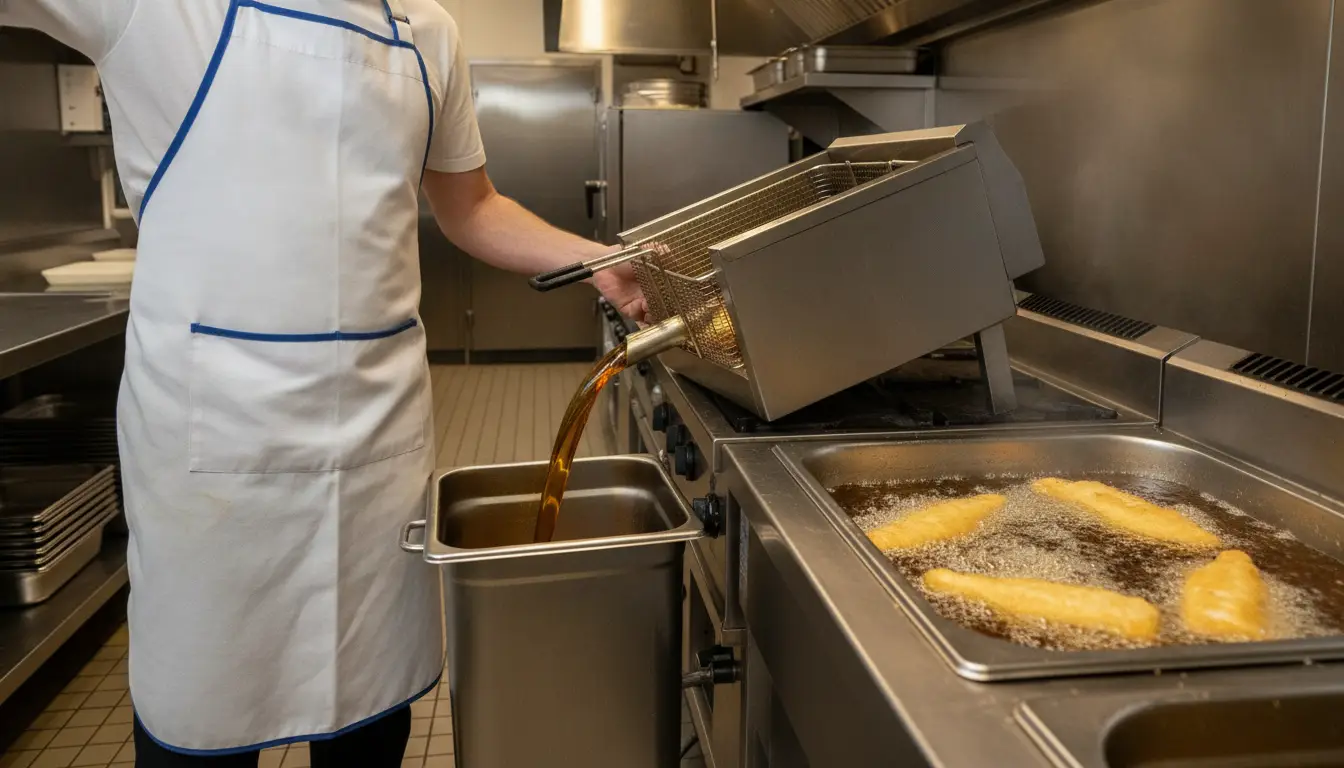
Step 1: Draining and Storage The standard process is to manually transfer oil waste from fryers to an outdoor storage container when the oil is cooled down and drained. The grease is then stored safely in collection containers for later pickup. For larger operations, indoor tanks connected directly to fryers via mobile caddy or piping eliminate the need for manual oil transfer entirely. For smaller kitchens, portable shuttle containers that roll from the fryer to an outdoor storage tank are the most practical option.
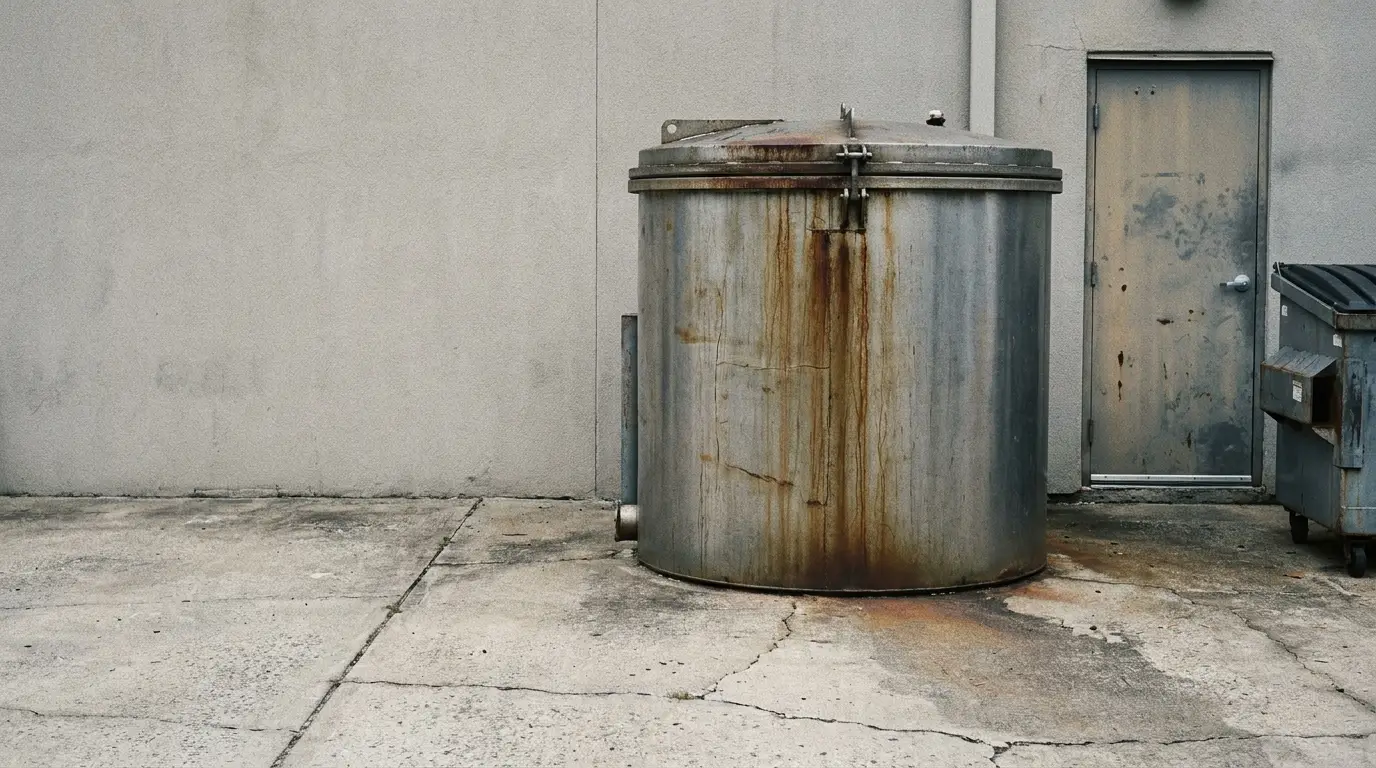
Step 2: Secure Storage Used cooking oil is stored in locked, leak-proof outdoor containers until collection. Locking mechanisms are important because used cooking oil has real commodity value and theft from restaurant containers is a genuine and growing problem, particularly in areas where oil prices are high. Some commercial kitchen operations require indoor storage unit and follow a similar collection process.
Step 3: Professional Collection A licensed used cooking oil collection company arrives on a scheduled basis, pumps the oil from storage containers into a specialized truck, and provides documentation confirming the volume collected and the destination for recycling. According to the North American Rendering Association, more than 4.4 billion pounds of used cooking oil is collected each year from restaurants in the U.S. and Canada to be rendered and recycled into sustainable biofuels.
Step 4: Processing into Renewable Products Collected oil goes to a processing facility where it is filtered, refined, and converted. The most common end use is renewable diesel or biodiesel. Used cooking oil gets collected by recycling companies and converted into biodiesel fuel through transesterification, reducing greenhouse gas emissions by 85% compared to petroleum diesel. Fish-derived frying oil, because of its higher fat content, can be a particularly effective biodiesel feedstock.
What Fried Seafood Restaurant Get Back: The Rebate Model
Beyond the environmental and compliance benefits, properly managed used cooking oil collection pays fried fish restaurants directly. Restaurants can earn $0.10 to $0.75 per gallon recycling used cooking oil with collection companies, with rates based on volume, quality, and current yellow grease market prices.
For a high-volume fish fry operation, those per-gallon rates add up quickly. A food service establishment running four to six fryers and changing oil frequently can generate thousands of dollars in annual rebates simply by partnering with the right collection service and keeping their oil clean enough to qualify for higher-tier pricing.
Key factors that affect rebate rates for seafood operations:
Oil quality matters. Oil that has been heavily contaminated with food particles, water, or non-oil waste will be penalized. Filtering oil between changes and keeping containers clean preserves quality and protects rebate income.
Volume earns more. Higher-volume locations negotiate better per-gallon rates. Multi-location seafood restaurant groups can consolidate volume across locations with a single provider to maximize their collective leverage.
Consistency of collection matters. Allowing oil to sit too long in containers, especially in warm climates, degrades its quality and reduces its value as a biodiesel feedstock. Regular collection on a schedule matched to your volume output preserves quality.
Compliance: What Fried Seafood Restaurant Need to Know
Proper used cooking oil disposal is not optional for commercial food service operations. Improper disposal — including pouring oil down drains — violates environmental regulations in virtually every U.S. jurisdiction and can result in EPA fines, increased insurance premiums, and damage to the restaurant’s compliance record.
Recycling used cooking oil is an essential step toward running a sustainable restaurant and contributing to environmental conservation. Not only does recycling keep harmful waste out of landfills and sewers, but it also offers a chance to repurpose oil for biodiesel and other products.
Health violations from improper grease disposal can enter permanent public records, surfacing in health inspection reports and online reviews. For a seafood restaurant where freshness and cleanliness are central to the brand, that kind of record is especially damaging.
A licensed collection service provides documentation at every pickup that serves as a compliance record for health inspections and any environmental audits. This documentation is the simplest, most reliable way to demonstrate proper disposal practices to regulators.
Special Considerations for Fish Fry Operations
A few factors make used cooking oil management slightly different for dedicated seafood and fish fry shops compared to other restaurant types:
Higher protein content means faster degradation. Fish proteins and natural fish oils mix into the frying oil during cooking. This accelerates oxidation and breakdown compared to frying starches alone. The practical result is that oil change cycles are shorter and total annual UCO volume is higher, both of which favor professional collection over informal disposal methods.
Odor management is more significant. Used cooking oil from fish frying has a stronger odor profile than oil from other foods. Outdoor storage containers should be sealed tightly and positioned away from customer-facing areas. Frequent collection reduces the odor burden on the back-of-house and surrounding area.
Batter residue requires clean container management. Heavy batter particles settle in used oil and can accumulate in storage containers between pickups. Containers should be checked regularly and cleaned out during each collection visit to prevent buildup that degrades oil quality over time.
Choosing the Right Collection Partner for a Seafood Operation
Not every used cooking oil collection provider is equally equipped to serve a high-volume, high-turnover operation like a fried seafood establishment. When evaluating providers, seafood restaurant operators should consider:
- Whether the provider offers free containers sized to the operation’s actual weekly oil output
- The rebate rate offered and how it is calculated, including any deductions for quality degradation
- Collection frequency options, including the ability to add extra pickups during high-volume periods
- Whether the provider offers indoor storage options for kitchens with limited outdoor space
- Documentation provided at each pickup for compliance recordkeeping
- Theft protection features, including locked containers and volume monitoring
The right provider for a fried fish operation is one that understands the specific demands of high-frequency frying, offers flexible scheduling to match oil turnover cycles, and pays competitive rebates that reflect the genuine commodity value of the oil being collected.
The Environmental Impact: Every Gallon Counts
The scale of used cooking oil recycling in the food service industry is significant. Global UCO trade reached 3.7 billion gallons in 2022, with demand expected to grow substantially through 2030 as biodiesel, renewable diesel, and sustainable aviation fuel production increases. The United States has the most well-developed UCO collection system in the world, driven by long-standing commercial collection infrastructure.
Fried seafood establishments and seafood restaurants are a meaningful part of that supply chain. The oil that comes out of a fish fryer at the end of a busy Friday night service is not waste. It is a raw material for renewable fuel. Properly collected and recycled, it reduces greenhouse gas emissions, offsets fossil fuel consumption, and contributes to a supply chain that is increasingly recognized as essential to global decarbonization goals.
For deep fried seafood operators, that environmental contribution comes at no cost and with a financial return. It is one of the few genuinely win-win decisions available in restaurant operations.
Final Thoughts
Used cooking oil management is a higher-stakes operation for fried seafood restaurants than for most food service types, simply because of the volume generated and the speed at which frying oil degrades in a fish-heavy kitchen. The right collection partnership addresses compliance, pays meaningful rebates, accommodates high collection frequency, and handles the specific challenges of fish-derived frying oil.
The good news is that the infrastructure for professional used cooking oil collection is mature, widely available, and in most cases free for the restaurant. The oil coming out of your fryers has value. The only question is whether you are capturing that value or leaving it on the table. Companies focused exclusively on used cooking oil collection, such as Eazy Grease, have developed service models specifically around the higher turnover demands of frying-heavy operations.
This article is for informational purposes. Rebate rates, collection terms, and regulatory requirements vary by location and provider. Contact collection services directly for terms applicable to your operation.