

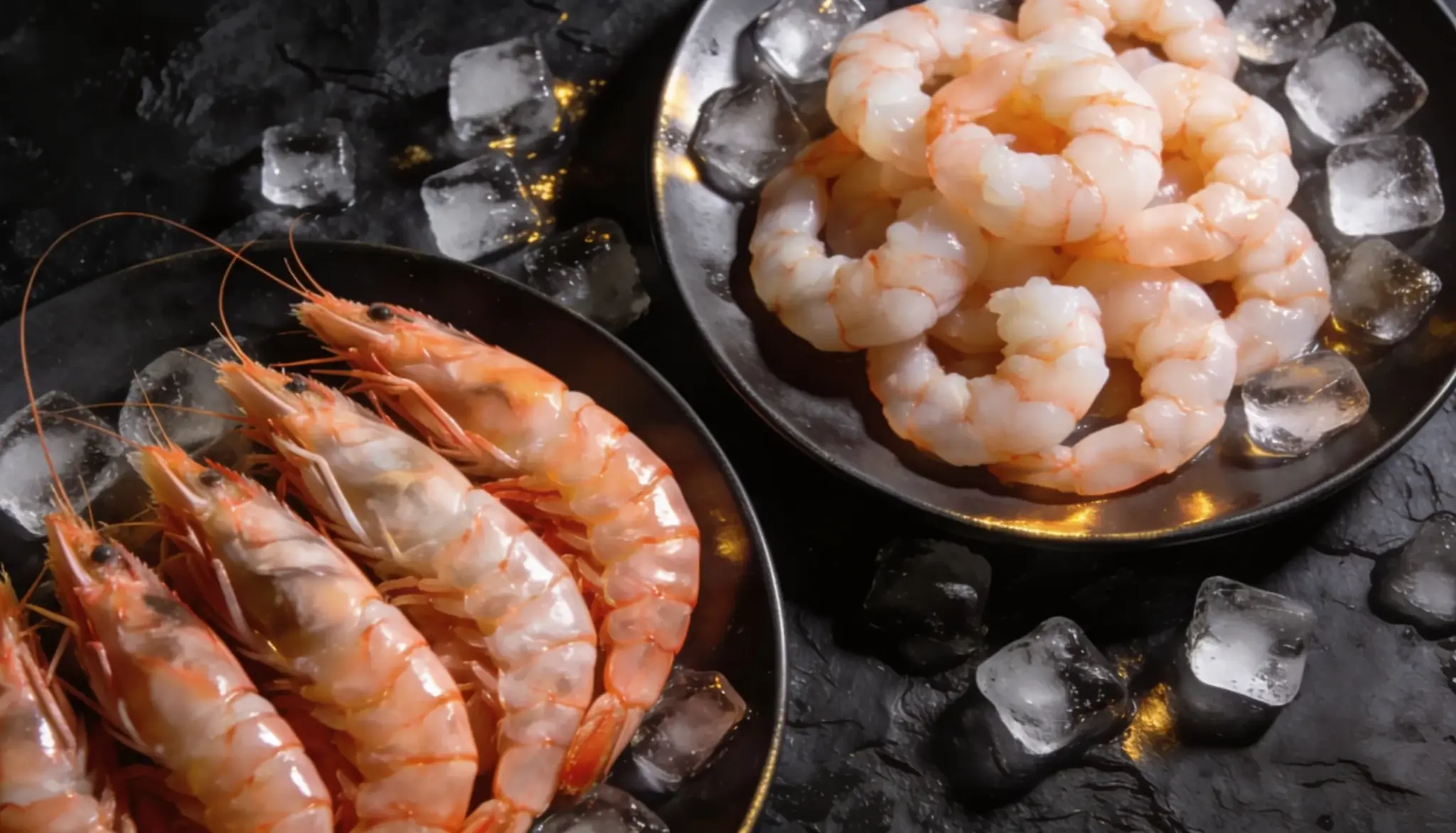
Shrimp and prawns are different types of crustaceans, although the names are often used interchangeably.
Prawns usually have a straighter body, larger size, and claws on three pairs of legs, while shrimp have a curved body, plate-like gills, and claws on two pairs.
They also differ in body shape, taste, anatomy, habitat, and culinary uses.
Understanding these differences makes it easier to choose the right seafood for cooking, shopping, and restaurant orders.
What are Shrimp?
They are small shellfish that live in oceans, rivers, lakes, and other bodies of water, and they belong to the crustacean family, along with crabs and lobsters.
They have a curved body, a thin shell, long antennae, and pairs of legs that help them move.
The species vary in size and color, cook quickly, and are sold fresh, frozen, cooked, or raw in grocery stores. They are used in a wide variety of dishes.
What are Prawns?
Prawns are shellfish, also from the crustacean family, along with shrimp, crabs, and lobsters.
They live in freshwater, brackish water, and some saltwater environments. Prawns usually have a straighter body, longer legs, and often grow larger than shrimp.
Like other shellfish, they have a hard outer shell that protects their body.
They are sold fresh, frozen, cooked, or raw, and their firm texture suits grilling, roasting, curries, and recipes that use larger pieces of seafood.
Differences Between Shrimp and Prawns: Anatomy-Based
Shrimp and prawns look similar, but several physical features set them apart. Their body shape, claws, gills, legs, and shell structure are different.
These characteristics are commonly used to identify and classify the two crustaceans.
Body Shape
Shrimp have a curved body because the second abdominal segment overlaps the segments before and after it.
Prawns have a straighter body with a different overlapping pattern.
This body shape is one of the easiest physical features to notice when comparing shrimp and prawns side by side.
Claws
Shrimp have larger claws on two pairs of legs, while prawns have larger claws on three pairs.
The number, size, and position of these claws are useful identification features.
Looking at the claws carefully helps distinguish shrimp from prawns with greater accuracy.
Gills
Shrimp have plate-like gills, while prawns have branching gills.
This difference cannot be seen without close examination, but it is one of the most important anatomical features scientists use to distinguish shrimp and prawns into separate biological groups.
Legs
Prawns usually have longer legs than shrimp, giving them a slightly different appearance.
Leg length alone cannot confirm identification, but it becomes much more useful when compared with body shape, claws, shell structure, and other physical features.
Shell
Shrimp have shell segments that overlap to form a curved body.
Prawns have a different shell arrangement that produces a straighter appearance.
The shell structure supports body shape and serves as another useful feature for comparing the two crustaceans.
A Quick Overview: Difference Between Shrimp and Prawns
| Features | Shrimps | Prawns |
| Body Shape | Curved body | Straighter body |
| Size | Usually smaller | Usually larger |
| Legs | Shorter legs | Longer legs |
| Claws | Larger claws on two pairs of legs | Larger claws on three pairs of legs |
| Gills | Plate-like gills | Branching gills |
| Habitat | Freshwater and saltwater | Mostly freshwater and brackish water |
| Taste | Mild and slightly sweet | Slightly richer and meatier |
| Texture | Tender | Firmer |
| Cooking Time | Cooks faster | Takes slightly longer to cook |
| Name Difference | Commonly called shrimp in the United States and Canada | Commonly called prawns in the United Kingdom, Australia, and New Zealand |
| Best Uses | Stir-fries, pasta, tacos, salads | Grilling, curries, skewers, seafood platters |
What is Better, Prawn vs Shrimp?
Choosing between prawns and shrimp depends on your recipe and personal preference.
Both are rich in protein and offer similar nutritional value, but they differ in taste, texture, size, and cooking performance.
1. Prawn vs Shrimp Taste
Shrimp and prawns have similar flavors after cooking, with only slight differences.
Both offer a mild, slightly sweet flavor that pairs well with herbs, spices, and sauces. Shrimp have a softer texture and cook quickly, while prawns are firmer and hold their shape better.
The cooking method and seasoning usually have a greater effect on the final flavor than the seafood itself.
2. Nutrition Comparison
Prawns and shrimp are both high in protein and low in saturated fat, making them healthy seafood choices.
They also provide nutrients such as vitamin B12, selenium, phosphorus, and iodine. Their nutritional values are very similar.
Grilled, baked, or steamed options usually contain less added fat than deep-fried or heavily sauced dishes.
3. Cooking Uses
Shrimp and prawns suit different recipes because of their size and texture.
Shrimp cook quickly and are often used in pasta, stir-fries, tacos, fried rice, soups, and salads.
Prawns are larger, have a firmer texture, and are commonly grilled, roasted, or added to curries, skewers, and seafood platters.
4. Price and Availability
Shrimp are usually more widely available in grocery stores, seafood markets, and restaurants.
They are sold in different sizes and are commonly available fresh, frozen, cooked, or raw throughout the year. Prawns may cost more in some regions.
Prices can also vary by season, location, and market demand, so the cost difference is not always the same.
5. Which One Should You Choose?
Shrimp and prawns are both excellent seafood choices, so the better option depends on your recipe and personal preference.
Shrimp work well in quick-cooking dishes because they are usually smaller and cook faster.
Prawns are larger with a firmer texture, making them suitable for grilling.
Popular Dishes Made with Shrimp and Prawns
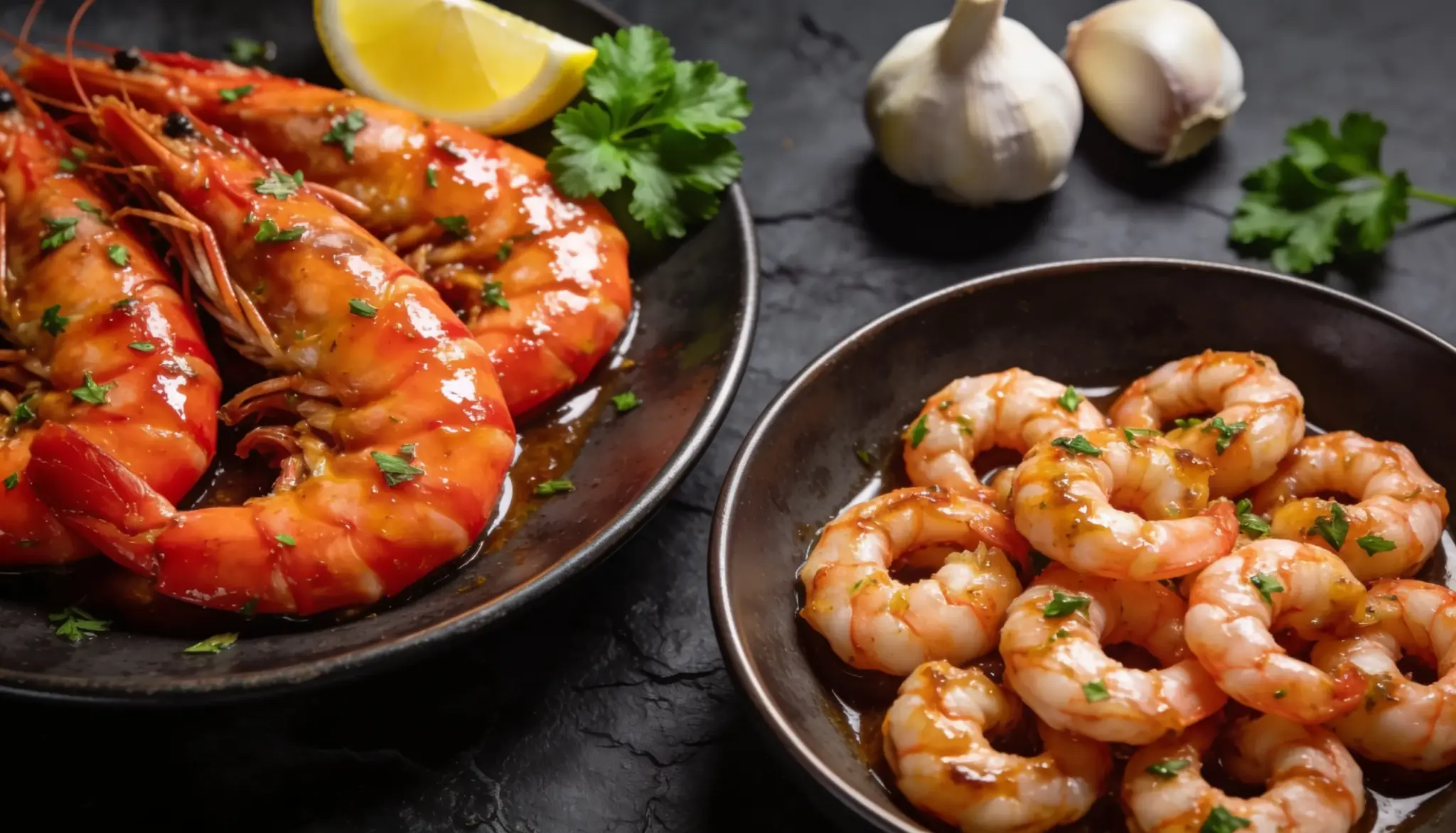
Shrimp and prawns are used in different dishes because of their size and texture.
Shrimp cook quickly and are often added to pasta, tacos, fried rice, and soups, whereas prawns are larger and are commonly grilled, roasted, or served in main dishes.
Popular Shrimp Dishes
- Garlic Butter Shrimp
- Shrimp Scampi
- Shrimp Burrito
- Shrimp Fried Rice
- Shrimp Pasta
Popular Prawn Dishes
- Grilled Prawns
- Garlic Prawns
- Prawn Curry
- Prawn Skewers
- Prawn Stir-Fry
A recipe that uses shrimp can often be made with prawns as well. Adjust the cooking time to match their size so they stay tender.
Conclusion
Shrimp and prawns may look the same, but they differ in body shape, size, habitat, taste, and anatomy.
Their names can also vary from one country to another, which often leads to confusion. Body shape, claws, and gills are more reliable indicators for distinguishing shrimp from prawns.
Both are widely used in cooking, and each suits different recipes depending on its size, texture, and cooking method.
Frequently Asked Questions (FAQs)
1. Can Shrimp Replace Prawns in Recipes?
Yes, they can replace each other with slight adjustments to cooking time for different sizes.
2. What Type of Shrimp is Most Commonly Eaten?
White shrimp, brown shrimp, pink shrimp, and tiger shrimp are commonly eaten.
3. Does Shrimp Size Affect Taste?
Yes, larger shrimp usually have a firmer texture, but the flavor changes very little.