

Most herbs are fussy. Thyme is not.
It grows in poor soil, handles dry spells, and still smells incredible. But most people still get it wrong.
They overwater it, plant it in the wrong spot, and then wonder why it struggles. I have seen this happen more times than I can count.
Learning how to grow thyme does not have to be that hard.
A few simple tips can help you grow a healthy, fragrant plant right at home
What is Thyme?
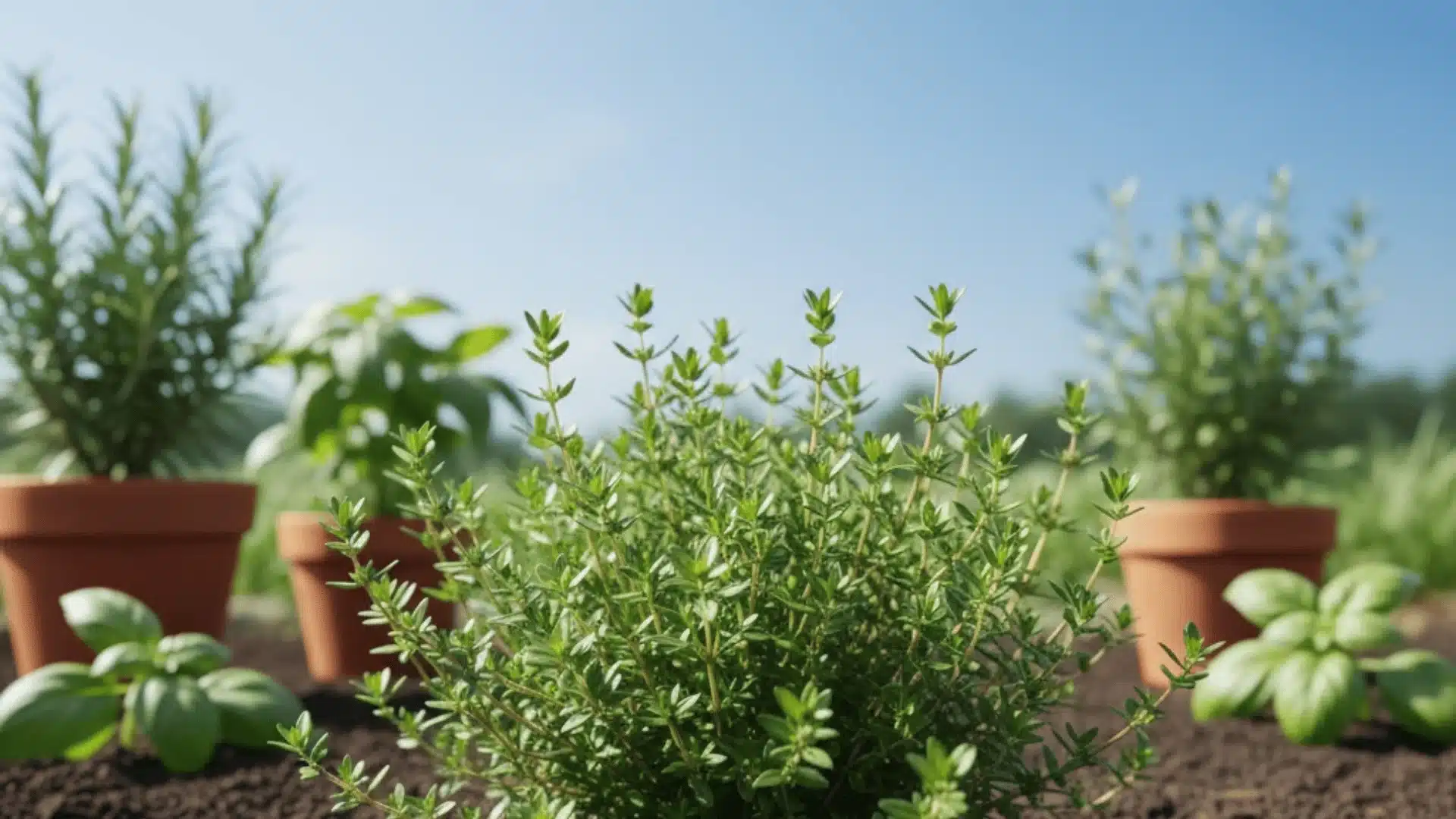
Thyme is a small herb in the mint family that has been used for thousands of years. People have grown it for cooking, medicine, and even as a natural remedy for coughs.
The plant itself is pretty compact. It grows low to the ground, with tiny leaves and thin woody stems.
In summer, it produces small flowers in pink, white, or purple. Bees absolutely love it.
Thyme originally comes from the Mediterranean region.
That is why it thrives in warm, sunny, and dry conditions. It is a tough little plant that does not need much fuss to grow well.
Types of Thyme to Grow
There are wide varieties of thyme out there.
Each one offers something a little different. Here is a simple breakdown to help you pick the right one for your garden.
| Type of Thyme | Best For | Key Feature |
|---|---|---|
| Common Thyme (Thymus vulgaris) | Cooking and kitchen gardens | Strong flavor, most widely used |
| Lemon Thyme (Thymus citriodorus) | Cooking and container gardens | Fresh citrus scent and flavor |
| Creeping Thyme (Thymus serpyllum) | Ground cover and pathways | Spreads low and wide, great for filling gaps |
| Woolly Thyme (Thymus pseudolanuginosus) | Ornamental gardens | Soft, fuzzy leaves, low-growing |
| Wild Thyme (Thymus polytrichus) | Rock gardens and slopes | Very hardy, handles poor soil well |
| Caraway Thyme (Thymus herba barona) | Cooking and borders | Mild caraway-like flavor, pretty pink flowers |
If you are growing thyme for cooking, common thyme or lemon thyme are your best bet. But if you want something that looks good in your garden, creeping thyme works really well.
How to Grow Thyme: A Step-by-Step Process
Growing thyme is honestly one of the easiest things you can do in a garden.
I remember being surprised by how little effort it actually takes. You just need to get the basics right, and the plant does most of the work for you.
Step 1: Prepare Your Spot and Soil
Thyme loves sunlight, so pick a spot that gets at least 6 to 8 hours of direct sun every day.
A south-facing window or an open garden bed works really well.
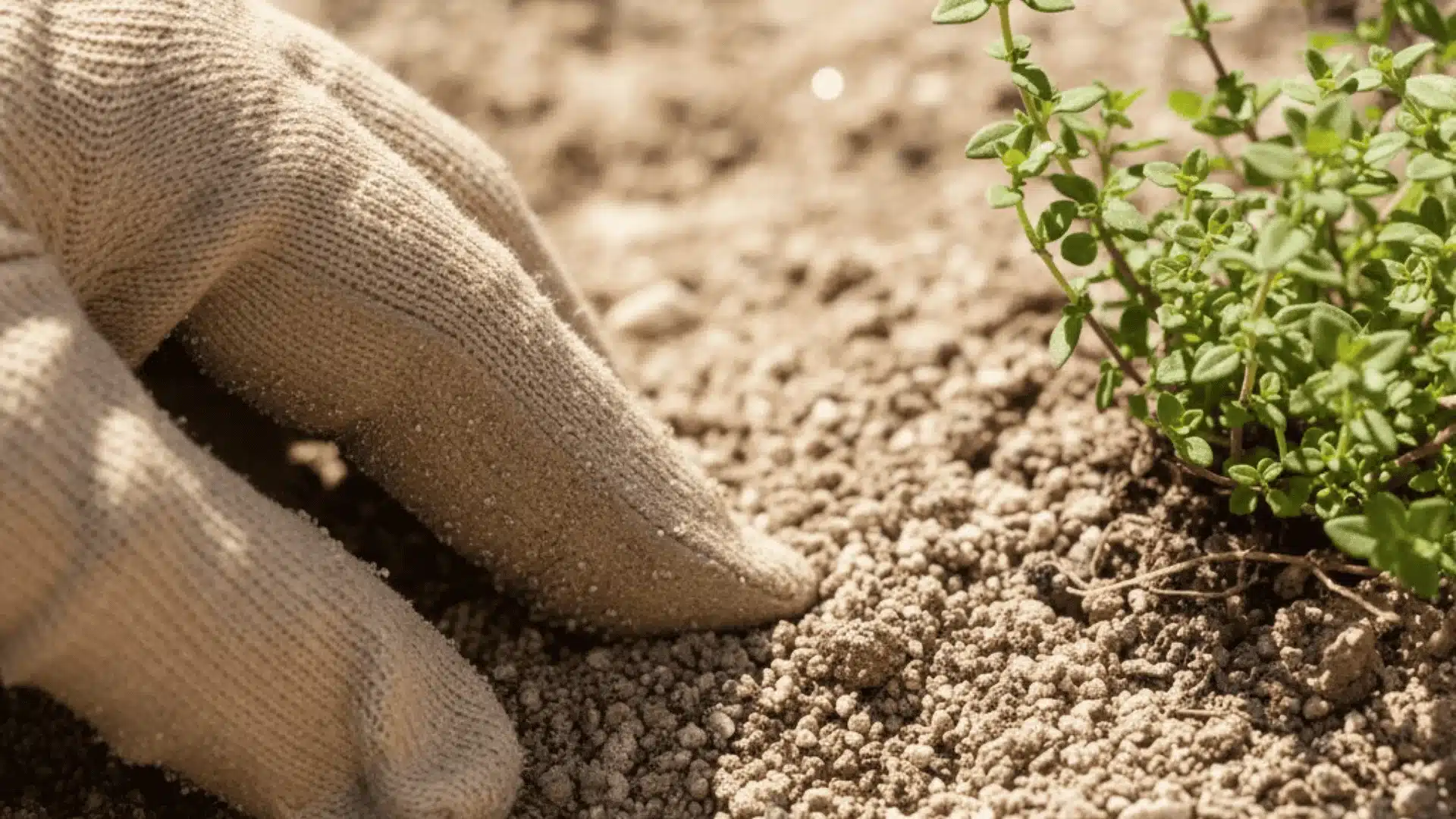
As for the soil, thyme does not like wet or heavy soil.
A slightly sandy, well-drained mix is ideal. If your soil holds too much water, mix in some sand or small gravel before planting
Step 2: Plant It Correctly
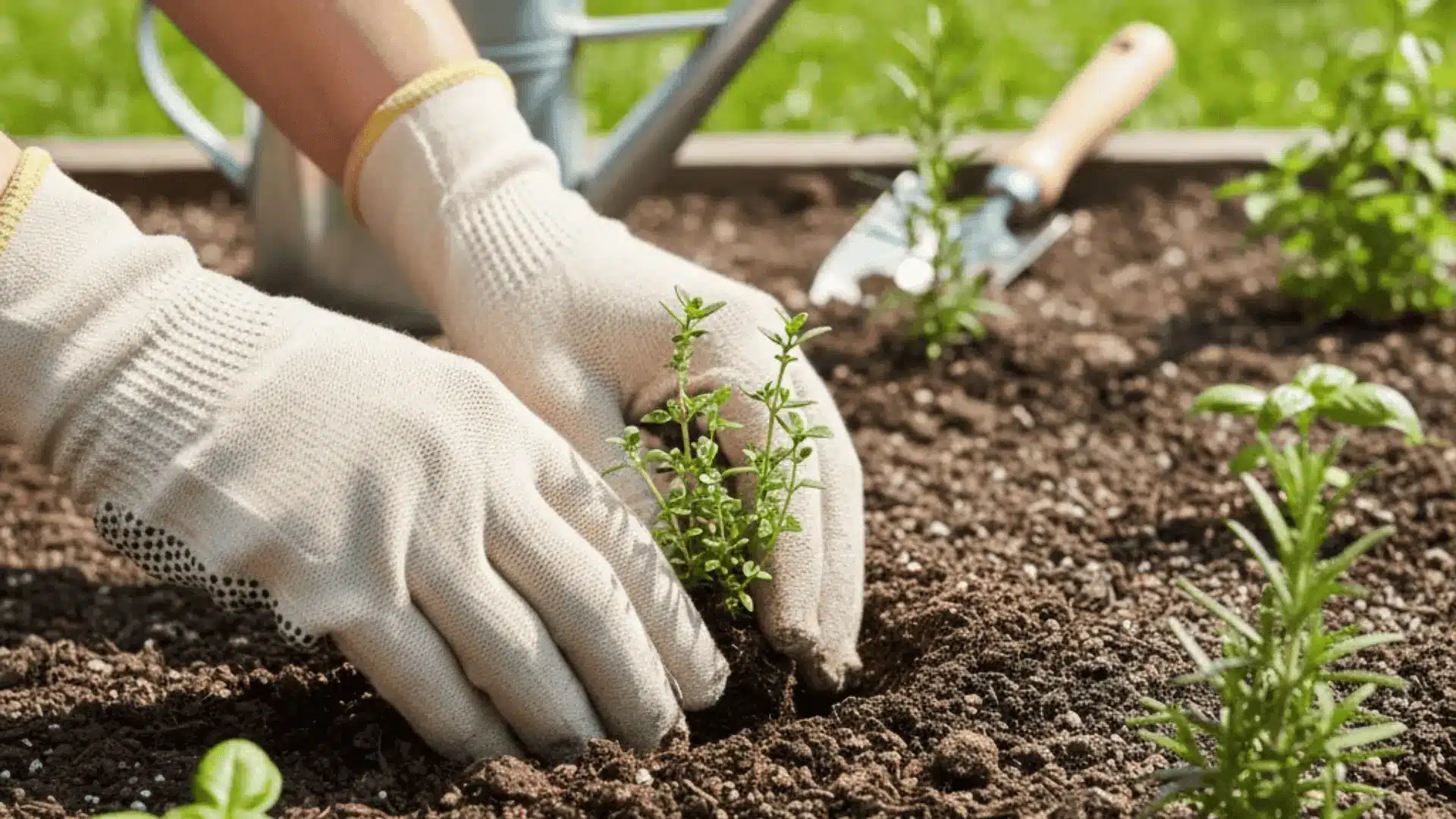
You can grow thyme from seeds, cuttings, or small nursery plants. If you are starting from seeds, sow them about 6 to 8 weeks before the last frost.
Press the seeds lightly into the soil. Do not cover them too deeply, as they need light to sprout.
Space your plants about 12 to 24 inches apart. This gives them room to spread out and grow properly.
Step 3: Water the Right Way
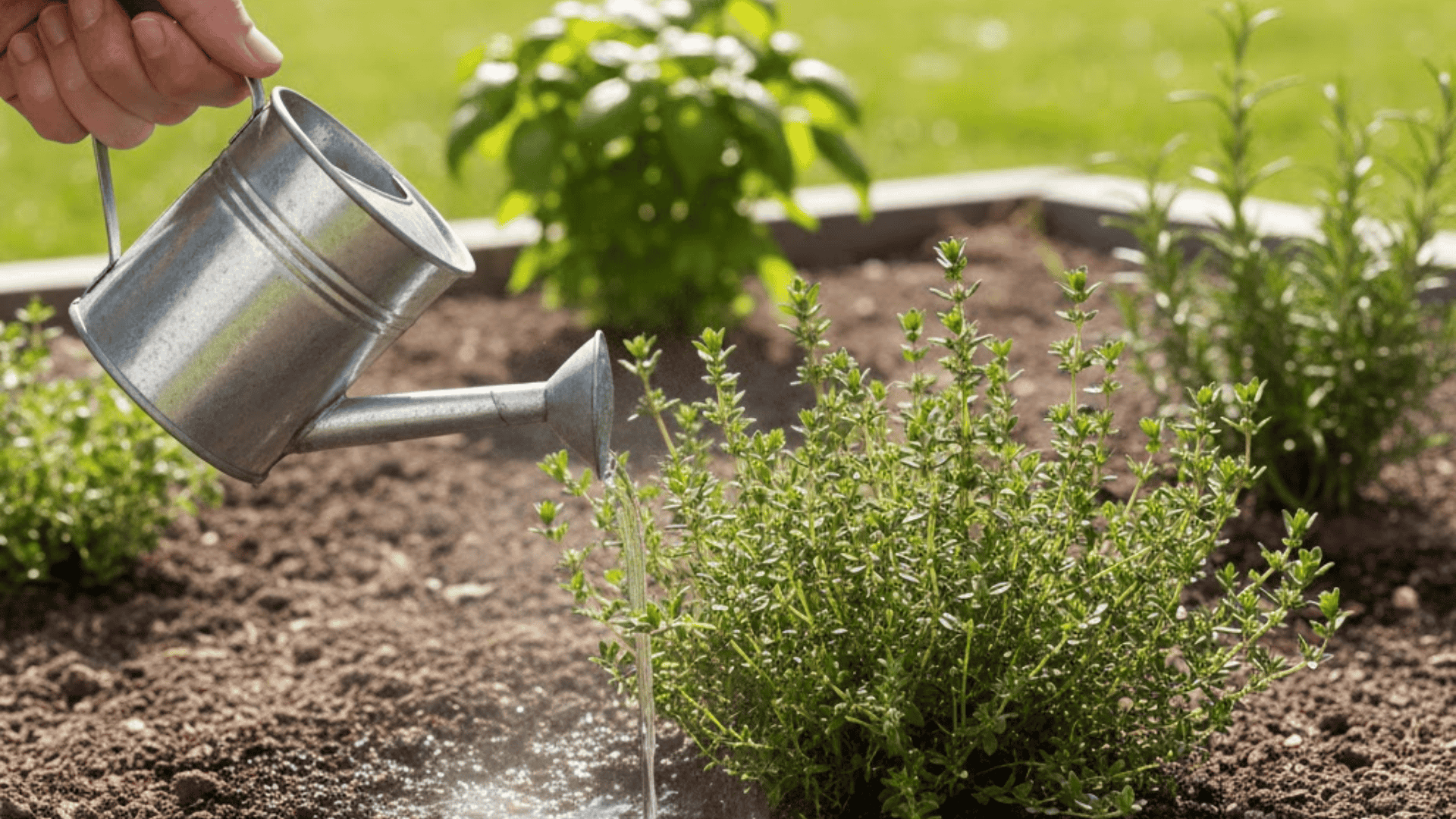
This is where most people go wrong. Thyme does not need much water. Water it deeply but only when the top inch of soil feels dry.
Overwatering is the number one reason thyme plants die.
Step 4: Feed it Lightly
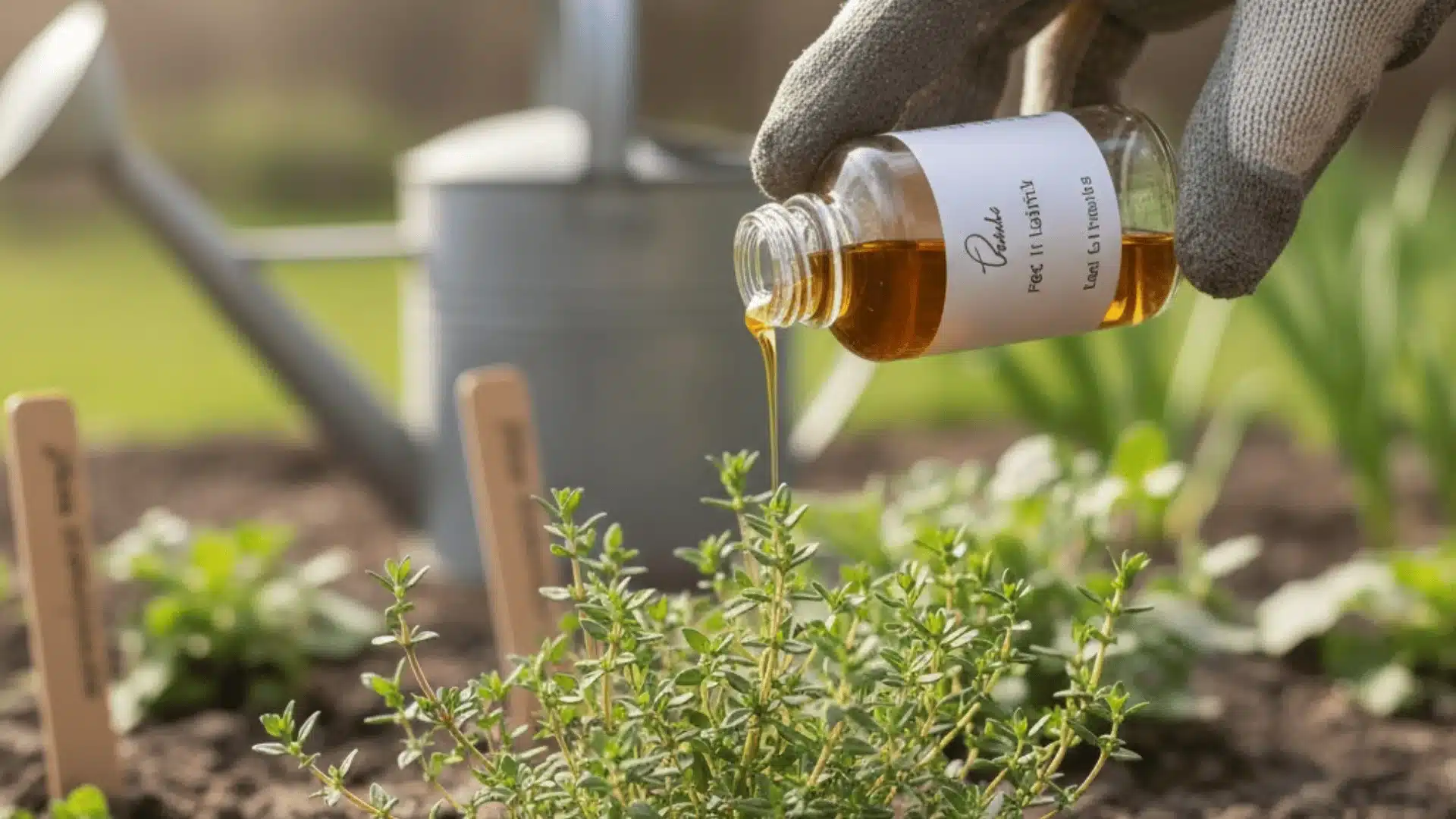
Thyme does not need heavy feeding. A light dose of balanced fertilizer in early spring is more than enough.
Too much fertilizer can actually reduce the flavor of the leaves.
Step 5: Prune It Regularly
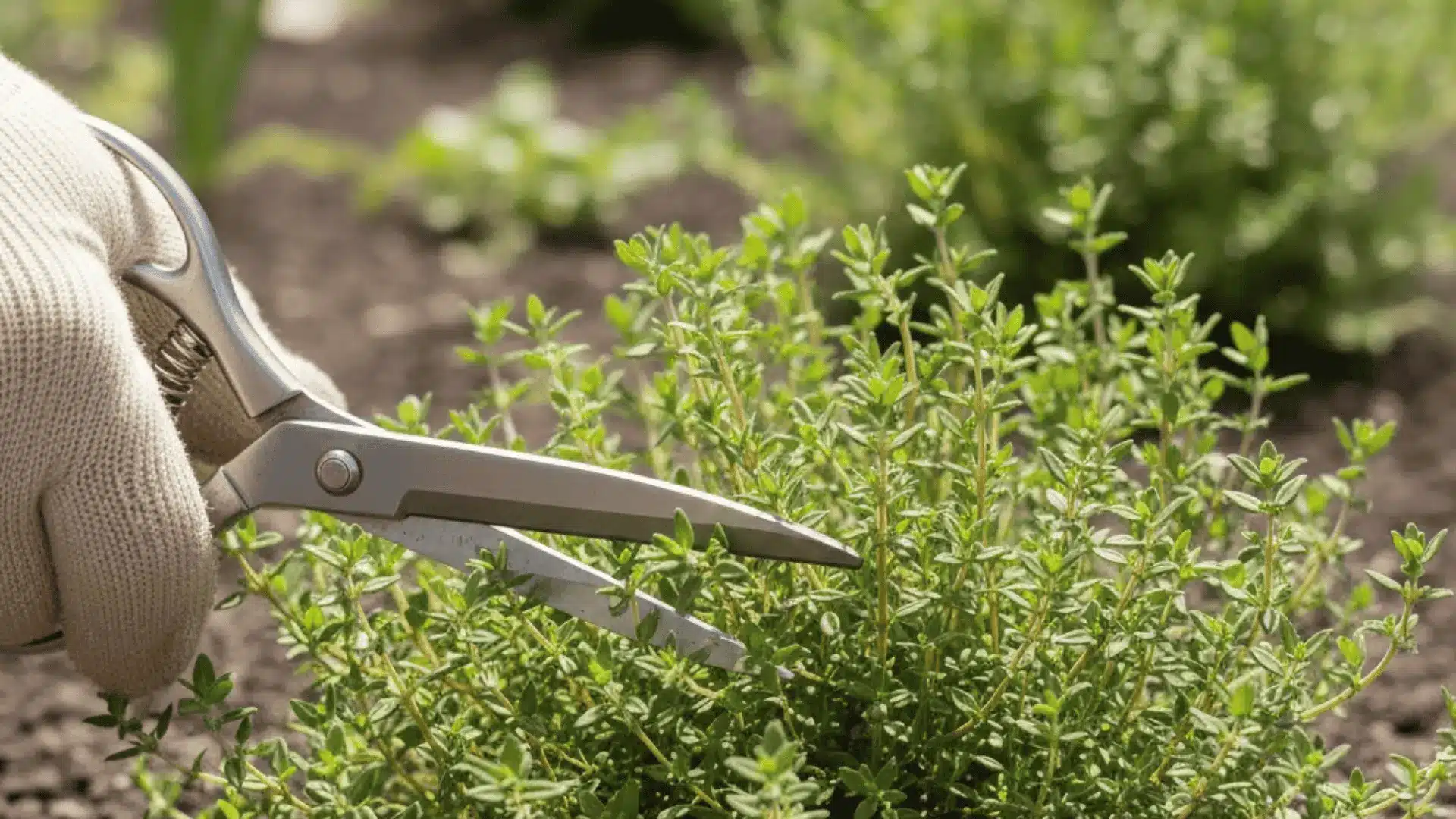
Trim your thyme plant after it flowers.
Cut back about one-third of the plant to keep it bushy and full.
Regular pruning stops it from getting too woody and helps new growth come in strong.
Step 6: Harvest it the Right Way
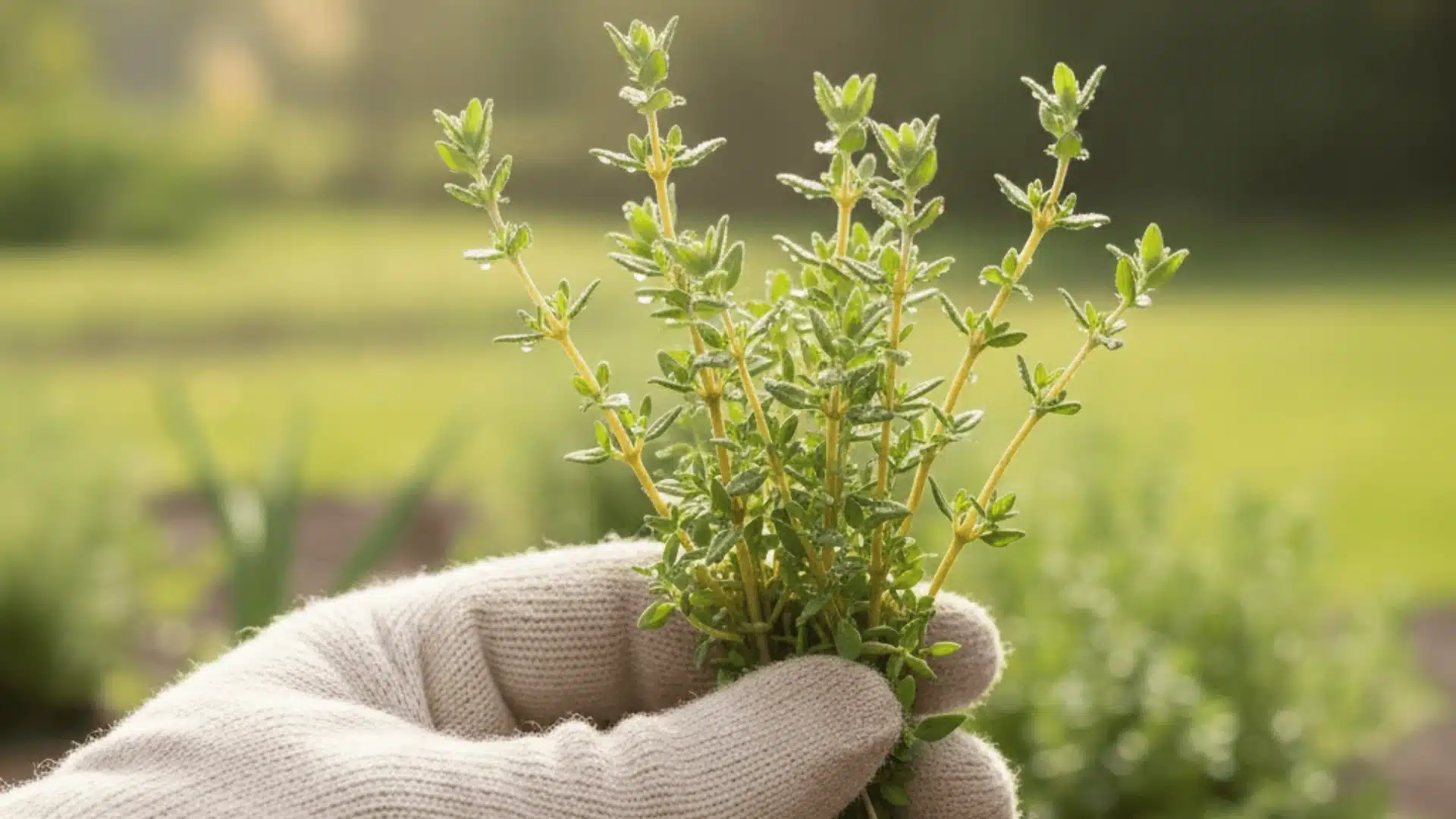
You can start harvesting thyme once the plant is well established. Snip the stems in the morning when the oils are at their strongest.
Avoid cutting into the woody part of the stem, as this can slow regrowth.
How to Grow Thyme in Pots: Everything I Did
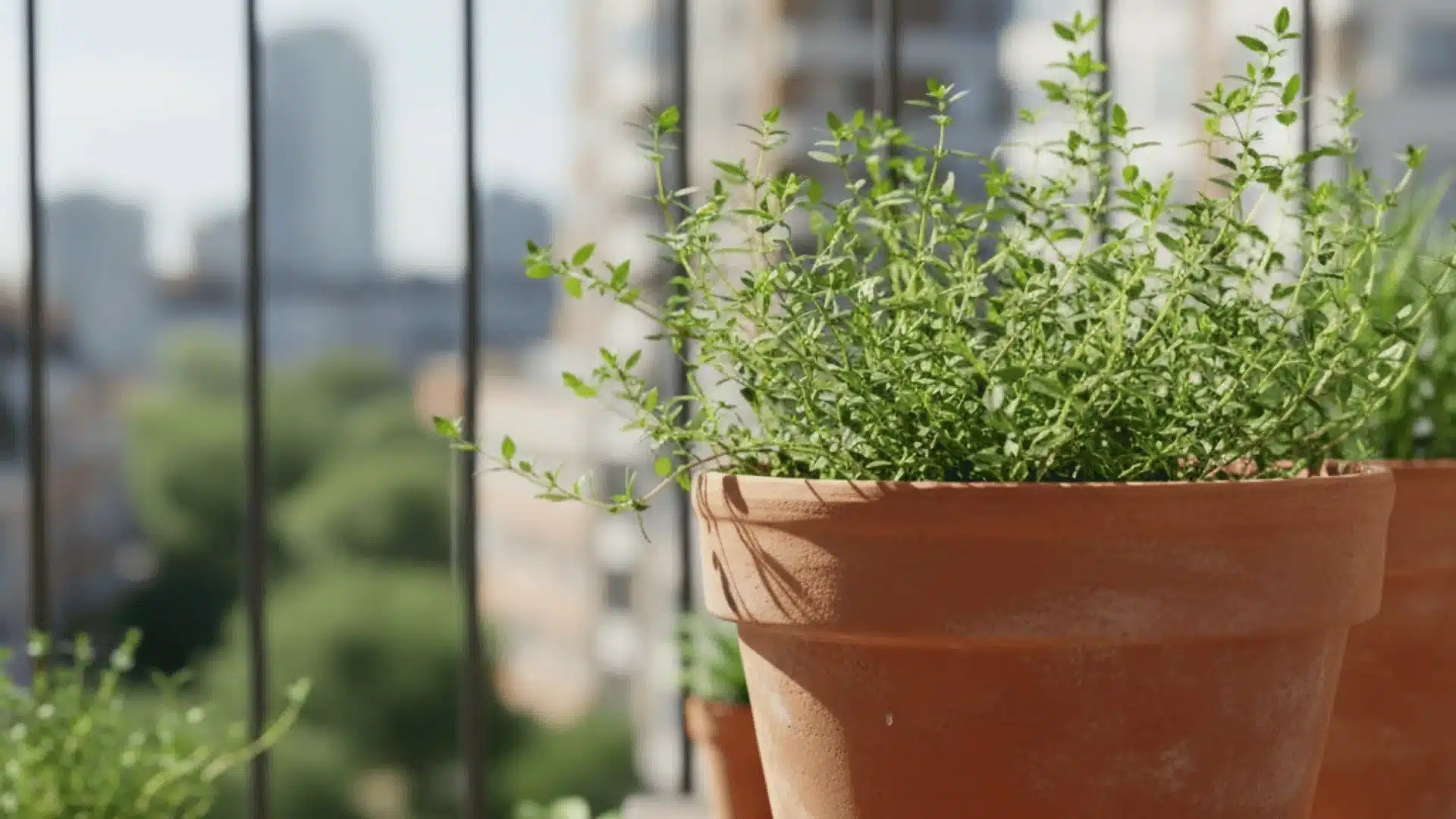
Not everyone has a big garden, and that is completely fine. When I started growing thyme, all I had was a small balcony and a couple of pots.
Thyme is one of those plants that actually does well in containers. You just need to get a few basics right from the start.
Picking the Right Pot
The first pot I used was about 6 to 8 inches wide, and it was the perfect starting size. Thyme does not need a huge amount of space, but the roots do need room to breathe.
One thing I always check before buying any pot is whether it has drainage holes at the bottom.
Without proper drainage, water collects at the base, and root rot sets in fast. Trust me, you do not want to deal with that.
Getting the Soil Mix Right
Regular potting mix straight out of the bag was my first mistake.
It held too much moisture, and the plant suffered for it. A blend of potting soil, coarse sand, and a little perlite works so much better.
It keeps the soil loose and drains water away quickly. Thyme roots simply do not do well in heavy or damp soil.
Finding the Right Spot
It took a few tries to find the perfect spot for the pot.
Thyme needs at least 6 to 8 hours of direct sunlight every day. A south-facing balcony or a bright windowsill works really well.
Once the plant started getting enough light, the growth improved noticeably within just a couple of weeks.
Watering Without Overdoing it
This takes a little practice to get right.
Pot-grown thyme dries out a little faster than garden-grown thyme, but that does not mean it needs more water.
Before every watering, press your finger about an inch into the soil.
If it feels dry, go ahead and water. If it still feels slightly damp, hold off for another day or two.
Feeding it Lightly
One round of light-balanced liquid fertilizer at the start of spring is honestly all thyme needs for the entire growing season.
Too much fertilizer weakens the flavor of the leaves and reduces the fragrance significantly. Less is truly more with thyme.
Knowing When to Repot
After about a year, roots started peeking out of the drainage holes at the bottom of the pot.
That was the signal to move the plant into a slightly bigger home. Going up just one pot size at a time is the right approach.
Moving to a pot that is too large too soon can actually slow the plant down rather than help it grow.
Keeping it Trimmed
Container-grown thyme can get a bit wild and woody if left alone for too long. A light trim every few weeks keeps the plant full, bushy, and productive.
Fresh new growth came in strong within days after every trim.
It also meant plenty of leaves ready for cooking throughout the season.
Mistakes That I Made When I First Planted Thyme
My first thyme plant did not survive. Looking back, I made almost every mistake possible.
Here is what went wrong, so you do not have to go through the same thing.
- Watering It Way Too Much: More water does not mean a healthier plant. Thyme handles drought well but struggles in soggy soil. I only water now when the top inch of soil feels completely dry.
- Planting It in the Wrong Soil: Regular potting mix holds too much moisture. A sandy or gritty mix drains much faster and suits thyme far better.
- Skipping Pruning: The plant got leggy and woody fast. A light trim every few weeks keeps it full and encourages fresh new growth.
- Keeping It in a Shady Spot: Thyme needs at least 6 to 8 hours of sunlight daily. Moving it to a brighter spot made an immediate difference.
- Harvesting Too Much Too Soon: Cutting large chunks off a young plant stressed it badly. Always wait until the plant is well settled before you start harvesting.
- Never Checking for Pests: Thyme is not completely pest-free. Aphids can still show up. A quick check of the leaves every few days keeps things under control.
Happy Planting!
When I first started growing thyme, I honestly did not think I could keep it alive.
But this little herb proved me wrong.
You do not need a big garden or any special skills. Get the sunlight right, avoid overwatering, and trim it regularly.
Knowing how to grow thyme well means you always have a fresh, fragrant herb within arm’s reach. Pick a sunny spot and give it a go.
Frequently Asked Questions
1. Does Thyme Come Back Every Year?
Yes, thyme is a perennial herb. It comes back every year on its own with very little care needed from you.
2. Is Thyme Better in Pots or Ground?
Both work well. Pots give you more control over soil and drainage. Ground planting gives roots more room to spread naturally.
3. How do You Cut Thyme so it Keeps Growing?
Trim stems just above a set of leaves. Never cut into the woody base. Regular light trimming encourages fresh, healthy growth every time.
4. Can You Grow Thyme From a Cutting?
Yes, absolutely. Take a 3 to 4-inch green stem, strip the lower leaves, and plant it in well-drained soil. Roots form within 2 to 3 weeks.