

Shared spaces such as dorms, shared rooms, studios, or rentals sometimes don’t work since they cannot fit areas for sleep, work, meals, dressing, resting, and storage of at least half of the books needed within one semester. Instead of “buying more organizers,” everything in the room needs to be used according to its intended purpose and made portable.
Rooms need to be flexible to turn into classrooms in the morning and to become anything but that during the evening hours. In addition, prior to the exams, they would offer some room for the students to keep their notes, laundry, food, cell phone chargers, and panic snacks. This means that small spaces need to be redesigned by considering people’s habits.
That is essential since space influences how students study. When the desk is hidden under a pile, one ends up studying from the bed. One ends up sleeping at the desk when it becomes a study station. When there is no place to store things apart from the floor, each task starts with clearing away. Given that academics are already stressful enough, those who require help with their assignments can seek services that will hear when they say, “Can someone write my research paper?” as you work on setting your study routine. The idea here is to create a productive room before motivation fights to appear.
Use Vertical Space, but Without Turning Your Room Into a Warehouse
Vertical storage is effective, provided that it does not turn into something incomprehensible. When your walls have too many hooks, shelves, hanging bags, wires, and hanging baskets, then your room can accommodate plenty of objects, but it can be stressful too. The students need practical, serene vertical storage facilities.
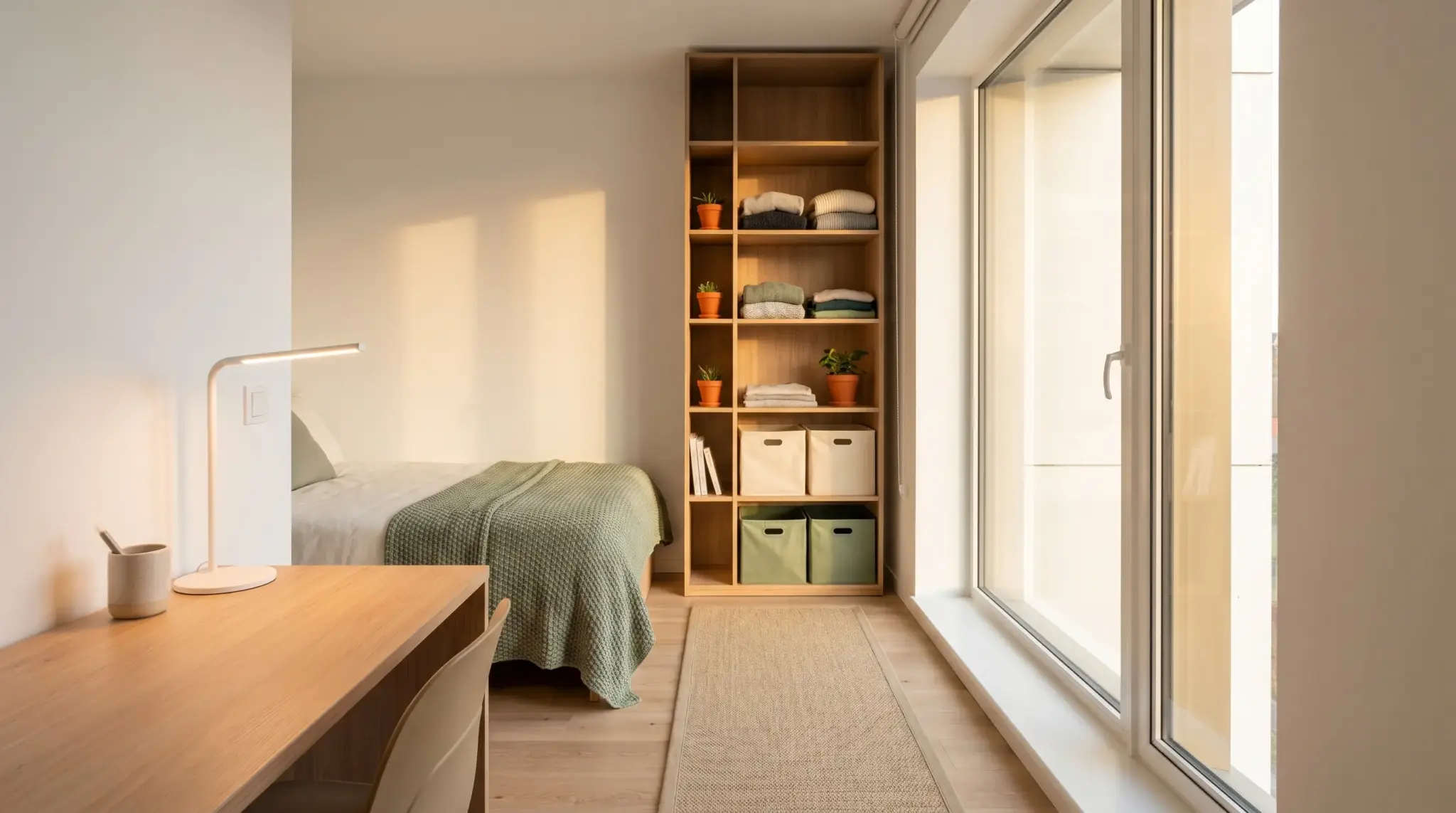
Use “one tall column” instead of different fragments of storage facilities in your room. Put up one thin shelf for storing books, accessories, hygiene supplies, and paperwork, where the top one will serve for rare items, the middle one for the frequently used ones, and the bottom one for bulky items. This way, you will stop yourself from looking everywhere.
The reverse side of the door is useful, but it should not turn into an accumulation of unnecessary junk. Take advantage of the backside of the door to store what comes out of the room: clothes, backpacks, laundry, and sports gear. Should you start hanging diverse objects on it, then you will no longer notice them at all. Invisible clutter becomes mental clutter eventually.
Don’t Make the Desk a Storage Space; Instead, Make It a Launch Pad
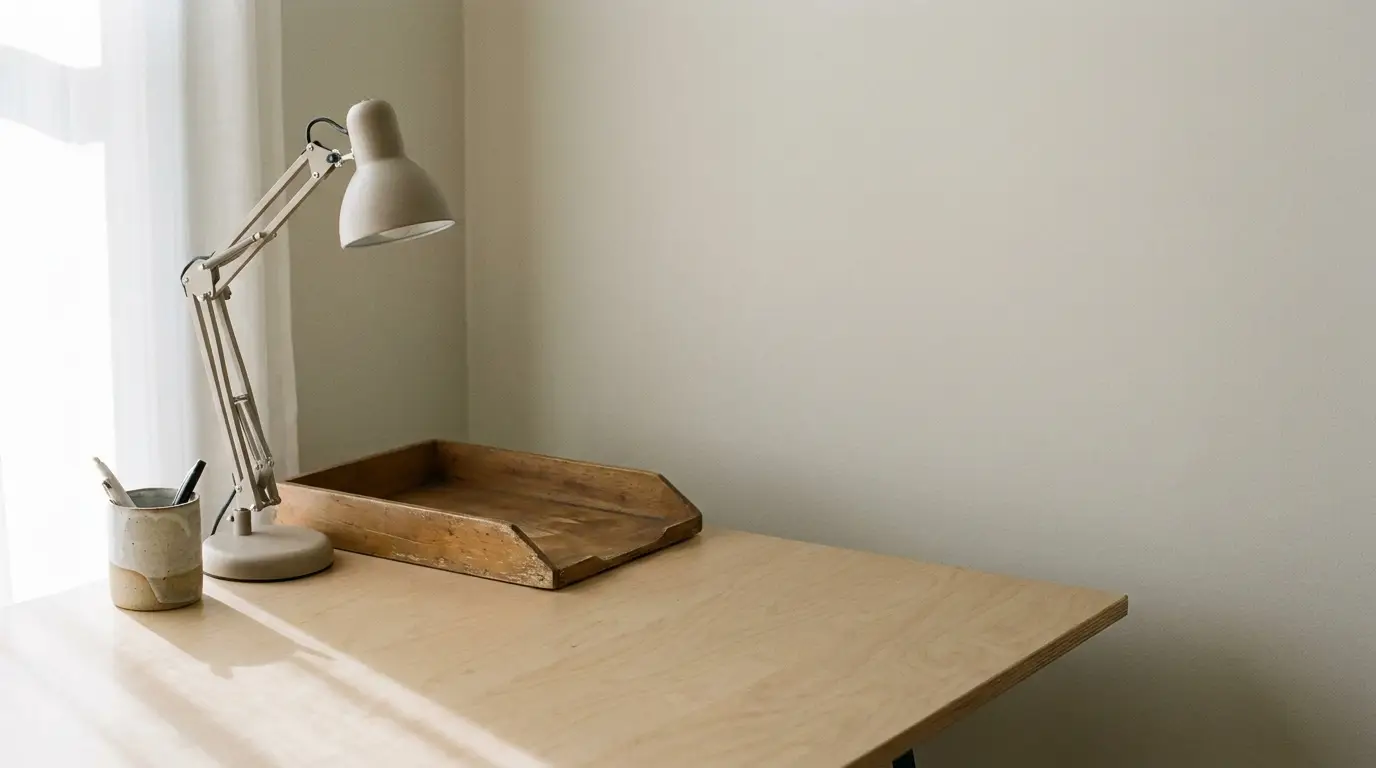
The desk of the student should not serve as a repository for all aspects of their life. The desk should aid the student in getting to work quickly. This means that there cannot be more than three items permanently at the desk: the lamp, the writing tool holder, and the work tray in use.
Every other item must be removed, including the active work tray that plays a critical role in the process. The active work tray would include the folder for the ongoing class, the notebook for immediate use, the sticky notes, and the immediate task to be worked on. After doing this, the tray would be set aside; it serves the purpose of eliminating the problem of the pile-up of papers that arises when a student takes up five different classes.
Design Storage to Fit True Student Chaos
It is not due to the laziness of most students; it is due to the system requiring more than they can provide. Folding, labeling, stacking, and opening three lids are just too much work; everything will fall apart by Thursday if these steps cannot be followed.
The open bins must only contain liquids like laundry, sweaters, sports equipment, shopping bags, and swaps. The closed bins must only contain items that belong to specific categories like winter clothes, documents, chargers, spare bedding, and collectibles.
| Student Problem | Better Small-Space Fix | Why It Works |
|---|---|---|
| Student Problem | Better Small-Space Fix | Why It Works |
| Desk always buried | One active work tray | Keeps only current tasks visible |
| Clothes land on the chair | Two-bin clothing system | Separates clean-ish clothes from laundry fast |
| The bed feels like a study zone | Lamp and blanket reset ritual | Creates a mental switch at night |
| No room for books | One vertical storage column | Adds capacity without wall chaos |
| Cables everywhere | Clear tech pouches by use | Makes chargers easy to find |
| Food clutter spreads | One snack shelf or basket | Keeps eating mess contained |
Annie Lambert, an academic writer, has noted how most students tend to disregard the effect that the physical environment has on their study skills. A messy room doesn’t necessarily mean a messy mind, although a poorly arranged room makes it challenging to work. Indeed, studies have revealed that even in minimal homes, furniture consumes a considerable amount of floor space that is available to use.
For instance, a paper at the Norwegian University of Science and Technology concerning furniture layout in small-space homes indicates that furniture occupies as much as 48% of the floor surface.
The Room Should Change as the Semester Passes
A student’s room shouldn’t look exactly alike in weeks two and twelve. If your responsibilities change, then so should the room. At the beginning of the semester, organization may be all about storing and planning. During midterm season, the use of a calendar and organized folders may be important. Finals might call for the removal of decorations and the clearing of surfaces.
Reset your room once a week by getting rid of any dead documents, empty boxes, used cups, and any items associated with an already completed job. Afterward, designate just one room zone to improve each week. Perhaps that zone is the workspace, the laundry area, or even the food shelf. Living in a small room becomes easier when you decide to tackle things one at a time.
Intelligent student housing doesn’t involve dressing up a small room like a showpiece. It is simply learning how to get your space to work for you. It is creating a workspace that invites productivity, a sleeping area that inspires rest, a storage solution that meets your actual needs, and a room that eliminates any hiding spots for clutter.