

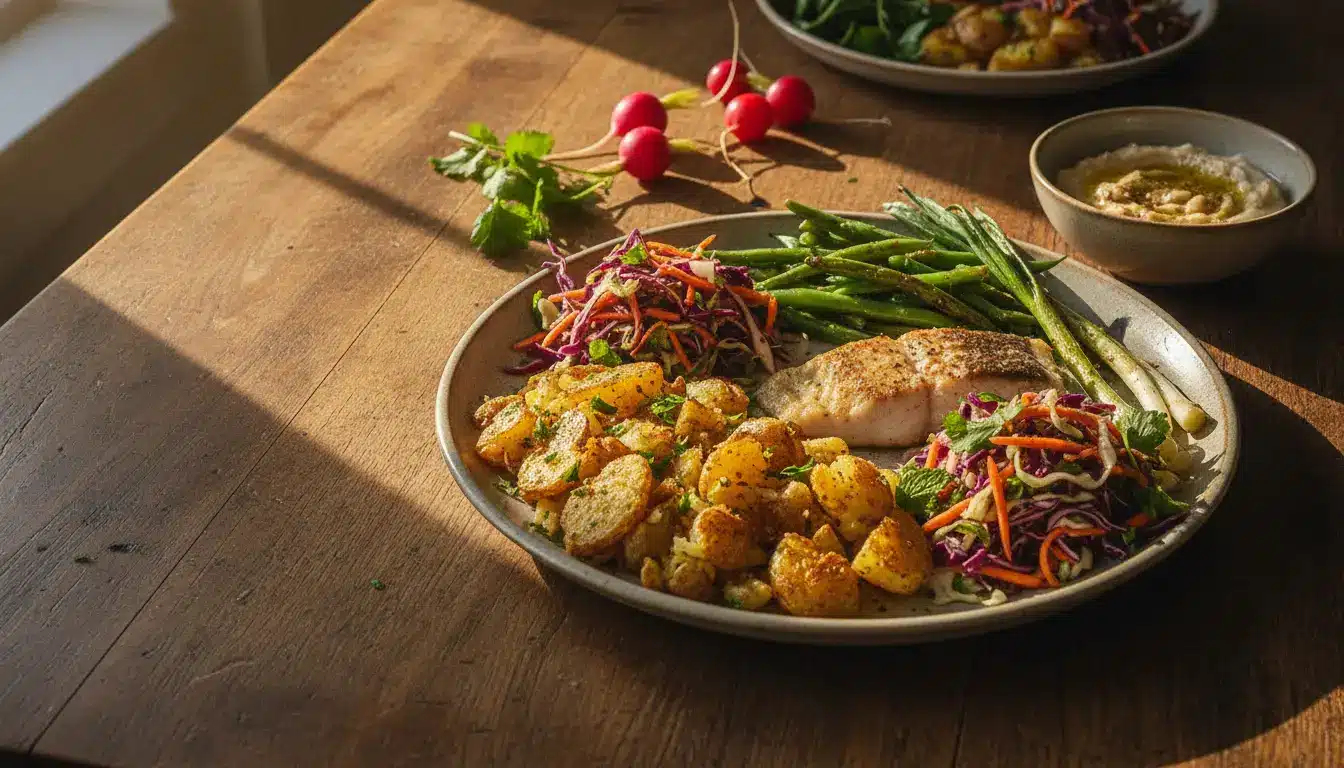
The fish is never the hard part.
That sounds wrong, I know. People worry about sticking, flaking, drying it out, leaving the middle too raw, making the kitchen smell like a dock. Fair enough. But once you’ve cooked fish a few times, the real problem shows up after the fillet is done.
You look at the plate and think, “Is that it?”
I’ve had beautiful fish dinners that still felt a little unfinished. A nice piece of cod, lemon, maybe a shiny puddle of butter. Good food. Still somehow too quiet. Seafood cooks fast, which is part of its charm, but dinner doesn’t always catch up with it. Potatoes need time. Beans need seasoning. Salad needs more than being dumped from a bag.
That’s where the garden side of the plate earns its keep.
A Fish Dinner Needs Something With Weight
A flaky fillet with lemon can be lovely, but it doesn’t always feel like supper. It can feel like the polite part of supper. The thing you’re supposed to admire before wondering whether there’s bread.
That’s why potatoes are so useful. Not fancy potatoes. The small ones rolling around the bottom of the bag, boiled until tender, cracked open with the bottom of a mug, then browned in a skillet until the torn edges go crisp. Add salt while they’re hot. Add parsley if you have it. Scallions are even better.
That kind of side does something steamed vegetables can’t. It gives the fish a floor.
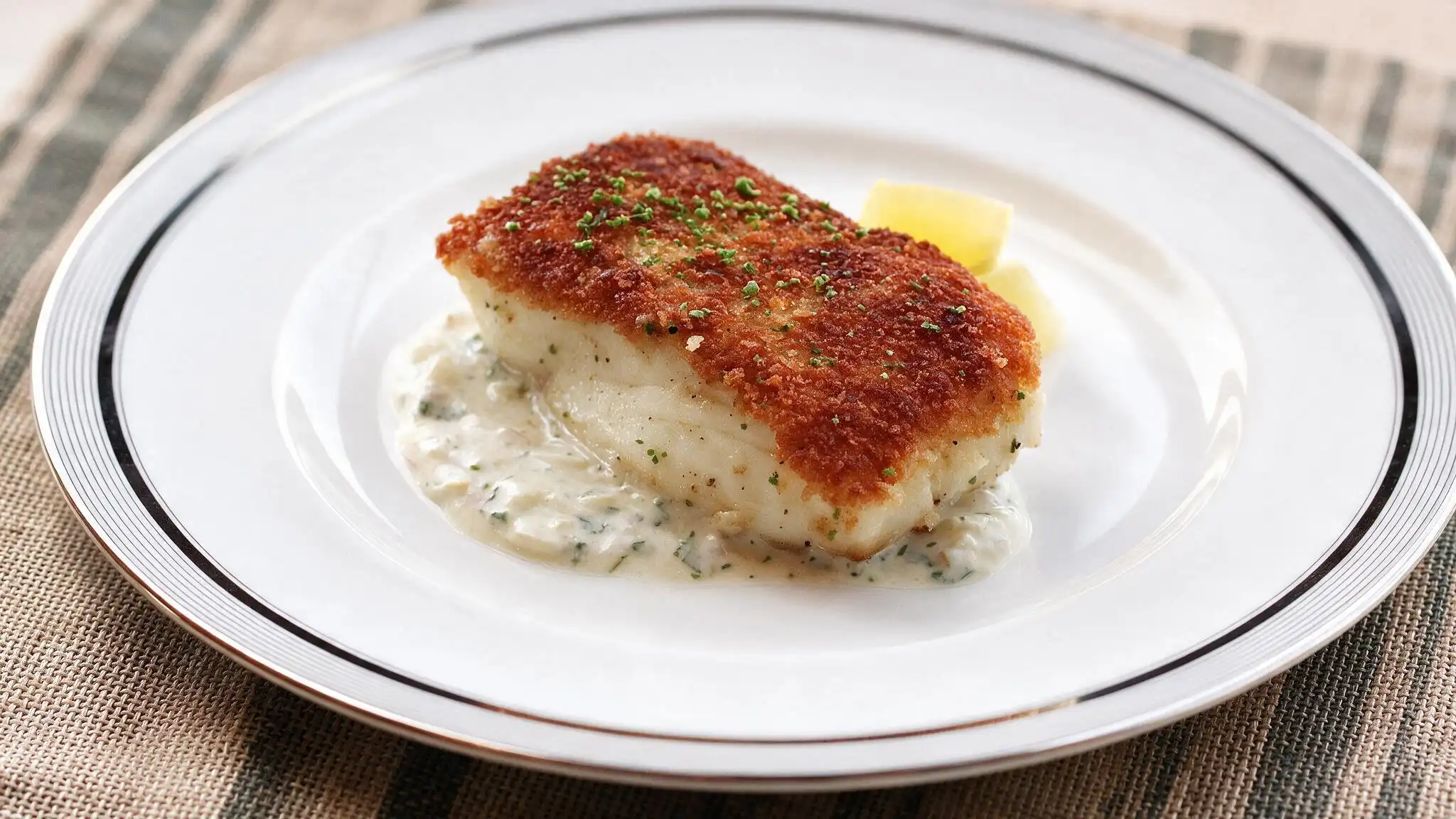
I like potatoes with cod, haddock, trout, crab cakes, and almost anything broiled. They’re especially good when the fish is lean or mild, because the plate needs a little comfort somewhere. A piece of white fish with boiled potatoes, green beans, and a lemony yogurt sauce feels completely different from that same fish sitting beside a scoop of plain rice.
Rice can work too, but it needs help. Warm rice with herbs, peas, scallions, lemon zest, or toasted almonds tastes like part of the meal. Cold, plain rice sitting next to fish tastes like someone forgot to finish cooking.
Beans are another underrated move. White beans with olive oil, garlic, spinach, and black pepper are excellent with tuna, sardines, cod, or shrimp. Black beans with corn and lime make shrimp feel more like dinner and less like the thing you eat standing near the counter. The USDA’s MyPlate is a simple visual, but it gets this part right: protein works better when the rest of the plate has a purpose too.
Most of those sturdy sides begin in very ordinary places: potatoes, beans, corn, greens, herbs, rice. They’re not glamorous, but they’re the reason a fish dinner feels settled. Even what phosphate is sits quietly behind that garden-grown part of the meal, since phosphorus helps crops develop before they ever become the potatoes, beans, and greens people reach for first.
No one needs to announce that at dinner. Please don’t. But it does make the “side dish” feel less like filler and more like the thing holding the plate together.
The Green Thing Should Not Be an Apology
There’s a certain kind of seafood dinner where the vegetable is clearly there because someone felt guilty.
You know it right away. Limp spinach. Pale zucchini. Broccoli with no salt. A tomato that tastes like the inside of a refrigerator. The fish may be fine, but the whole plate feels like a compromise.
Vegetables, besides seafood, need a little nerve.
White fish needs texture. If you’re looking through different white fish types, don’t only think about flavor. Think about how soft the fish will be on the fork. Cod, haddock, sole, and flounder can disappear beside anything too gentle. Give them blistered green beans, crisp cabbage, roasted cauliflower, snap peas, or tomatoes cooked until they split.
And cook the vegetable first. This sounds too obvious to mention, but it’s where many fish dinners go sideways. Fish is quick. Vegetables are not always quick. If the fillet is done while the carrots are still hard, you’re already in trouble.
Start the potatoes. Dress the slaw. Warm the beans. Char the scallions. Then cook the fish.
A small timing change makes the whole meal calmer. The fish comes off the heat and has somewhere to go. The side dishes are ready, not negotiable.
Scallions are one of my favorite lazy fixes. Slice them raw into rice or potato salad. Char them in a dry pan and serve them with salmon. Sizzle them with ginger and spoon the oil over cod.
Shrimp, Crab, and Lobster Need Brightness More Than Bulk
Shellfish can trick you.
Shrimp, crab, and lobster feel special, so the instinct is to add more rich things around them. Butter. Creamy sauces. Fries. Bread. Cheese, sometimes, which I won’t fight about today. It can all be delicious. It can also make the meal strangely flat.
Crab cakes are the best example. Crab cakes with fries and tartar sauce are fun, but everything is soft, fried, creamy, or salty. Add cabbage slaw with vinegar, celery, parsley, and a little mustard, and suddenly the crab tastes sweeter. Nothing magical happened. The plate just got some contrast.
Lobster has the same problem. Butter is great. Buttered corn, buttered potatoes, and buttered bread beside buttered lobster can feel like a nap waiting to happen. Put tomato salad next to it. Or cucumber with dill.
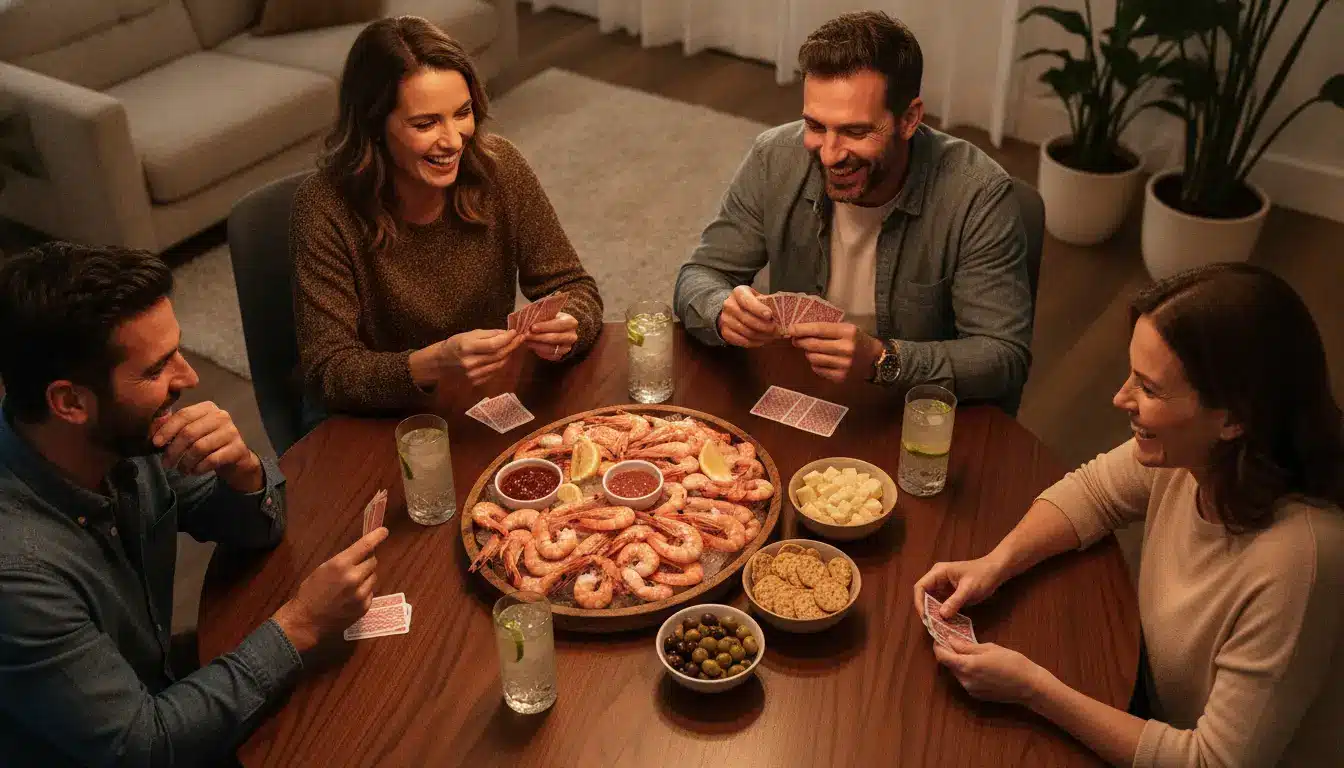
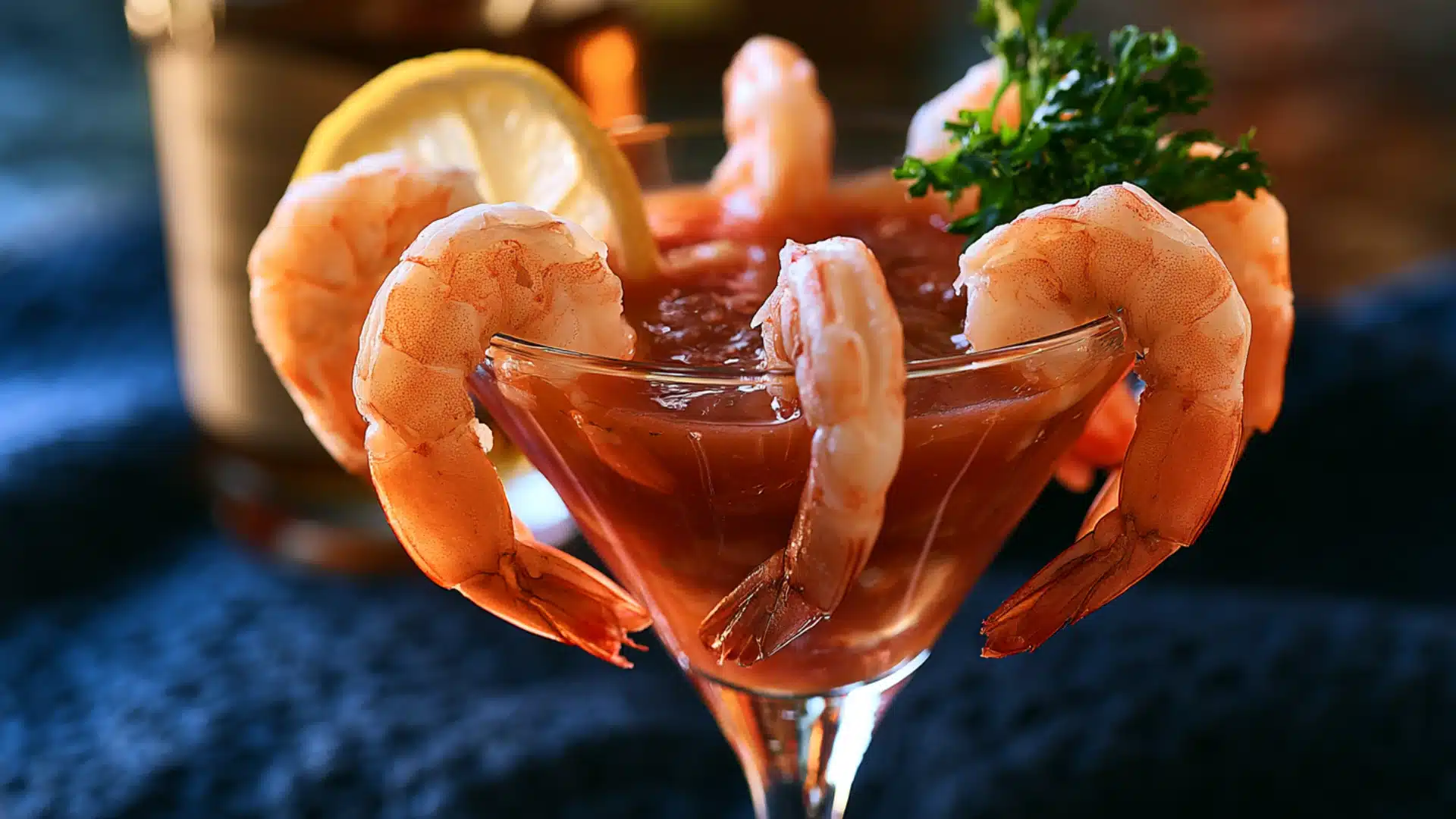
Shrimp cocktail is a little different because it already has a bite from the sauce, but it still needs support if you want it to count as dinner. That’s why the best ideas for what to eat with shrimp cocktail are not just more dips. Corn salad, avocado, potatoes, rice, slaw, and bread all change the role of the shrimp. Appetizer becomes a meal.
The FDA’s advice about eating fish focuses on choosing and eating seafood safely, especially for groups that need to be more careful, but there’s a practical cooking point in there too: fish belongs inside a larger eating pattern. The fillet does not erase the rest of the plate.
That matters because seafood has a health halo. People act like fish automatically makes dinner light, even when it’s sitting under cream sauce with fries on the side. Sometimes that is exactly the meal you want. Fine. Enjoy it. But the fish is not doing charity work for the rest of the plate.
Good Sides Make the Fish Taste More Like Itself
I don’t trust side dishes that try too hard around seafood.
A heavy casserole beside delicate fish feels like two dinners fighting. A sugary glaze on salmon with sweet potatoes and sweet corn can turn cloying fast. A giant bowl of pasta with four shrimp on top is not a seafood dinner. It’s pasta wearing earrings.
The best sides usually know when to stay in their lane. Rough potatoes with herbs. Beans with garlic. Cucumbers with vinegar. Tomatoes with salt. Rice with scallions. Cabbage with lime. Corn with chili and lemon. Greens cooked until they still have some bite.
That doesn’t mean boring. It means useful.
A good side changes the way you experience the fish. It gives you a crisp bite after a soft one. Something cool after something smoky. Something sharp after something buttery. Something starchy when the fish is too lean to carry the meal alone.
None of that feels restaurant-fancy. It just feels considered.
And really, that’s what separates a good seafood dinner from a plate of cooked fish.
Wrap-Up Takeaway
A seafood dinner feels complete when the sides do real work. Potatoes can give a lean fillet some weight. Cucumbers, cabbage, tomatoes, and herbs can wake up rich fish or buttery shellfish. Beans and rice can turn shrimp or cod into something that actually satisfies. The trick is to stop asking what “goes with fish” and start asking what the plate is missing. Tonight, cook the side dishes first, cook the seafood last, and give the fish something better to sit beside.