

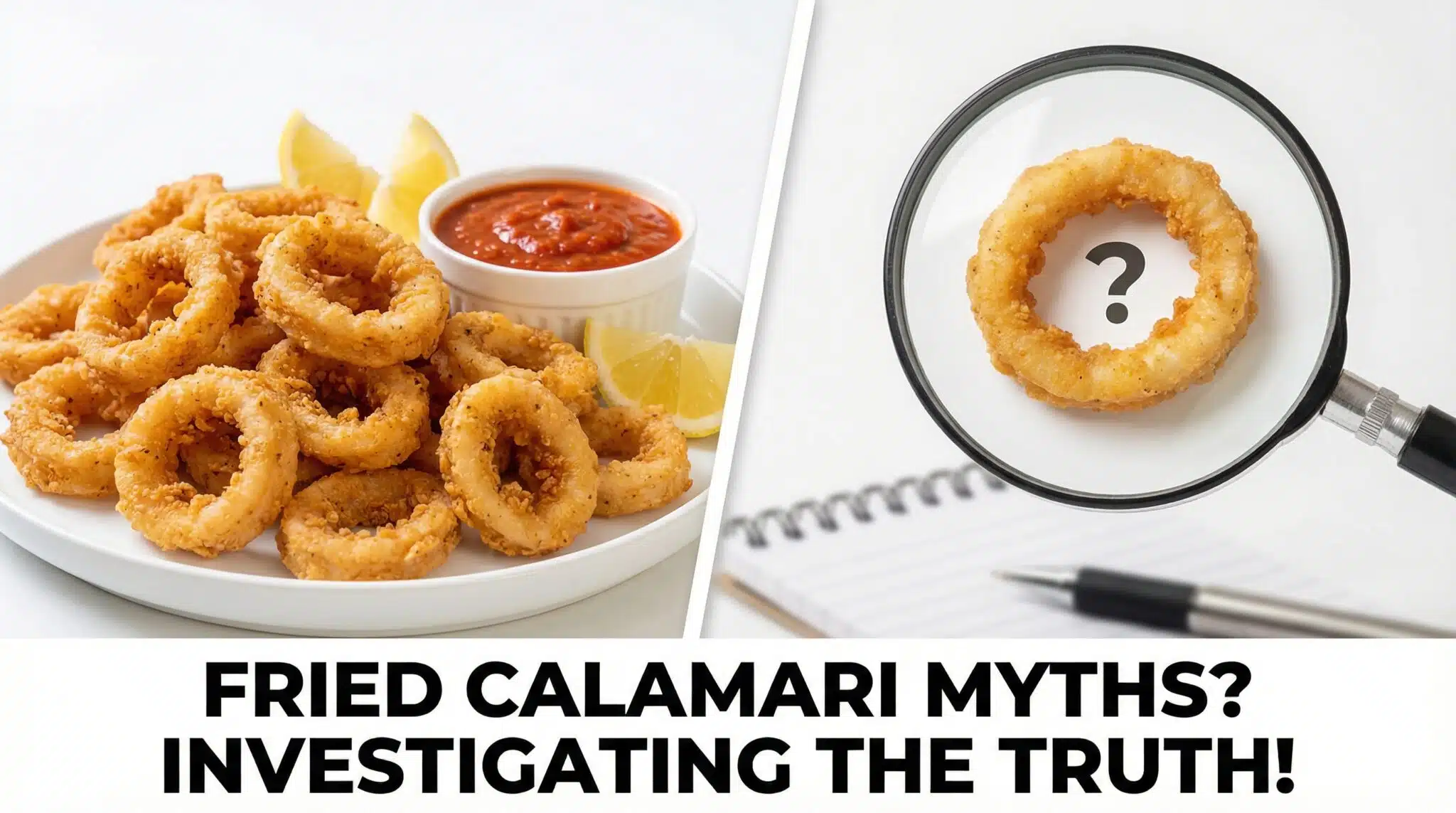
Is Your Calamari Actually Pig Intestine?
Every few years, this rumor crawls out of the internet swamp, wipes its feet on your dinner plans, and plops itself right on the table:
“Calamari isn’t squid. It’s pig intestine.”
And look… I get why it sticks. Fried rings are already a little suspicious (affectionately). Add a dramatic “food fraud” twist, and suddenly everyone at the table is doing CSI: Appetizers.
But here’s the actual story: the “calamari is pig bung” thing is mostly a modern urban legend that got a rocket booster from one radio segment and then took on a life of its own. Is seafood sometimes mislabeled? Yes. Is your average basket of calamari secretly hog rectum? Almost certainly not.
Let’s talk about why this myth won’t die, what the evidence says, and how to calm your nerves the next time the server sets down the fried goodness.
Why this rumor spread like spilled ranch
A good food scare needs three ingredients: gross factor, “it sounds plausible,” and a villain with a profit motive. This one has all three.
1) The texture overlap is… annoyingly real
Squid and pork intestine both have that chewy, springy, collagen-y vibe when they’re cooked certain ways. Deep fry anything long enough and it becomes “crispy on the outside, mysterious on the inside,” you know?
So yeah someone could absolutely take a bite and go, “Wait a second…” That’s not proof. It’s just the kind of sensory coincidence that makes people feel like detectives.
2) The money angle makes people spicy
The rumor always comes with the same wink wink: “Restaurants do it because it’s cheaper.”
And sure, in theory, if one ingredient costs less than another, your brain goes, Aha! Scam! (My brain does this in the Target throw pillow aisle too: “These are $30? This is a scam.”)
3) Seafood mislabeling is a real thing
Back when this rumor really caught fire, seafood mislabeling reports were everywhere. If you already think seafood labels are sketchy, your brain doesn’t need much convincing to leap from “maybe this isn’t snapper” to “maybe it’s… pig.”
But the calamari rumor didn’t start with lab evidence or a big bust. It started with a story.
The radio segment that launched a thousand side eyes
This whole thing traces back to a January 2013 segment on This American Life.
A producer got a tip from someone connected to meat processing: the claim was that “pork bung” (aka pig rectum/intestine used for casings and such) was being passed off as calamari.
Here’s the part that gets conveniently “forgotten” when the internet tells the story at full volume: it wasn’t confirmed. Even in the segment, they couldn’t point to restaurants where this was definitely happening.
What they did explore was a different question: could fried pork bung pass for calamari in a casual taste situation?
Online, that nuance got launched into the sun. “Could it happen?” became “It’s happening everywhere, probably to you, right now, in this very Chili’s.”
And that’s how rumors work: they take the elevator, not the stairs.
Okay, but what does science say?
When researchers actually did the unsexy, unviral work testing calamari with DNA barcoding the results were… boring. (Which is what you want from your food supply, honestly. Please give me boring.)
In studies around 2014-2015 that tested calamari from New York City restaurants aka a huge market where you’d expect fraud to show up if it were common researchers found no pork DNA in the samples.
Zero.
Most samples were squid, as advertised. One sample reportedly came back as something weird (red deer whole separate “what on earth” moment), but the famous pig intestine swap? Not there.
So if this were widespread, NYC would’ve been a pretty good place to catch it, and they… didn’t.
Why “pig as calamari” is a logistical headache (for everyone)
Even if someone wanted to pull off a grand calamari con, it’s not as easy as the rumor makes it sound.
- Meat and seafood are regulated differently. Pork and seafood live in different bureaucratic worlds (USDA vs FDA). Mixing categories is not the kind of paperwork adventure most businesses crave.
- Traceability is getting stricter. Food supply chains are under more scrutiny than they used to be, and records matter more than ever.
- Big chains would get caught fast. This rumor loves to pick on large restaurants, but big companies have supplier audits, standard purchasing systems, and a lot of eyes on them. If calamari were secretly pig parts at scale, we’d have actual enforcement cases and headlines not just your cousin’s friend’s coworker’s “I heard.”
And that’s the thing: for a scandal that’s been passed around for over a decade, there’s a weird lack of proof it’s actually happening.
The seafood scams you should worry about (because they really happen)
If you want to keep your foodie skepticism pointed at the stuff that’s actually common, focus on species swapping cheaper fish being sold as pricier fish.
This is where testing and investigations have repeatedly found issues. Think:
- “Red snapper” that’s actually something else
- “Wild salmon” that’s not wild
- “Crab” that’s stretched, swapped, or creatively interpreted during shortages
It’s usually fish for fish games, not pig for squid plot twists.
How to spot real calamari (no lab coat required)
If you’re still sitting there like, “Okay but… what if,” here are a few quick reality checks:
1) Look at the rings
Real squid rings often have subtle circular muscle lines and a consistent thickness (not perfect nature isn’t a factory). Intestine tends to look more irregular and “layered,” sometimes with seam-ish edges.
(Also: heavy breading can disguise a lot. Breading is basically a disguise with crumbs.)
2) Check for tentacles
If there are tentacles with suction cups on the plate, congratulations you’re not eating pig. Pigs, famously, do not come with adorable little sea creature grabbers.
3) Taste like a person who’s paying attention
Squid is mild, a little sweet, faintly oceany. Pork is richer, meatier, and tastes like… pork. If you’ve eaten both, they’re not identical unless your tastebuds are currently on vacation.
4) Ask (nicely)
You can literally say, “What kind of squid is your calamari?” or “Where do you source it?” A normal restaurant buying from a normal seafood supplier should be able to answer without looking like you just accused them of crimes.
The bottom line
Could someone, somewhere, at some point, have tried to pass off pork bung as calamari? Possibly. Humans have done weirder things for less.
But based on what’s been tested and what’s actually documented, your average calamari order is squid, not pig intestine.
So go ahead and enjoy your fried rings in peace. And if the rumor comes up at dinner, you can be the person who calmly says, “Actually, they DNA tested that,” while everyone else clutches their marinara like it’s a stress ball.