

Ever wondered what makes Chilean sea bass so popular in restaurants?
This premium fish isn’t just about its buttery texture and mild flavor. It contains vital nutrients that many do not realize are essential to the body.
When you know the nutritional breakdown of this, you can make smarter choices for your health.
You’ll learn whether this fish deserves a spot on your regular menu.
This blog gathers everything you need to know about the Chilean sea bass nutrition. By the end, you’ll have all the facts to decide if this fish fits your diet.
What is Chilean Seabass?
Chilean sea bass has an interesting backstory. It’s not actually a bass at all.
The fish’s real name is Patagonian toothfish. That’s why fish merchant Lee Lantz renamed it in 1977.
He wanted a name that would sell better in American markets. This fish lives in the cold, deep waters around South America, particularly near Chile and Argentina.
You’ll also find it near Antarctica. It can survive at depths of up to 12,000 feet.
The name change turned this unknown fish into a luxury item. Restaurants started serving it everywhere.
Its popularity led to overfishing. Today, many populations are carefully monitored to prevent extinction.
So when you order Chilean sea bass, you’re eating a deep-sea fish with a marketing makeover.
Chilean Seabass Physical Characteristics
Chilean sea bass is built for survival in extreme conditions:
- Can grow up to 7 feet long and weigh over 200 pounds.
- Has a large, elongated body with a grayish or brownish color.
- Features prominent teeth, which is why it’s called toothfish.
- Possesses a thick, oily flesh that gives it a buttery texture.
- Has large eyes adapted for deep-water living.
- Covered in small scales that aren’t easily visible.
- Can live up to 50 years in the wild.
- Matures slowly, taking 10 years or more to reproduce.
Scientific Name and Classification
The scientific name for Chilean sea bass is Dissostichus eleginoides.
Scientists classify it as part of the Nototheniidae family, commonly known as cod icefish.
This fish belongs to the order Perciformes, which includes perch-like fish. Despite its common name suggesting it’s a bass, it’s not related to bass at all. The sea bass label was purely a marketing decision.
Species are often sold under the name Chilean sea bass, but they have barely different characteristics and habitats.
Chilean Sea Bass Nutrition Profile
Here’s the nutritional breakdown for a 3-ounce (85g) cooked serving:
| Nutrient | Amount | Daily Value |
|---|---|---|
| Calories | 134 kcal | 7% |
| Protein | 16g | 32% |
| Total Fat | 7g | 9% |
| Omega-3s | 1,400mg | – |
| Cholesterol | 45mg | 15% |
| Sodium | 60mg | 3% |
| Vitamin D | 200 IU | 50% |
| Vitamin B12 | 1.2mcg | 50% |
| Selenium | 36mcg | 65% |
| Phosphorus | 200mg | 16% |
The omega-3 number is the one that stands out to me: 1,400mg per 3-ounce serving is notably high for a white fish.
Most white fish like cod or tilapia sit well below 300mg.
That figure alone explains a lot of the nutritional interest in this fish beyond just its flavor.
- Contains 134 calories per 3-ounce cooked serving.
- Provides 16 grams of high-quality protein per serving.
- Has 7 grams of total fat, mostly healthy unsaturated fats.
- Delivers 1,400mg of omega-3 fatty acids for heart health.
- Contains zero carbohydrates, sugar, or fiber.
- Provides 50% of daily vitamin D needs.
- Supplies 50% of the recommended vitamin B12 intake.
- Offers 65% of daily selenium requirements.
- Low in sodium with only 60mg per serving.
- Contains moderate cholesterol at 45mg per serving.
- Rich in phosphorus for bone and teeth health.
- Includes magnesium for muscle and nerve function.
Health Benefits: Should You Include it in Your Diet?
This offers nutritional value but isn’t suitable for everyone. Here’s what to consider before adding it to meals.
The Benefits
This fish brings several health advantages to your plate:
- Supports Heart Health: Omega-3 fatty acids lower triglycerides and greatly reduce the risk of heart disease.
- Builds and Repairs Muscle: High-quality protein helps muscle growth and keeps you feeling full longer.
- Boosts Brain Function: Essential fatty acids support memory, focus, and overall cognitive health effectively.
- Increases Energy Levels: Vitamin B12 supports red blood cell production and fights fatigue naturally.
- Protects Against Cell Damage: Selenium acts as a powerful antioxidant and supports healthy thyroid function.
- Aids Weight Management: Low calories with high protein make it perfect for maintaining a healthy weight.
- Strengthens Bones and Immunity: Vitamin D supports calcium absorption and helps keep your immune system strong.
The Concerns
Despite the benefits, there are valid reasons to be cautious:
Mercury Accumulation: Mercury builds up in your body over time and can damage the nervous system. Frequent consumption increases health risks.
Expensive Choice: Chilean sea bass costs significantly more than salmon, cod, or tilapia. The high price makes it impractical for regular meals.
Sustainability Questions: Overfishing nearly wiped out the population in the 1990s. Conservation efforts help, but the species stays vulnerable. Always choose MSC-certified sustainable sources to avoid supporting illegal fishing.
Who Should Be Careful
- Pregnant and breastfeeding women due to potential mercury content.
- Young children under 12 years old should limit their consumption.
- People with fish or seafood allergies must avoid it completely.
- Individuals on blood-thinning medications because of the omega-3 effects.
- Those with gout should monitor intake due to purine content.
- People watching sodium levels if the fish is prepared with salt.
- Anyone with kidney problems should consult their doctor first.
- Individuals are concerned about sustainability and overfishing issues.
How to Cook Chilean Sea Bass
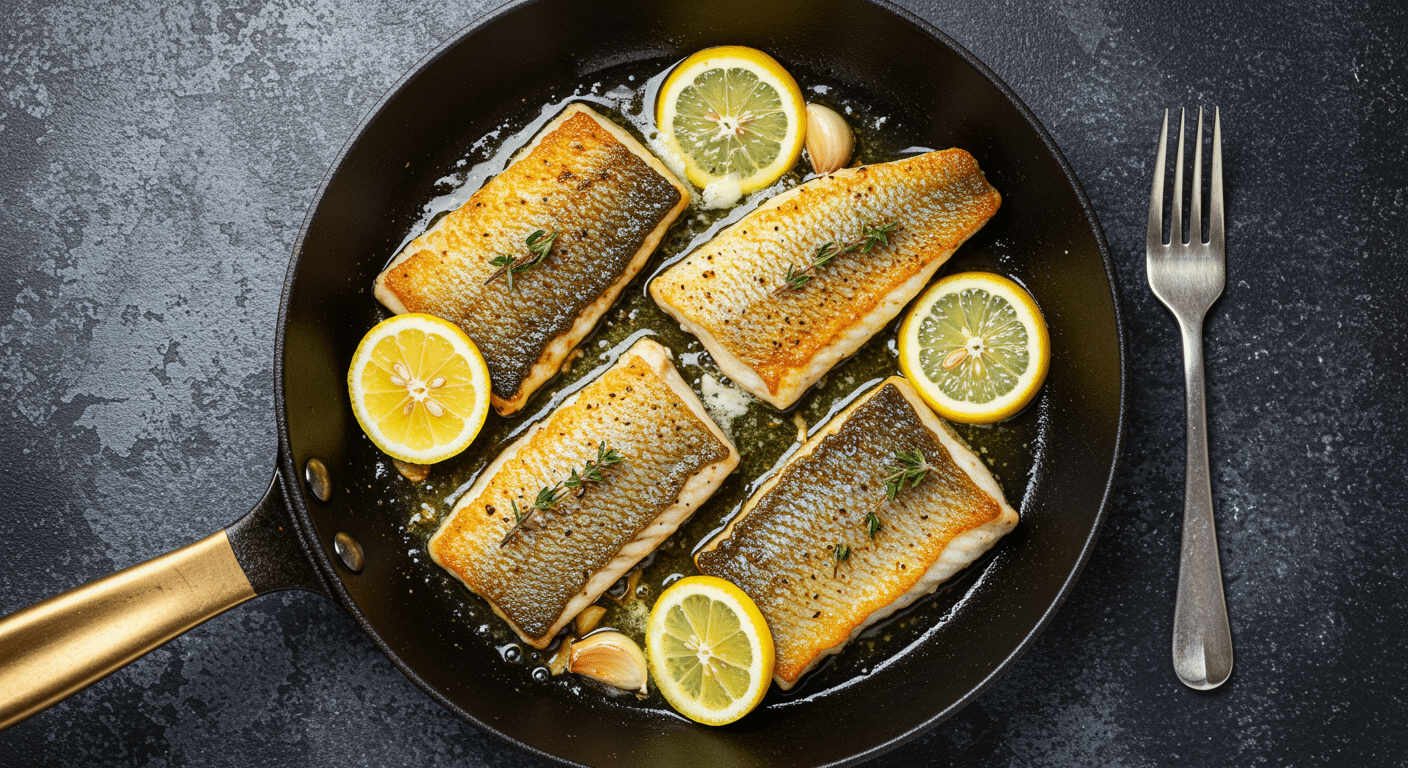
Chilean sea bass is easy to cook at home. The high fat content keeps it moist, so you won’t mess it up as easily.
Ingredients
- 2 Chilean sea bass fillets (6 oz each)
- 2 tablespoons olive oil
- Salt and pepper
- 1 lemon
- 2 garlic cloves, minced
Simple Pan-Seared Recipe
Step 1: Prep the Fish: Pat the fillets dry with paper towels. Season both sides generously with salt and pepper. This helps create a nice crust.
This step matters more with Chilean sea bass than with most fish because of its high fat content.
Excess moisture on the surface steams the fillet instead of searing it, and you lose that golden crust entirely. Take an extra 30 seconds here. It’s worth it.
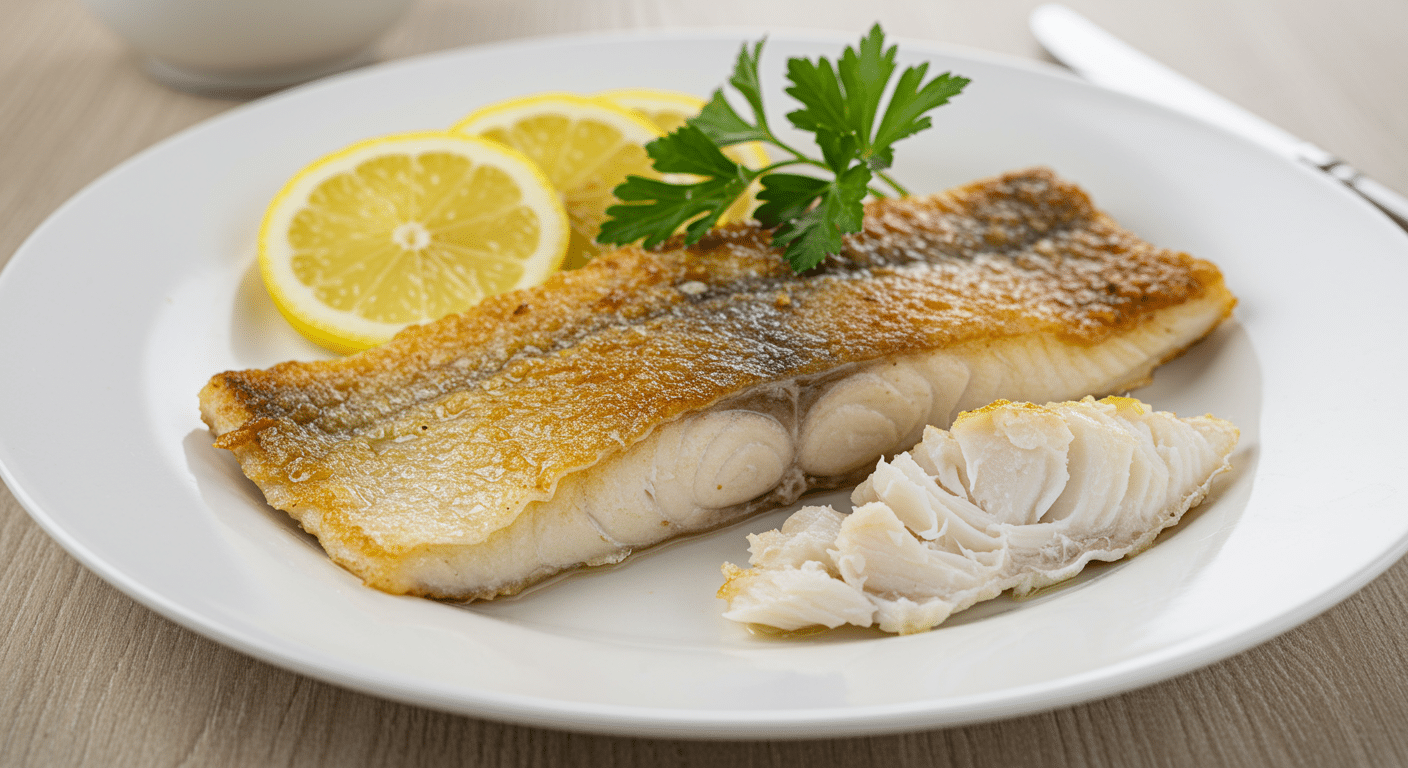
Step 2: Heat and Sear: Heat olive oil in a pan over medium-high heat. Place fillets skin-side down and don’t touch them for 4 minutes. Let the skin get crispy.
Step 3: Flip and Finish: Carefully flip the fillets. Add minced garlic to the pan. Cook for another 3-4 minutes until the fish flakes easily with a fork.
Step 4: Add Final Touches: Squeeze fresh lemon juice over the top. Sprinkle with herbs if you like. Serve immediately while hot.
Chilean Sea Bass Nutrition vs Other Popular Fish
Here’s how Chilean sea bass compares to other common fish (per 3-ounce serving):
| Fish Type | Calories (per 3 oz) | Protein | Omega-3s | Mercury Level |
|---|---|---|---|---|
| Chilean Sea Bass | 134 kcal | 16 g | 1,400 mg | Moderate |
| Salmon | 175 kcal | 19 g | 1,800 mg | Low |
| Cod | 90 kcal | 20 g | 200 mg | Low |
| Tuna (Yellowfin) | 110 kcal | 25 g | 300 mg | Moderate-High |
| Halibut | 120 kcal | 23 g | 400 mg | Moderate |
| Tilapia | 110 kcal | 22 g | 150 mg | Very Low |
| Mahi-Mahi | 93 kcal | 20 g | 140 mg | Low |
If you’re choosing based purely on omega-3s, salmon still edges it out. But Chilean sea bass delivers that omega-3 count in a much milder, less ‘fishy’ package, which makes it the better entry point for people who are trying to eat more oily fish but don’t enjoy the stronger flavour of salmon.
Risks Considerations & Sustainability Issues
Chilean sea bass faces serious environmental challenges that go beyond health concerns.
The Overfishing Crisis
The fish grows slowly and takes 10+ years to reach breeding age. This makes populations recover very slowly after heavy fishing. Illegal boats still operate in remote Antarctic waters, making enforcement difficult.
Better Alternatives
Consider these more sustainable options: Alaskan halibut, Pacific sablefish, and wild-caught salmon.
These fish offer a similar taste profile with a lower environmental impact.
Wrapping Up
Chilean sea bass is a high-quality source of protein, omega-3 fatty acids, and essential vitamins.
Eat this fish in moderation due to its mercury content. Choose certified sustainable sources with MSC labels to help protect it, especially since it nearly went extinct once. Your choices impact ocean health.
Most adults can enjoy it once or twice a month. Pregnant women and children should pick other fish instead.
Try the simple recipes we shared. The buttery flavor lives up to the hype when you cook it right.