

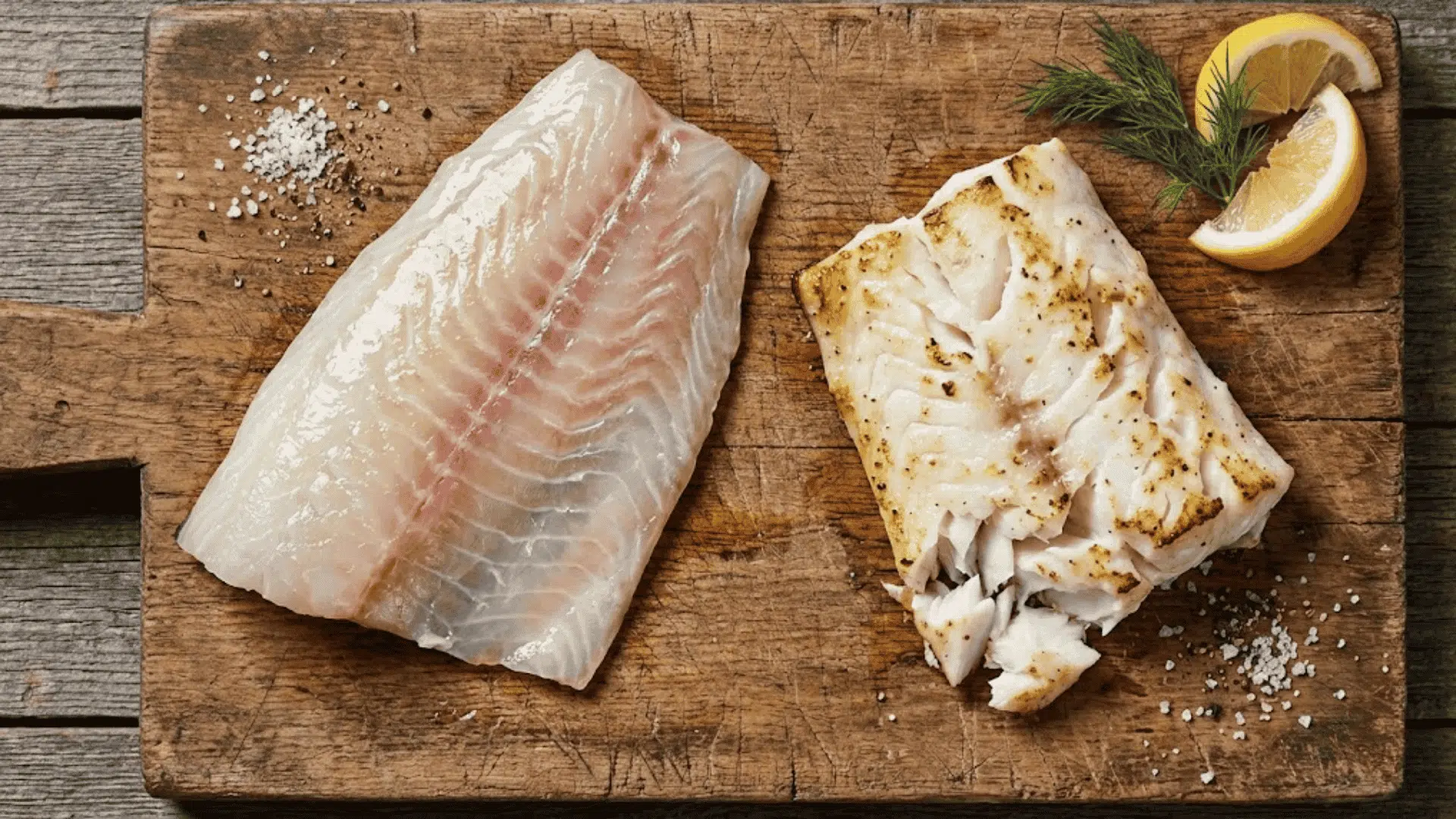
I’ve been there more times than I’d like to admit, slicing into what looks perfectly cooked, only to find it’s still raw in the middle. Or even worse, leaving it on the heat too long until it turns dry and rubbery.
Learning the right fish internal temp has completely changed how I cook. No more guessing. No more dry fillets.
No more undercooked centers that make me nervous about food safety.
This blog shows the exact temperatures to cook fish properly and how to hit them consistently.
They’re straightforward methods that work in my kitchen with any type of fish I throw on the stove.
What Should Fish be Cooked to?
Temperature matters because it kills harmful bacteria and parasites. Cook fish too little, and you risk getting sick.
But there’s more to it than safety alone.
The right temperature also affects texture and flavor. Fish cooked to the proper temperature stays moist and flaky.
Go past that point, and the proteins squeeze out all the moisture.
Most fish should reach 145°F (63°C) on the inside. This is what the USDA recommends for safe consumption.
At this temperature, the flesh turns opaque and separates easily with a fork. The center should no longer look translucent or raw.
Howto Measure Fish Internal Temp the Right Way
Getting an accurate reading takes the right technique.
Here’s how I check my fish properly:
Step 1: Insert the Thermometer Into the Thickest Part
I always aim for the center of the thickest section. This spot takes the longest to reach the proper temperature.
It gives me the most reliable way to tell whether my fish is fully cooked through.
Step 2: Angle It Horizontally, Not Straight Down
Push the thermometer in from the side of the fillet.
This keeps it positioned in the meat without going all the way through. If I push straight down, I might hit the pan and get a false reading.
Step 3: Wait a Few Seconds for The Reading to Stabilize
I’ve learned that digital thermometers need a moment to adjust.
I hold it still and watch the numbers settle. Rushing this step led to removing the fish too early.
Step 4: Avoid Touching Bones or The Cooking Surface
Bones and metal pans conduct heat much faster than fish flesh. When my thermometer touches these, the temperature spikes incorrectly.
I make sure to keep the probe tip surrounded only by meat for accuracy.
Step 5: Check Multiple Spots if The Fillet Is Thick
I don’t rely on just one measurement for larger pieces. The edges often cook faster than the middle.
I test two or three locations to confirm the entire fillet has reached the safe temperature I’m aiming for.
Benefits of Achieving Optimal Cooking Temperatures
Cooking fish to the right temperature brings several advantages beyond just safety.
Better Flavor and Moisture Retention
Fish cooked at the correct temperature keeps its natural juices locked in. The proteins firm up just enough without squeezing out all the moisture.
This means every bite tastes rich and satisfying, not bland or dried out, as overcooked fish often is.
Improved Texture
The flesh becomes tender and flaky at the right temperature. It pulls apart gently with your fork.
Undercook it, and you get a mushy, rubbery feel. Overcook it, and it turns tough and stringy. Hit that sweet spot, and the texture is perfect.
Food Safety Assurance
Reaching 145°F kills harmful bacteria, such as Salmonella, and parasites that live in raw fish.
This protects you and your family from foodborne illness. You can eat with confidence, knowing the fish is safe for everyone at the table.
Consistent Results Every Time
Using a thermometer removes all the guessing. You’ll know exactly when to take the fish off the heat.
No more cutting into it to check or relying on cooking times that vary. Your fish turns out right, meal after meal.
Internal Temp for Different Kinds of Fish
Here’s a quick reference table for popular varieties:
| Fish | Safe Temp | Preferred Temp | Visual Cues |
|---|---|---|---|
| Salmon | 145°F | 120-125°F (medium-rare) | Translucent pink to opaque, flakes easily |
| Tuna | 145°F | 110-125°F (rare to medium-rare) | Deep red to light pink or tan |
| Cod | 145°F | 145°F | Completely white, large flakes, firm |
| Halibut | 145°F | 145°F | Translucent to solid white, firm flakes |
| Tilapia | 145°F | 145°F | Fully white, no translucent areas |
| Swordfish | 145°F | 135-140°F | Translucent to opaque, firm touch |
| Mahi-Mahi | 145°F | 145°F | Pinkish to white, golden edges |
| Trout | 145°F | 145°F | Translucent to solid, crispy skin |
| Sea Bass | 145°F | 135-140°F | Mostly white, slightly firm |
1. Salmon
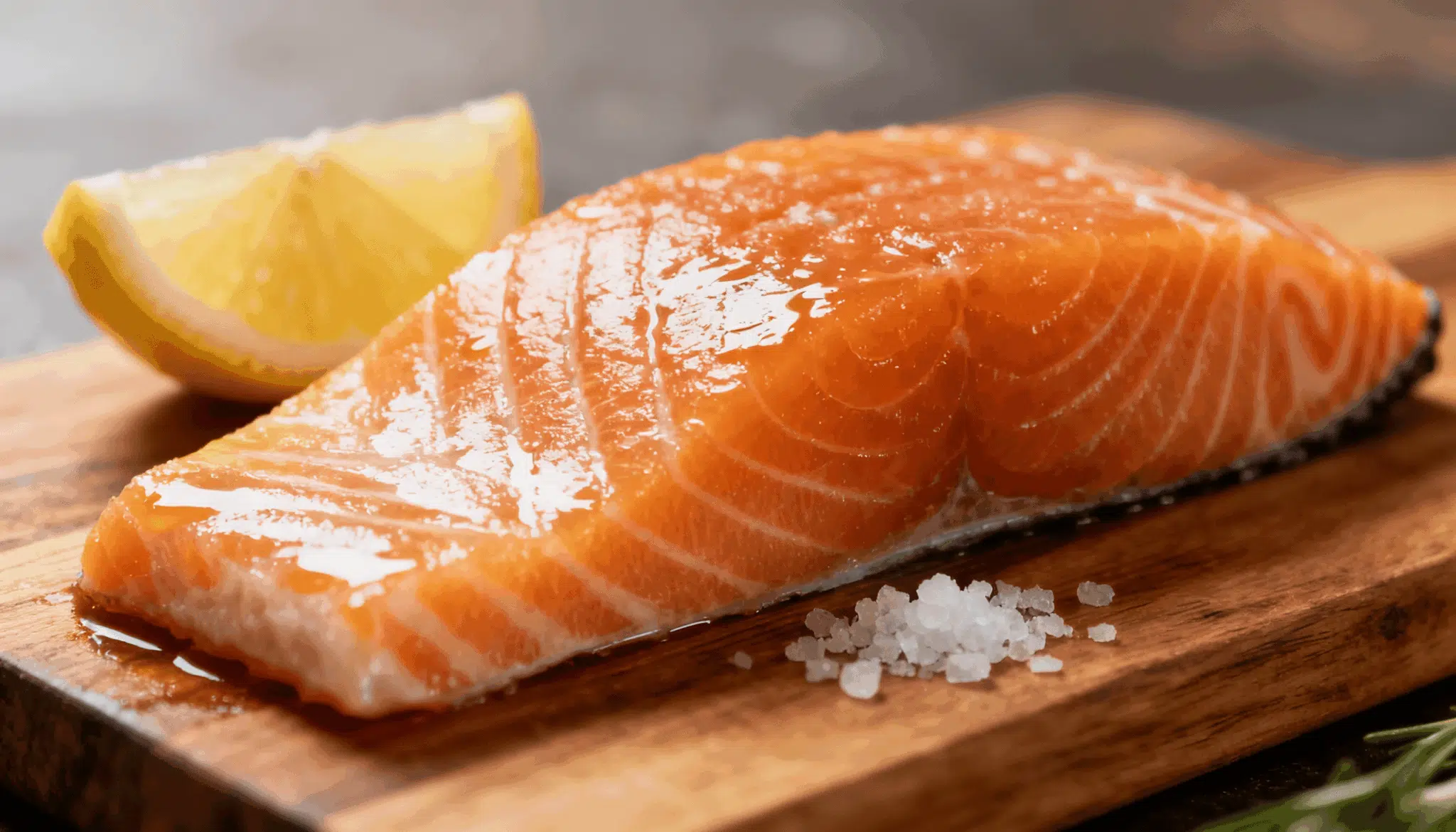
For salmon, people prefer a softer, more buttery texture. The choice depends on your preference and comfort level with less-cooked fish.
- Safe temperature: 145°F (fully cooked)
- Medium-rare: 120-125°F (translucent center, very moist)
- How to tell: Flesh turns from translucent pink to opaque, flakes easily.
2. Tuna
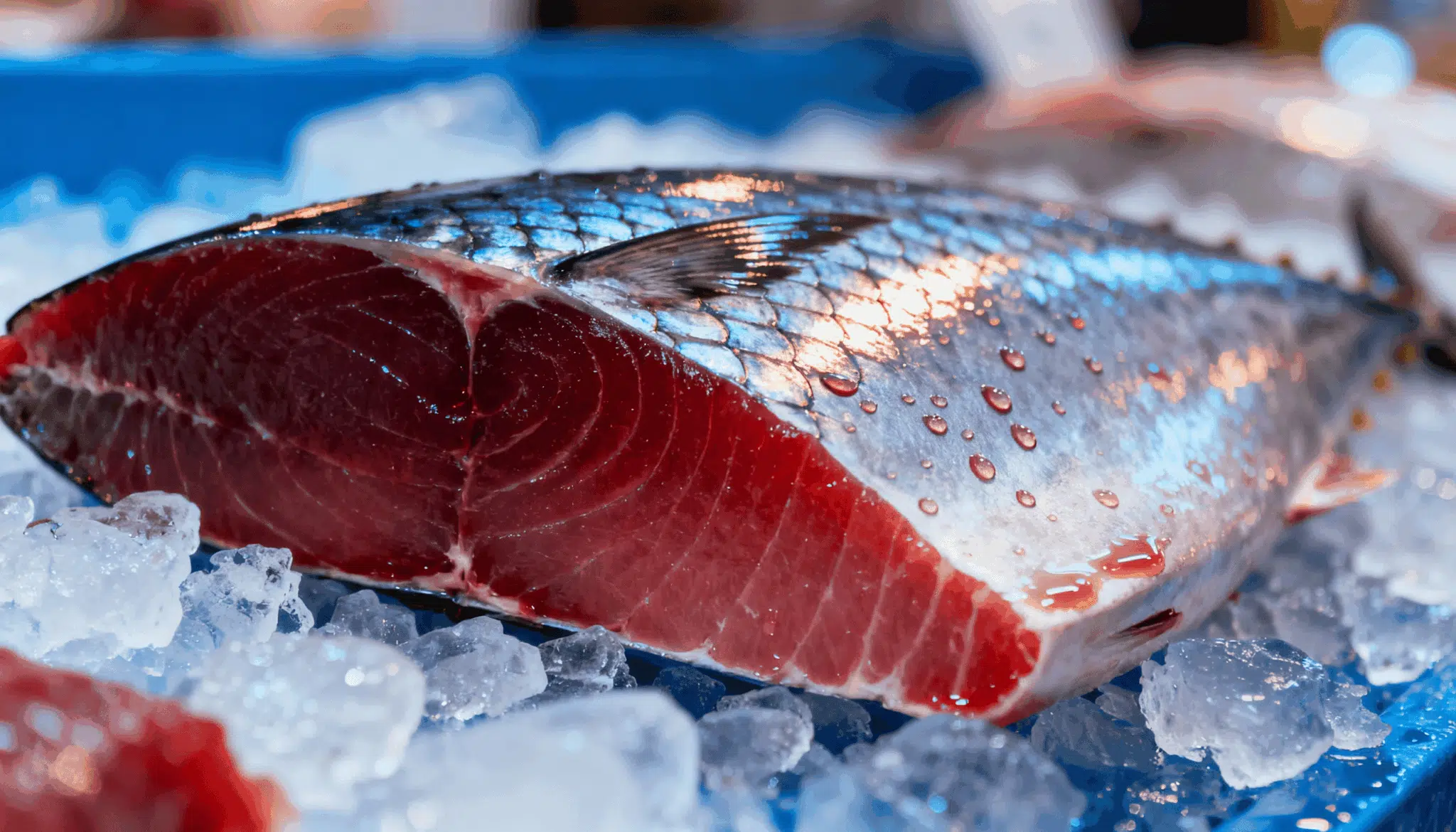
Tuna is often served rare or medium-rare because it dries out quickly when fully cooked. Sushi-grade tuna can safely be eaten at lower temperatures than other fish.
- Rare: 110-115°F (cool red center)
- Medium-rare: 125°F (warm pink center)
- Fully cooked: 145°F (opaque, but may be dry)
- Visual changes: Color changes from deep red to lighter pink or tan.
3. Cod
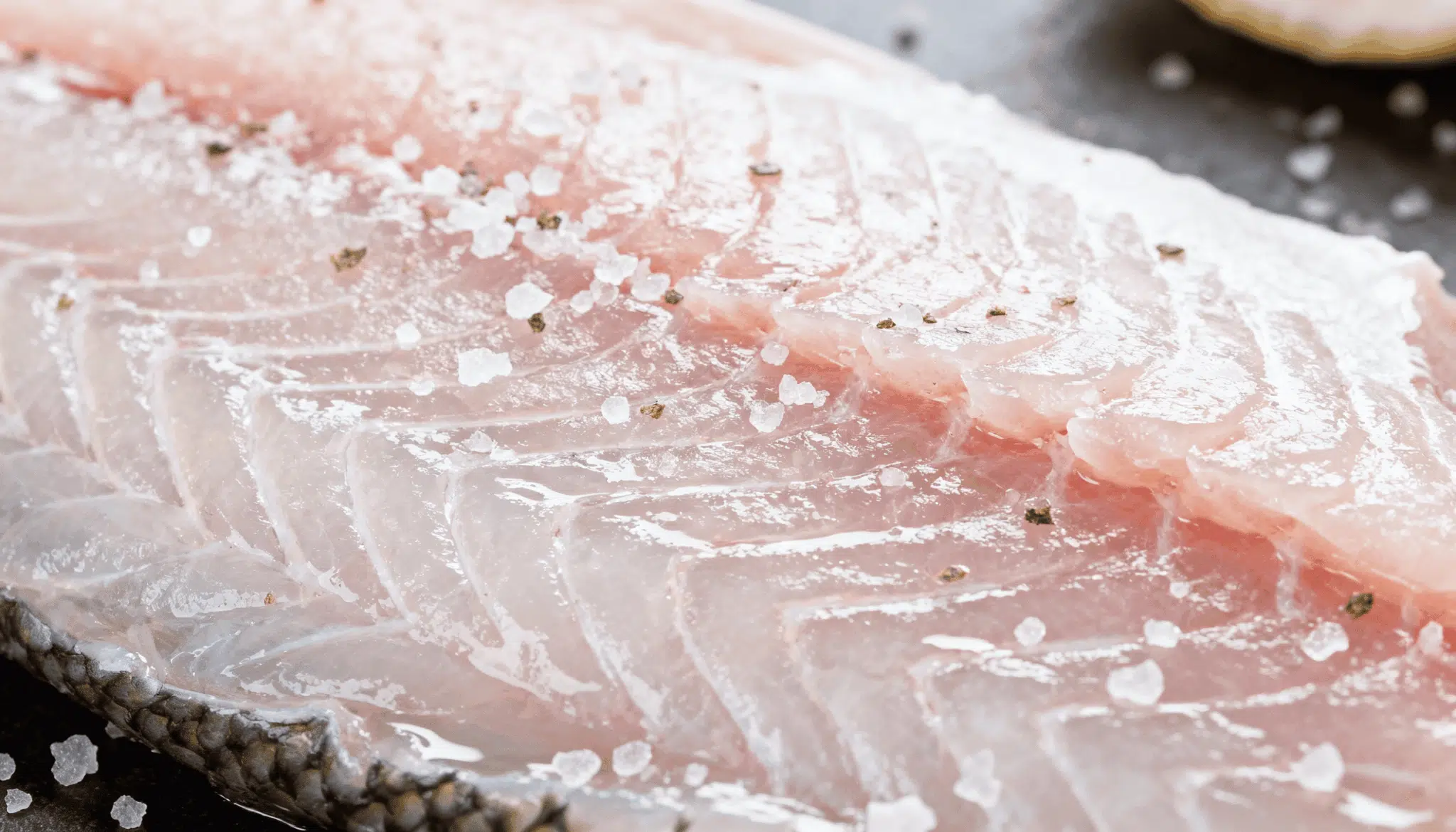
Cod needs to reach the full be safe and taste good. This white fish has a mild flavor and firm texture when cooked properly.
- Safe temperature: 145°F (opaque white throughout)
- Doneness indicators: Flesh turns completely white, flakes into large chunks.
- Texture check: Should feel firm but not rubbery.
4. Halibut
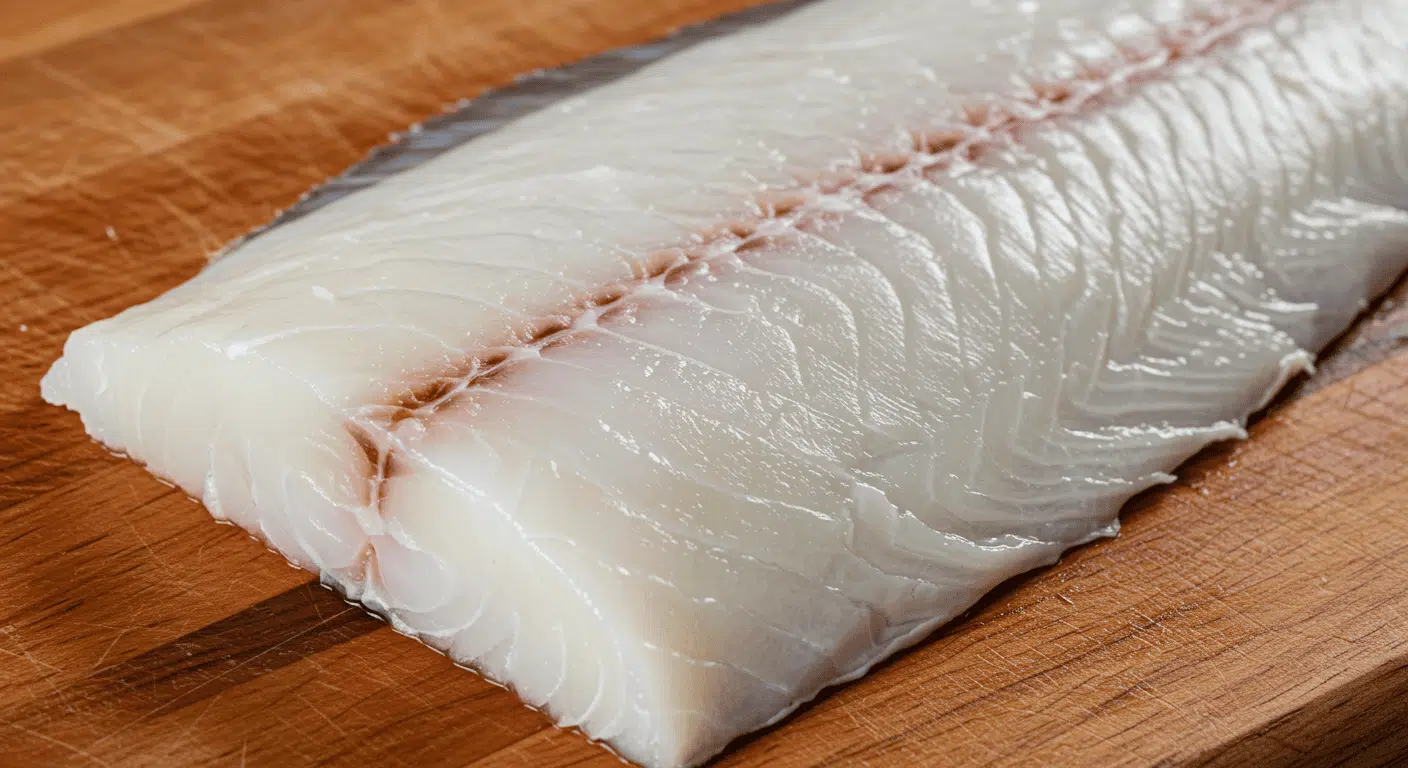
Halibut is a dense, meaty fish that holds up well to cooking. It needs the full temperature to cook through properly and develop its sweet, mild flavor.
- Safe temperature: 145°F (opaque and firm)
- What to look for: Turns from translucent to solid white, separates into firm flakes.
- Texture check: Should feel substantial but tender.
5. Tilapia
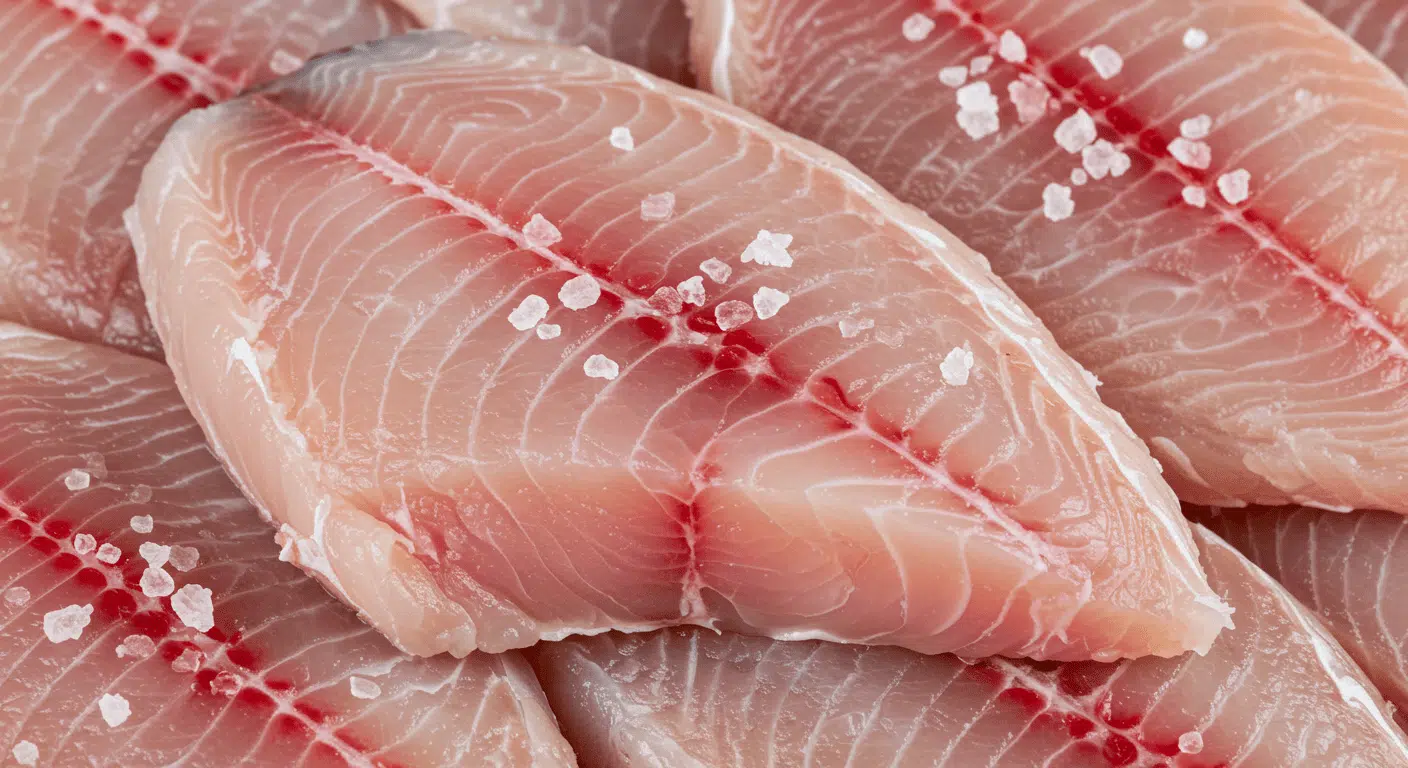
Tilapia is a thin, delicate fish that cooks fast. Watch it closely because it goes from perfect to overdone in seconds.
- Safe temperature: 145°F (white and opaque)
- Readiness signs: The flesh is completely white, with no translucent areas remaining.
- Texture check: Flakes easily but stays moist.
6. Swordfish
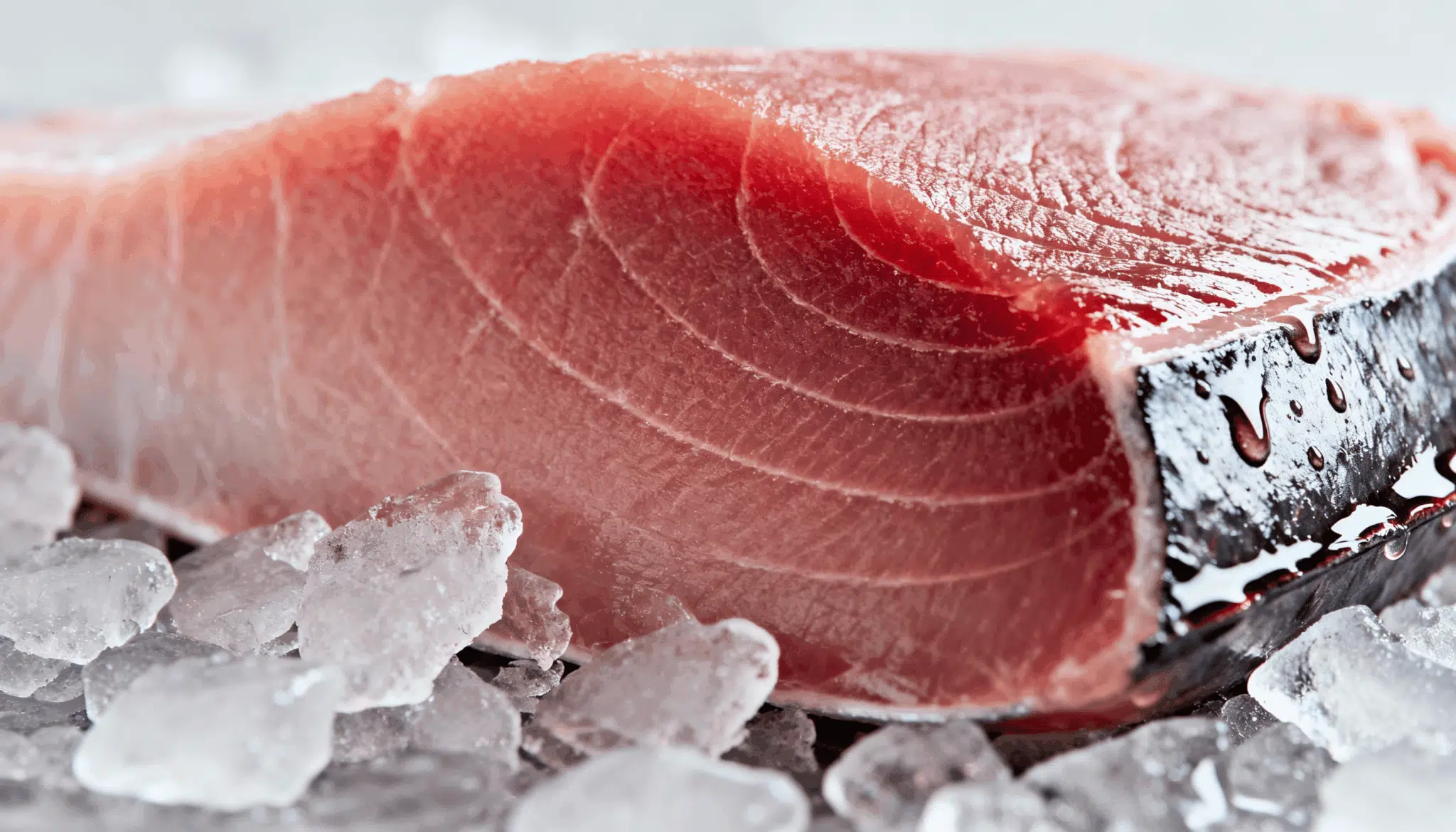
Swordfish is a steak-like fish with dense, meaty flesh. It can handle slightly lower temperatures than delicate fish and still taste great.
- Safe temperature: 145°F
- Preferred by many: 135-140°F (slightly pink center, very juicy)
- Cooked markers: Change from translucent to opaque and from firm to firm to the touch.
7. Mahi-Mahi
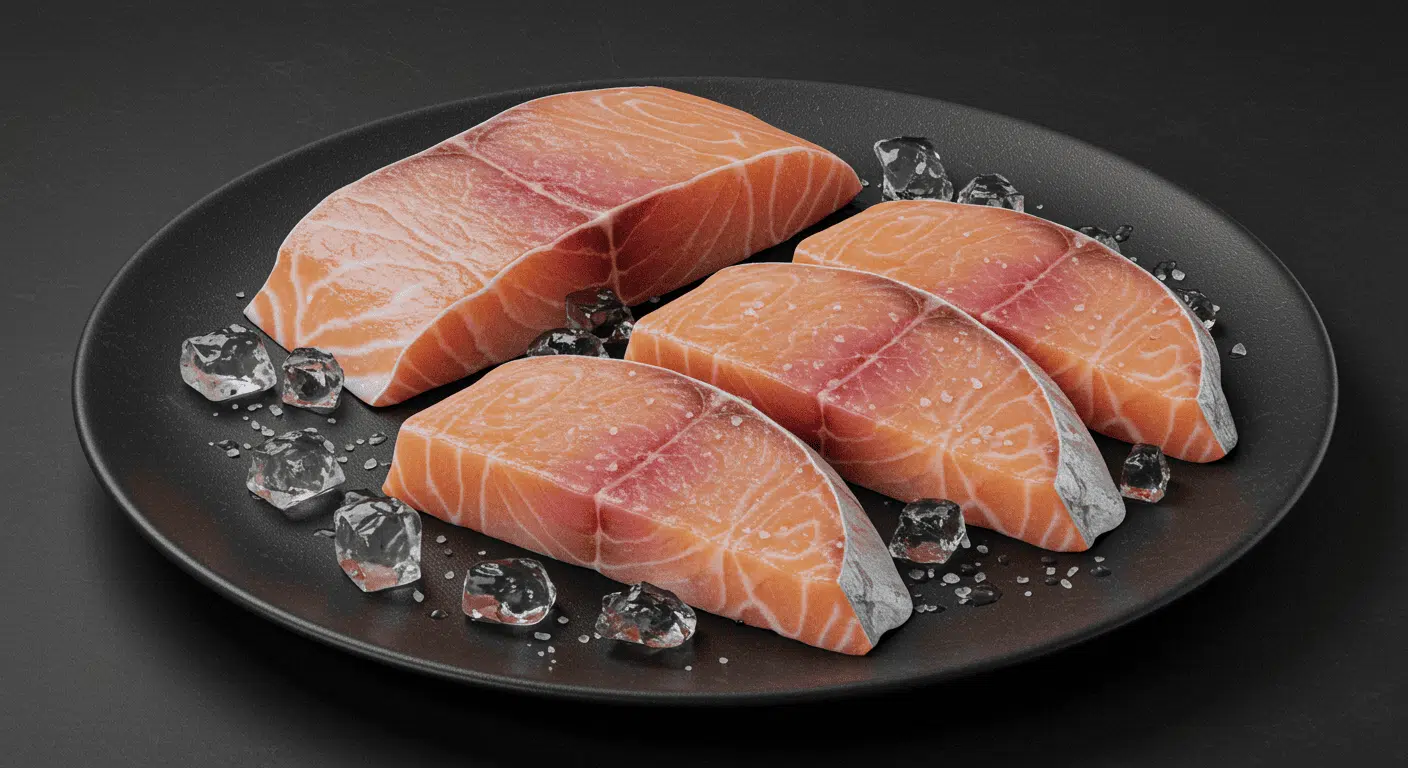
Mahi-mahi has a firm texture and sweet taste that works well with high-heat cooking. This tropical fish stays moist when cooked to the proper temperature.
- Safe temperature: 145°F (opaque white with golden edges)
- When it’s ready: Flesh turns from pinkish to white, flakes in medium chunks.
- Texture check: Feels firm and springy, not mushy.
8. Trout
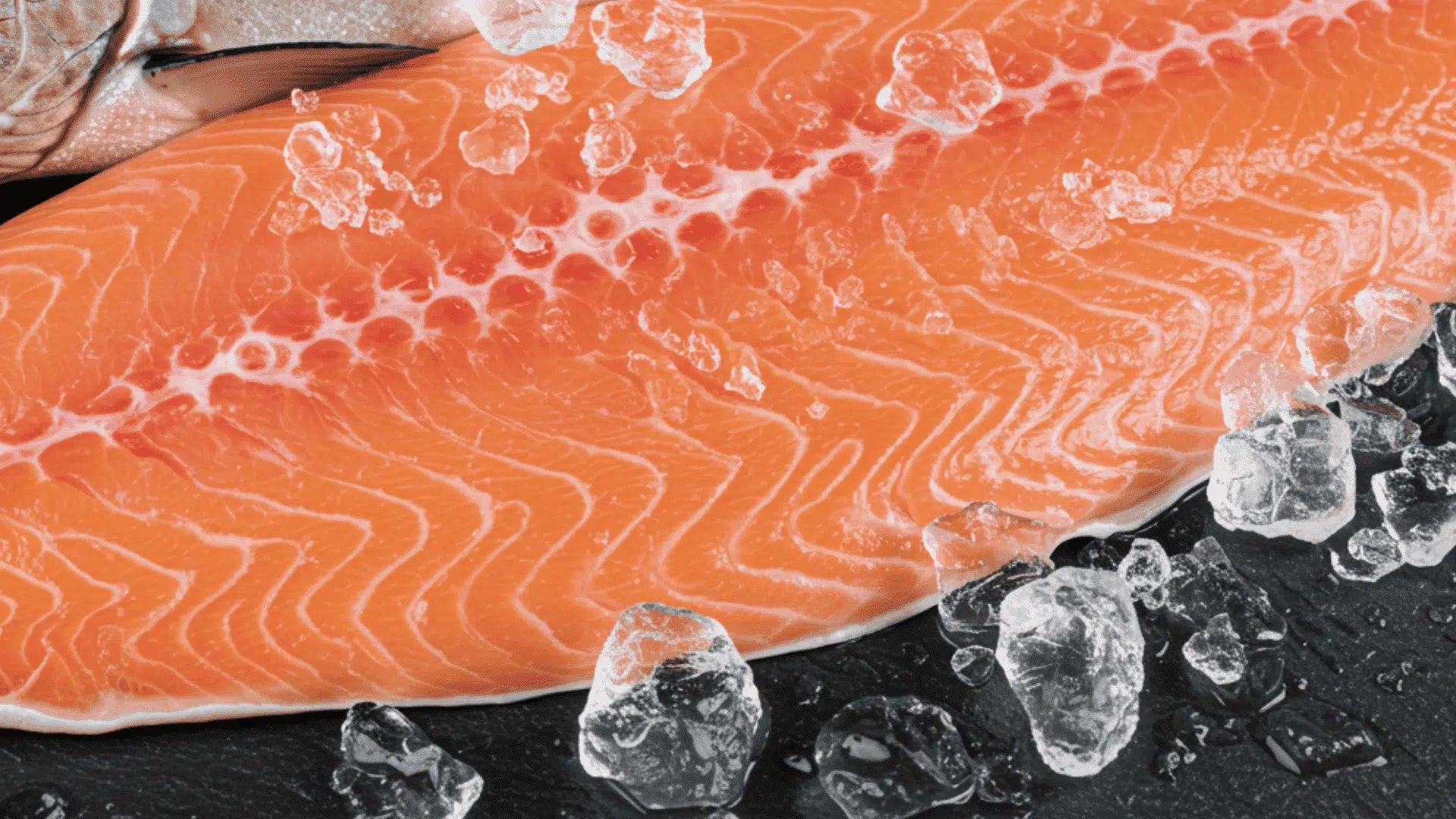
Trout is a delicate freshwater fish with tender flesh. It cooks quickly and needs careful attention to avoid drying out the thin fillets.
- Safe temperature: 145°F
- Signs it’s done: Skin crisps up, flesh turns from translucent to solid.
- Texture check: Flakes easily into small, tender pieces.
9. Sea Bass
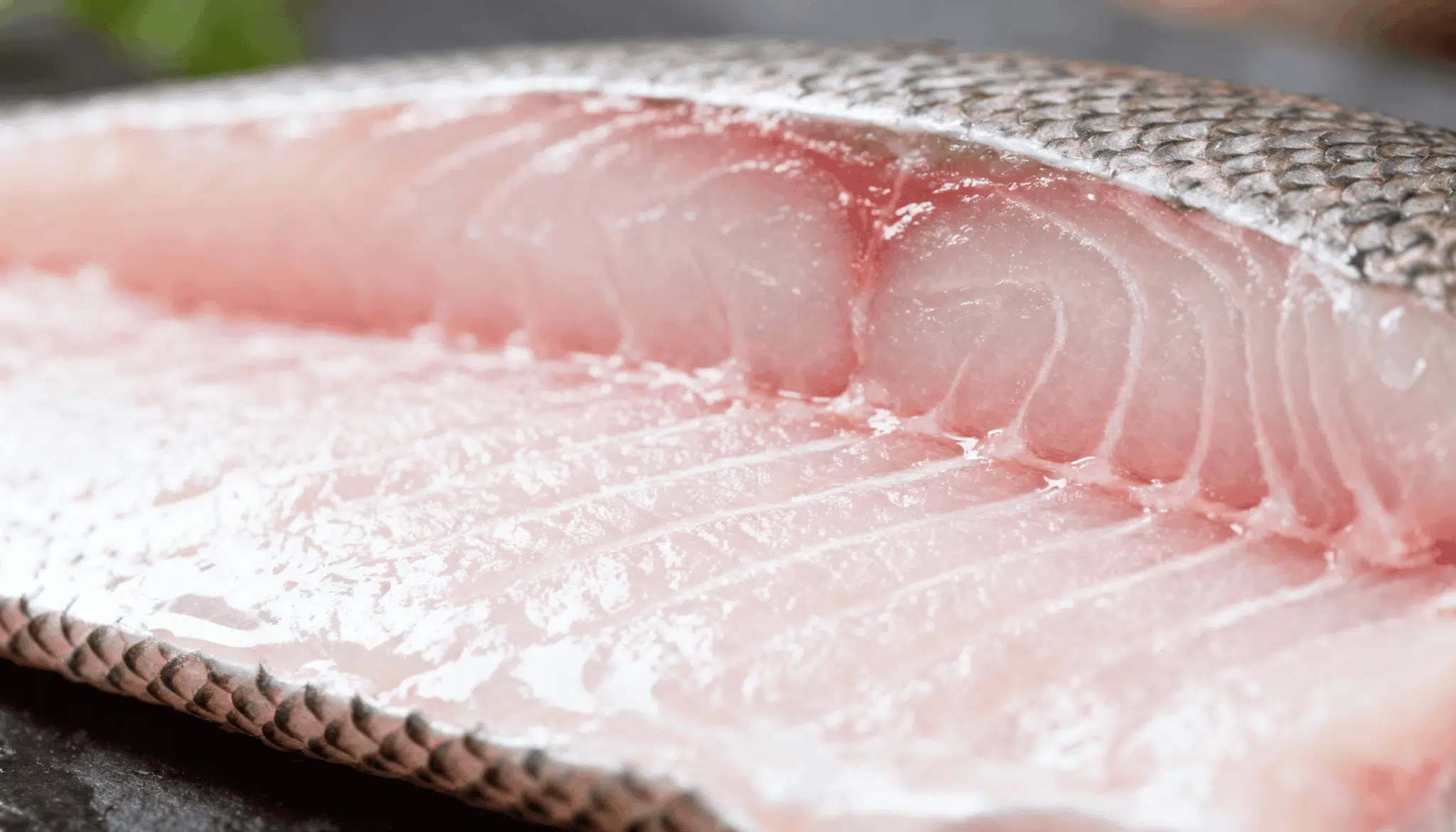
Sea bass has buttery, rich flesh that benefits from gentle cooking. This premium fish deserves careful temperature monitoring to preserve its luxurious texture.
- Safe temperature: 145°F (opaque and moist)
- Preferred by chefs: 135-140°F (slightly translucent center)
- Perfectly cooked: Flesh is mostly white and feels slightly firm, with some give.
How Temperature Affects the Texture and Flavor of Fish
| Temperature Range | Texture | Flavor | Appearance |
|---|---|---|---|
| Under 110°F | Raw and slippery | Mild, ocean-like taste | Translucent and glossy |
| 110-120°F | Soft and tender | Buttery, rich flavor | Slightly opaque edges |
| 120-130°F | Silky and moist | Full, pronounced taste | Pink or reddish center |
| 130-140°F | Firm but juicy | Balanced and sweet | Mostly opaque |
| 140-145°F | Flaky and tender | Clean, mild flavor | Completely opaque |
| 145-150°F | Firm and dry | Concentrated taste | White and solid |
| Over 150°F | Tough and crumbly | Bland and chalky | Dried out, dull color |
Can You Refreeze Fish After Cooking?
Yes, refreezing cooked fish is possible, but let me be honest, it’s never going to taste as good as the first time.
Each freeze-thaw cycle further degrades the cell’s structure. The texture suffers. The moisture escapes.
When there’s too much leftover fish, refreezing seems practical, and it’s edible but far from impressive.
Cooked fish can be kept in the freezer for up to 3 months. Let it cool down completely first. Wrap it tightly in plastic wrap and cover with foil to prevent freezer burn from ruining the quality.
Reheated refrozen fish becomes drier and crumblier, though flavor remains fair.
However, it’s not close to the quality of fresh-cooked food. Never refreeze raw fish that has already frozen once. That’s asking for trouble. The food safety risk isn’t worth it.
Avoid Foodborne Illnesses With These Tips
- Don’t buy fish that smells off or sour. Fresh fish smells like the ocean. My nose tells me if something is good.
- Wash cutting boards after raw fish to prevent contamination of vegetables or bread spreads.
- I store raw fish on the bottom shelf of the fridge to prevent juices from dripping onto cooked foods below.
- Thaw fish in the fridge overnight; counter-thawing risks bacterial growth by leaving it in the danger zone longer.
- I reheat cooked fish to at least 165°F; lower temperatures don’t kill bacteria from the fridge.
- I pay attention to recall notices; contaminated fish can cause serious illness, and checking takes two minutes.
- Marinate fish in a covered container in the fridge. Leaving it out on the counter invites bacteria.
- I always use a thermometer. We can’t confirm if the fish reached a safe temperature, so guessing doesn’t cut it.
- Never leave raw fish out at room temperature for more than two hours to prevent bacterial growth and food safety risks.
Cooking Fish Safely
Cooking fish the right way isn’t just about getting good flavor; it’s about keeping myself and everyone at my table safe from foodborne illness.
Fish cooks faster than most meats, which sounds convenient until I undercook it and create a real problem.
The difference between perfectly cooked and dangerously raw can be just a few degrees.
That’s why I don’t guess anymore.
My thermometer gives me the exact reading I need to know when fish is safe to eat.
Bacteria like Salmonella and Listeria don’t announce their presence. The only reliable defense I have is hitting the right fish internal temp. Most fish need to reach 145°F to kill harmful bacteria.
Final Thoughts
Now I have taught you how to cook fish perfectly. The right fish internal temp makes all the difference between a meal that’s just okay and one that’s truly satisfying.
Start with a good thermometer and check the thickest part of your fish.
Remember that 145°F is the safe baseline, though some fish taste better at slightly lower temps.
Pay attention to the visual cues, too, color, texture, and how easily it flakes, because they tell the full story.
What type of fish will you try first?
Frequently Asked Questions (FAQ’s)
1. Is My Fish Safe to Eat at 165?
Yes, 165°F is safe, but likely overcooked and drier than necessary.
2. What Temperature Is Fish Done in The Oven?
Fish is done in the oven when it reaches an internal temperature of 145°F.
3. Fish Internal Temperature Cod?
Cod should reach 145°F for safe consumption with proper texture.
4. Is 135 Safe for Fish?
No, 135°F is below the safe temperature of 145°F for most fish.
5. Is Fish 145 or 165?
Fish is safe at 145°F, while 165°F is for reheating leftovers.