

Let’s be honest — nobody opens a restaurant because they’re passionate about temperature logs. You do it because you love food, you love feeding people, and there’s something deeply satisfying about a packed dining room on a Saturday night. But food safety? That’s the unglamorous bit that keeps the whole thing from falling apart.
And the scary part is, most food safety problems are difficult to detect before someone eats the food and gets sick. And a small forgettable mistake is all it takes for contamination to happen.
So here’s a practical checklist of things you can do to stop contamination in its track and ensure your customers get the safe and fresh food they expect.
Your Team Comes First
You could have the most pristine kitchen in the country, and it wouldn’t mean much if the people working in it don’t understand why they’re doing what they’re doing. Handing someone a pair of gloves isn’t training. They need to actually grasp the reasoning behind safe food handling — what causes contamination, why temperatures matter, how bacteria behave.
Anyone working in restaurants and cafes in any capacity should at least take a level 1 food hygiene awareness for catering course to gain the essential knowledge they need to handle food safely. Those more directly involved with food preparation, storage, and handling should have received more advanced training.
It’s important to recognise that training alone does not guarantee safe practice. A strong safety culture, a shared understanding of standard practice, and active safety management are just as important. If the senior chef cuts corners when things get busy, everyone else will too. The standards you walk past are the standards you accept — and in a kitchen, that can have real consequences.
Get Serious About Temperature
This is where restaurants and cafés get caught out more than anywhere else. Fridges need to sit between 0°C and 5°C. Freezers at -18°C or colder. Not roughly, not most of the time — consistently.
Cooking temperatures matter just as much. Meat and poultry should hit 75°C at the core — no guesswork, use a probe. If you’re holding hot food for service, it needs to stay above 63°C. Cooling something down? You’ve got a ninety-minute window to get it from 63°C to below 8°C. Miss that window and you’re in the danger zone, quite literally.
Cross-Contamination Is Where It Usually Goes Wrong
If I had to pick the single biggest cause of foodborne illness in commercial kitchens, it’d be this. And it’s almost always avoidable — which makes it all the more frustrating.
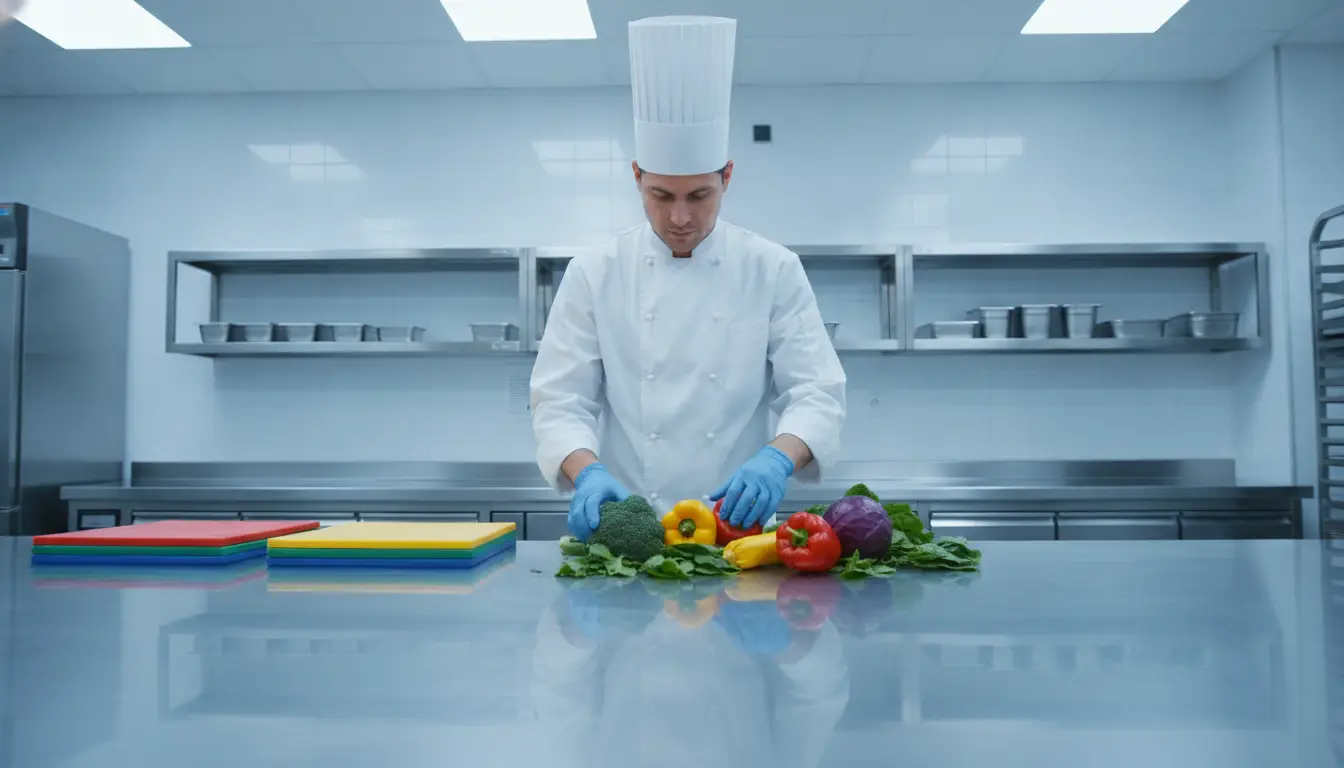
Colour-coded boards. Raw below cooked in the fridge. Utensils washed properly before they touch a different food type. You know all this already — that’s not the issue. The issue is execution. Halfway through a manic lunch with orders stacking up and someone off sick, the basics are the first thing to slip.
That’s why muscle memory matters — and why investing in proper training for kitchen staff pays off long after the course is done. A level 2 food hygiene and safety for catering qualification doesn’t just tick a compliance box. It gets these habits embedded deeply enough that people do them without thinking, even when the pressure’s on.
Cleaning That Actually Happens
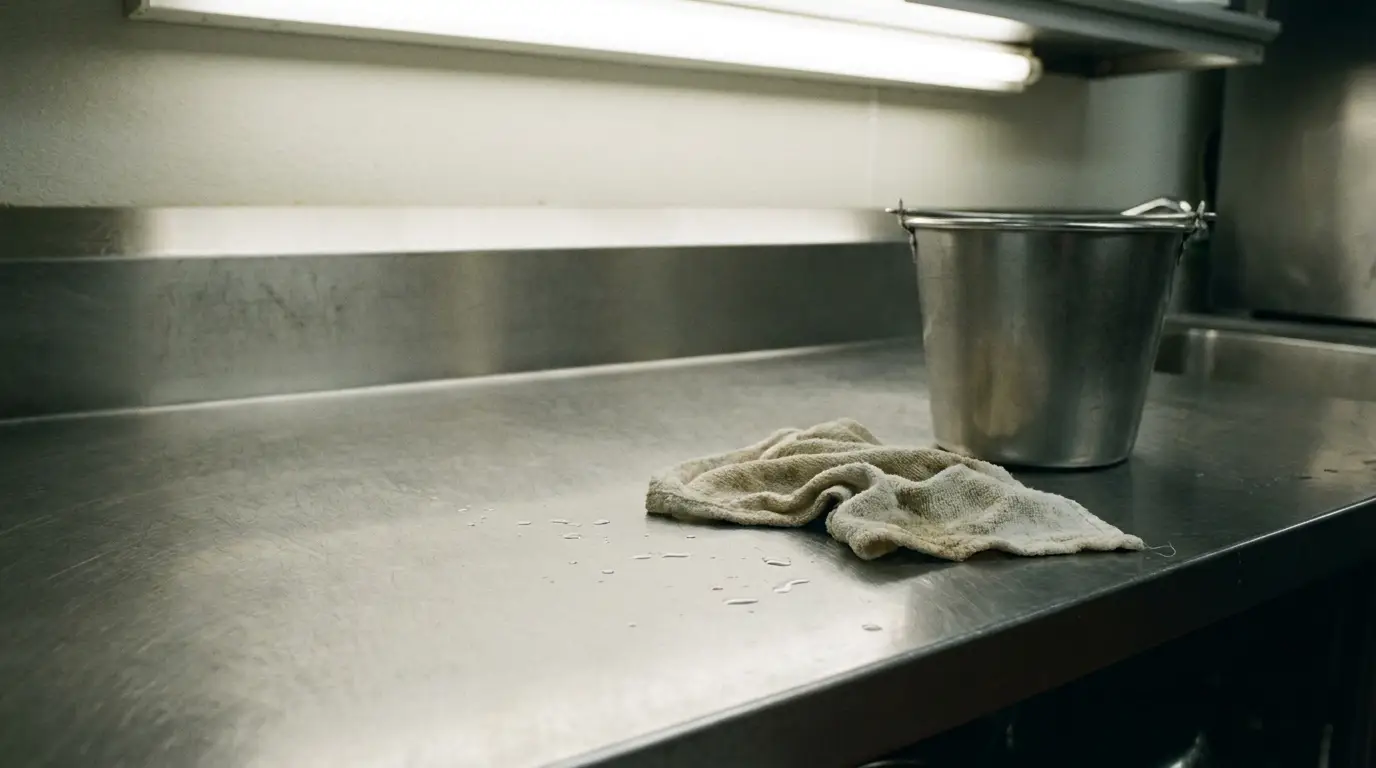
There’s a difference between having a cleaning schedule pinned to the wall and actually following it. Every food business needs a written plan — what gets cleaned, how often, which products to use, and who’s doing it. But the plan is worthless if nobody checks whether it’s being done.
Bacteria don’t care whether a surface is visible to customers — and that’s the bit kitchens tend to forget. Food contact surfaces need sanitising throughout the day, not just at closing. Slicers, blenders, and anything else with moving parts should be taken apart and cleaned after every use. And the easy-to-overlook spots deserve the same attention: fridge shelves, tap handles, light switches, the inside of the microwave.
Build in some accountability. Sign-off sheets, spot checks, whatever suits your operation. Just don’t assume it’s happening because nobody’s complained.
Allergens Aren’t Optional
Since Natasha’s Law, allergen management has quite rightly become non-negotiable. You need to know precisely what’s in every dish — not vaguely, not probably, but definitively. And that information has to be easy for customers to access.
Keep detailed, up-to-date ingredient records. Whenever a supplier changes a product or you tweak a recipe, update them. Train your staff to handle allergen questions with confidence, because a shrug and “it should be fine” is genuinely dangerous when someone has a severe allergy.
Check What’s Coming Through the Door
Your kitchen is only as good as what goes into it. When deliveries arrive, actually inspect them. Is the packaging intact? Are chilled goods at the right temperature? Do the dates give you enough time to use the stock?
Keep records of your suppliers and where products come from. Traceability feels like paperwork for paperwork’s sake — until something goes wrong and you need to pinpoint exactly where a problem started. Then it becomes the most important document you’ve got.
Waste and Pests — The Stuff Nobody Wants to Think About
Empty bins regularly. Store food waste separately. Keep external waste areas clean, tidy, and properly secured. It’s deeply unglamorous work, but neglecting it is basically an open invitation for rats, mice, and cockroaches.
Get a pest control contract sorted and don’t just rely on scheduled visits. Keep your own eyes open between inspections — droppings, gnaw marks, odd smells. Catching something early is a minor inconvenience. Catching it late is a nightmare.
Keep Records — They’re Your Safety Net
You should be able to demonstrate the food safety controls you have in place when an environmental health officer turns up. Any records of temperature logs, cleaning sign-offs, training certificates can offer a strong evidence of compliance.
Records also help you see who is has received what training, how closely the standards are being followed, and where there may be a risk.