

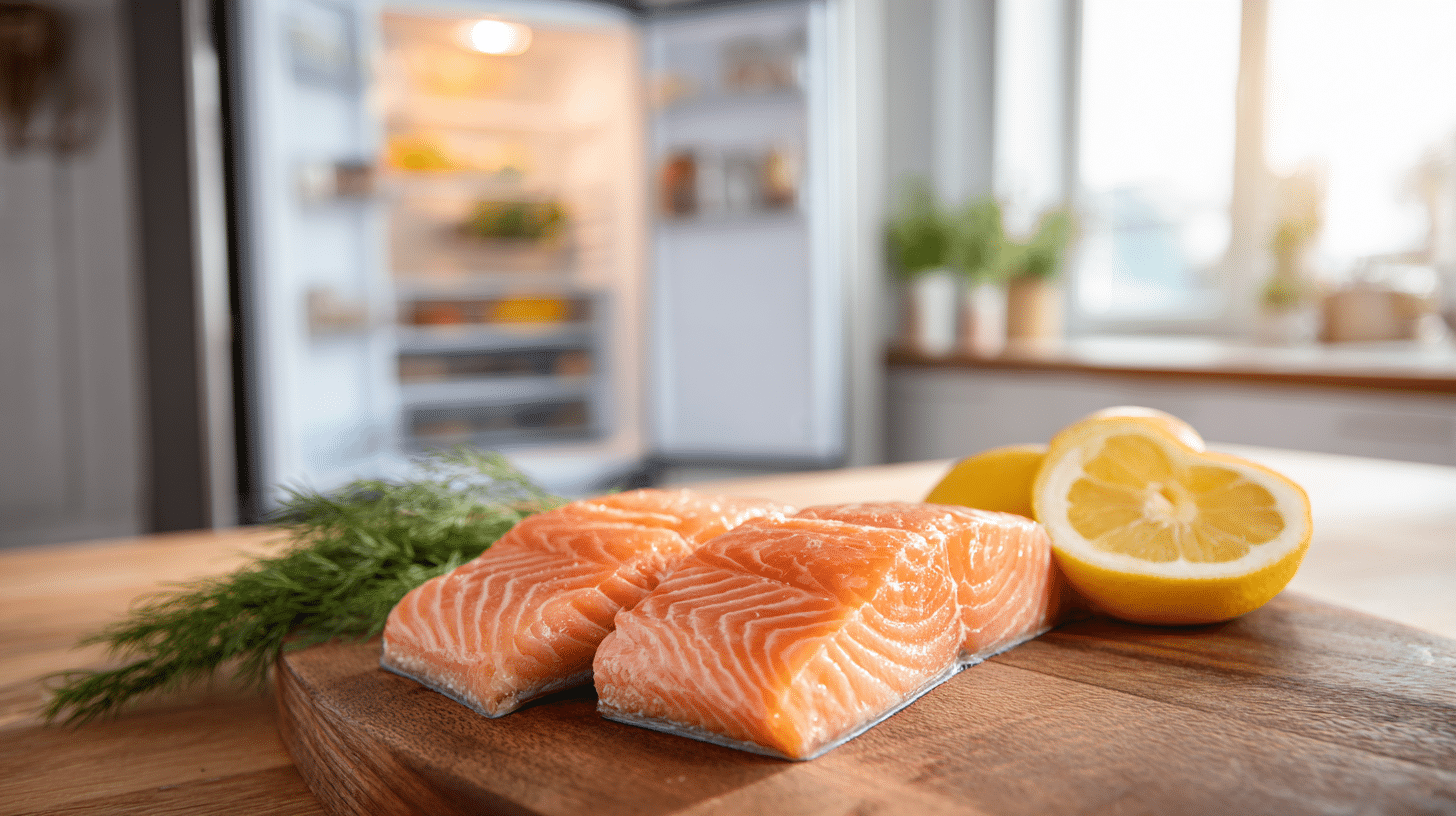
I’ll never forget the time I bought beautiful salmon fillets on Monday for a Tuesday dinner. Then work got crazy. By Thursday,
I stood there staring at that package, wondering if I’d just wasted $20. Should I risk it? Toss it? I had no clue.
That day taught me a costly lesson about storing salmon. Now I know exactly how long each type lasts, and I’m saving that salmon every single time.
Let me share what I learned.
How Long Does Salmon Last in the Fridge?
The storage time for salmon depends on how it’s prepared and stored.
Generally, raw salmon has the shortest fridge life of all types. Store it at 40°For below and use within one to two days of purchase.
The clock starts ticking from when the fish was caught, not when you bought it. Always check for a fishy smell or slimy texture before cooking.
Beyond this, various cooking methods, general preparation techniques, thawing methods, and even the initial quality of the fish all contribute to determining the shelf life.
Knowing these factors will help you maximize freshness and minimize food waste.
Quick Reference: Salmon Storage Times
| Salmon Type | Fridge Life | Storage Tip |
|---|---|---|
| Raw/Fresh | 1-2 days | Use quickly, store at 40°F |
| Cooked | 3-4 days | Cool within 2 hours |
| Smoked (opened) | 5-7 days | Keep tightly wrapped |
| Canned (opened) | 3-4 days | Transfer from can |
| Sushi/Sashimi | 1 day | Use the same day |
| Thawed | 1-2 days | Don’t refreeze |
| Marinated | 1-2 days | Limit the marinating time |
| Vacuum-sealed (unopened) | 2-3 days past date | Check seal first |
Let’s find out how various preparation methods impact the refrigerator lifespan of your salmon.
1. How Long Can Cooked Salmon Stay in the Fridge?
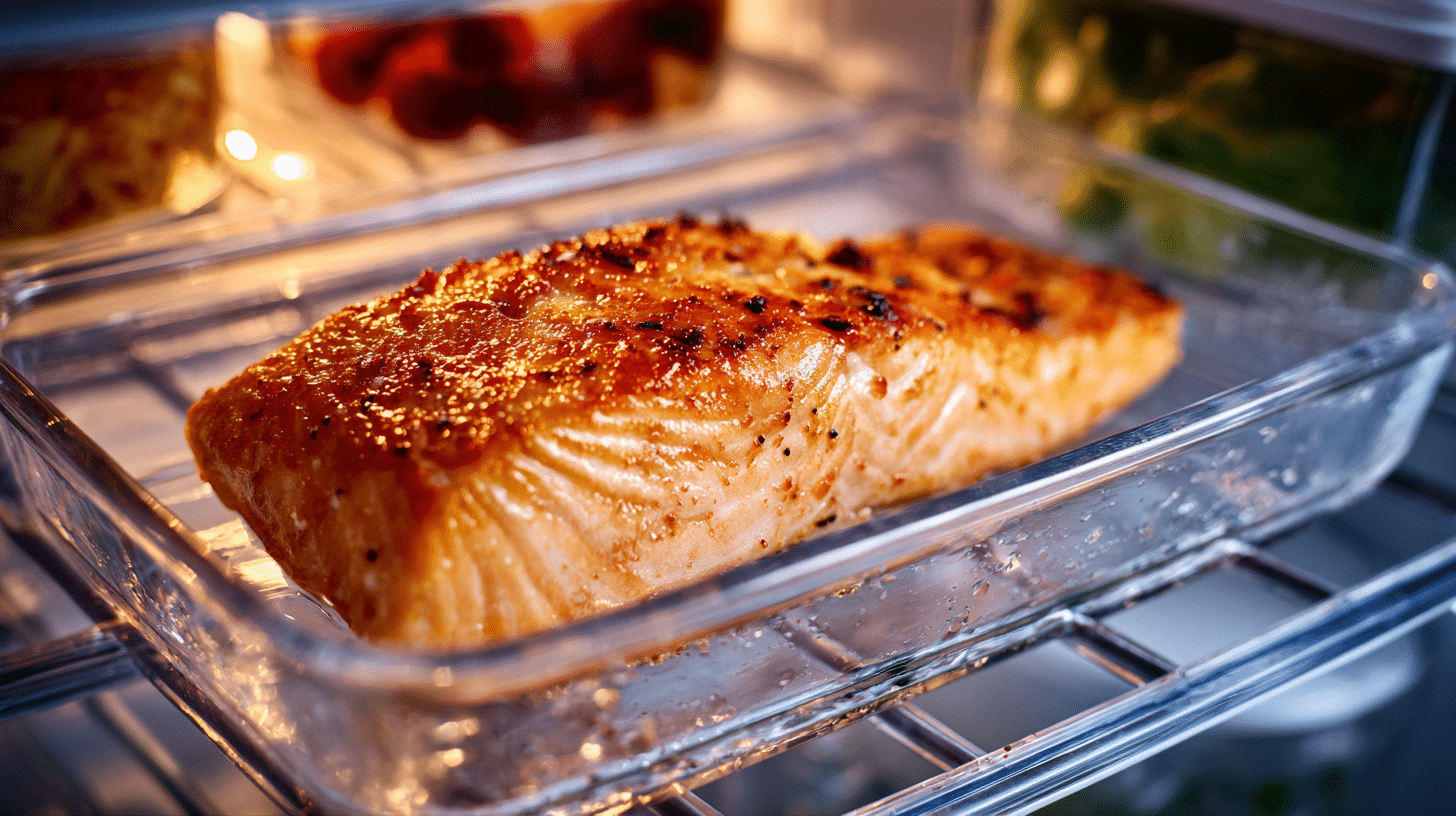
Cooked salmon lasts longer than raw because heat kills bacteria. You can safely store leftover cooked salmon in the refrigerator for 3 to 4 days.
Ensure that you cool it quickly after cooking and store it in airtight containers. Reheat only once to maintain quality and safety.
Tips for storing cooked salmon:
- Cool salmon within 2 hours of cooking
- Use glass or plastic airtight containers
- Label with cooking date for tracking
2. How Long Can Smoked Salmon Stay in The Fridge?
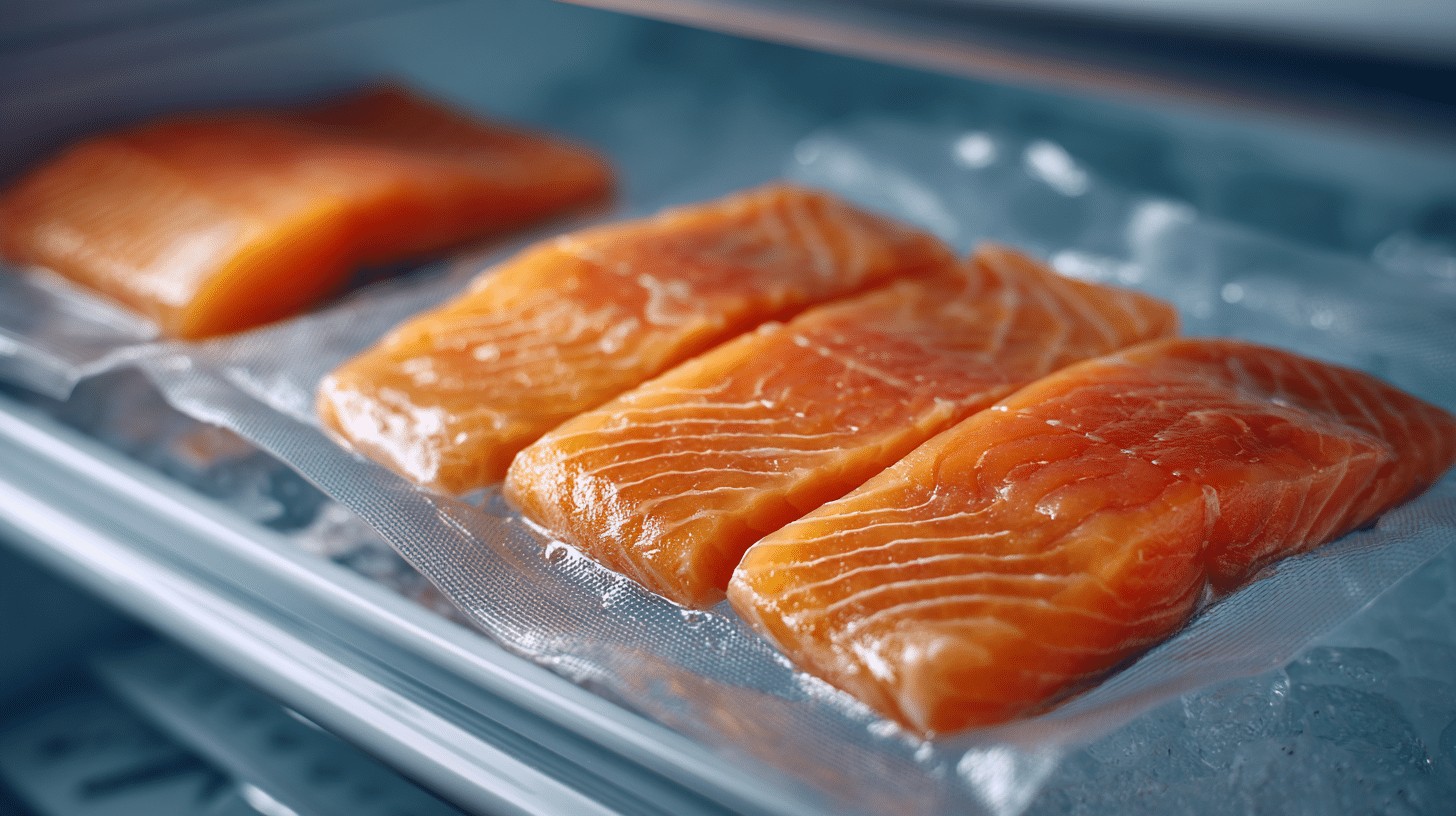
Once you open the package, the smoked salmon will stay fresh for 5 to 7 days. The smoking process helps preserve the fish longer than raw varieties. Keep it wrapped tightly in its original packaging or transfer to an airtight container.
Check the expiration date as your starting point.
Tips for storing smoked salmon:
- Keep in original vacuum packaging when possible
- Wrap tightly in plastic if transferred
- Store in the coldest part of the refrigerator
3. How Long Can Canned Salmon Stay in The Fridge?
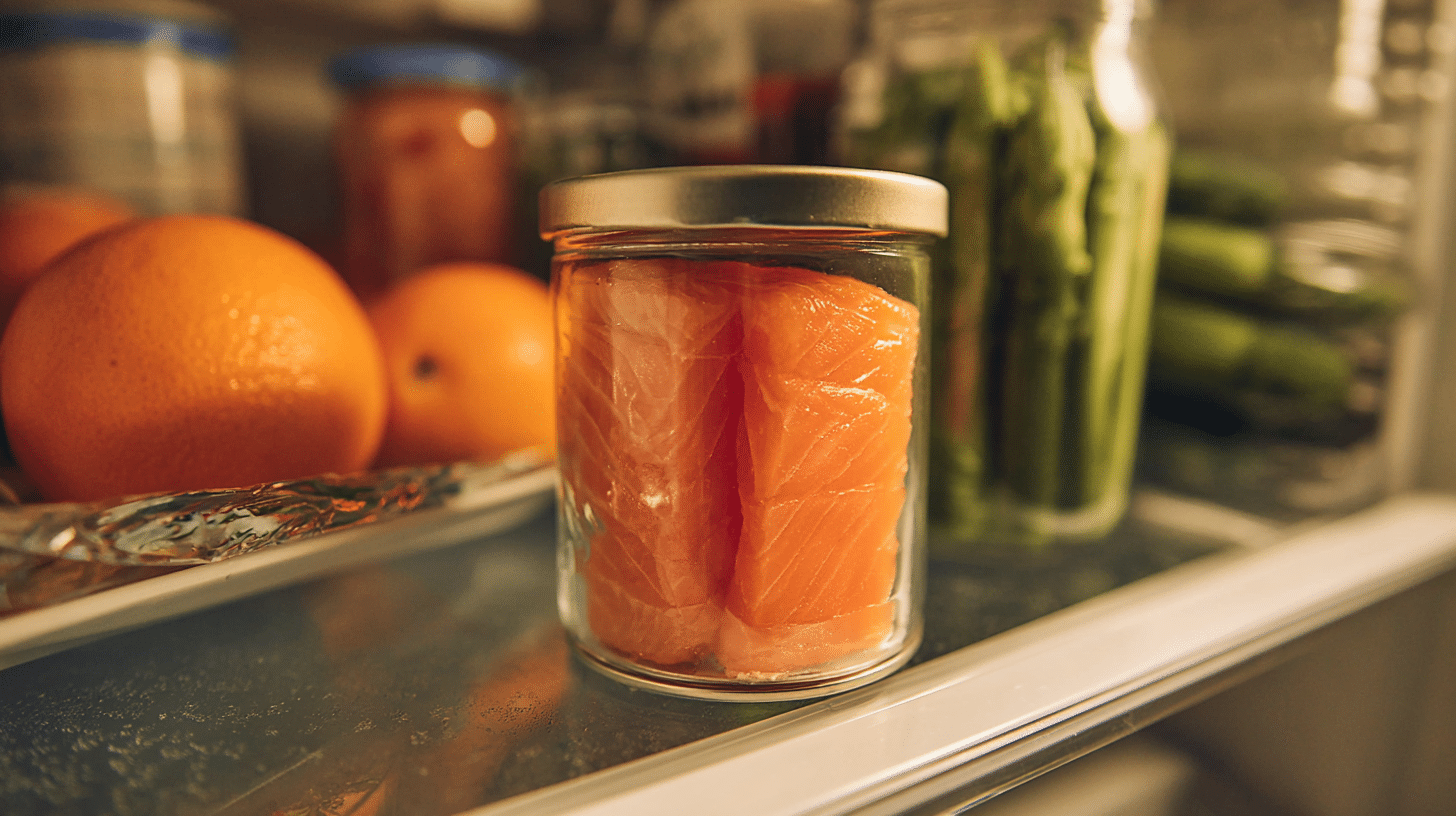
After opening a can of salmon, transfer the contents to a covered container. It will stay good for three to four days in the fridge.
Never leave open canned salmon in the original can, as this can cause a metallic taste and potential contamination issues.
Tips for storing canned salmon:
- Cover tightly with a lid or plastic wrap
- Use within 3 days for best quality
- Keep away from strong-smelling foods
4. How Long Can Salmon Sushi/Sashimi Stay in The Fridge?
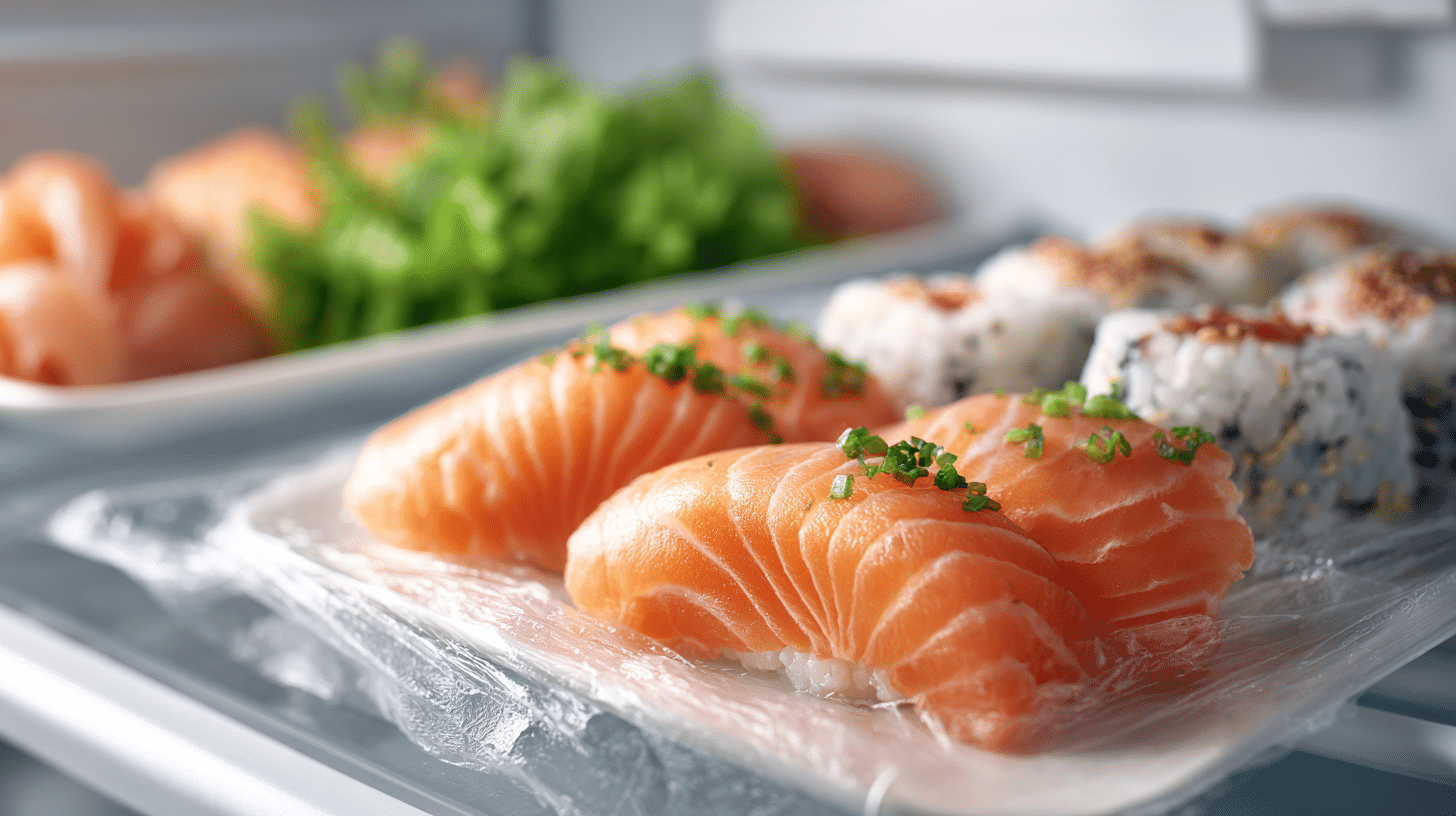
Sushi-grade salmon requires the freshest fish and has the shortest storage time. Use it within one day of purchase for the best taste and safety.
This salmon undergoes special freezing processes to kill parasites; however, it remains highly perishable once thawed.
These timeframes help you plan meals, minimize food waste, and ensure your family’s safety.
Tips for storing sushi-grade salmon:
- Buy from trusted sushi suppliers only
- Wrap in a damp paper towel, then plastic
- Use the same day for optimal safety
5. How Long Does Thawed Salmon Last in the Fridge?
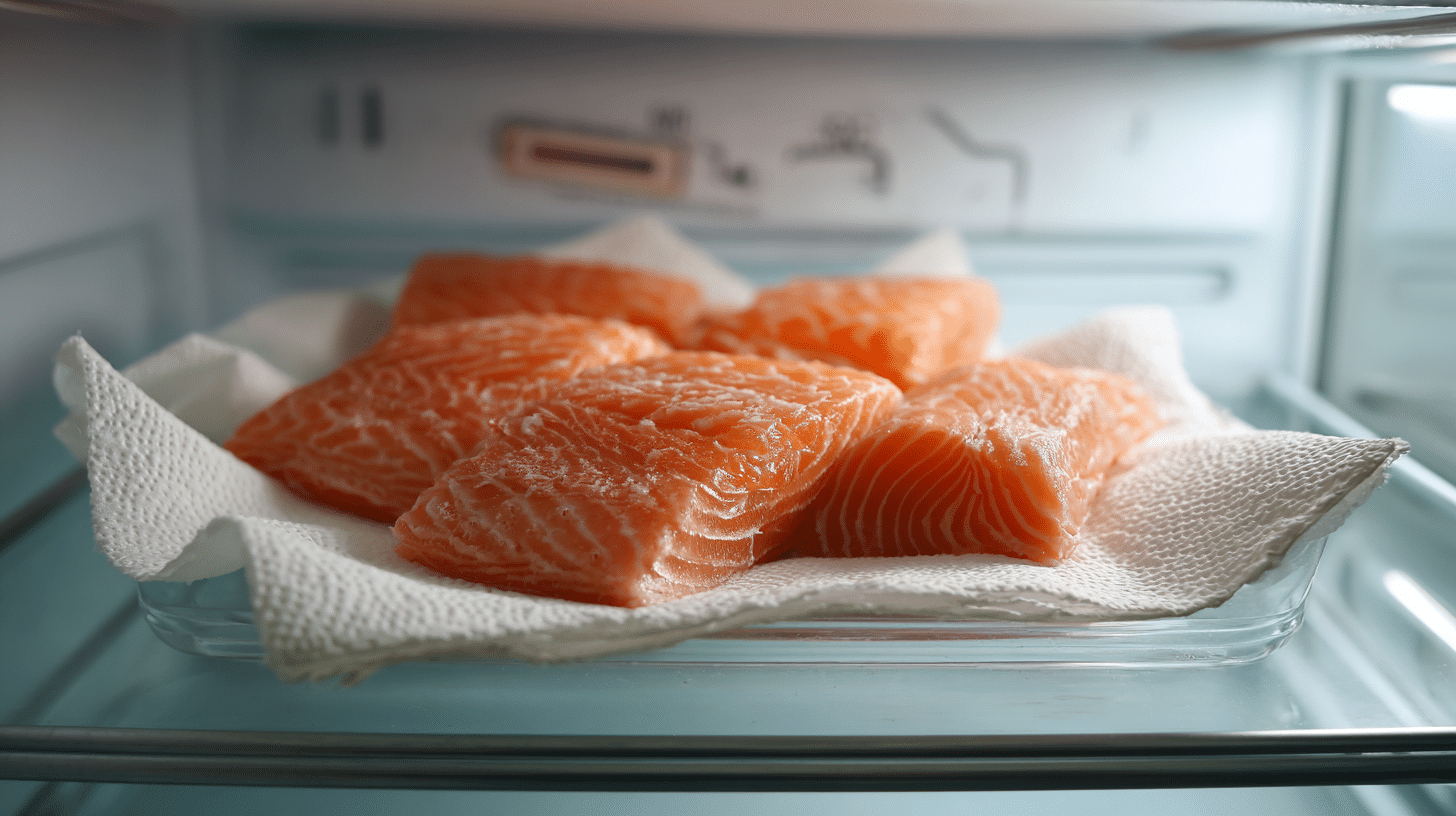
Thawed salmon should be used within 1 to 2 days of defrosting. Once frozen salmon is thawed, it becomes more perishable than fresh salmon because ice crystals damage the fish’s cellular structure.
Never refreeze previously frozen salmon, as this can increase bacterial growth and affect the texture.
Tips for storing thawed salmon:
- Pat dry with paper towels before storing
- Use within 24 hours for the best quality
- Keep at 40°For below consistently
6. How Long Does Marinated Salmon Last in the Fridge?
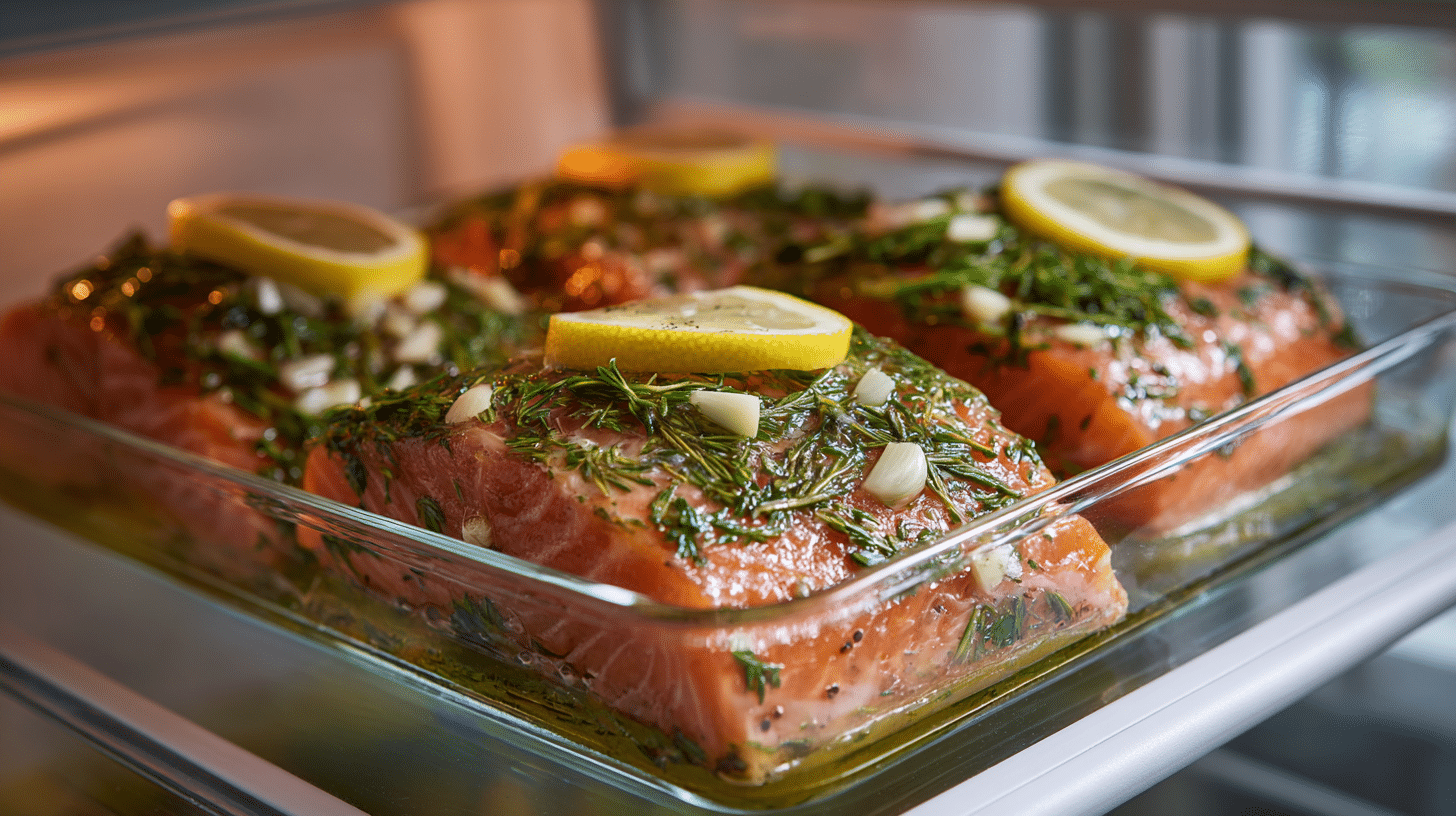
Marinated salmon stays fresh for 1 to 2 days in the refrigerator. The acid in marinades can start “cooking” the fish, so avoid marinating for too long.
Most marinades contain ingredients that can break down the fish’s texture if left too long.
Tips for storing marinated salmon:
- Marinate for 30 minutes to 2 hoursmaximum
- Use glass or ceramic containers for acidic marinades
- Discard marinade after use, don’t reuse
7. How Long Does Vacuum-Sealed Salmon Last in the Fridge?
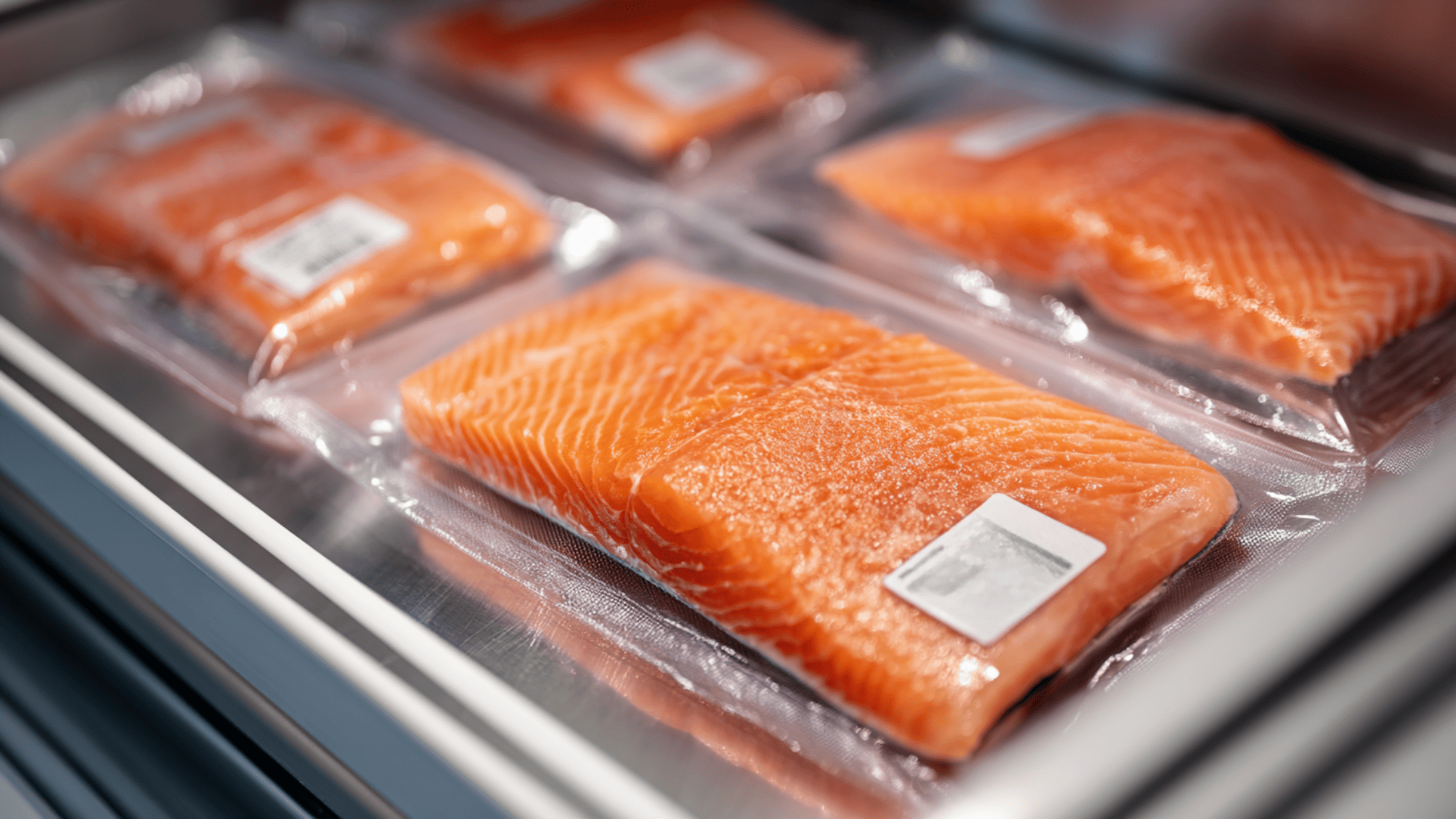
Unopened vacuum-sealed salmon lasts 2 to 3 days past the sell-by date when stored properly in the refrigerator. Once opened, treat it like fresh salmon and use it within 1 to 2 days.
The vacuum sealing removes air and slows bacterial growth, extending shelf life slightly.
Tips for storing vacuum-sealed salmon:
- Check seal integrity before storing
- Don’t open until ready to use
- Store in original packaging when possible
Here’s How I Freeze Salmon for Longer Storage
Freezing salmon is the best way to extend its life beyond a few days.
I do this all the time when I find salmon on sale or can’t cook it right away.
Frozen salmon stays good for 2-3 months in your freezer. After that, it’s still safe to eat but the quality drops. The texture gets dry, and the flavor fades.
So, here’s my step-by-step freezing method:
Prepare the Salmon First
Pat the salmon completely dry with paper towels. Moisture creates ice crystals that damage the fish. Remove any bones you find.
Cut large pieces into portion sizes. I usually do 4-6 ounce pieces. This makes thawing easier later.
Wrap it Properly
First layer: Wrap each piece tightly in plastic wrap. Press out all the air bubbles.
Second layer: Wrap again in aluminum foil or place in a freezer bag. Squeeze out as much air as possible.
Double wrapping prevents freezer burn. This is the white, dry patches that ruin the taste.
Label Everything
Write the date on each package with a permanent marker. Also note if it’s wild or farmed salmon.
I learned this the hard way. I found mystery salmon in my freezer with no date. Had to toss it because I didn’t know how old it was.
Freeze Quickly
Place wrapped salmon on a flat surface in the coldest part of your freezer. Don’t stack pieces on top of each other until they’re frozen solid.
Fast freezing creates smaller ice crystals. Smaller crystals mean better texture when you thaw it.
Tips I Will Recommend
- Freeze salmon the day you buy it if you won’t use it within 1-2 days
- Vacuum sealing works even better than plastic wrap if you have the equipment
- Write the weight on the label so you know how long to cook it later
- Keep frozen salmon away from foods with strong odors like onions or garlic
6 Key Factors that Impact Salmon Freshness
Several factors determine how long your salmon stays fresh and safe to eat. Understanding these helps you store fish properly and avoid waste.
1. Air Exposure
Oxygen is salmon’s enemy. When air comes into contact with the fish, it accelerates spoilage and bacterial growth.
Bacteria need oxygen to multiply. The more air they have contact with, the faster they grow. This is why vacuum-sealed salmon lasts longer than salmon wrapped in regular plastic.
I always wrap my salmon tightly with no air pockets. Even small gaps let oxygen in and start the spoilage process.
According to the FDA’s fish storage guidelines, proper wrapping is one of the most important steps in storage.
2. Storage Location in Your Fridge
Not all parts of your fridge are the same temperature. The coldest spot is usually the back of the bottom shelf.
Store your salmon there. The door is the warmest part because it opens and closes constantly. Temperature fluctuations make bacteria grow faster.
I keep a fridge thermometer to check the temperature. It should stay at 40°F or below. Many fridges run warmer than people think.
The USDA recommends keeping all raw fish in the coldest part of your refrigerator.
3. Moisture Levels
Salmon needs the right moisture balance. Too much water creates a breeding ground for bacteria. Too little dries out the fish and ruins the texture.
I pat my salmon dry with paper towels before storing. Then I place a fresh paper towel in the container to absorb any liquid that forms.
Some people store salmon on ice in the fridge. This works well if you change the ice daily. Melted ice water makes salmon mushy.
4. Cross-Contamination
Raw salmon can contaminate other foods in your fridge. Fish juices carry bacteria that spread easily.
Always store salmon in a sealed container or on a plate to catch drips. Keep it away from ready-to-eat foods such as salads, fruit, or leftovers.
I learned this lesson when salmon juice dripped onto my vegetables. Had to throw everything away.
The CDC warns that cross-contamination is a major cause of seafood-related foodborne illness.
5. Time Since Catch
Freshness begins to decline the moment the fish is caught. This is the factor you can’t control, but you need to know about it.
“Fresh” salmon at the store might already be several days old. The fish was caught, transported, processed, and shipped before reaching your store.
Always ask your fishmonger when the fish arrived. Some stores receive deliveries twice a week. If the salmon arrived three days ago, you have only one day left to use it.
6. Container Type
The container you use matters. Airtight containers slow bacterial growth by limiting oxygen exposure.
Glass containers work best. They don’t absorb odors and seal tightly. Plastic containers are fine if they’re BPA-free and have tight-fitting lids.
I avoid storing salmon in the original styrofoam tray with plastic wrap. It’s not airtight. The fish spoils faster.
For short storage (1-2 days), keep vacuum-sealed salmon in its original package. Once opened, transfer to an airtight container.
How to Tell if Salmon Has Gone Bad?
Fresh salmon has a mild ocean scent. If it smells fishy, sour, or like ammonia, throw it out immediately.
Trust your instincts here because smell is the most reliable indicator.
Good salmon appears bright with firm flesh. Bad salmon turns dull, grayish, or develops dark spots. The flesh becomes slimy or mushy to the touch.
Whole salmon should have clear, bright eyes and red gills. Cloudy eyes and brown gills mean it’s past its prime. Excessive moisture or milky liquid pooling around the fish indicates spoilage.
When in doubt, don’t risk it; toss questionable salmon to stay safe.
How to Defrost Salmon Safely
I used to thaw salmon on the counter. Got food poisoning that kept me in bed for two days. Never again.
Thawing matters just as much as storage. Do it wrong and bacteria multiply fast, even if the salmon was perfectly fresh when you froze it.
Here are the three safe methods I use:
Refrigerator thawing (best method):
Move salmon to the fridge 12-24 hours before cooking. Place on a plate to catch drips. Small fillets thaw in 12 hours. Thicker cuts need 24 hours.
The USDA recommends this method because fish stay at safe temperatures.
Cold water method (when rushed):
Keep salmon in a sealed bag. Submerge in cold water. Change water every 30 minutes. Takes 1-2 hours. Cook immediately after.
Microwave (last resort):
Use the defrost setting. Check every minute. Cook right away.
What Home Cooks Say: Community Experience
The Reddit discussion explains that raw salmon usually stays fresh in the fridge for 1 to 2 days when stored properly.
Most users agree it should be kept very cold, tightly wrapped, and placed on ice or in the coldest section of the fridge. A strong fishy smell, a slimy texture, or a dull color are signs that it’s no longer safe.
Some sources say that store-bought salmon with a “use by” date should still be eaten within a day of opening.
Freezing is suggested if it won’t be cooked soon, as it keeps salmon safe much longer.
Salmon Recipes to Explore
I’ve tested dozens of salmon recipes over the years. These are my favorites that I come back to again and again.
Creamy Spinach-Stuffed Salmon
I make this creamy spinach-stuffed salmon when I want something special but simple.
Mix wilted spinach with cream cheese and garlic. Stuff into salmon pockets. Bake until flaky. Finish with lemon juice.
It’s filling, flavorful, and works perfectly for busy weeknight dinners.
Salmon Wraps
Salmon lettuce wraps are my go-to healthy meal. Cook salmon until flaky, then wrap in crisp lettuce with your favorite toppings.
I add cucumber, onion, and avocado. Mix up the flavors with lemon-dill, sriracha mayo, or teriyaki sauce.
They’re low-carb, filling, and ready in minutes.
Lemon Ginger Salmon
I am so in love with this lemon ginger salmon because it’s quick and flavorful.
Mix lemon juice, grated ginger, garlic, soy sauce, and honey. Bake, pan-sear, or grill the salmon with this marinade.
It cooks in under 15 minutes and tastes restaurant-quality. Perfect for tacos, rice bowls, or simple weeknight dinners.
Final Thoughts
Now you know exactly how long salmon stays fresh in your fridge.
The key takeaways: raw salmon gets 1-2 days, cooked salmon gets 3-4 days, and proper storage at 40°F makes all the difference.
I learned these lessons through mistakes and research. You don’t have to waste money or risk your health as I did.
When your salmon smells off or feels slimy, throw it out immediately. It’s not worth the gamble.
Store it right, use it fast, and enjoy every bite. You’ve got this!
Questions? Drop a comment.
Frequently Asked Questions
1. Does Wild Salmon Last Longer than Farmed Salmon?
No significant difference. Both types last 1-2 days when fresh and raw. Storage conditions matter more than salmon type.
2. Can I Store Salmon in Water?
No, don’t submerge fresh salmon in water. It dilutes the flavor and makes the texture mushy. The exception is when freezing salmon in water to prevent freezer burn.
3. What if My Salmon Smells Slightly Fishy?
A slight ocean smell is normal. A strong, unpleasant fishy odor means it’s spoiling. When in doubt, throw it out. Foodborne illness isn’t worth the risk.
4. Does Rinsing Salmon Extend Its Shelf Life?
No. Rinsing won’t remove bacteria or extend freshness. It might actually introduce new bacteria from your tap water. Pat it dry instead.