

I am pretty sure you know about my obsession with soups by now after seeing my seaweed soup and catfish pepper soup.
But then I came across lobster bisque.
And once I tried it, I realized it’s much simpler than it seems.
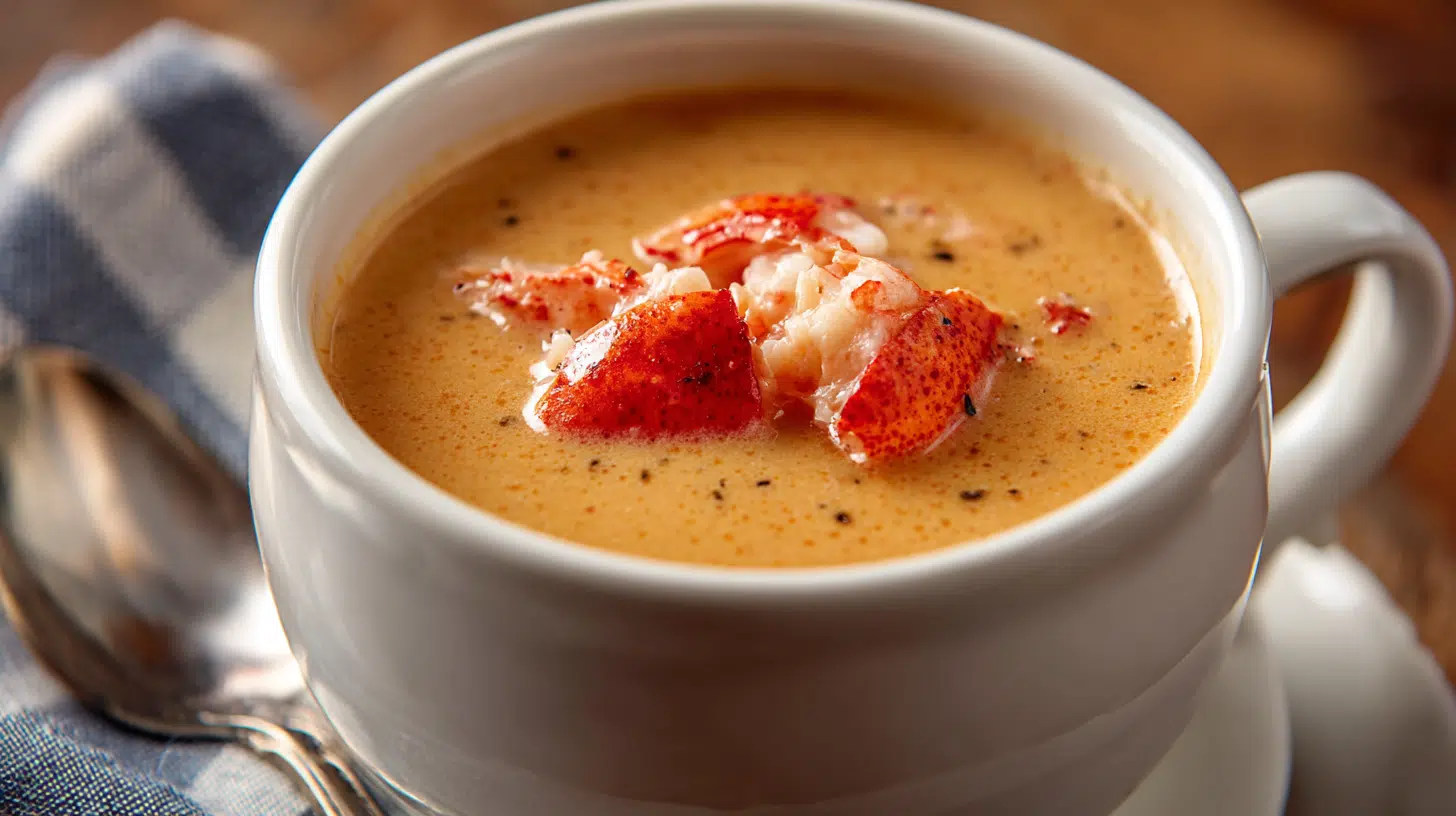
This recipe gives me that perfect balance of sweet lobster flavor with a touch of brandy and cream.
I’ll share the complete recipe, including exact ingredient measurements, the mistakes I’ve learned to avoid, simple variations, and how I serve and store this creamy soup.
What is Lobster Bisque?
When I first learned about lobster bisque, I was surprised by how old and refined it is. Lobster bisque is a thick, creamy French soup that’s been around since the 17th century.
It starts with lobster shells and meat, which get cooked down to extract every bit of flavor.
The shells aren’t just tossed aside; they’re the secret to that deep, rich taste.
The soup gets its signature velvety texture from a combination of cream and sometimes rice or a roux.
Chefs blend everything until it’s perfectly smooth. What makes this soup special is the layering of flavors. Tomato paste adds a subtle sweetness, while cognac or brandy brings heat and depth.
The finished bisque should coat the back of a spoon and have a beautiful coral color.
Ingredients Needed for Lobster Bisque Recipe
Here are the key ingredients you’ll need to make this delicious recipe from scratch:
| Ingredient | Purpose |
|---|---|
| Lobsters or lobster tails | Main protein and flavor base |
| Heavy cream | Creates rich, velvety texture |
| Onions | Adds sweetness and depth |
| Carrots | Builds aromatic foundation |
| Tomato paste | Provides color and tanginess |
| Brandy or cognac | Adds warmth and complexity |
| Olive oil | For sautéing ingredients |
| Fish or seafood stock | Liquid base for the soup |
| Bay leaves | Enhances overall aroma |
| Fresh thyme | Adds herbal notes |
| Salt and pepper | Seasoning and balance |
| Paprika | Subtle smokiness and color |
Below are standard measurements to help you plan.
- 2 whole lobsters (about 1½ pounds each) or 4 large tails
- Heavy cream: 1½ cups
- Onion: 1 medium, chopped
- Carrots: 2 medium, chopped
- Celery: 2 stalks, chopped
- Garlic: 3 cloves, minced
- Tomato paste: 2 tablespoons
- Brandy or cognac: ¼ cup
- Olive oil: 2 tablespoons
- Butter: 2 tablespoons
- Fish or seafood stock: 4 cups
- Bay leaves: 2
- Fresh thyme: 3 sprigs
- Paprika: 1 teaspoon
- Salt: 1 to 1½ teaspoons
- Black pepper: ½ teaspoon
Lobster Bisque Recipe: Step-by-Step Preparation
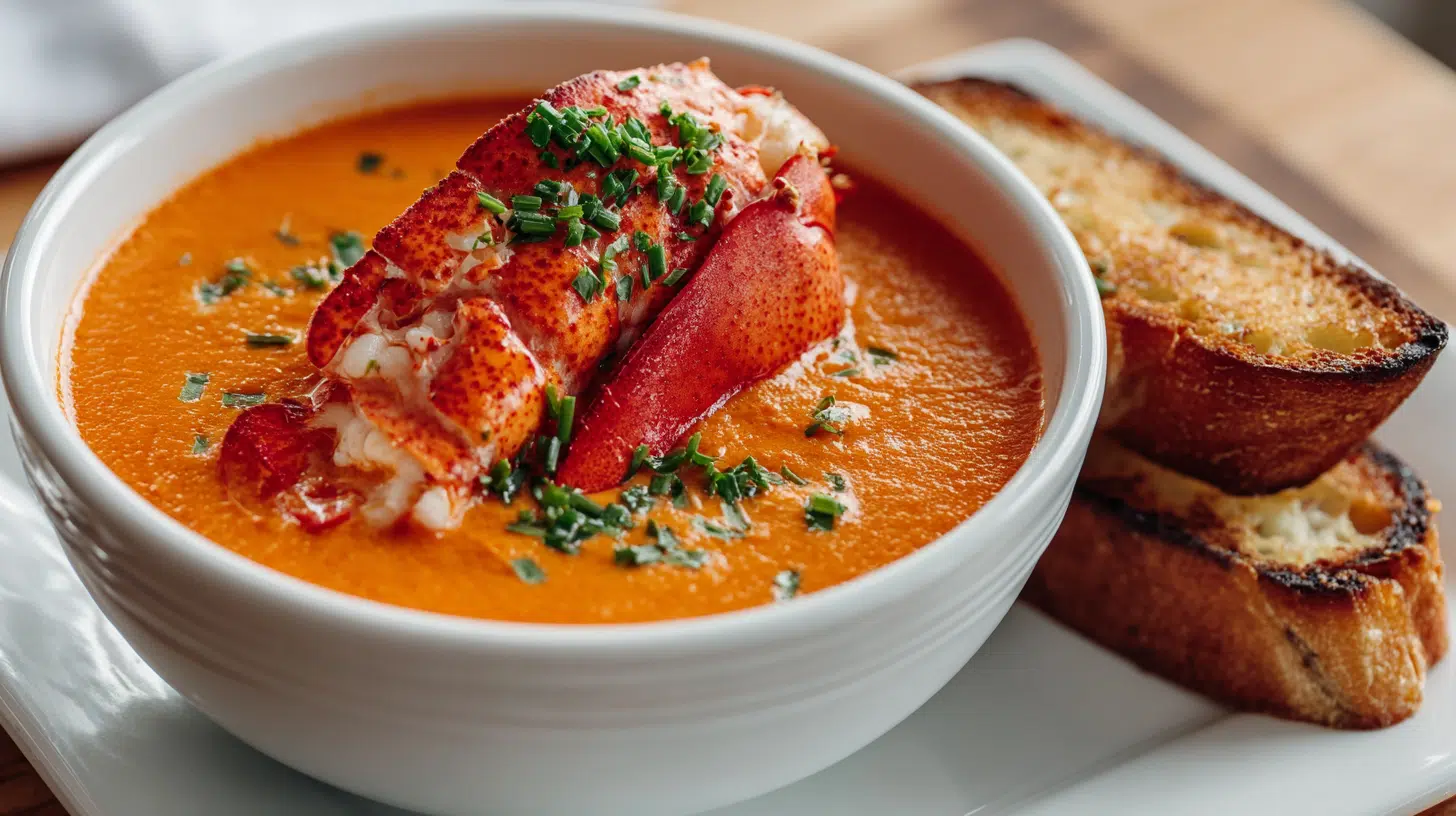
When I make this soup, I focus on one step at a time. Rushing never helps here.
Each stage builds flavor, from the shells to the final simmer. Following the order makes the cooking feel steady and controlled, even if it’s your first attempt.
Step 1: Prepare the Lobster
Start by cooking the lobsters in boiling salted water for about 8 minutes. Please remove them and let them cool.
Once cooled, extract the meat from the tails and claws. Save shells for flavor in the broth.
Step 2: Sauté the Shells
Heat butter and oil in a large pot. Add the lobster shells and cook them for 5 minutes, stirring often. This releases oils and flavors from the shells.
The kitchen will smell incredible at this point.
Step 3: Add Aromatics
Toss in chopped onions, carrots, and celery. Cook until the vegetables soften, about 8 minutes.
Add minced garlic, tomato paste, and paprika. Stir everything together and let it cook for another 2 minutes to deepen the flavors.
Step 4: Deglaze with Brandy
Pour in the brandy and let it simmer for a minute. This burns off the drink while leaving behind a rich flavor.
Scrape up any browned bits from the bottom of the pot; that is pure flavor.
Step 5: Add Stock and Simmer
Pour in the fish stock along with bay leaves and thyme. Bring everything to a boil, then reduce the heat.
Let it simmer for 30 minutes so all the flavors meld together beautifully, and the liquid reduces slightly.
Step 6: Strain the Broth
Remove the pot from the heat. Strain the liquid through a fine-mesh sieve, pressing on the solids to extract every drop of flavor.
Discard the shells and vegetables. You’re left with an intensely flavored lobster broth.
My first attempt, I rushed the straining and didn’t press firmly enough on the solids. I ended up with a thinner bisque that lacked the velvety richness I was after. Now I take my time and really work that sieve.
Step 7: Blend and Finish
Return the strained broth to the pot. Stir in heavy cream and bring to a gentle simmer.
Add the reserved lobster meat, chopped into bite-sized pieces, and season with salt and pepper. Cook for 5 more minutes until heated through.
Download the Full Detailed Recipe
My Experience Making This Recipe at Home
The first time I made lobster bisque, I rushed the shell step. The soup tasted fine, but it lacked depth.
Now, I take my time browning the shells. That single step changed everything. I also learned not to boil after adding cream. Low heat keeps the texture smooth.
This recipe has become my go-to for quiet weekends and small dinners.
Nutrition Information per Serving
| Nutrient | Amount | % Daily Value* |
| Calories | 320–450 kcal | 20% |
| Total Fat | 28g – 35g | 40% |
| Saturated Fat | 18g – 22g | 95% |
| Cholesterol | 120mg – 150mg | 45% |
| Sodium | 800mg – 1,100mg | 40% |
| Total Carbohydrates | 12g – 18g | 5% |
| Dietary Fiber | 1g | 3% |
| Sugars | 4g | — |
| Protein | 12g – 18g | 28% |
Easy Variations of Lobster Bisque Recipe
I enjoy adjusting this soup to suit the mood or season. Small tweaks can change flavor without altering the process.
These ideas come from testing what maintains balance while offering variety.
1. Spicy Lobster Bisque

Add cayenne pepper, red pepper flakes, or a dash of hot sauce to the base.
The heat contrasts beautifully with the sweet lobster and rich cream. Start with a small amount and adjust to your preference. Spice levels vary widely.
I make this version when I want the soup to feel bolder without overpowering the lobster.
2. Roasted Garlic Bisque

Roast a whole head of garlic until soft and caramelized. Squeeze out the cloves and blend them into the soup.
This adds a mellow, sweet garlic flavor without the sharp bite of raw garlic. This is my choice when I want the soup to taste deeper without adding spice.
The result tastes richer and more complex overall.
3. Coconut Milk Bisque

This is when I want something different that still feels comforting, go to the recipe. Substitute half the heavy cream with coconut milk for a tropical twist. This creates a lighter soup with subtle sweetness.
Add a squeeze of lime juice and fresh cilantro at the end. It’s a fusion take that surprises guests in the best way possible.
4. Mushroom Bisque
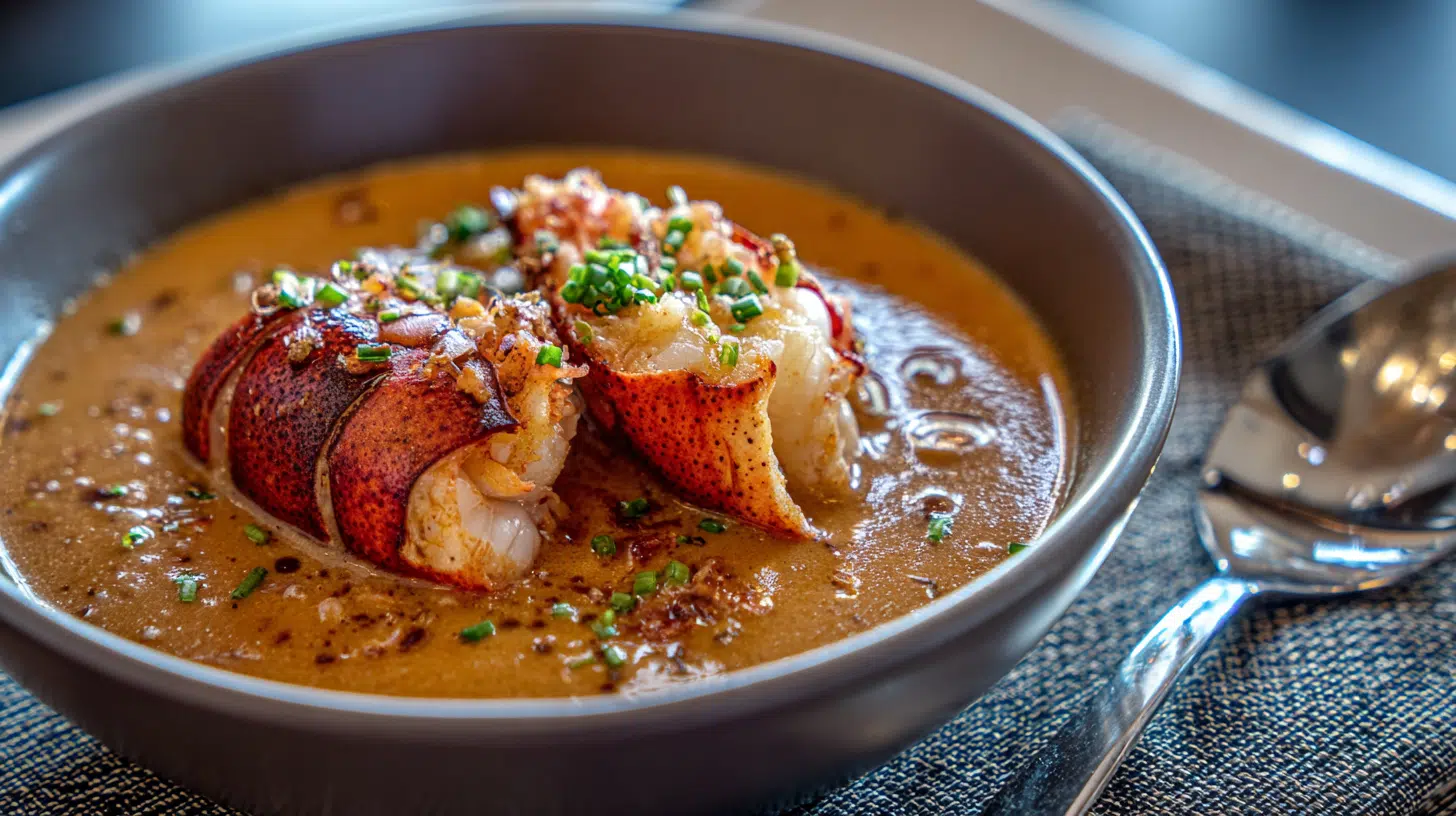
Sauté sliced mushrooms with the aromatics to add earthy depth. Shiitake or cremini mushrooms work well.
They absorb the lobster flavor while contributing their own umami richness.
I like this option when I want the soup to feel more filling without adding more cream. This variation creates a more substantial, hearty soup that’s still quite refined.
What to Serve with Lobster Bisque?
When I serve this soup, I think about balance. Rich soups need lighter sides.
Pair your lobster bisque with these side dishes and accompaniments to create a complete, satisfying meal:
| Side Dish | Why It Works |
|---|---|
| Crusty French Bread | Perfect for soaking up every last drop of soup |
| Garlic Bread | Adds a savory, buttery complement to the rich bisque |
| Simple Green Salad | Light greens with vinaigrette balance the cream |
| Caesar Salad | Classic pairing that adds crunch and tang |
| Oyster Crackers | Traditional topping that adds texture |
| Grilled Cheese Sandwich | Turns the meal into comforting, casual fare |
| Steamed Asparagus | Fresh vegetables cut through the richness |
| Roasted Vegetables | Adds color and healthy balance to the plate |
| White Wine | Chardonnay or Sauvignon Blanc complements seafood perfectly |
What Usually Goes Wrong While Cooking Lobster Bisque (And How I Fix It)
I’ve dealt with most of these issues myself. They usually come from heat or timing.
Once you know what causes them, fixing them is simple and stress-free.
Bisque tastes too thin: Simmer it longer before adding cream. Reduction builds the body.
The cream separates when reheating: theheat was too high. Rewarm slowly and stir often.
Soup tastes flat: Add a pinch of salt or a small splash of brandy at the end.
Too strong seafood taste: Add extra cream or a little stock to soften it.
Gritty texture: Strain again through a finer sieve or cheesecloth.
Storing and Reheating Lobster Bisque
- Store in an airtight container in the refrigerator for up to 3 days.
- Let the bisque cool completely before refrigerating to prevent bacterial growth.
- Freeze in portions for up to 2 months in freezer-safe containers.
- Leave space at the top of containers as liquid expands when frozen.
- Thaw frozen bisque overnight in the refrigerator, never at room temperature.
- Reheat gently on the stovetop over low heat, stirring frequently.
- Avoid boiling when reheating, as it can cause the cream to separate.
- Add a splash of cream or stock if the bisque thickens too much.
- Microwave individual portions on medium power in 30-second intervals.
- Stir well after reheating to redistribute any separated fats.
Furthermore, you can have a look at the Guidelines on storing and reheating food safely.
Final Thoughts
Making this soup at home turned out to be easier than I first expected. This lobster bisque recipe lets me bring restaurant-style flavor to the table without using tricky methods or rare ingredients.
What matters most, I’ve learned, is giving the flavors time to develop and not rushing the process.
Whether I make it for a special celebration or a relaxed weekend meal, this bisque comes through every time.
I also like knowing there’s a version for every taste, from classic to spicy to lighter twists.
With everything laid out clearly, I run to the kitchen, grab some fresh lobster, and start cooking.
Frequently Asked Questions (FAQ’s)
1. Can I Use Frozen Lobster?
Yes. Thaw it fully and pat it dry before cooking.
2. Can I Skip Alcohol?
Yes. Use extra stock with a squeeze of lemon.
3. Is This Soup Gluten-Free?
Yes, as written. No flour is required.
4. Can I Make It Ahead?
Yes. Flavor improves after a day in the fridge.
5. Can I Blend the Lobster Meat?
You can, but chunks give better texture.