

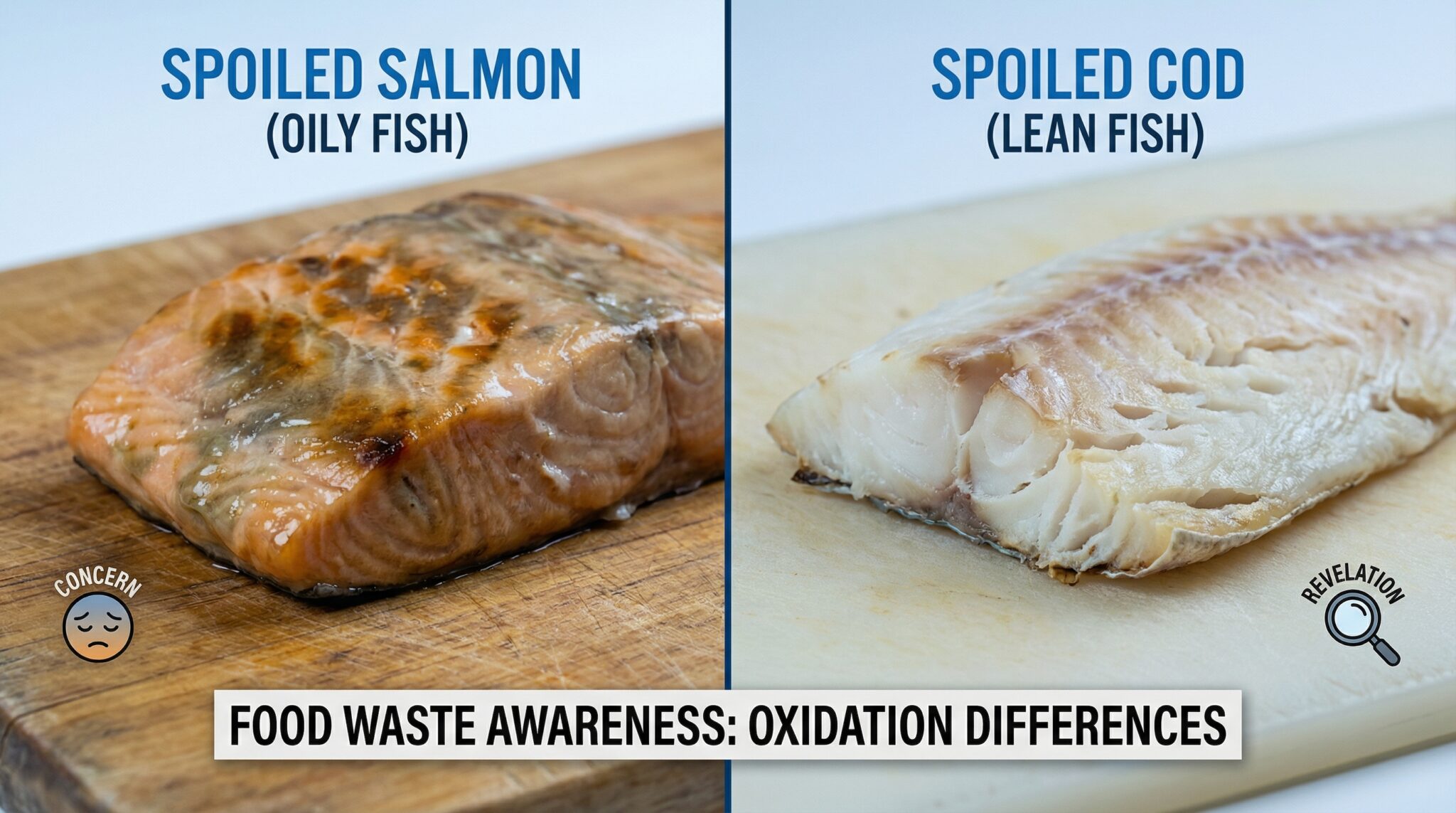
Why Salmon Spoils Faster Than Cod (And Why It’s Not Your Imagination)
You know that moment when you open the fridge, feeling very proud of yourself for buying “healthy protein,” and then your salmon hits you with a weird paint-y, metallic funk like it’s been hanging out behind the radiator?
Meanwhile, the cod you bought on the exact same grocery run is sitting there like an innocent little angel.
You’re not dramatic. The fish is.
Oily fish (salmon, mackerel, sardines… the delicious omega-3 poster children) really do go downhill faster than lean fish (cod, tilapia, haddock). The rude twist? The same omega-3 fats you’re buying them for are a big part of why they turn on you so quickly.
Let’s talk about what’s actually happening and how to keep your fish from ruining dinner (or your whole relationship with seafood).
The quick and dirty difference: oily fish vs. lean fish
Here’s the simplest way I explain it to myself when I’m standing at the seafood counter trying to look like I know what I’m doing:
- Oily fish = fat in the meat you’re eating. That fat tastes amazing… and it oxidizes (aka gets rancid) faster.
- Lean fish = much less fat in the meat. So you’re mostly battling bacteria/age, not rancid fat flavor.
Common “oily fish” troublemakers
Salmon, mackerel, sardines, herring, trout, anchovies, Arctic char, sablefish/black cod, bluefish, and fattier tuna cuts.
Common “lean fish” that behave themselves longer
Cod, tilapia, haddock, pollock, halibut, flounder, sole, snapper, grouper, sea bass, catfish.
My lazy rule of thumb: darker flesh + visibly richer/fattier look = usually oilier = shorter fridge life. If you’re unsure, peek at the nutrition label more fat grams generally means a shorter “tastes great” window.
Why salmon goes off so fast (the “oily secret”)
Fish spoilage isn’t just one thing. It’s like a three person group project where everyone is doing the most:
- Enzymes in the fish start breaking down tissue after the fish dies (yep, pleasant).
- Bacteria on the surface multiply over time.
- Fat oxidation happens when fat is exposed to oxygen this is the big extra issue for oily fish.
Lean fish mostly deal with #1 and #2.
Oily fish get #1, #2, and #3 all at once, and they kind of… hype each other up. The fat starts tasting stale/rancid before the fish even gets that classic “rotten fish” ammonia stink. So you can have salmon that’s not technically “spoiled” in the food safety sense, but it tastes like regret.
Also: some lean fish store more fat in their livers, not in the muscle you’re eating. Salmon stores more of that fat right in the fillet. So your dinner is basically the front line.
Your fridge is probably too warm for fish (sorry)
Most home fridges hang out around 38-40°F. That’s fine for a lot of foods. Fish, however, is an absolute diva.
Fish enzymes are perfectly happy working at fridge temps (because fish come from cold water meanwhile beef and pork enzymes are used to a 98°F body temp situation). So even when your fish is “refrigerated,” it’s still slowly breaking down.
And with oily fish, those enzymes can also mess with fats in a way that makes rancid flavors show up faster. Fun!
Real life timing (best quality window, not “risk it” window)
If you store raw fish promptly and keep it cold for sashimi storage timeline:
- Standard fridge (38-40°F)
- Oily fish: about 1-2 days
- Lean fish: about 4-5 days
- Colder fridge zone (32-35°F)
- Oily fish: about 3-5 days
- Lean fish: about 6-8 days
- Freezer
- Oily fish: roughly 2-3 months for best quality
- Lean fish: roughly 6-8 months for best quality
And yes, I’ve played the “but it’s only been in the freezer since… November?” game. Frozen salmon is the one that comes out tasting like dry cardboard sadness if you forget it long enough. Cod is way more forgiving.
The bacteria part (aka why day three is where dreams go to die)
Bacteria live on fish skin (and in the general “things that exist in the world are covered in bacteria” way). Over time, they multiply and contribute to that unmistakable “nope” smell.
Oily fish can feel like it falls off a cliff after day two because bacteria and fat oxidation are both happening and bacteria can speed up the breakdown even more.
Also: how the fish was handled matters. A fish that was stressed, mishandled, or kept warmer than it should’ve been can spoil faster regardless of whether it’s salmon or cod. So if you can, ask the fishmonger about safe fish for raw eating and when it came in or when it was caught instead of trusting the sell by date like it’s a sacred promise.
(It’s not. It’s a suggestion at best.)
How to tell if fish is off (before it ruins your whole evening)
Here’s the sneaky part: oily fish can smell “rancid” before it smells “fishy.”
That metallic/paint like/cardboardy smell? That’s often oxidation your early warning sign with salmon and friends.
The smell progression (in normal human language)
Oily fish:
mild ocean smell → slightly sour → rancid/cardboard/metallic → putrid/ammonia
Lean fish:
mild ocean smell → slightly sour → ammonia/putrid
Waiting for ammonia with salmon is like waiting for your smoke alarm to tell you the toast is done.
My “don’t overthink it” freshness check
If you’re buying whole fish, the classic signs matter (clear eyes, red gills, etc.). But most of us are buying fillets in plastic, so here’s what I actually use at home:
- Smell it. Mild, briny, clean = good. Sour, sharp, “chemical,” or ammonia = bad news.
- Touch it. It should be firm and spring back. Mushy or falling apart = nope.
- Look at it. Slimy is normal-ish in a fish way, but if it’s excessive and won’t rinse off, that’s a sign.
Toss it immediately if…
- The fish was above 40°F for more than 2 hours (or you truly don’t know its temperature history). This is the FDA guidance, and I’m not here to encourage seafood roulette.
- You smell any ammonia
- It’s mushy and doesn’t spring back
- There’s slime that won’t rinse off
Cook it immediately if…
It’s still firm, but you’re getting that “rancid” oily fish smell. It’s not going to improve with a spa day in your fridge, but cooking it right away can salvage dinner.
“Fresh” fish isn’t always the freshest (plot twist)
A lot of retail “fresh” fish was previously frozen and thawed for display. And even truly never frozen fish has been on a timeline since the moment it was caught.
Sometimes the best move especially for oily fish is buying good quality frozen fish that was frozen quickly (often right on the boat). Properly frozen fish can be more “fresh” in practice than the pretty fillet under bright lights that’s been hanging out for days.
If you’re not cooking salmon the same day you buy it? I’m personally a fan of vacuum sealed frozen portions. They’re not romantic, but neither is throwing away $18 of fish because it smells like a hardware store.
How I store fish at home (so it doesn’t betray me)
You don’t need a professional kitchen setup. You just need to do two things really well:
- Keep it cold (colder than your fridge wants to be).
- Limit oxygen exposure (especially for oily fish).
Here are the methods that actually make a difference:
1) Wrap it like you mean it
If it’s not vacuum sealed, don’t leave it in the store tray like it’s a long term plan.
- Pat it dry.
- Wrap tightly in plastic wrap (press out air).
- Then wrap again (foil or another layer).
This helps slow down oxidation and keeps your fridge from smelling like low tide.
2) The “ice bath” trick (low effort, high reward)
If you want your fish colder than your fridge runs (without buying a new fridge like a maniac), do this:
- Put fish in a container/zip bag
- Set it in a bowl or pan of ice in the fridge
- Keep it covered and drain any meltwater
Restaurants do variations of this for a reason. It works.
3) Vacuum sealing (if you have one)
If you own a vacuum sealer, oily fish is where it earns its keep. Less oxygen = slower rancid flavor development.
If you don’t own one, don’t run out and buy one in a panic. Tight wrapping is still a big upgrade from “open tray, vibes only.”
4) Freezing (the right way)
Freezing stops bacterial growth and slows enzyme action a lot, but it doesn’t completely stop oxidation, especially in oily fish.
For oily fish, the best options are:
- Vacuum seal, or
- Double wrap very tightly (plastic + foil)
Thaw safely:
- Overnight in the fridge, or
- In a cold water bath (sealed), changing the water every 30 minutes
Never thaw at room temp. That’s how you end up gambling with bacteria while the outside warms up faster than the inside.
5) Post-thaw timing (this one matters)
Oily fish tastes best when you cook it pretty quickly after thawing.
- Oily fish: aim for same day, ideally within 4-12 hours, with 24 hours as a “don’t push it” limit
- Lean fish: can often handle 2-3 days post-thaw (quality-wise)
And I wouldn’t refreeze thawed fish. That’s not a moral stance. It’s a texture and flavor tragedy prevention plan.
The takeaway (so you can stop losing salmon to the trash)
If salmon keeps going off on you faster than cod, it’s not because you’re cursed. It’s because oily fish has a shorter, fussier “tastes amazing” window thanks to fat oxidation plus all the usual enzyme and bacteria stuff happening in the background.
So if you buy oily fish:
- Keep it colder than you think
- Keep air away from it
- Don’t “save it for later” unless later means tomorrow
- And don’t be afraid of good frozen fish (it might actually treat you better)
Now go rescue your dinner plans. And if you’re currently sniff testing salmon with one eyebrow raised… I have been you.