

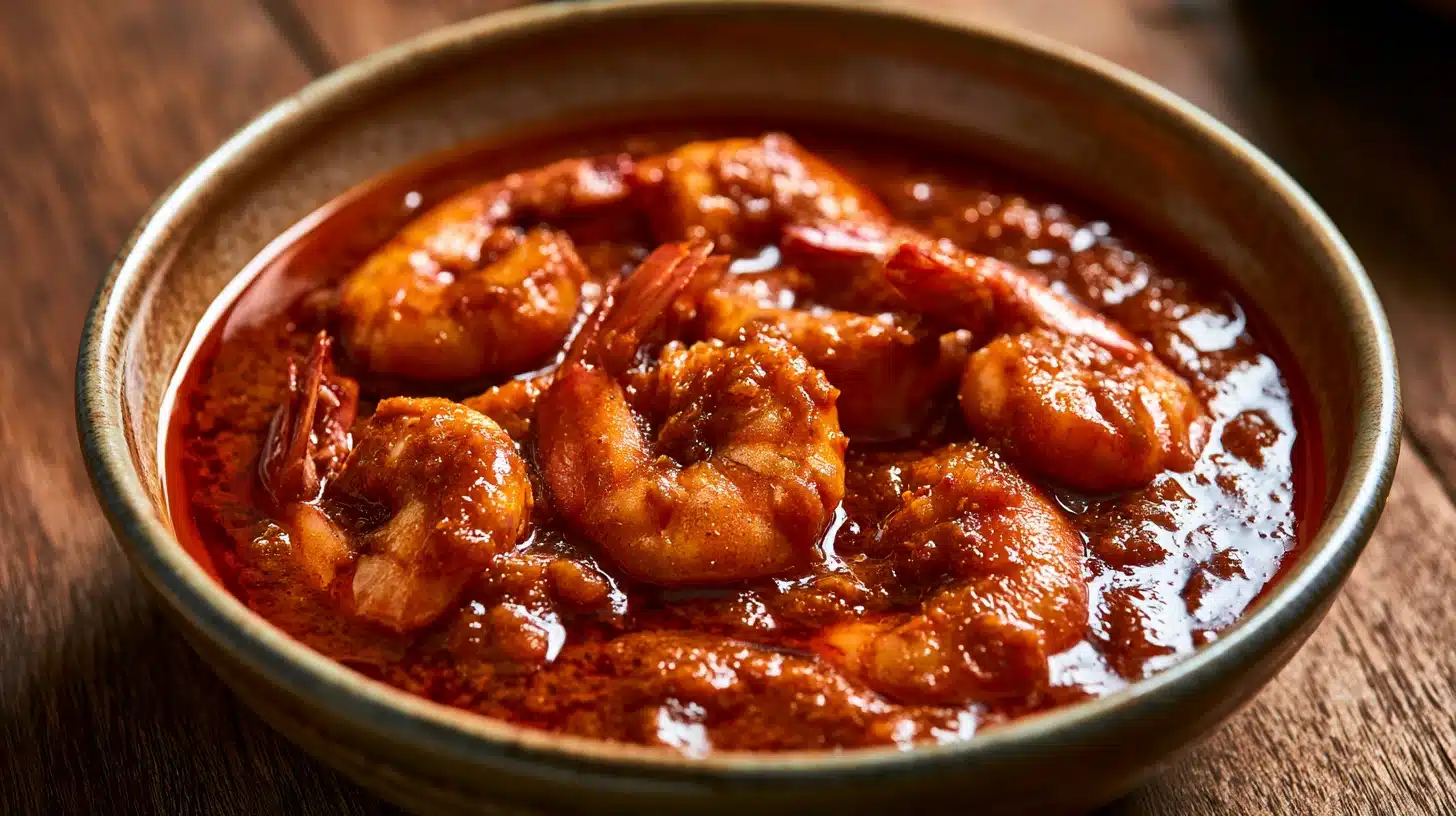
Craving something spicy and comforting? Prawn curry might just be it. This dish is loved across coastlines and kitchens everywhere.
No two regions on the globe prepare their curry the same: from creamy coconut milk curries in Kerala to tangy vinegar and kokum in Goa, and spicy red curry paste in Thailand.
If you’ve only tried one variation, you’re missing out on a global buffet!
Whether you prefer creamy, spicy, tangy, or mildly flavored curries, there’s a prawn curry here to match your taste.
Nutritional Value of Prawns
Prawns are a lean, protein-rich seafood enjoyed across cuisines worldwide. They come loaded with high-quality protein while staying low in fat and calories.
The table below gives a quick breakdown of what a typical serving offers.
| Nutrient | Approximate Value |
|---|---|
| Calories | 95–100 kcal |
| Protein | 20–24 g |
| Fat | 1–2 g |
| Carbohydrates | Less than 1 g |
| Sodium | 110–170 mg |
If you’re looking for a protein-rich option that doesn’t feel too heavy, prawns can be a great choice for your meal.
These values are approximate and may shift slightly based on the prawn variety, cooking method, and whether prawns are fresh or frozen.
Best Prawn Curry Recipe Variations
Not sure where to start? Think about the flavors you usually enjoy, and you’ll find an easy match among these options.
The taste of this dish can vary with your style. Some people add onions and tomatoes to their dish while others have theirs with coconut milk or roasted and ground coconut paste.
The spices, tang, and texture of these curries change from place to place.
1. Classic Indian Prawn Curry
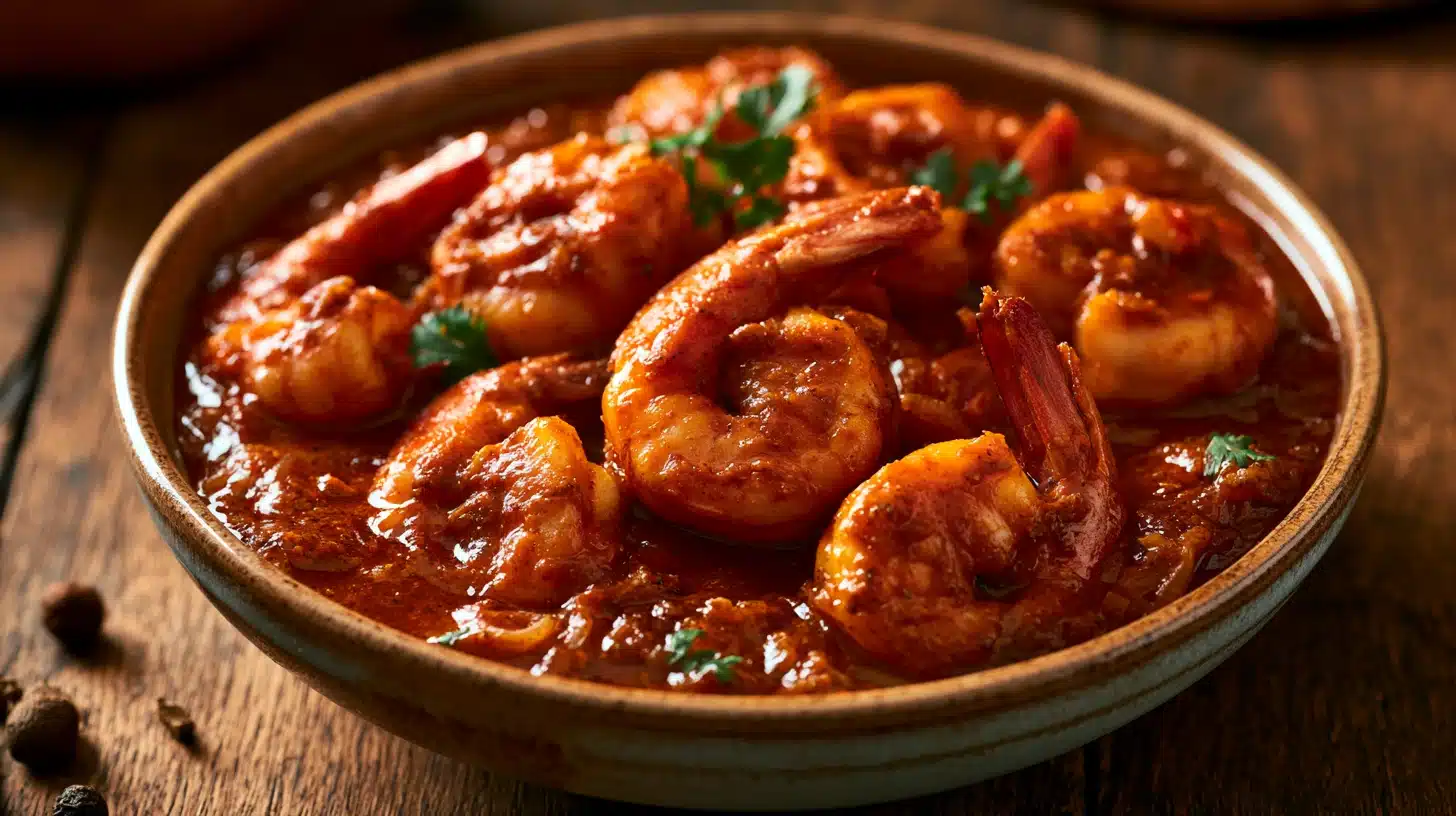
In this classic version, the masala is made from a combination of onion and tomato puree that forms a tasty gravy with an earthy flavor imparted by spices like turmeric powder, chili powder, and coriander powder.
If you like familiar Indian masala flavors, this is an easy place to start.
Ingredients
- 500g prawns, cleaned and deveined
- 2 onions, finely chopped
- 2 tomatoes, pureed
- 1 tbsp ginger-garlic paste
- 1 tsp turmeric powder
- 1 tsp red chili powder
- 1 tsp coriander powder
- ½ tsp garam masala
- 2 tbsp cooking oil
- Salt to taste
- Fresh coriander leaves, for garnish
Recipe
Keep this one in mind for a comforting weeknight meal when you want something flavorful without complicated ingredients.
Step 1: In a pan, heat the oil and sauté the chopped onions until golden brown. It should take a couple of minutes.
Step 2: Add the ginger- garlic and sauté with the onions for a minute. Add tomato puree and sauté until the oil separates.
Step 3: Add turmeric powder, chili powder, and coriander powder; mix well, and sauté the prawns, coating well in the masala.
Step 4: Add some water and cover; simmer for 8-10 minutes, and then finish with garam masala.
Step 5: Garnish with chopped coriander and serve with plain rice.
2. South Indian Prawn Curry
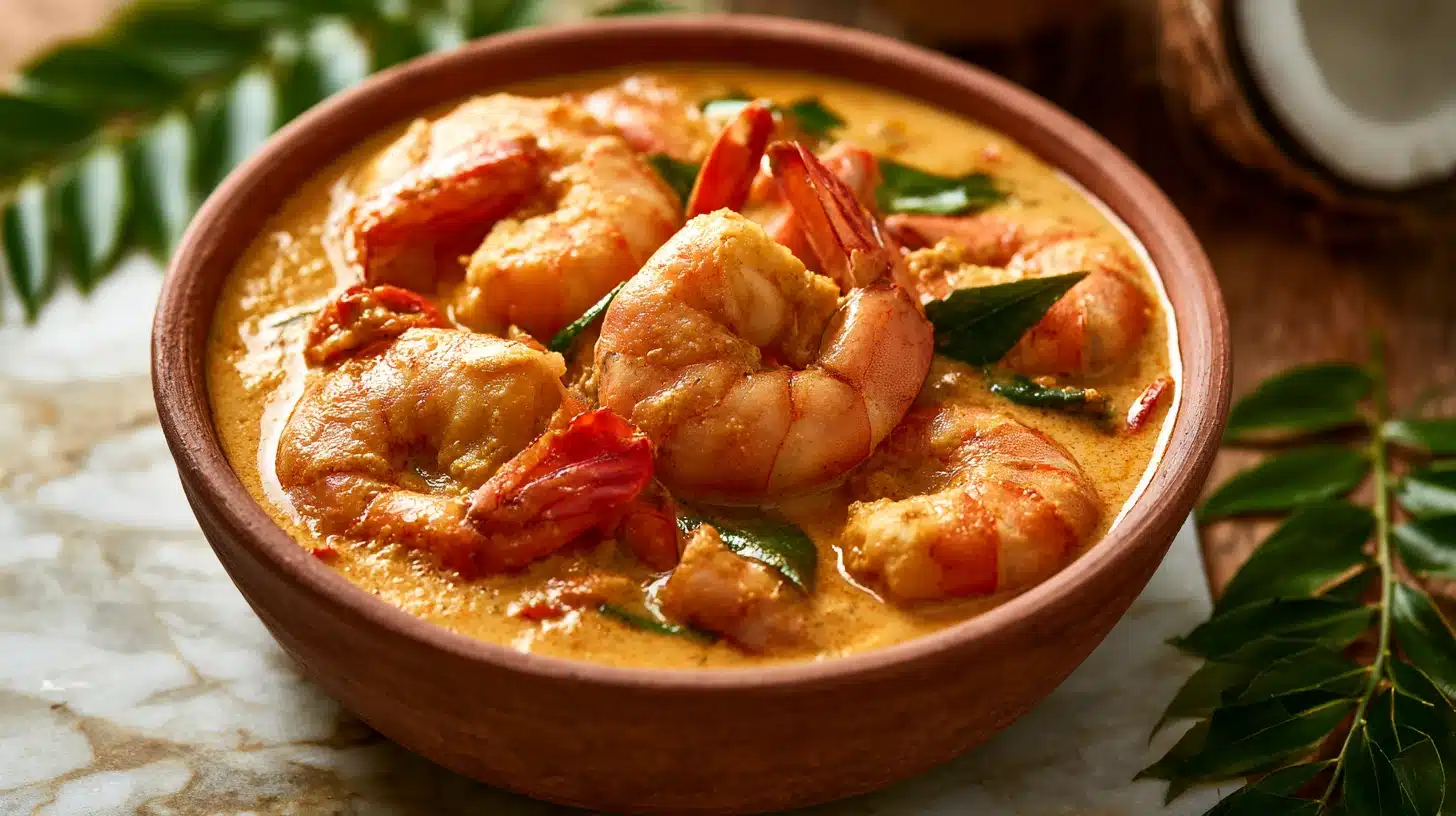
This South Indian variation simmers prawns in coconut milk with curry leaves and mustard seeds. Tamarind adds a nice tang to the gravy. The flavors feel light yet bold at the same time.
This one is worth trying if you enjoy the combination of creamy coconut, gentle spice, and a little tang.
Ingredients
- 500g prawns
- 1 cup coconut milk
- 1 onion, chopped
- 2 tomatoes puree
- 10-12 curry leaves
- 1 tbsp tamarind pulp
- 1 tsp mustard seeds
- 1 tsp turmeric powder
- 1 tsp red chili powder
- 2 tbsp oil
- Salt to taste
- 1 tbsp ginger-garlic paste
- 1 tbsp Coriander powder
- ½ tsp Garam masala
Recipe
This recipe uses simple pantry staples and comes together in under 30 minutes. There’s no complicated technique involved here.
Just follow the steps in order, and the flavors will build up naturally.
Step 1: Heat oil in a pan over medium heat. Add the mustard seeds and let them splutter completely. Add the curry leaves and sauté for a few seconds until fragrant.
Step 2: Add the diced onions and sauté until golden brown. Next, add the chopped tomatoes. Cook until soft and fully blended with the onions.
This indicates that the base is prepared.
Step 3: Add turmeric and chili powder. Combine thoroughly, then add the prawns and gently coat them with the masala.
Step 4: Add the tamarind pulp and coconut milk. Cover and let it simmer on low heat for 8-10 minutes, stirring occasionally.
Step 5: Garnish with coriander leaves. Serve warm alongside steamed rice.
3. Goan Prawn Curry
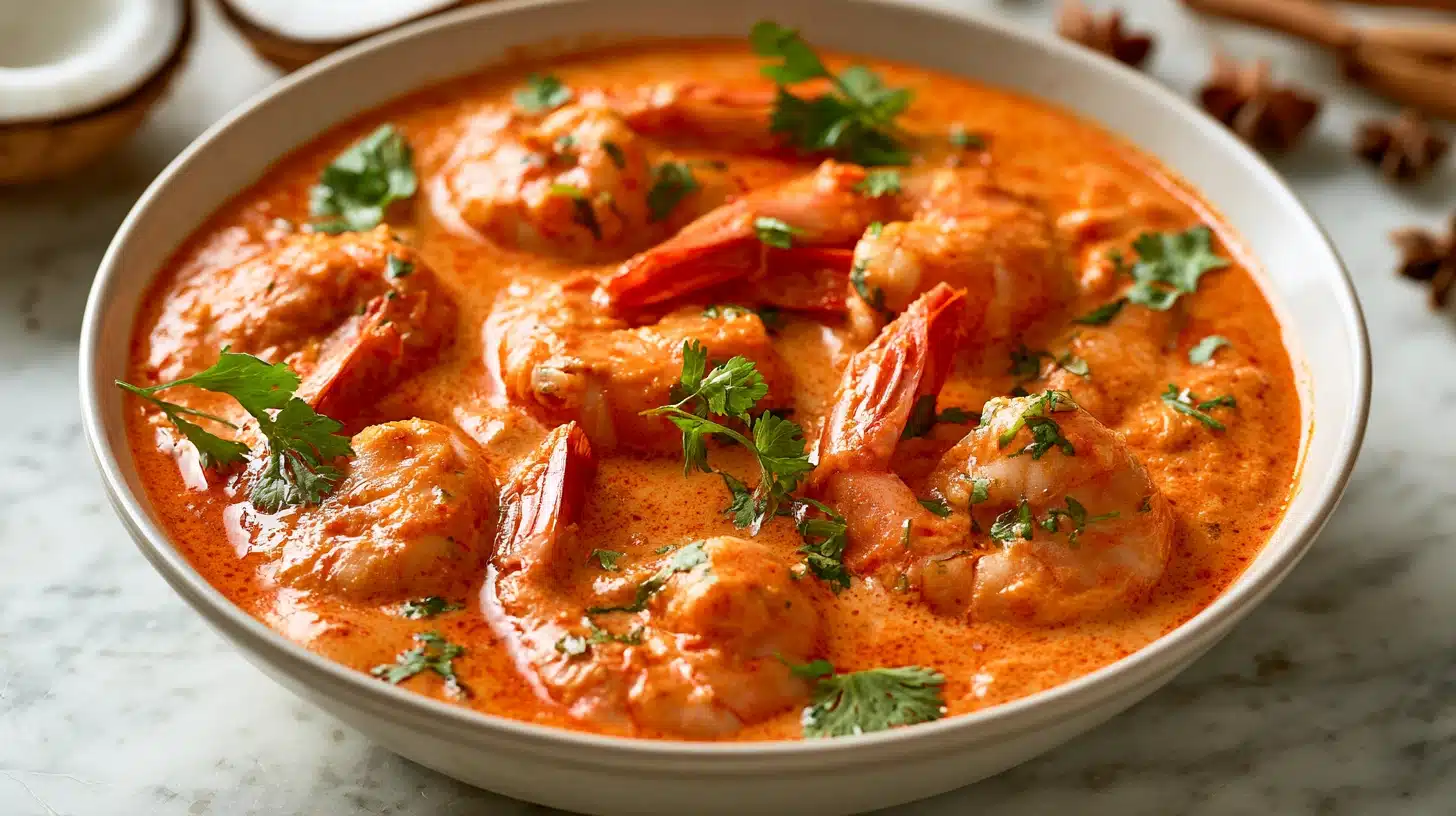
Goan Prawn Curry uses roasted coconut and dried red chilies for a bold, coastal flavor. Kokum or tamarind adds the tang that makes this curry stand out.
The tastes seem delicate yet strong at the same time. This curry captures Goa’s food culture in one simple bowl.
If tangy and slightly spicy curries are more your style, this Goan version may become a favorite.
Ingredients
- 500g prawns
- 1 cup grated coconut
- 4-5 dried red chilies
- 1 tsp coriander seeds
- ½ tsp cumin seeds
- 4-5 kokum petals or 1 tbsp tamarind pulp
- 1 onion, chopped
- 1 tomato, chopped
- 2 tbsp oil
- Salt to taste
Recipe
This recipe looks fancy but stays simple once you get the coconut paste ready. The roasting step builds most of the flavor, so don’t skip it.
Follow each step patiently, and the curry will taste rich and balanced.
Step 1: In a pan, dry roast the grated coconut, dried red chilies, coriander seeds, and cumin seeds. Roast until you smell a pleasant, toasty scent.
Allow the mixture to cool thoroughly, then blend it into a smooth paste with some water.
Step 2: Warm oil in a pan on medium heat. Add the diced onion and sauté until tender and lightly golden. Then add the diced tomato. Cook until it is fully softened and blends with the onion.
Step 3: Add the ground coconut paste into the pan. Sauté for 3-4 minutes, stirring frequently to prevent sticking to the pan’s base.
Step 4: Now add kokum petals or tamarind pulp to achieve the traditional Goan flavor. Next, toss the prawns. Cook for 8 minutes until they become pink and are fully cooked.
Step 5: Switch off the heat when the curry attains a pleasant, thick texture. Serve warm alongside steamed rice.
4. Kerala Prawn Curry
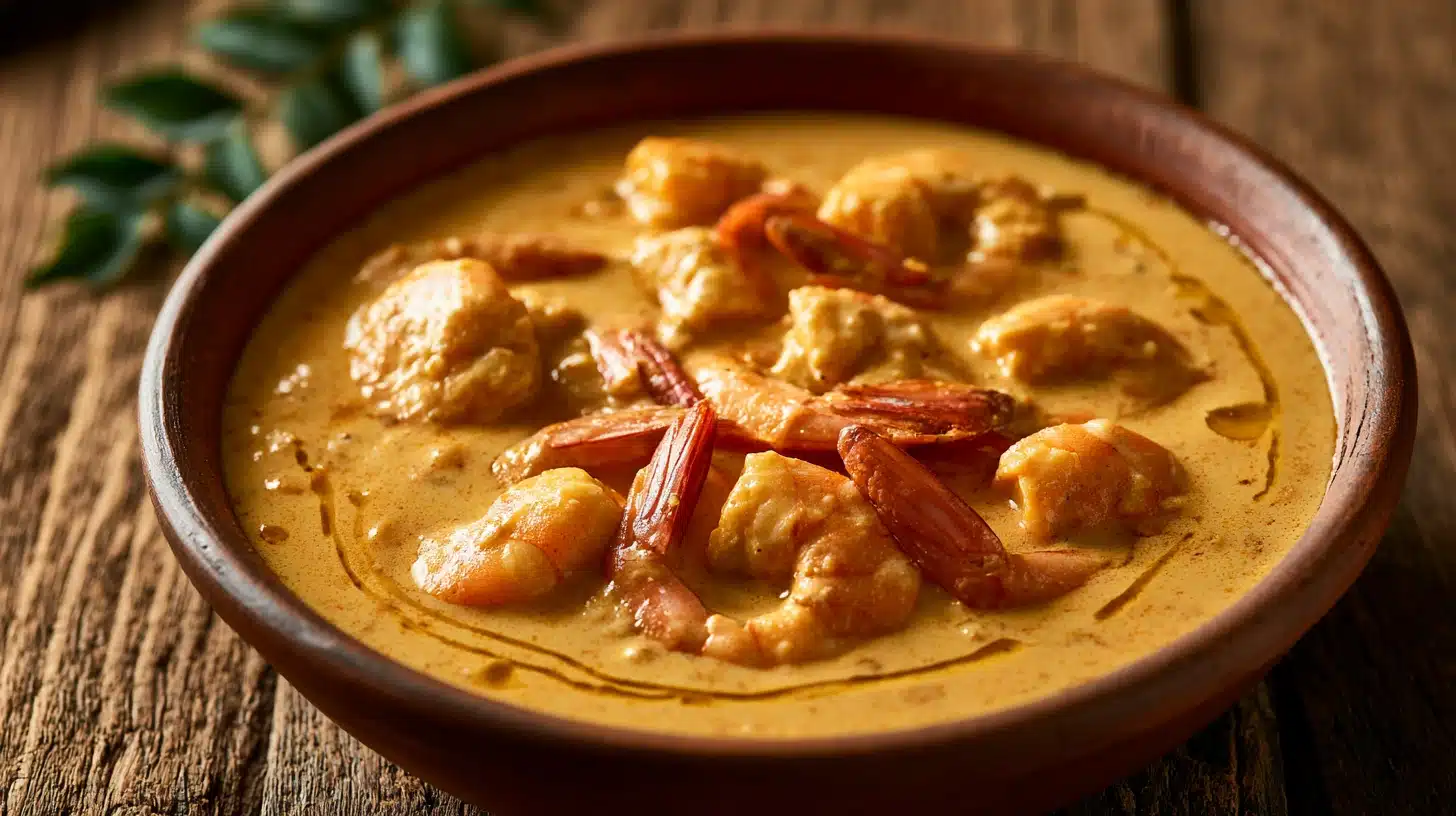
Kerala curry combines coconut milk, curry leaves, and mustard seeds. The heat level remains gentle, allowing the coconut taste to stand out.
Ingredients
- 500g prawns
- 1 cup coconut milk
- 1 onion, sliced
- 10-12 curry leaves
- 1 tsp mustard seeds
- 1 tsp turmeric powder
- 1 tsp red chili powder
- 1-inch ginger, sliced
- 2 green chilies, slit
- 2 tbsp coconut oil
- Salt to taste
Recipe
This recipe stays quick and easy, even on a busy day. Most of the work happens in one pan. Follow the steps in order, and the coconut milk will bring everything together perfectly at the end.
Step 1: In a pan, heat coconut oil on medium heat. Add mustard seeds and let them splutter completely before proceeding. Add curry leaves, chopped ginger, and split green chilies.
Allow them to sauté for a few minutes until aromatic.
Step 2: Place the chopped onion into the pan. Prepare it until it becomes tender and pale golden. Add turmeric and chili powder. Blend thoroughly to prevent the spices from sticking together.
Step 3: Place the prawns into the pan. Sauté for 3-4 minutes until they begin to change color and become a bit firmer.
Step 4: Add coconut milk. Cook slowly on low heat for 8-10 minutes, stirring from time to time.
Step 5: Remove the heat as soon as the curry thickens slightly. Serve warm alongside rice or soft appam.
5. Malabar Prawn Curry
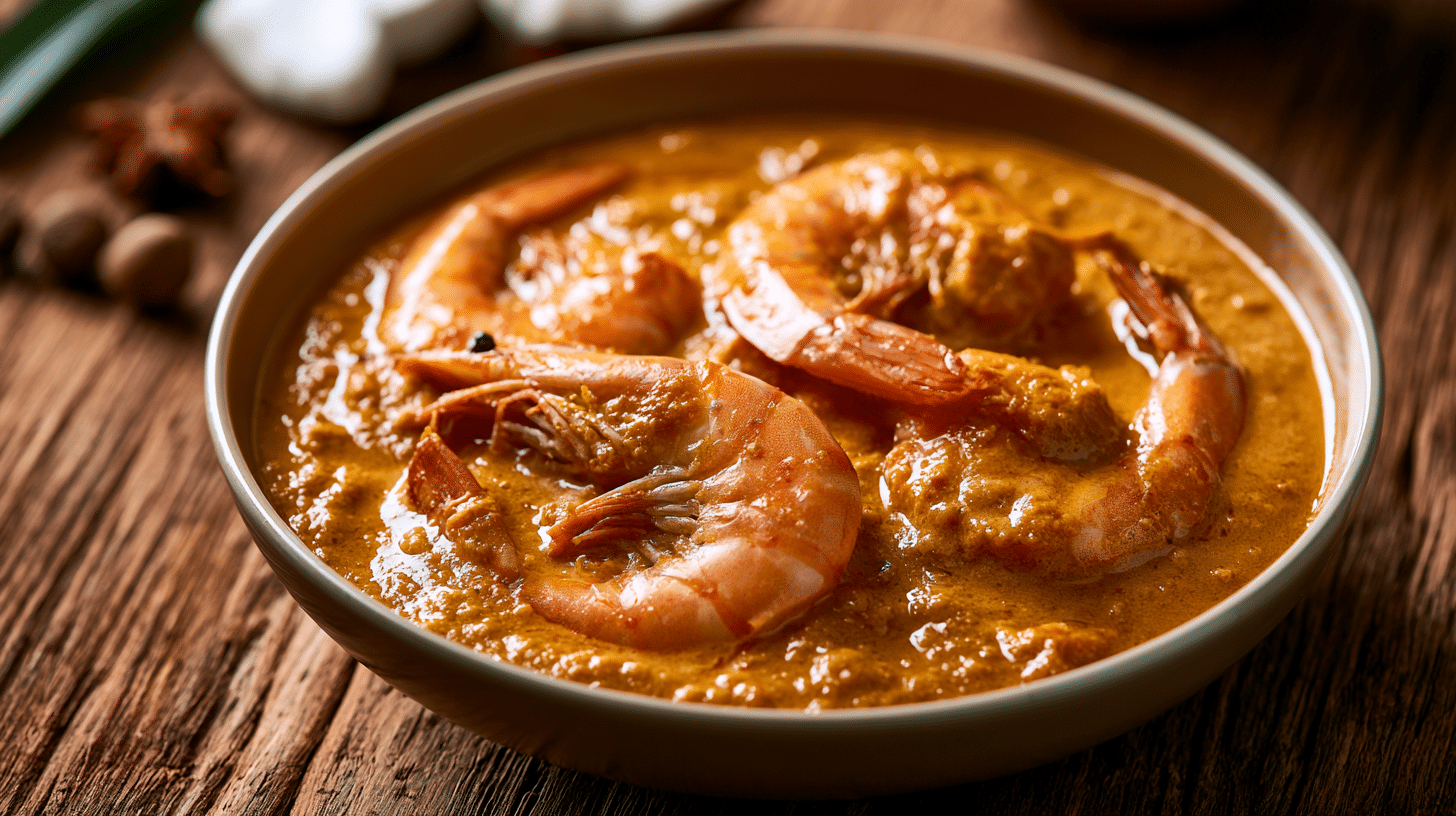
This Malabar recipe relies on roasted coconut for its rich, nutty taste. Whole spices such as cinnamon and cloves enhance the aroma of each bite.
The consistency is rich and creamy, in contrast to lighter coastal curries. It complements steamed rice perfectly.
Ingredients
- 500g prawns
- 1 cup grated coconut
- 1 onion, chopped
- 1 tsp fennel seeds
- 1-inch cinnamon stick
- 2 cloves
- 1 tsp red chili powder
- ½ tsp turmeric powder
- 2 tbsp coconut oil
- Salt to taste
Recipe
This recipe needs a bit of roasting, but the rest stays simple. If hearty gravies are your thing, serve this with plenty of rice so you can enjoy every bit of the sauce.
Step 1: In a pan, dry-roast the shredded coconut until it turns golden brown. Continue to stir to ensure it browns uniformly on every side. Allow it to cool a bit, then blend it into a creamy paste.
Step 2: In a pan, warm coconut oil over medium heat. Add cinnamon, cloves, and fennel seeds. Allow them to emit their fragrance for a few moments.
Step 3: Add turmeric and chili powder, then add the roasted coconut mixture into the pan. Prepare for 2-3 minutes, mixing constantly to prevent sticking.
Step 4: Include the prawns and some water. Stir gently to blend. Cook on low heat for 8-10 minutes until the curry becomes thick and creamy.
Step 5: Switch off the heat when the texture appears rich and thick. Serve warm alongside steamed rice.
6. Coconut Milk Prawn Curry
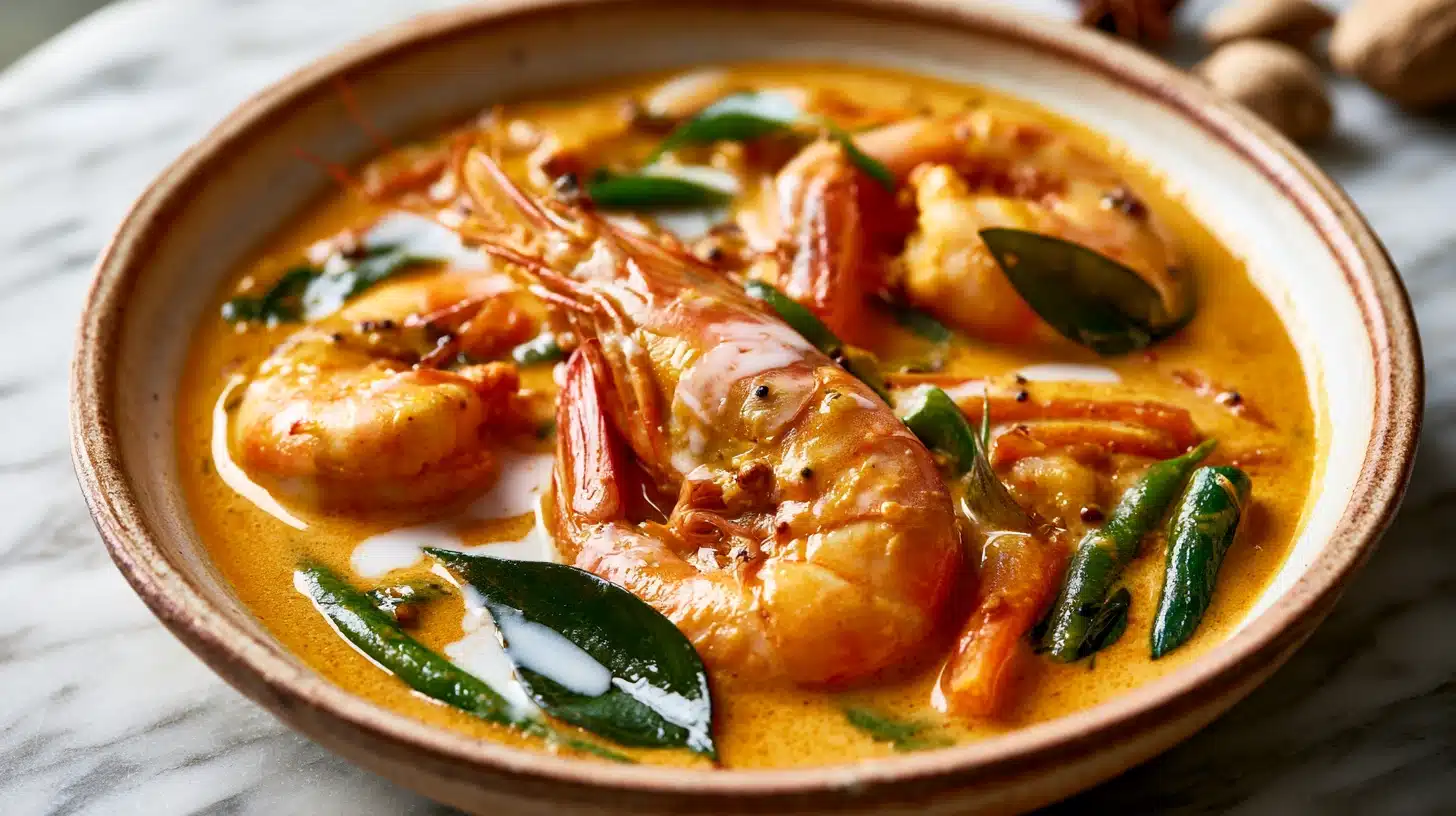
This Prawn Coconut milk curry remains silky, rich, and gently spiced. It assembles quickly, making it an excellent option for hectic weeknights.
Vegetables can effortlessly be added to enhance the curry’s heartiness. It complements rice or fresh bread nicely.
Ingredients
- 500g prawns
- 1 cup coconut milk
- 1 onion, chopped
- 1 tomato, chopped
- 1 tsp turmeric powder
- 1 tsp red chili powder
- 1 tsp coriander powder
- 1 cup mixed vegetables (optional)
- 2 tbsp oil
- Salt to taste
Recipe
This recipe stays simple and quick, perfect for a weeknight dinner. Follow the order closely, especially with the vegetables, to get the texture just right.
Step 1: Heat oil in a pan on medium heat. Add the diced onion and sauté until tender and lightly golden. Add the tomato. Cook until it becomes soft and mixes with the onion.
Step 2: Add turmeric, chili powder, and coriander powder. Mix thoroughly to ensure the spices are evenly spread.
If you are adding vegetables, include them at this point. Sauté for 3-4 minutes until a bit soft.
Step 3: Place the prawns into the pan. Cook for 2-3 minutes, until they begin to firm up.
Step 4: Add coconut milk. Cook on low heat for 6-8 minutes, stirring from time to time.
Step 5: Remove the heat when the curry achieves a smooth, creamy texture. Serve warm with rice or crusty bread.
7. Thai Coconut Prawn Curry
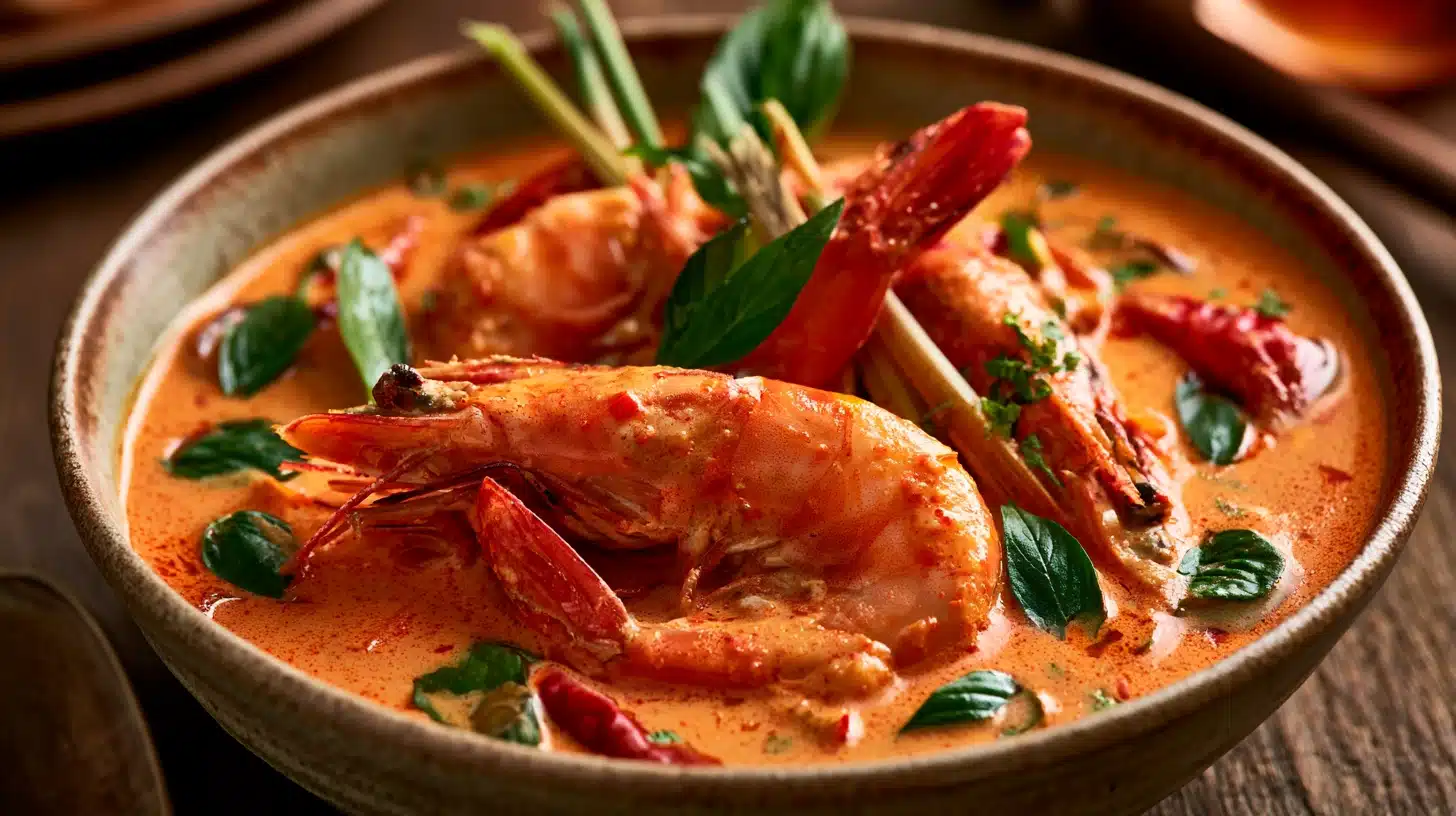
Thai coconut curry combines rich coconut milk with red curry paste. Lemongrass and kaffir lime leaves provide a fragrant aroma.
Fish sauce and palm sugar combine to create sweet and salty flavors. It is most delicious when served with jasmine rice.
Ingredients
- 500g prawns
- 1 cup coconut milk
- 2 tbsp red curry paste
- 1 stalk lemongrass, crushed
- 3-4 kaffir lime leaves
- 1 tbsp fish sauce
- 1 tsp palm sugar or brown sugar
- 1 tbsp oil
- Fresh coriander leaves, for garnish
Recipe
This recipe comes together fast, with barely any prep work needed. If you love sweet, salty, spicy, and aromatic flavors coming together, this Thai-style curry deserves a spot on your list.
Step 1: Heat oil in a frying pan on medium heat. Add red curry paste. Sauté for a minute until it becomes aromatic and a bit darker in color.
Step 2: Add lemongrass and kaffir lime leaves into the pan. Add coconut milk. Stir thoroughly to ensure the paste mixes seamlessly into the liquid.
Step 3: Add fish sauce and palm sugar. This creates a harmony of sweet, salty, and tangy flavors that adds to this curry’s uniqueness.
Step 4: Place the prawns into the pan. Cook on low heat for 6-8 minutes, until fully cooked.
Step 5: Switch off the heat when the curry appears flavorful and aromatic. Top with fresh coriander leaves. Serve warm alongside jasmine rice.
Side Dishes to Serve with Prawn Curry
The appropriate side dish can enhance or ruin a meal. Certain curries are best enjoyed with plain rice, whereas others require a more substantial option like appam or parotta.
Basmati Rice, Steamed
The most typical pair is steamed basmati rice. Its extended grains remain airy and tender. The subtle taste allows the curry to shine.
This pairing is effective for nearly all variations on this list.
Kerala Matta Rice
Kerala matta rice features a reddish color and a mildly chewy texture. This rice is sourced from Kerala and complements Kerala or Malabar prawn curry perfectly.
Its nutty taste pairs nicely with rich coconut gravies.
Appam
Appam is a tender, bowl-like rice pancake featuring crunchy edges. Its gentle sweetness harmonizes perfectly with spicy curries.
Appam pairs perfectly with Kerala prawn curry, absorbing the coconut milk sauce in each bite.
Neer Dosa
Neer dosa is a delicate, soft rice pancake originating from coastal Karnataka. It possesses nearly no flavor by itself, making it an excellent complement to strong, spicy curries.
South Indian and Malabar prawn curry complement it particularly well.
Chapati
Chapati is a tender flatbread made from whole wheat, commonly found in many Indian households. It pairs nicely with heartier curries such as Classic Indian prawn curry.
The simple, grainy taste allows the spices in the curry to stand out.
Wrapping Up
Prawn curry is something quite different in every part of India or beyond. They all taste very different, but they all manage to make something spectacular with ordinary ingredients.
So, which one sounds most like your kind of dinner? If you love creamy flavors, start with Kerala or coconut milk curry. Prefer something bold and tangy? Give the Goan version a try.
This recipe is quite flexible; give it your touch!
Frequently Asked Questions (FAQs)
1. How Should I Store Leftover Prawn Curry?
Place leftovers in a sealed container. Store it in the refrigerator for up to two days. Warm slowly over low heat prior to serving.
2. What Are Some Alternatives to Coconut Milk?
Fresh cream or cashew paste can serve as a replacement. Both provide a comparable creamy consistency, although the taste will vary slightly.
3. What is the Cooking Time for Prawn Curry?
The majority of recipes require approximately 25 to 30 minutes from beginning to end. Shrimps cook quickly, ensuring the process remains fast overall.