

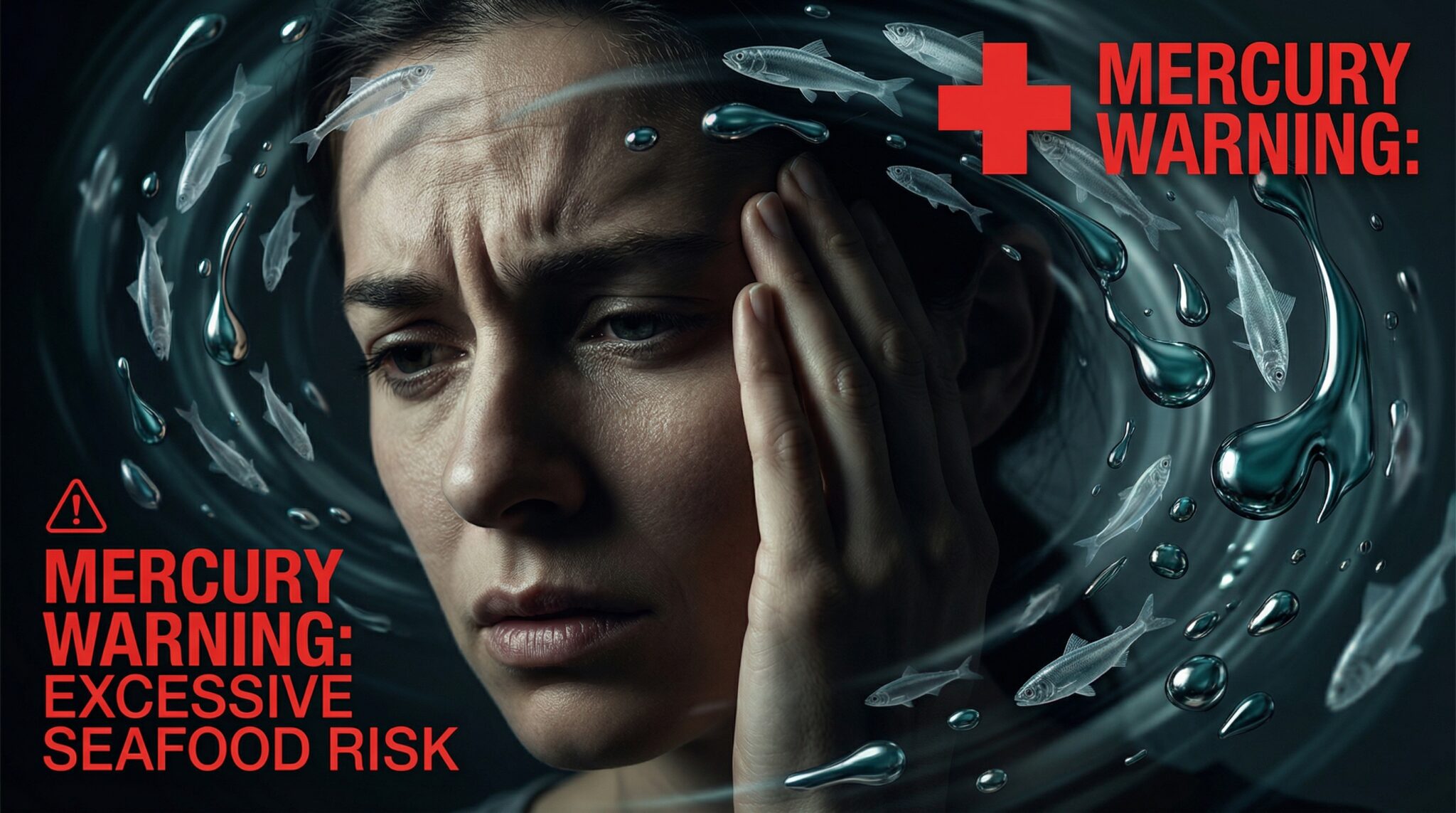
Sick After Seafood? It’s Not Always “Food Poisoning” (And Yes, It Matters)
If you’ve ever eaten a perfectly innocent looking piece of fish and then spent the next few hours or weeks wondering if seafood is secretly plotting against you… hi. You’re not alone.
Seafood can make people sick in a few very different ways, and the tricky part is this: the fix (and the urgency level) depends on which kind of “sick” you’re dealing with.
So let’s do the thing I wish everyone would do before spiraling into a 2 a.m. Google hole: figure out whether this is a slow build or a sudden smackdown.
(And obvious disclaimer: I’m not your doctor. I’m just the person who reads way too much and wants you to stop suffering unnecessarily.)
Step One: Did This Hit You Fast… or Creepy Slow?
Here’s the simplest way to sort this out:
1) Slow creep (weeks to months)
Think: “I’ve been eating a lot of tuna lately and now I feel… off.”
This pattern is most often mercury buildup.
2) Sudden disaster (minutes to hours after one meal)
Think: “I ate that fish and now my body is filing a complaint.”
This is more likely a toxin reaction, foodborne illness, or a true allergy.
Safety note (please don’t be chill about this): if you have trouble breathing, throat/tongue swelling, confusion, or numbness spreading after shellfish, skip the rest of this post and get medical help immediately.
The Sneaky One: Mercury Buildup (A.K.A. “Why Am I So Weirdly Tired?”)
Mercury is the slow burn villain. You don’t get hit with it after one salmon dinner. It’s more like: “Congratulations, you’ve been consistently eating the wrong fish and now your nervous system is cranky.”
What mercury buildup can feel like
Over weeks to months, you might notice:
- Fatigue that doesn’t make sense
- Tingling/numbness (often around mouth or fingertips)
- Metallic taste
- Brain fog, trouble focusing, memory hiccups
- Mood shifts (anxiety/low mood can pop up)
- Subtle vision changes
If exposure continues and gets worse, you can see more serious neurological stuff like tremors, balance issues, weakness, speech feeling “off,” hearing/vision problems.
If you’re reading this thinking, “Oh. That’s… familiar,” the most helpful immediate move is pretty boring but effective: stop the high mercury fish now and switch to low mercury options including shrimp serving frequency guidance. (Cooking doesn’t remove mercury, unfortunately. You can’t “air fry” your way out of this one.)
The fish most likely to be the problem
Mercury goes up the food chain, so big predator fish are the usual suspects.
Personally? If I were choosing what to avoid/rarely eat, it’d be:
- Shark, swordfish, king mackerel, tilefish
- Bigeye tuna, marlin, orange roughy
Middle-ish group (don’t make it your personality):
- Tuna steaks
- Halibut
- Mahi-mahi
- Snapper/grouper
- Canned albacore tuna (this one surprises people)
Lower mercury picks that are generally safer more often:
- Salmon
- Sardines/anchovies
- Tilapia, pollock, catfish
- Shrimp
- Canned light tuna
- Trout
If you think you overdid it: what to do (without panicking)
Mercury levels drop once you cut exposure your body doesn’t stay stuck forever.
What I’d do:
- Immediately pause the high mercury fish for a while (especially the “avoid/rarely” list)
- Switch to the low mercury options
- If you were eating moderate/high mercury fish several times a week, consider a non-urgent doctor visit to ask about blood mercury testing, especially if you have neurological symptoms or you’re pregnant/planning pregnancy
Also important: kids and pregnancy are higher stakes situations with mercury. If that applies to your household, it’s worth being extra conservative and checking official guidance or your doctor’s advice.
The “One Meal Ruined My Life” Category: Sudden Seafood Reactions
If you got sick minutes to hours after a specific meal, mercury is unlikely. This is where toxins, storage issues, contaminated shellfish, or allergy come in.
And yes, some of these have oddly specific “tells,” like a detective show… except you’re the detective and also the victim.
Scombroid (the “this tastes peppery and now I’m flushing” situation)
This happens when certain fish weren’t kept cold enough and build up histamine. Cooking doesn’t fix it.
Common fish: tuna, mackerel, mahi-mahi
Typical timing: 10-30 minutes after eating
Symptoms can include:
- Flushing, sweating
- Headache
- Hives
- Tingling around the mouth
- Fast heartbeat
It can look like an allergy, but it’s a toxin reaction. Mild cases often improve with antihistamines and time, but if breathing is affected, treat it as urgent.
Ciguatera (the “why does cold feel hot?” horror show)
This one is infamous for a reason. It comes from toxins that build up in certain warm water reef fish.
Common fish: barracuda, grouper, red snapper, amberjack
Typical timing: 2-12 hours after eating
The classic giveaway:
- Temperature reversal (cold feels burning hot, hot feels cold/icy)
- Tingling that can spread (mouth to fingers/toes)
- GI symptoms (nausea/diarrhea) often hit first
Some nerve symptoms can linger. If you suspect this, it’s a good reason to contact urgent care especially if symptoms are intense or you’re getting dehydrated.
Shellfish toxins (this is where I get bossy)
Some shellfish related toxins can be dangerous fast.
If you ate clams/mussels/oysters and develop numbness around the mouth that spreads (face → fingers/toes → limbs), especially within about an hour, that’s an emergency. Call 911.
Also: if stomach symptoms shift into confusion or memory issues, don’t “wait it out.” Get emergency care.
Escolar (a.k.a. “white tuna” that betrays you)
Sometimes “white tuna”/”butterfish” is actually escolar/oilfish, which can cause… let’s call it urgent bathroom chaos.
Typical timing: 30 minutes to 36 hours
Typical symptom: watery/oily diarrhea
Usually short lived, but you still need to hydrate and seek care if you can’t keep fluids in.
Haff disease (rare, but don’t ignore it)
This one is uncommon, but the symptoms are serious enough that it belongs in your brain.
Within 24 hours of eating certain fish/crawfish, if you get:
- Severe muscle pain/stiffness
- Chest pain
- Dark brown urine
Go to the ER immediately. This can affect the kidneys.
“Is This an Allergy?” (Because Allergies Play by Their Own Rules)
A true seafood allergy is your immune system overreacting, and it can start even if you’ve eaten seafood for years with zero drama. (Your body can be petty like that.)
Symptoms usually happen minutes to 2 hours after eating:
- Hives/itching
- Swelling (face/lips)
- Mouth tingling
- Stomach cramps/vomiting
- Congestion
Anaphylaxis warning signs (don’t debate these)
If you have:
- Throat tightness or tongue swelling
- Trouble breathing/wheezing
- Dizziness/fainting
- Weak/rapid pulse
Use epinephrine if you’ve been prescribed it and get emergency care.
Also: being allergic to one category doesn’t always mean you’re allergic to all seafood (crustaceans vs. mollusks are different), but please don’t test that theory at home. That’s a job for an allergist, not your kitchen.
When to Stop Reading and Get Medical Help
Call 911 or seek emergency care if you have:
- Trouble breathing, throat/tongue swelling
- Numbness spreading from mouth to limbs after shellfish
- Confusion, fainting, slurred speech
- Severe muscle pain with dark urine
- Signs of shock (fainting, cold/clammy skin, very fast pulse)
Get care within 24 hours if:
- You can’t keep fluids down / ongoing vomiting
- Nerve symptoms last more than several hours
- Symptoms worsen after improving
- Severe headache with fever
Consider asking your doctor about mercury testing if:
- You eat moderate/high mercury fish 3+ times per week
- You’re pregnant/planning pregnancy
- You have tremors/coordination issues/memory problems developing over weeks
- Young kids in your home regularly eat higher mercury fish
And if you’re unsure in the moment, Poison Control (in the U.S.) is a great real time resource: 1-800-222-1222.
How to Enjoy Seafood Without Regretting Your Life Choices
I’m not here to ruin seafood for you. I love seafood. I want you to keep loving it just with slightly less chaos.
My personal “stay sane” approach:
- Don’t rotate the same top predator fish on repeat (looking at you, swordfish and big tuna steaks)
- Choose lower mercury staples more often (salmon, sardines, shrimp, trout, pollock… the dependable friends of the sea)
- Be picky about freshness and storage (if it smells “off” or tastes weirdly peppery/metallic, trust your instincts)
- If you get sick, note what you ate, when, and where (annoying, yes but useful if you need care)
Seafood shouldn’t feel like Russian roulette. With a little pattern spotting and a willingness to not ignore red flag symptoms and understanding wild and farmed seafood differences you can keep the omega-3s and skip the drama.