


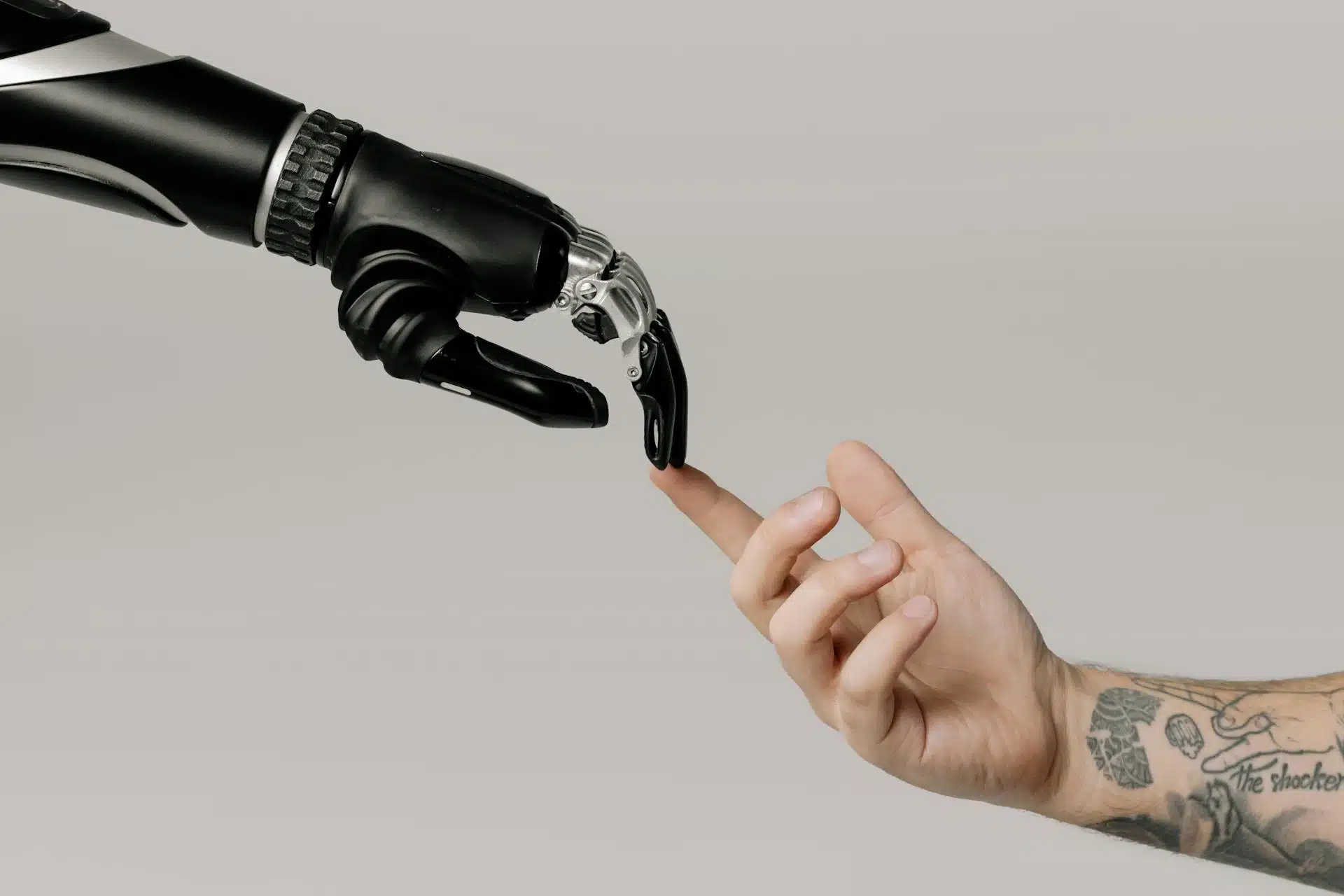
Picture a classroom where one student hands in a carefully revised essay, polished by late-night coffee and handwritten notes in the margins. Another submits an assignment produced in minutes with an AI tool. Professors can’t always tell the difference. The debate has never been louder: AI vs human writing in academia.
This article dives into what data and research reveal about the strengths, weaknesses, and future of both. Are machines outpacing human creativity, or is the human mind still irreplaceable when it comes to nuance, authenticity, and insight? Let’s look at what the evidence says.
Source: https://www.pexels.com/uk-ua/photo/6153354/
Human Writing in the Age of AI Assistance
Dr. Susan L. Woodward has spent years studying the intersection of technology and education. Through her research at DoMyEssay, a leading writing website for students seeking to “do my papers” efficiently, she set out to measure not just how students use AI, but its real impact on quality, productivity, and creative expression. Dr. Susan L. Woodward has spent years studying the intersection of technology and education.
Instead of staying in labs, her team pulled data from real settings: lecture halls, writing workshops, and graduate seminars. They compared essays drafted fully by students with ones that began as AI text and were later revised. They studied plagiarism reports, revision notes, and grading rubrics.
Today, writing means something different than before. Students are no longer asked simply to produce human written text; they’re asked to prove ownership of thought. A polished paper matters less than whether it carries a recognizable voice, an argument shaped by the writer, and the kind of creative decision-making no algorithm can fully mimic.
What AI Writing Brings to the Table
AI is often praised for its speed, structure, and accessibility. In surveys, more than 60% of students admit to testing AI for assignments at least once in the past year. The question many ask is: what is AI for writing doing best?
Here’s what the evidence shows:
- Instant drafting: AI reduces blank-page anxiety by producing structured text within seconds.
- Consistent grammar: Most tools deliver polished syntax, lowering revision time.
- Topic exploration: AI can generate multiple perspectives on a single prompt.
- 24/7 support: Unlike tutors, tools don’t sleep.
- Customization options: Some platforms adapt to reading levels, making academic material more approachable.
But students also report frustrations: shallow arguments, repetitive phrasing, and a lack of originality that professors quickly notice.
How to Use AI for Writing Academic Papers
Students often ask if it’s “cheating” to use AI. The truth is, it depends on how you use it. AI is helpful for setup, but useless if you hand it the whole job. Professors can usually tell when something is an example of AI writing, not because of errors, but because it lacks the quirks and depth of human thought.
AI can help you with:
- Kickstarting a blank page. Instead of staring at a blinking cursor, let AI throw out a rough outline or sample thesis. It’s like having a brainstorming partner who never runs out of ideas.
- Testing directions. Ask it for three different ways to frame a debate, then choose the one you actually want to argue. That way, you stay in control.
- Polishing language. Use it to smooth grammar, shorten long sentences, or tidy transitions. The content stays yours; AI just cleans up the edges.
- Explaining tough sources. Stuck on a dense article? Feed in a paragraph and ask for a simpler summary. It won’t replace your analysis, but it can save you hours of confusion.
But make sure you avoid these pitfalls:
- Copy-pasting full AI essays. Detection tools flag this, and even if they don’t, your professor will.
- Trusting citations blindly. AI invents sources. Always check them in real databases.
- Forgetting your own voice. If your past assignments sound one way and this one suddenly reads like a blog post, it’s a giveaway.
AI should save you time, not replace your thinking. Use it to build scaffolding, such as outlines, drafts, and language cleanups, then do the heavy lifting yourself. That balance keeps your essay credible, your skills sharp, and your professors on your side.
Examples of Best Free AI Writing Tools
Students often ask which tools are most useful in practice. Here are a few that came up repeatedly in surveys and classroom trials:
- ChatGPT (Free Version) – Generates drafts and outlines quickly; limited by word count and accuracy checks.
- QuillBot – Strong for paraphrasing and rewriting; helps students refine clarity.
- Grammarly (FreeVersion) – Focused on grammar, style, and tone corrections.
- Hemingway App – Great for simplifying complex sentences and improving readability.
- Scribbr AI Tools – Helpful for citation checks and quick summaries of research.
None of these should be used as full replacements for writing, but together they offer scaffolding for students.
The Benefits and Limits of AI Content Writing
AI tools promise efficiency, but students who lean on them too heavily risk losing their own academic voice. Here’s a structured look at what data shows.
Benefits of AI Content Writing | Limits of AI Content Writing |
Rapid drafting reduces time pressure | Lack of originality; repetitive phrasing |
Strong grammar and spelling accuracy | Risk of factual errors or “hallucinations” |
Brainstorming ideas for essays | Weak at nuanced argumentation |
Accessibility for non-native speakers | AI detectors often flag generated text |
Useful for structure and organization | Over-reliance reduces critical thinking skills |
Human Content Writing and the Case for Original Thought
Even in an AI-driven classroom, professors consistently reward students for authenticity and personal perspective. A human written essay tends to weave in emotion, lived experience, and creativity that machines cannot fully replicate.
Surveys show that 72% of professors rate human work as “more credible,” even if it contains minor errors. Students who take the time to build arguments often gain trust not only in grades but in recommendation letters and long-term academic opportunities.
Strengths and Weaknesses of Human Writing
Human papers have clear strengths and real challenges, and both deserve a closer look.
Strengths of Human Papers | Weaknesses of Human Papers |
Deep analysis, context, and critical thought | Slower drafting process |
Authentic voice and originality | Higher risk of grammar/spelling errors |
Ability to link ideas to lived experience | Inconsistent structure compared to AI |
Greater adaptability for complex essays | Can suffer from procrastination and stress |
Builds long-term writing skills | Requires significant effort and time |
This balance explains why universities emphasize writing practice despite the availability of automation. A human essay writer might take longer, but the output resonates more deeply with academic audiences.
The Hybrid Model: A Combination of AI and Human Writing
The most promising approach is not competition but collaboration. Many classrooms now experiment with AI written article drafts that students then revise. This creates a middle ground: AI handles the scaffolding, and humans add nuance, context, and originality.
Data shows this hybrid method can increase productivity by 25% while maintaining high originality scores. In practice, it’s like having a research assistant sketch the outline while the student fills it with arguments and evidence.
Beyond the Verdict: Where Creativity Goes Next
The debate isn’t about AI replacing students, but about reshaping habits. Universities are already shifting to hybrid teaching models where writing is part skill-building, part tech-literacy. The real trial of human papers vs. AI isn’t about speed. It’s about whether future graduates can still think independently in a world of machine help.
FAQ
Why are professors cautious about AI in student work?
Because AI tools often generate surface-level arguments, professors worry students may miss out on building analytical skills. Credibility, originality, and critical thought remain essential markers of strong academic writing.
Is AI writing good for academic essays?
AI can help structure and brainstorm, but it shouldn’t replace human effort. At best, it’s a tool for drafts, summaries, and brainstorming, and students must refine arguments, citations, and voice.
Can AI and human writing really work together in academia?
Yes, the strongest results come from blending both. Students often start with an AI-generated draft or outline, then refine it with their own analysis and voice. This hybrid model saves time while preserving the originality that professors value most.