


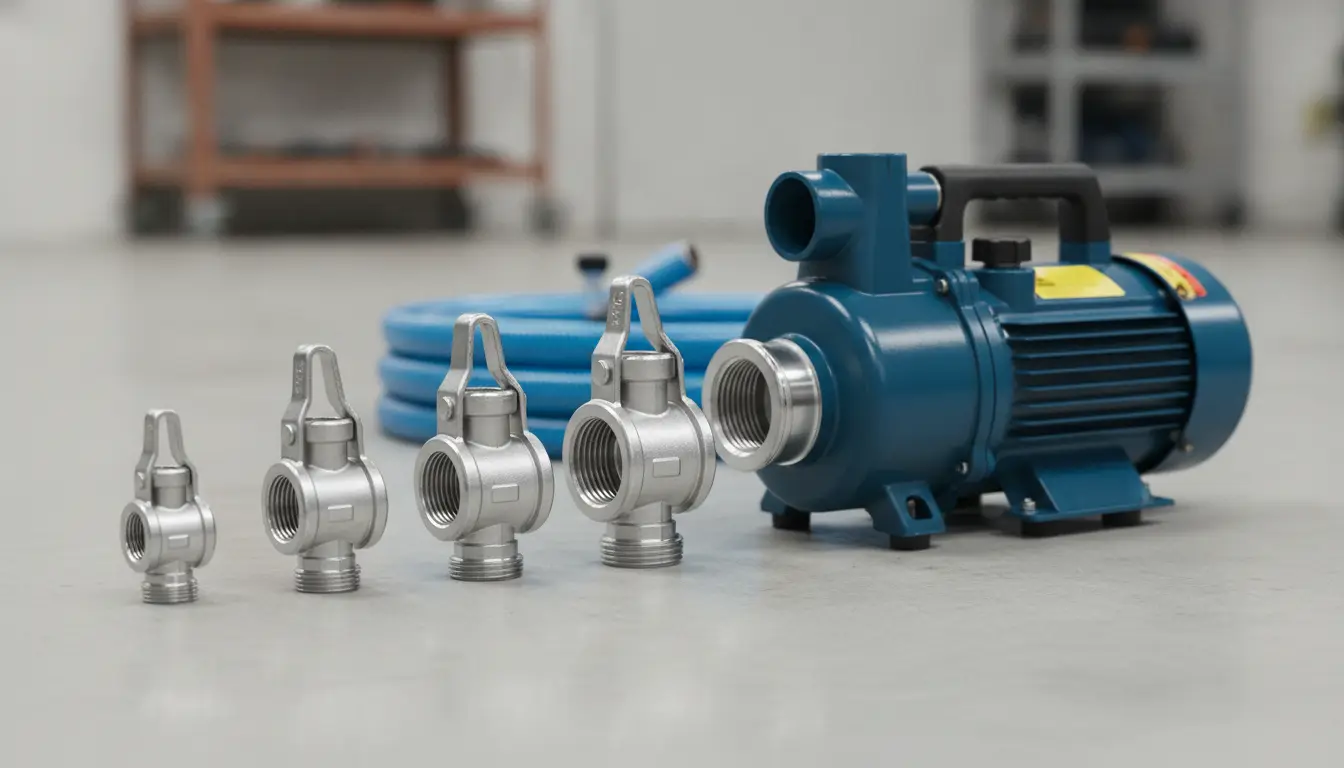
Pick the wrong camlock fitting, and you’re looking at leaks, pressure loss, or a connection that won’t seal. It’s annoying, and most people deal with it at least once. Getting it right from the start means skipping the return trip and keeping your water transfer moving on schedule.
The good news? Sizing these fittings isn’t rocket science. Three pieces of information matter: your pump’s port size, your hose’s inner diameter, and what you’re actually doing with it. Here are five straightforward rules that’ll get you to the right size.
Match the Fitting Size to Your Pump’s Inlet and Outlet Ports
The best place to start is the pump’s port size because every hose connection depends on it. If the fitting is too small, too large, or matched to the wrong thread type, the connection may leak, loosen, or fail to close properly. That is why choosing the right camlock fittings for pump hoses is important before setting up a water transfer, irrigation, or drainage system. The right fitting helps create a secure connection between the pump and hose, which makes water movement smoother and more reliable. It also saves time during setup because the hose can be connected and removed without dealing with complicated tools or loose parts.
Most residential and light-duty water pumps use 1-inch or 1.5-inch ports, while many mid-range transfer pumps use 2-inch ports. Larger agricultural or industrial pumps may need 3- or 4-inch fittings, depending on the flow rate and hose setup. Checking the pump’s spec sheet or measuring the port before buying can help match the fitting correctly.
It is also important to remember that camlock sizes usually follow nominal pipe sizing. A 2-inch camlock refers to the nominal bore size, not the exact outside measurement of the thread. Before choosing a fitting, buyers should check whether the pump uses NPT or BSP threading so the adapter connects cleanly and holds pressure during use.
Align the Hose Inner Diameter With Your Fitting Size.
The hose bore and the fitting bore should match. Otherwise, you’ll drop the flow rate, create turbulence, and wear out both the hose and fitting faster than they should.
Standard garden hoses sit at 5/8-inch inner diameter, which pairs with 3/4-inch camlock fittings (the wall thickness accounts for the difference). Lay-flat irrigation hoses typically come in 2-inch or 3-inch bores. Suction hoses for trash pumps run 3-inch or 4-inch. Not sure what you have? Cut the end square and measure inside with a ruler. That measurement, in inches, is your fitting size.
And here’s something most people miss: the cam arms should close and lock without any forcing. If they’re straining to click shut, the hose collar isn’t sitting in the groove right, usually because the hose OD (outer diameter) falls slightly outside that fitting’s groove tolerance. Try sizing up or down by half an inch and test the fit before you pressurize.
Choose the Right Camlock Type (A Through F) for Each End of the Connection
Six standard camlock coupling types exist, and each one does a specific job. Reverse them and you won’t get a connection at all.
- Type A: Female coupler body with male threaded adapter end. Connects a female cam body to a male NPT pipe fitting.
- Type B: Male coupler plug with female NPT end. Plugs into a female cam body; the other end threads onto a male NPT port.
- Type C: Female coupler with hose shank (barb). Goes onto the female cam body side; the shank slips inside a hose.
- Type D: Male plug with hose shank. Slots into the female cam body; the barb end goes inside the hose.
- Type E: Male plug with male NPT thread. Threads into a female NPT fitting, plugs into a female cam body.
- Type F: Female coupler with female NPT thread. Threads onto a male NPT fitting, accepts a male cam plug.
In a typical pump-to-hose setup, you’ll thread a Type B or Type E adapter onto the pump’s outlet, then put a Type C or Type D fitting on the hose end. The cam arms lock over the groove on the male plug and seal everything without tools. Just match the thread type on each end (NPT or BSP), and you’re good.
Factor in Your Working Pressure and Flow Demands
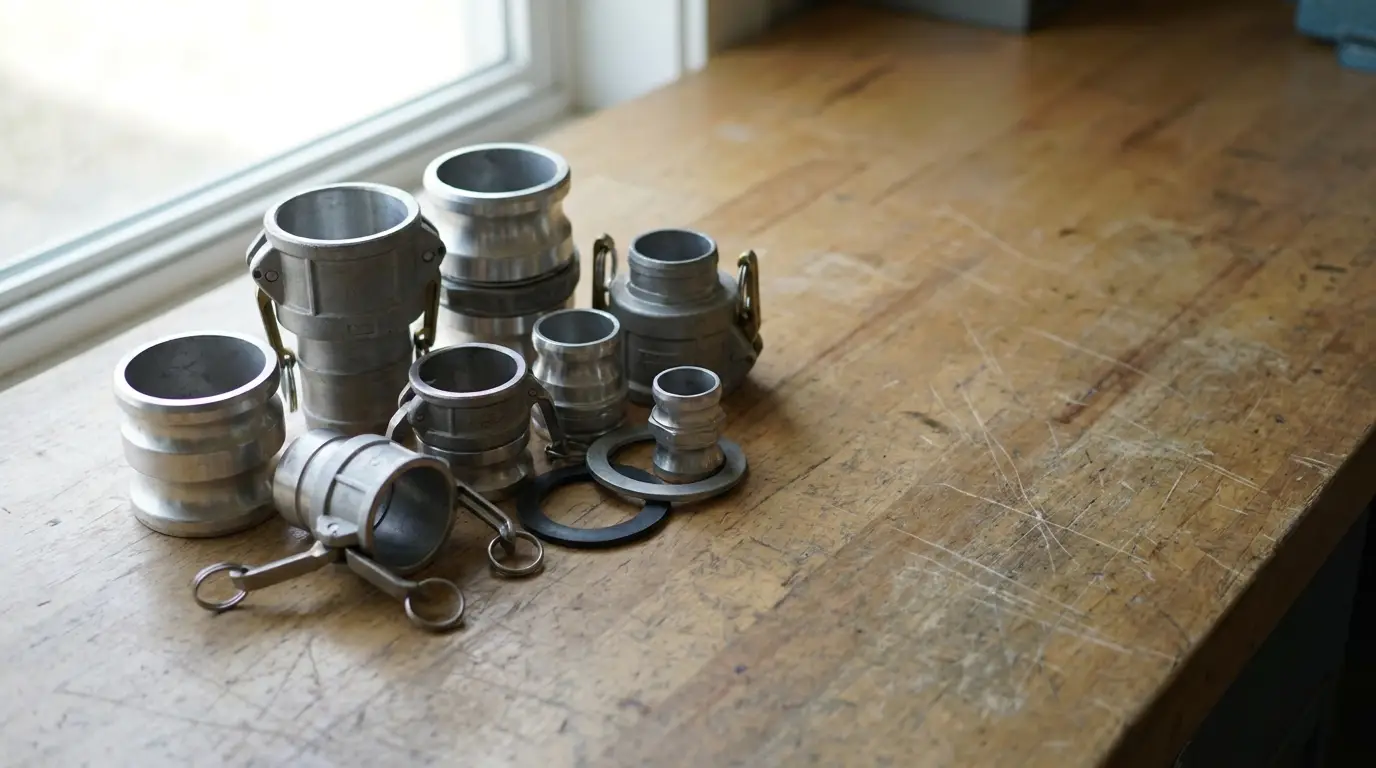
Size matters for fit, but it also matters for whether the fitting can actually handle what your pump throws at it.
Aluminum camlock fittings, the most common for water transfer, top out around 150 PSI for 2-inch sizes and dip a bit lower as the bore gets bigger (3-inch and 4-inch). Stainless steel fittings go up to 250 PSI in many cases and resist corrosion much better over time. Running a standard 2-inch centrifugal pump at around 80-100 PSI? Aluminum’s fine. But if you’re above 120 PSI with a high-pressure pump, go stainless.
Flow rate’s the other half of this equation. A 1-inch camlock fitting throttles the flow on a pump rated for 150 gallons per minute. Under-sizing chokes the pump, jacks up back pressure, and can burn out the impeller over time. The rule of thumb: size the fitting to match or exceed your pump’s rated flow capacity, not just the port thread size.
Don’t Ignore the Gasket Material Inside the Cam Body
Every camlock coupler has a flat gasket seated inside the female cam body. The gasket material you pick determines what fluids and temperatures it’ll handle.
For plain water transfer, EPDM rubber gaskets are standard. They work from about 20°F to 212°F (-7°C to 100°C) and stand up to weathering well; that’s why they’re the default for irrigation, flood pumping, and tank filling. Buna-N (nitrile) gaskets work better if you’re transferring fuels or oils and might swap the same fittings between setups. Silicone gaskets fit food-grade or high-temperature applications.
The gasket also affects how tight the seal is. A worn, cracked, or undersized gasket will drip even on a perfect connection. If your camlock leaks at the joint after the arms lock down, replace the gasket before you blame the fitting size. Replacement gaskets cost almost nothing and solve 80% of camlock leak problems right away.
Conclusion
Getting the right size camlock hose fitting for water pumps comes down to four things: your pump’s port size, your hose’s inner diameter, the correct camlock type (A through F) for each end, and the pressure rating your job actually needs. Don’t skip the gasket. A correctly sized fitting with a worn gasket leaks just as badly as the wrong size would. Hit all four of those marks and your pump connection will hold solid through whatever you’re doing.