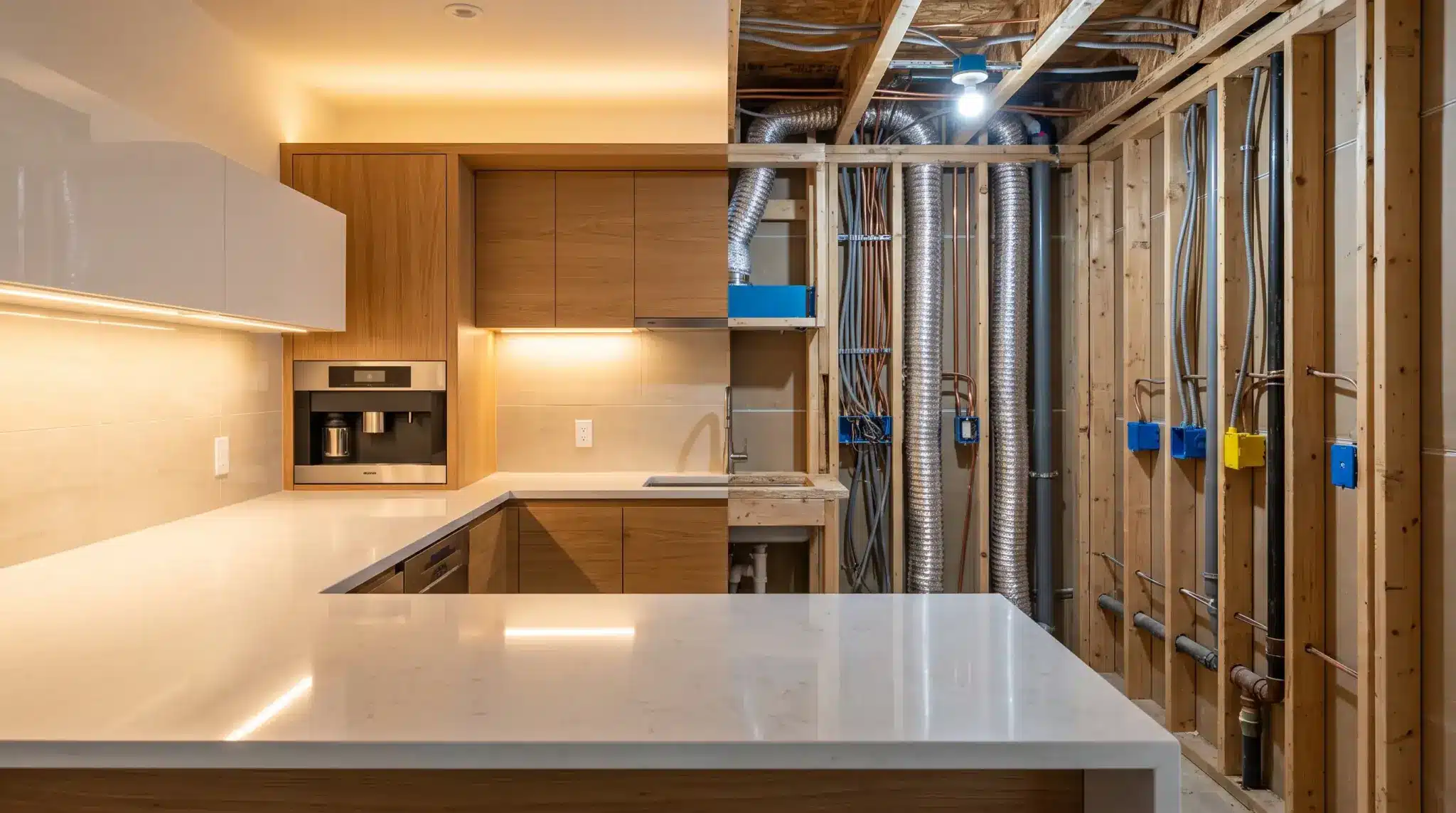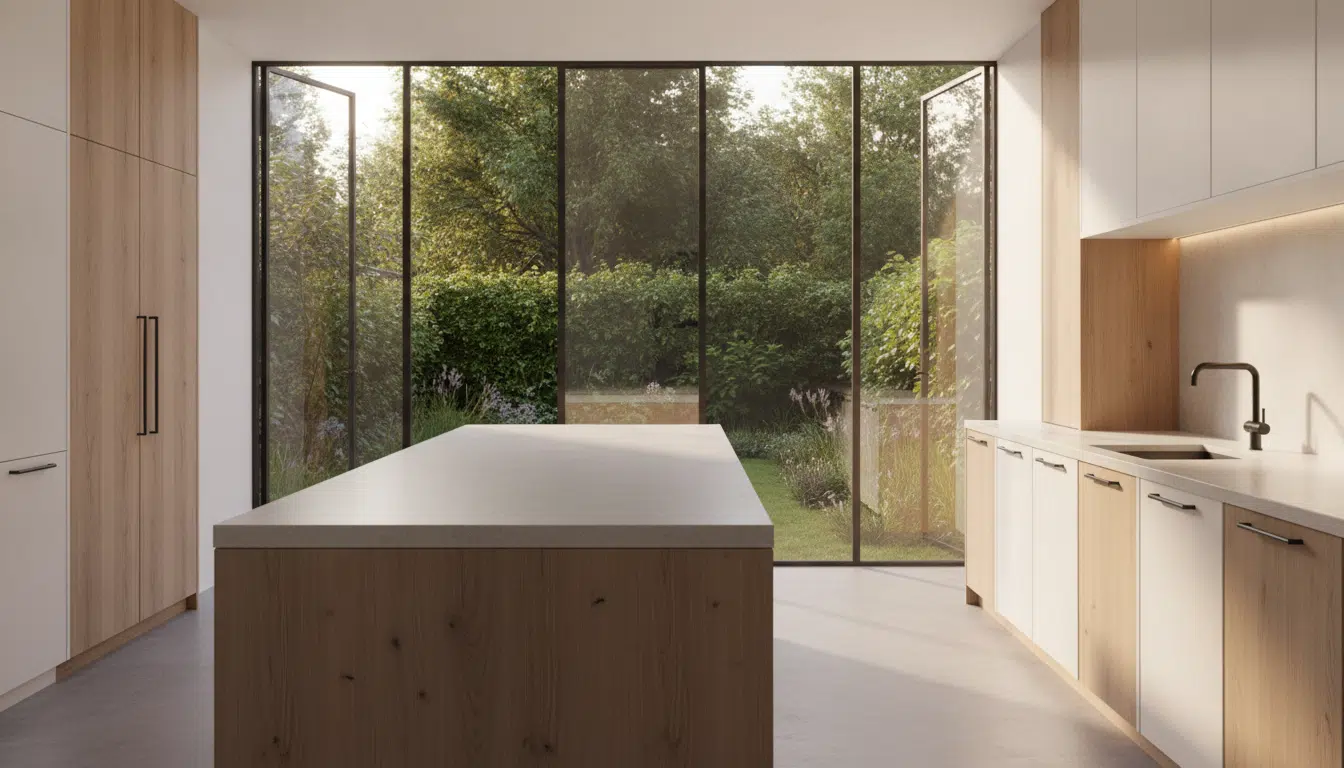


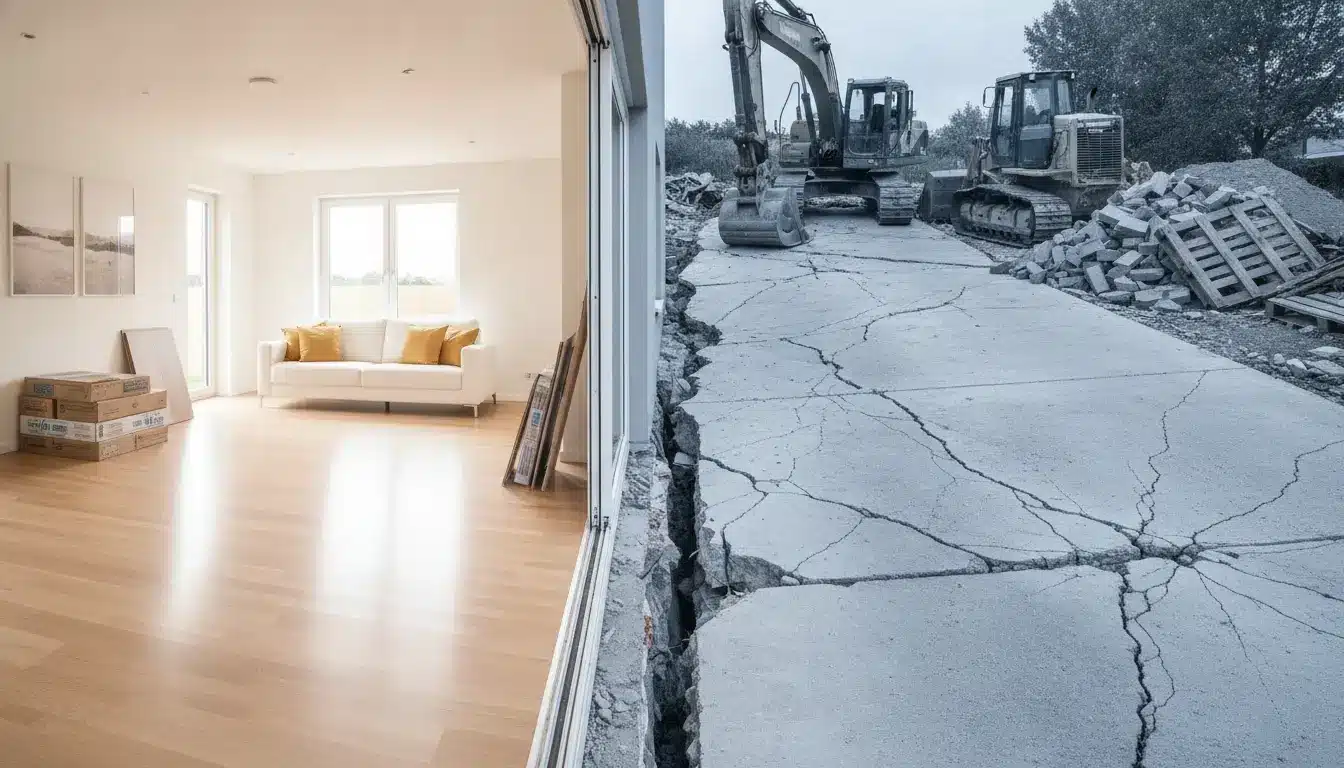
Property development projects, whether residential renovations or commercial construction, consistently produce their most expensive surprises at the interfaces between different project scopes. The electrical work that assumed a certain panel capacity and discovered it wasn’t there. The plumbing rough-in that encountered unexpected foundation conditions. The interior remodeling that revealed structural issues requiring resolution before finish work could proceed.
Among the most consistently underestimated interface problems in property development is the gap between interior remodeling scope and exterior concrete infrastructure. These two scopes feel entirely separate: one happens inside, the other outside, and they involve different contractors with different expertise addressing different physical systems. The cost of that apparent separation shows up in project outcomes that fall short of what was planned, budgets that get revised upward mid-project, and timelines that extend beyond what anyone anticipated when the projects were planned independently.
How Interior Remodeling Affects Exterior Concrete Conditions
Interior remodeling projects create conditions that affect the exterior concrete surrounding a property in ways that aren’t always obvious until the damage has occurred. The construction traffic, material staging, and equipment movement associated with significant interior renovation introduces loads and activities to the property that the exterior concrete wasn’t designed to accommodate continuously.
Heavy material deliveries routed across concrete driveways and walkways create concentrated loads that exceed the design capacity of residential concrete pavement. Equipment parked on concrete surfaces for extended periods during renovation projects creates sustained loading that residential concrete doesn’t experience during normal use. Material staging areas on concrete surfaces expose those surfaces to chemical contamination from construction products, concentrated weight from stacked materials, and abrasion from foot traffic patterns different from normal use.
The concrete damage that results from these conditions develops gradually and isn’t always obvious during the renovation itself. It becomes apparent afterward: cracking patterns that weren’t present before construction, surface scaling in areas used as staging, and settlement in areas subjected to heavy equipment loads. By this point, the renovation contractor has completed their scope and left, and the concrete damage is a separate problem requiring separate remediation.
The Utility and Access Conflicts That Stop Projects Mid-Stream
Exterior concrete infrastructure frequently contains utility conduits, drainage systems, and structural elements whose locations aren’t fully documented but whose disruption creates immediate project-stopping consequences. Interior remodeling that requires new utility connections, drainage modifications, or structural work near the building perimeter may need to penetrate or cross exterior concrete elements that can’t be cut or removed without significant additional scope and cost.
A drainage modification required by a bathroom addition may need to connect to the exterior drainage system in ways that require cutting through concrete flatwork whose removal and replacement wasn’t in anyone’s project budget. An electrical service upgrade required by a kitchen renovation may need conduit routing through exterior concrete that was installed before conduit was embedded, requiring surface conduit installation that affects the property’s appearance or core drilling through concrete that requires specialized equipment.
These conflicts are discoverable before construction begins when the project planning includes assessment of what exterior concrete infrastructure exists, where it runs, and what it contains. They become expensive when discovered during active construction under time pressure, which is the typical discovery context when remodeling and concrete infrastructure planning happen independently.
What Commercial Properties Add to This Equation
Commercial properties add regulatory dimensions to the remodeling-concrete interface that residential properties don’t face to the same degree. ADA accessibility requirements connect interior building access directly to exterior hardscape conditions: accessible routes must be continuous from parking areas through exterior hardscape to building entrances, and interior remodeling that modifies entrance configurations may create accessibility compliance requirements for the exterior concrete connecting to those entrances.
A commercial interior remodeling project that relocates an entrance to improve interior flow may inadvertently create exterior accessibility compliance issues that require concrete ramp modifications, detectable warning surface installation, or accessible parking area reconfiguration that wasn’t anticipated in the interior remodeling scope or budget. Discovering these requirements after interior construction is underway rather than during planning creates compressed timelines and limited options that increase cost.
Commercial concrete contractor involvement in the planning phase of commercial interior remodeling specifically addresses this regulatory interface, identifying where interior changes create exterior compliance requirements that need to be scoped and budgeted alongside the interior work rather than discovered after it’s begun.
Drainage Modifications and Their Concrete Implications
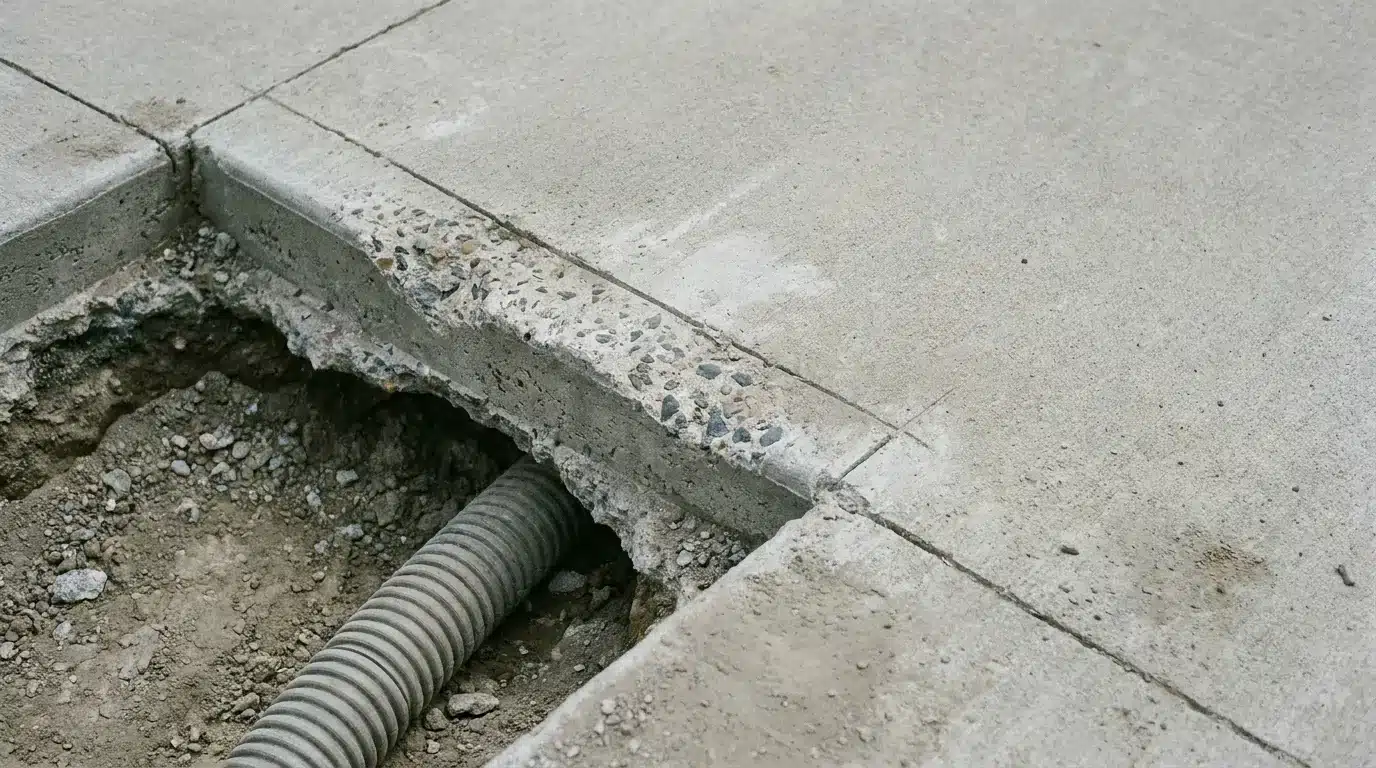
Interior remodeling projects frequently modify the building’s drainage systems: adding plumbing fixtures, relocating existing ones, or changing how water is managed within the building envelope. These interior drainage modifications connect to exterior drainage infrastructure that exits the building through concrete foundations and disperses through exterior drainage systems embedded in or beneath exterior concrete.
Adding interior drains requires connecting them to the exterior drainage system at points that may require penetrating or modifying exterior concrete. Relocating interior drains may require rerouting exterior connections in ways that involve excavating beneath exterior concrete, disrupting the subbase, and replacing the concrete after new drainage is installed. Interior bathroom additions with floor drains may need to connect to exterior drainage systems whose capacity wasn’t designed for additional discharge volumes.
None of these situations is unresolvable, but each one costs less when it’s planned and scoped before construction begins than when it’s discovered during active work. The project that includes concrete infrastructure assessment in its planning phase knows exactly what exterior connections look like, what they have capacity for, and what modifications they need before the interior contractor has mobilized and the clock is running on construction timeline.
The Budget Integration That Changes Project Outcomes
The most direct solution to the costly gap between home remodeling projects and commercial concrete planning is integrating both into the same project budget framework from the beginning rather than developing separate budgets for each that don’t account for their interactions.
An integrated project budget that accounts for both interior remodeling scope and the exterior concrete modifications and protections that scope requires produces a more accurate total project cost than two separate budgets that each treat the other as outside their scope. The contingency built into an integrated budget covers the interface risks that separate budgets ignore entirely, which means the integrated project is more likely to be completed within budget than two separately budgeted projects that encounter their shared interface costs as unexpected additions.
Developing this integrated budget requires both the remodeling contractor and the concrete professional to be involved in the project planning phase simultaneously rather than sequentially. The remodeling contractor’s scope informs the concrete professional’s assessment of what exterior work will be required. The concrete professional’s assessment of existing conditions informs the remodeling contractor’s understanding of what constraints and opportunities the exterior infrastructure creates for the interior project.
Making the Case for Simultaneous Planning
The efficiency argument for simultaneous remodeling and concrete planning is made most clearly by its alternative: sequential planning where each scope is developed without full information about the other, surprises discovered during construction create expensive mid-project changes, and the completed project costs more and takes longer than it would have with integrated planning from the beginning.
This alternative is how most projects that experience the costly gap between remodeling and concrete planning actually unfold, which is why the pattern is so consistent. The projects that avoid it are the ones where someone recognized early enough that these scopes interact significantly and organized the planning process to account for that interaction before any work began.