

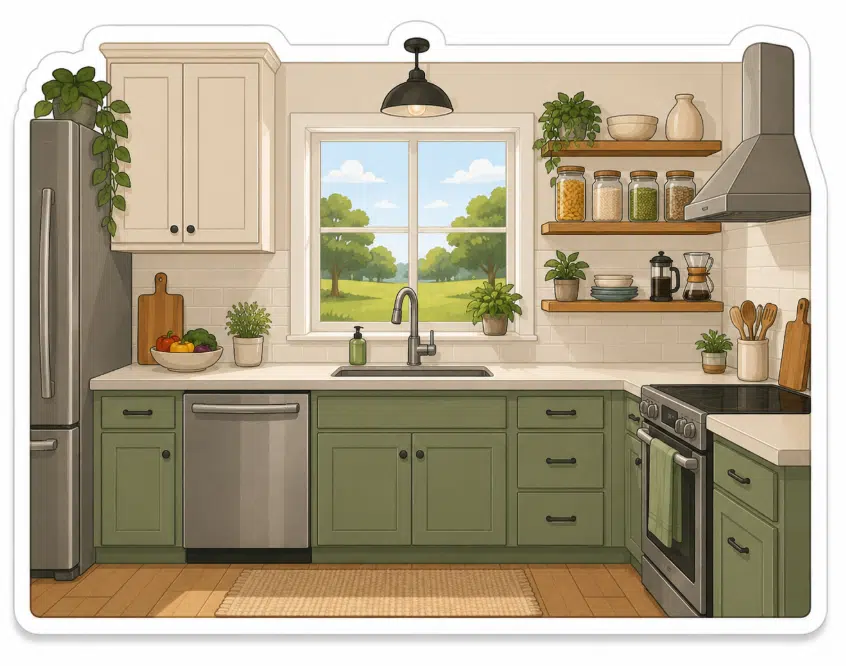
A well-organized kitchen does not just look good. It changes how you cook. When everything has a logical place, you stop losing time hunting for the right pan or second-guessing where you left the peeler. Prep flows into cooking, and cooking flows into cleanup, without unnecessary interruptions.
This guide covers the core principles that make a kitchen genuinely functional, then turns each one into concrete steps you can act on today.
Principles Behind a Kitchen Optimized for Cooking
Most kitchen organization advice focuses on aesthetics. Matching containers, color-coded cutting boards, artful spice arrangements. These things are fine, but they are downstream of a more fundamental question: how does food actually move through this kitchen?
The answer shapes everything. A kitchen organized around cooking follows a few core principles:
- Placement follows task, not category. Tools and ingredients belong near where they get used, not grouped by type.
- Fixtures that do more than one job. The right sink or workspace can consolidate multiple tasks into one area and reduce how much you move around while cooking.
- Access by frequency. Daily items go in prime spots. Rarely used things go elsewhere.
- Clear surfaces. Counter space is working space. Keeping it open means you can start cooking without setup.
- Visibility over concealment. When things are hidden, they stop getting used. Seeing what you have changes how you cook.
Tips for Principle #1: Placement Follows Task, Not Category
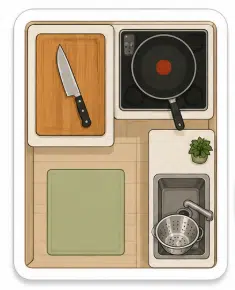
Divide the kitchen into four zones based on what happens there: prep, cooking, cleaning, and storage. Then assign every tool and ingredient to the zone where it actually gets used.
- Map your prep zone: Knives, cutting board, mixing bowls, and a trash bowl for scraps all belong within arm’s reach of wherever you chop and assemble.
- Stock the cooking zone: Salt, cooking oil, stirring spoons, and your most-used pans belong at or immediately beside the stove. If you reach for it while something is on the heat, it lives here.
- Anchor things to the sink: The colander, dish soap, and cleaning tools belong in the cleaning zone. So does anything used primarily for draining, rinsing, or washing up.
- Treat nearby cabinets as extensions of each zone: Cabinet space next to the stove is cooking storage. Do not fill it with baking equipment you use twice a year.
Tips for Principle #2: Fixtures That Do More Than One Job
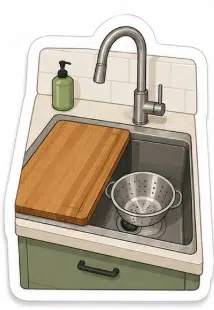
The layout and fixtures of a kitchen have more to do with efficiency than most people realize. A sink that only handles washing, for instance, forces you to use counter space for prep work that could happen right there. Choosing fixtures that consolidate tasks reduces how much you move around and how much counter real estate you need to protect.
- Consider a modern workstation sink: A workstation sink integrates accessories like cutting boards, colanders, and drying racks directly over the basin. Prep, rinsing, draining, and cleanup can all happen in one spot instead of spreading across the counter.
- Use the sink ledge for active prep: Many workstation sinks have a ledge rail that holds accessories at different positions. This turns what is usually dead space into a functional extension of your prep area.
- Match the sink size to how you cook: If you regularly cook large batches or deal with big pots and sheet pans, an oversized or double-basin workstation sink gives you room to work without compromising the rest of your counter.
- Think about faucet placement too: A high-arc or pull-down faucet with enough clearance for large pots is part of the same logic. The fixture should accommodate how you actually use the sink, not just what looks good in a showroom.
Tips for Principle #3: Access by Frequency
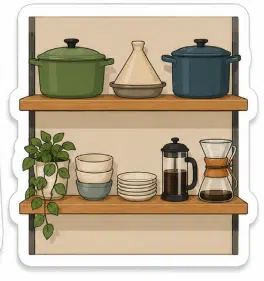
The tools and ingredients you cook with every week deserve the easiest spots in the kitchen. Everything else can work around them.
- Audit your actual rotation: Before reorganizing, spend a week noticing what you reach for most. Those items set the priority.
- Give daily items prime real estate: Eye-level shelves, front-of-drawer positions, and hooks within arm’s reach are for things you use constantly. Weekly or occasional items go higher, lower, or further back.
- Apply the same logic to the pantry: Staples like olive oil, canned tomatoes, and grains belong at eye level. Specialty or backup stock goes behind or below them.
- Fix the friction points: If you consistently have to move things to get to something you use all the time, that storage arrangement is worth changing.
Tips for Principle #4: Clear Surfaces
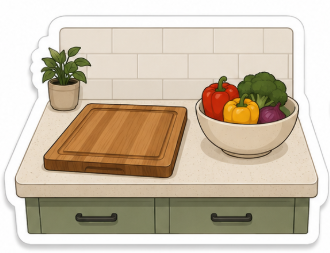
Counter space is working space. The goal is to have enough open surface that you can start cooking without moving anything out of the way first.
- Set a threshold for what stays out: If you use an appliance daily, it earns counter space. Weekly or less, it belongs in a cabinet.
- Give homeless items an actual home: Counters collect clutter when things have nowhere else to go. Designating a spot for everything removes the default of leaving it out.
- Keep one stretch of counter completely clear: Even in a small kitchen, one uninterrupted prep surface makes a real difference. Protect that space.
- Reassess after grocery runs: This is when surfaces tend to get buried. Building a habit of putting things away immediately keeps the reset from piling up.
Tips for Principle #5: Visibility Over Concealment
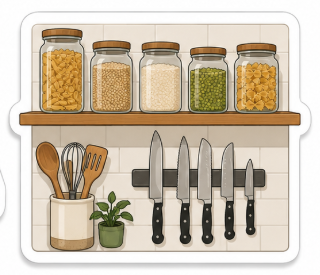
When ingredients and tools are out of sight, they stop getting used. Visibility is not just about convenience; it changes what you actually cook.
- Switch dry goods to clear containers: Pasta, grains, legumes, and baking staples are easier to track and harder to forget when you can see them. You also see when you are running low.
- Bring frequently used tools above the counter: A utensil crock or a wall-mounted magnetic knife strip keeps daily tools visible and immediately accessible.
- Use drawer organizers that show everything at once: A shallow organizer where every tool sits in its own slot beats a deep drawer where things pile up and require digging.
- Reserve open shelving for high-rotation items: Things you reach for every day do not need a cabinet door between you and them. Things you use rarely are better stored out of sight to reduce visual clutter.
Wrapping Up
An efficient kitchen is not the result of a single reorganization session. It comes from paying attention to how you actually cook and adjusting the space to match that, not the other way around. Start with placement, fix the friction points that slow you down most, and make sure your fixtures are working with you.
A modern workstation sink, clear sightlines into your pantry, and a cleared prep surface will do more for your cooking than any drawer organizer ever will on its own. Small adjustments compound quickly, and within a week of cooking in a better-organized kitchen, the old setup will feel hard to go back to.
Frequently Asked Questions
What Is the Most Important Thing to Organize First in A Kitchen?
Start with your prep and cooking zones. Getting your knives, cutting board, and stove-side tools placed correctly eliminates the most common friction points in everyday cooking. Everything else can follow from there.
How Do Workstation Sinks Help with Kitchen Organization?
A workstation sink consolidates several tasks that would otherwise compete for counter space. With accessories like over-sink cutting boards, colanders, and drying racks built to sit in or over the basin, you can prep, rinse, drain, and clean up without moving between different parts of the kitchen. For anyone who finds counter space tight, it is one of the most practical upgrades available.
How Do I Keep My Kitchen Organized Once I Set It Up?
The most reliable method is to make sure everything has a designated home, and that the home makes sense given how often you use it. When putting things away is as easy as taking them out, organization maintains itself. The systems that fall apart are usually the ones that require more effort to maintain than they save.
Do I Need a Big Kitchen to Cook Efficiently?
Not at all. A small kitchen with good organization will outperform a large one where tools and ingredients are scattered without logic. The principles here apply regardless of square footage. In smaller kitchens, a workstation sink and clear surfaces become even more valuable because every inch of functional space counts.