

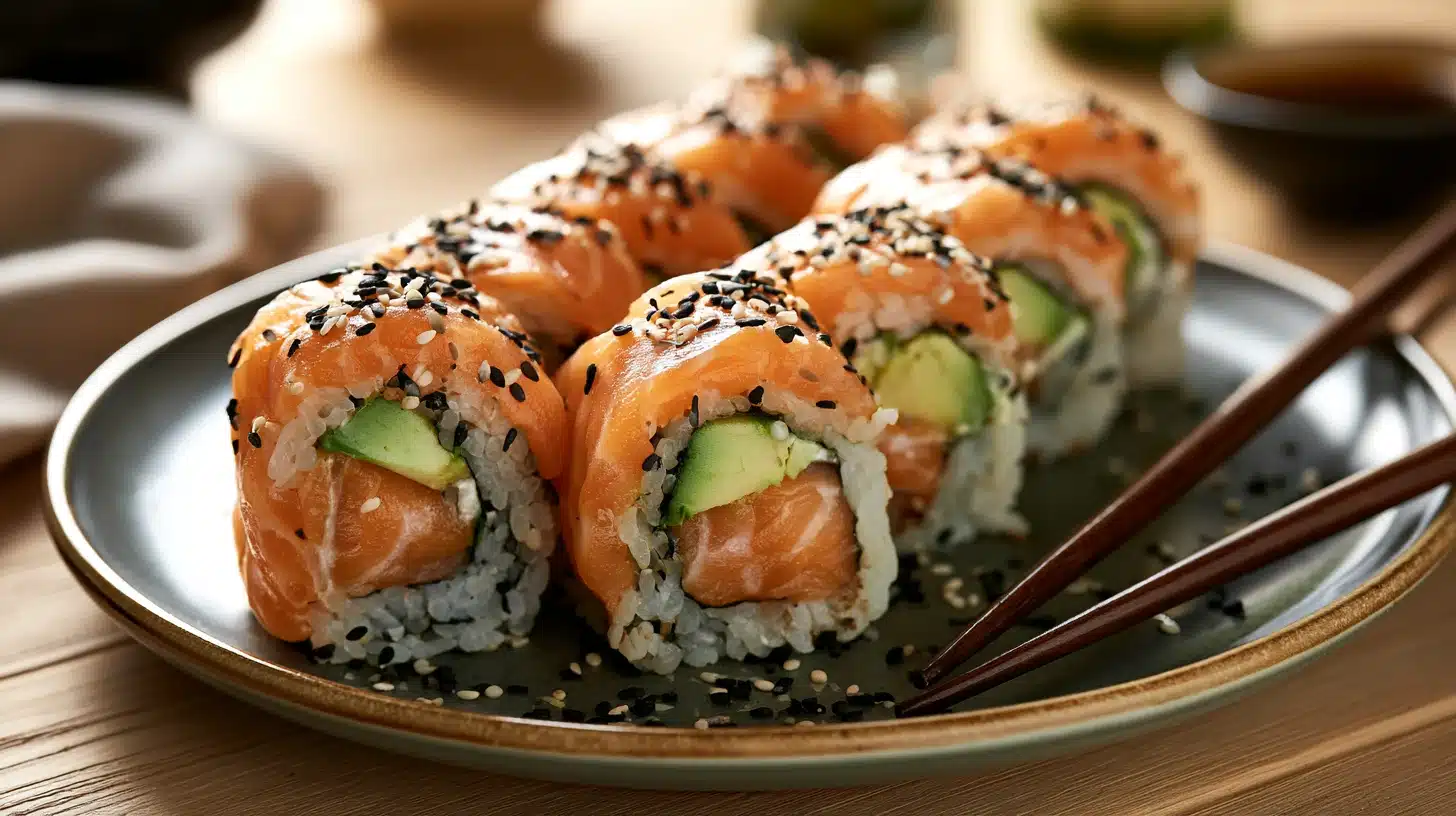
Why does making Sushi at home feel harder than ordering it from a restaurant?
An Alaska roll sushi proves that idea wrong, combining sushi rice, crab, avocado, and fresh salmon into one beginner-friendly roll.
This Sushi looks like restaurant-quality work. All it really needs is a bamboo mat and a bit of patience.
Home cooks give up on Sushi after one messy attempt. This roll rarely causes that problem.
Ingredient picks, rolling steps, sauce pairings, health notes, and safe storage tips follow next for consistent, satisfying results every time.
What Makes It Different?
A sheet of nori holds sushi rice, crab or imitation crab, avocado, and cucumber, the classic combination behind this roll.
Raw, sushi-grade salmon sits on top instead of rolled inside, and that single difference is what separates it from a California roll.
The rolling technique barely changes between the two. Smoked salmon can replace raw salmon without much of a taste difference either.
Sushi chefs on the West Coast get credit for the original version. Restaurants across the country now put their own spin on it with different sauces.
Ingredients Required
This Sushi comes together with a short list of fresh ingredients, most of which are already familiar from a grocery run.
- 2 cups sushi rice, cooked and seasoned
- 4 sheets nori
- 6 oz sushi-grade salmon, thinly sliced
- 1/3 cup imitation crab, shredded
- 1 avocado, thinly sliced
- 1 cucumber, cut into thin strips
- 2 tablespoons mayonnaise
- Toasted sesame seeds, for topping
No sushi-grade salmon nearby? Yellowtail, tuna, or smoked salmon fill in without much difference in taste. Plain crab stick also works, giving a lighter bite than crab mixed with mayonnaise.
Easy Alaska Roll Recipe that You’ll Love
Rice comes first, followed by the fillings, then the actual rolling. Skipping ahead usually leads to a messier roll, so the order below matters more than it seems.
Difficulty Level: Beginner | Serves: 4 rolls (32 pieces) | Estimated Time: 35 minutes | Prep Time: 15 minutes | Cook Time: 20 minutes
Step 1: Cook and Season the Sushi Rice

Rinse the rice until the water runs clear, then drain it well. Bring 2 cups of water to a boil in a covered pot, then lower the heat and let it simmer for 18 to 20 minutes.
Once done, pull the pot off the heat and leave the rice covered for 10 minutes. Mix rice vinegar, sugar, and salt separately before folding into the warm rice with gentle, cutting strokes.
Spread it out on a tray so it cools before rolling starts.
Step 2: Prepare the Fillings
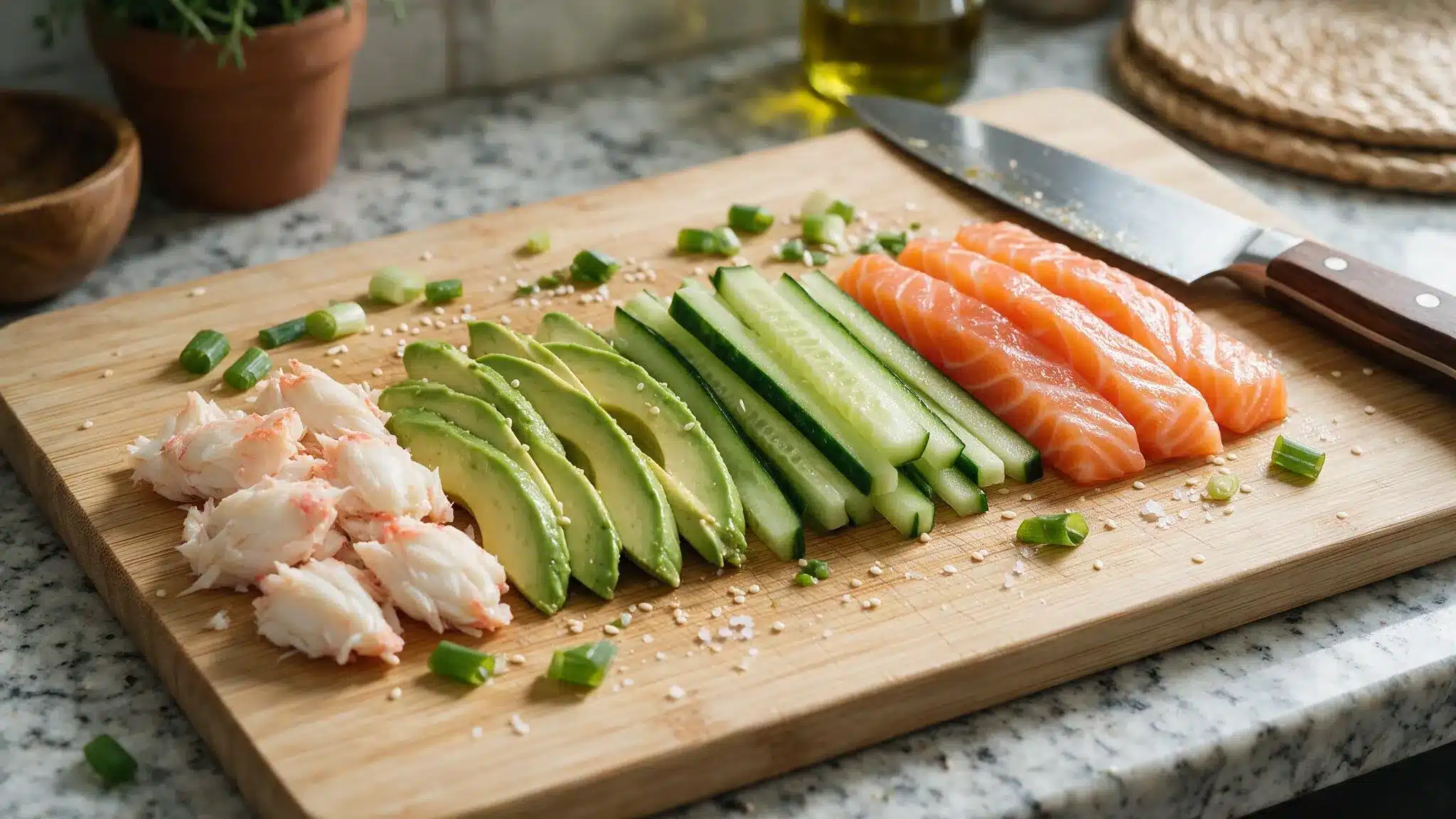
Shred the crab into thin strips first. Avocado follows, sliced into even pieces that won’t fall apart during rolling.
Cut the cucumber into thin matchsticks, similar in size to the crab and avocado. Salmon comes last, sliced thin and kept close in size for an even topping.
Step 3: Spread the Rice Evenly
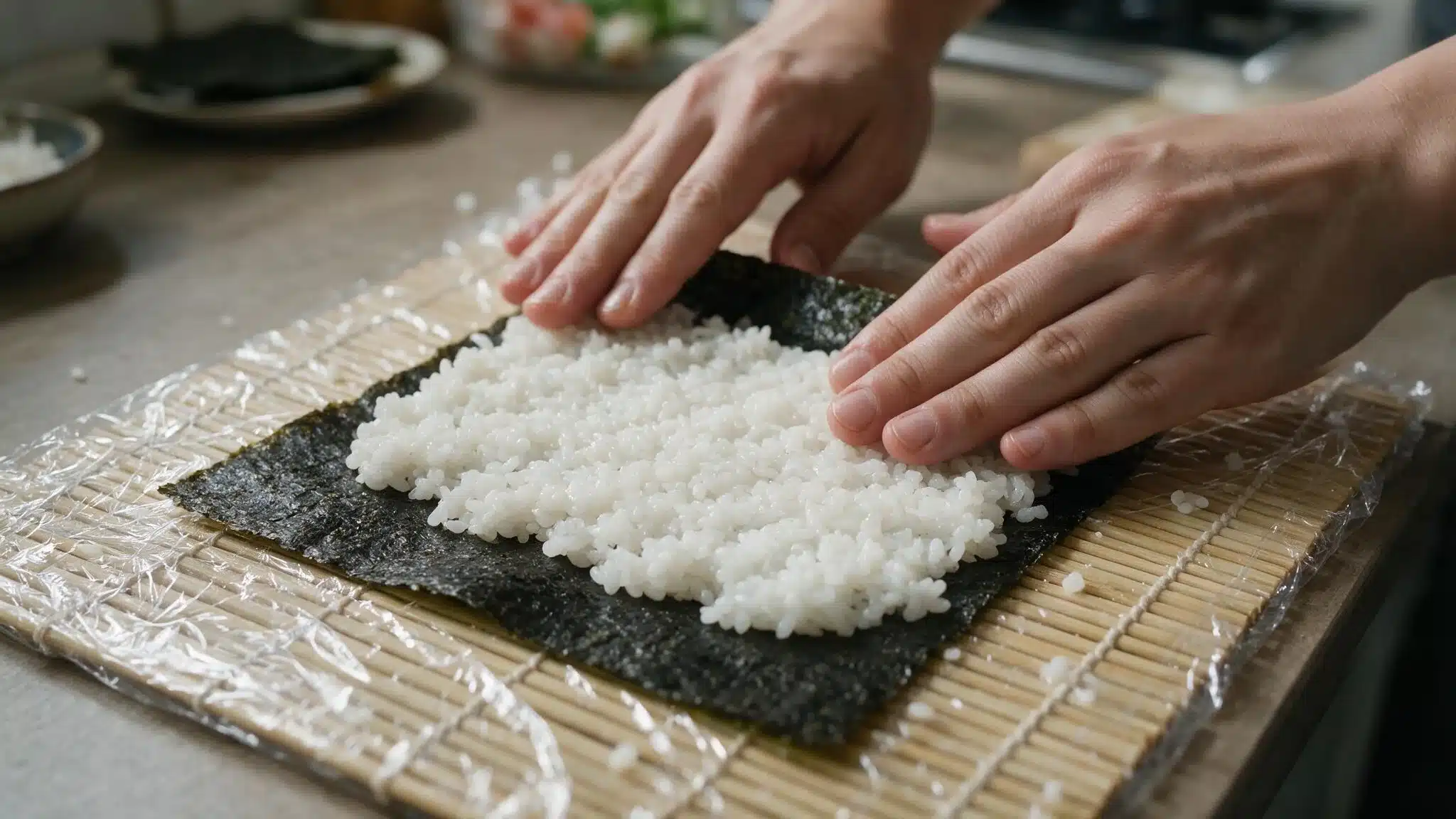
A sheet of nori goes shiny-side down on a plastic-wrapped bamboo mat. Spread the rice across the surface next, pressing gently so it reaches every edge.
The whole sheet then flips over, rice facing down against the mat.
Step 4: Add the Filling and Roll
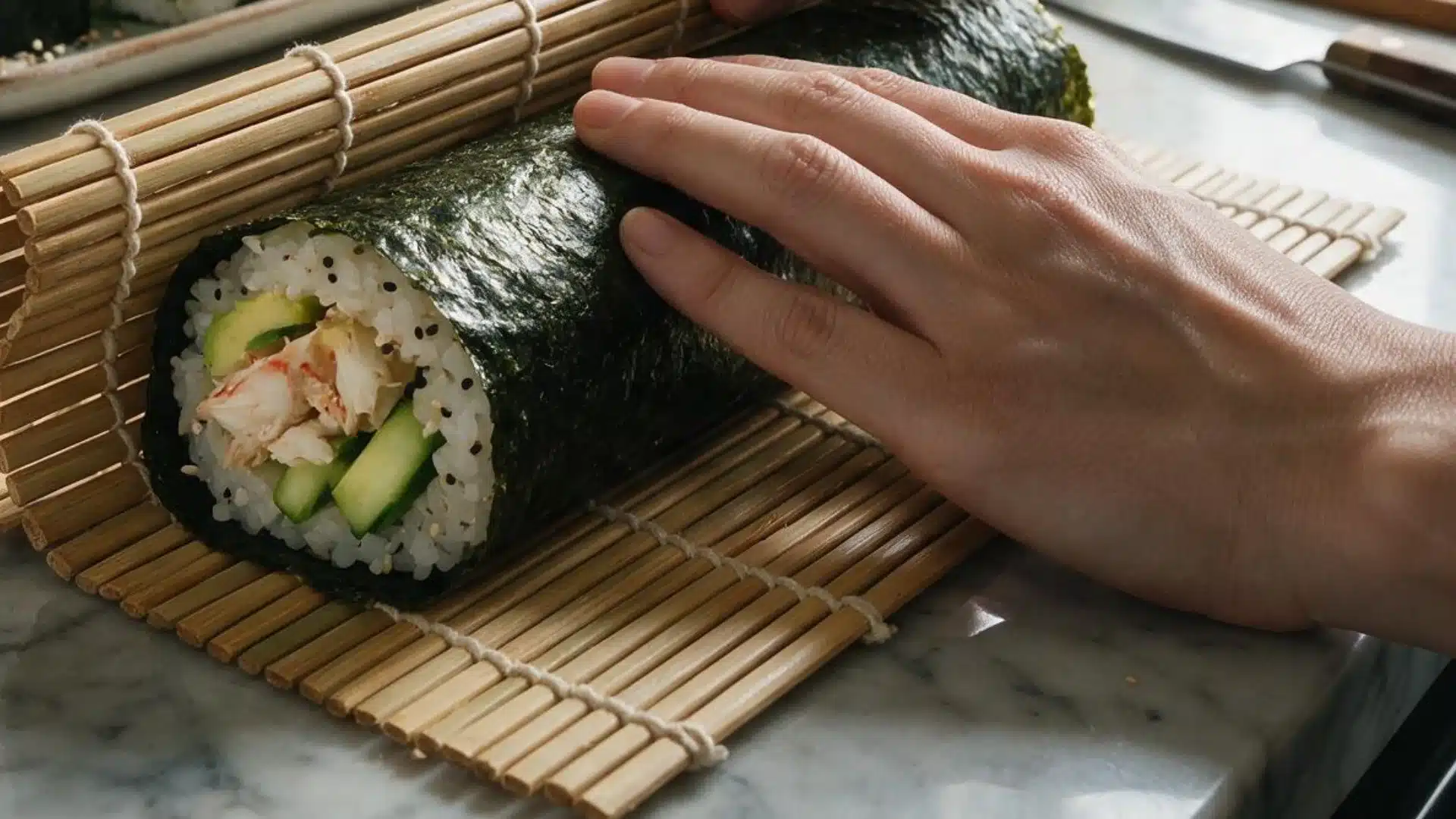
Crab, avocado, and cucumber line up near the bottom edge of the nori. The mat lifts from there, rolling everything into a tight log in one steady motion.
A light press along the length locks the shape in place.
Step 5: Top with Fresh Salmon
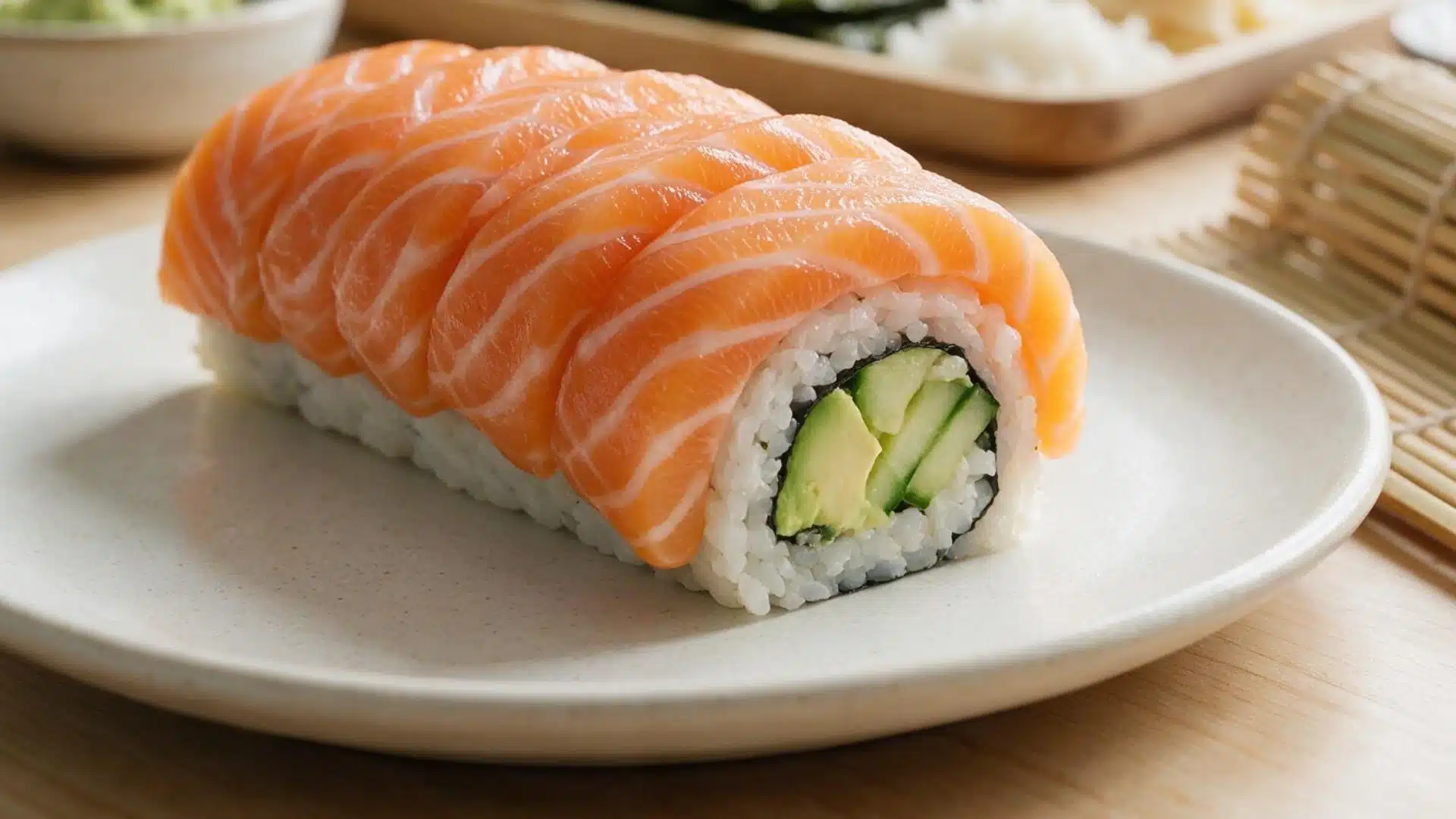
Thin salmon slices drape across the rolled log once it holds together on its own. Pressing the mat over the salmon one more time helps it settle without shifting.
Step 6: Slice and Serve Neatly
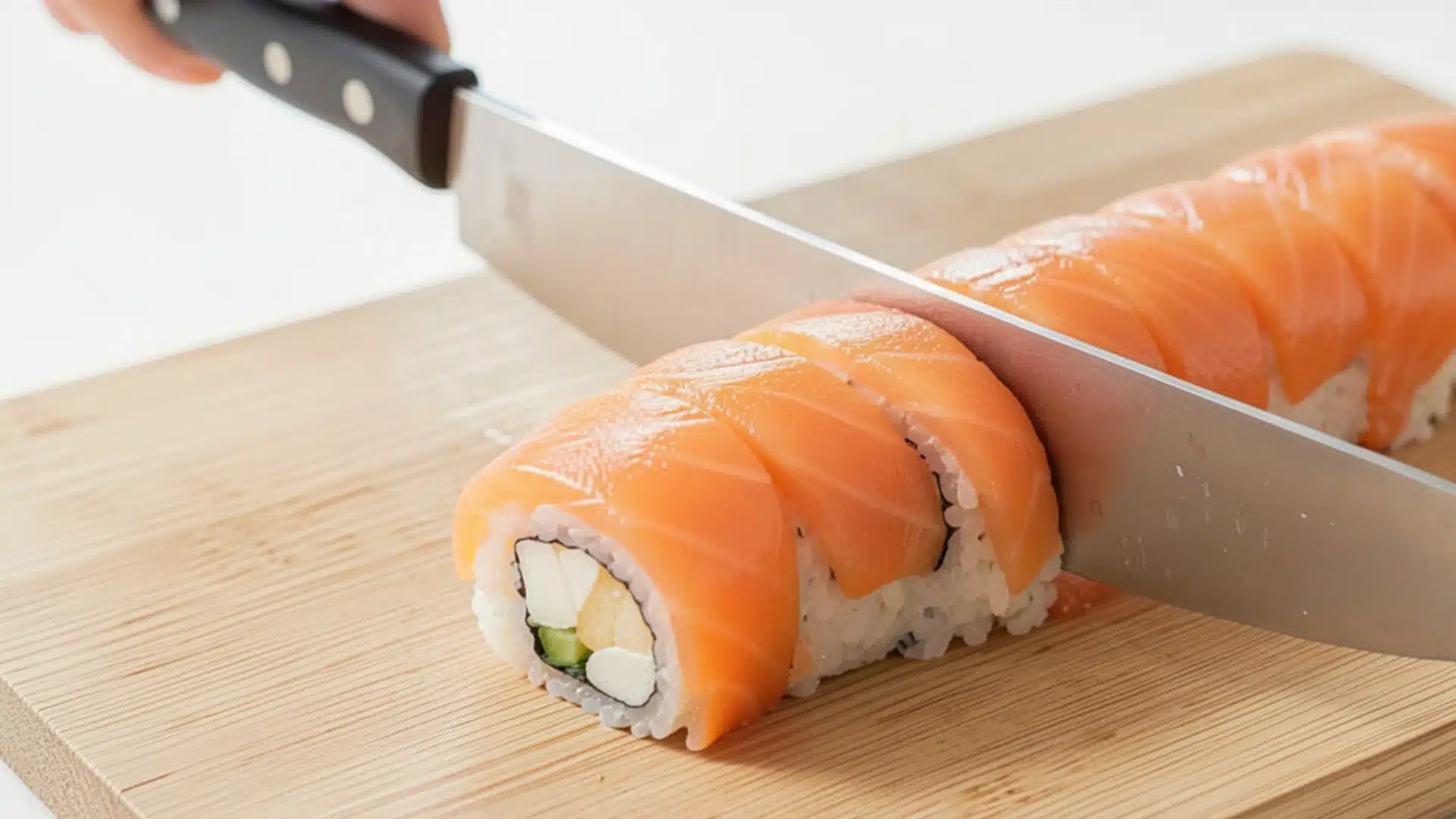
A wet knife makes the cleanest cuts through a finished roll. Eight even slices come from each roll, with the blade wiped clean between cuts.
Plating happens right after slicing, since this holds its texture best when served fresh.
Tight rolling and a firm hand with the mat usually solve a roll that keeps falling apart. A wet blade between cuts also keeps salmon from sliding off the top during slicing.
Is Alaska Roll Sushi Healthy?
Nutrition depends on portion size and what goes inside, though this roll leans lighter than deep-fried sushi options.
Salmon carries a good dose of protein and omega-3 fats, the kind linked to heart health. Avocado and crab add their own share too, rounding out a mix that stays fairly balanced overall.
Nutrition per Roll (approximate):
- Calories: 250–600
- Protein: 15–25g
- Fat: 10–20g
- Carbohydrates: 25–40g
- Sodium: 400–800mg
Rice makes up most of that calorie count, with mayonnaise pushing the number higher when used heavily. A brown rice swap adds fiber without much change to the roll’s texture.
Cutting back on mayonnaise trims more calories than it seems. Sodium stays a concern too, so a low-sodium soy sauce makes sense for anyone watching intake closely.
Gluten-free soy sauce or tamari swaps in easily for anyone avoiding wheat, without changing the flavor much.
Sauces that Pair Well with Sushi Rolls
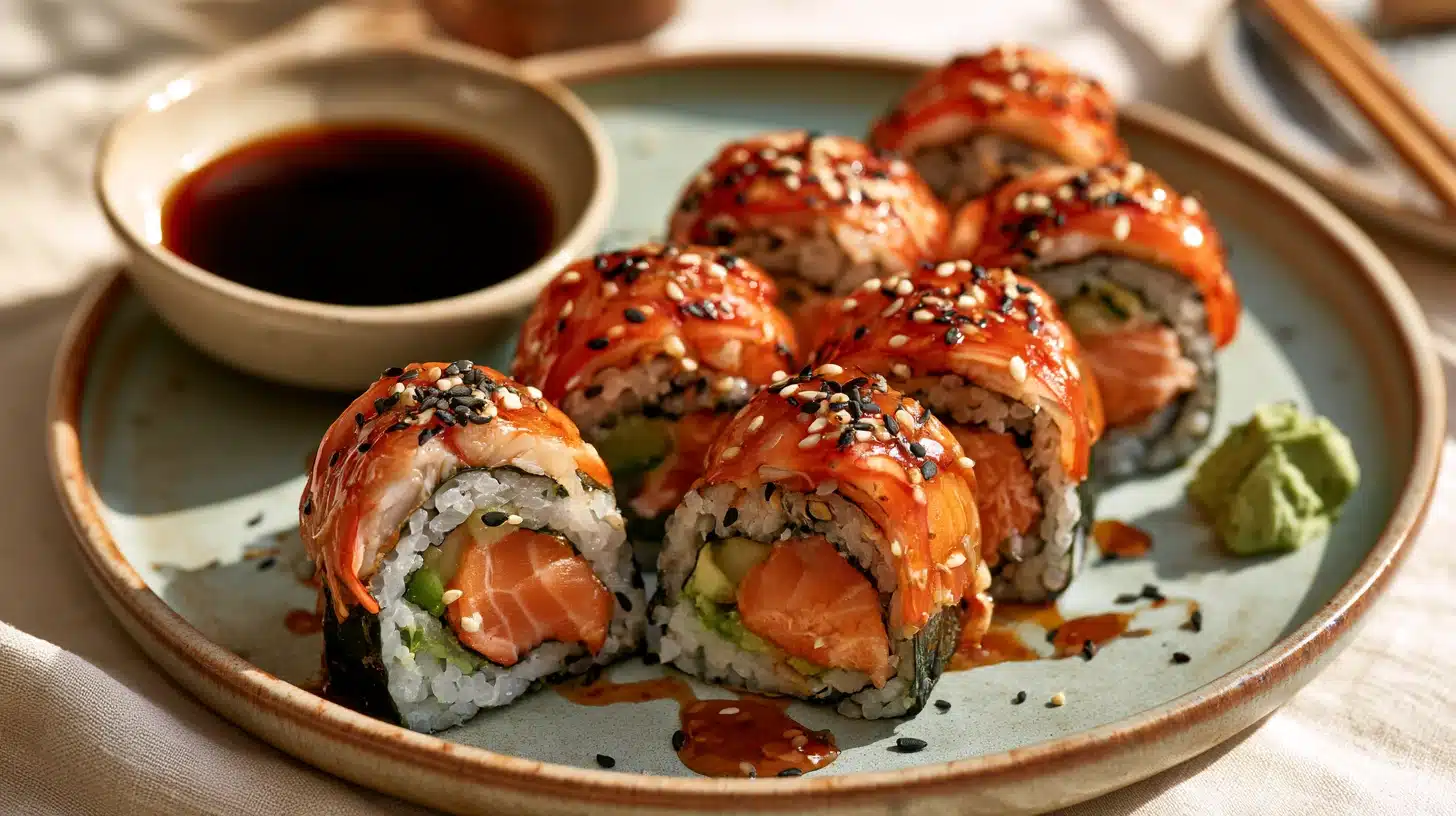
The right sauce can add saltiness, sweetness, heat, or richness without overpowering the salmon.
These few options are easy to find and work especially well with homemade salmon sushi rolls.
1. Soy Sauce
Soy sauce is the simplest choice for dipping sushi and adds a salty, savory flavor that complements salmon naturally.
Use it lightly rather than soaking the roll so the rice, fish, and fillings still come through clearly.
2. Spicy Mayo
Spicy mayo adds creamy richness and gentle heat to salmon sushi rolls. Mix mayonnaise with a small amount of sriracha, then drizzle it over the finished roll.
Adjust the spice level depending on how much heat you prefer.
3. Eel Sauce
Eel sauce brings a thick, sweet, and savory finish that pairs especially well with rich salmon.
A small drizzle across the top is usually enough, adding extra flavor without making the sushi roll feel overly sweet or heavy.
4. Wasabi Sauce
Wasabi sauce gives salmon sushi a sharper kick while keeping the texture creamy and easy to drizzle.
It works particularly well for anyone who enjoys noticeable heat, but use it sparingly so it does not overpower the salmon.
5. Ponzu Sauce
Ponzu sauce adds a light citrusy flavor that balances the natural richness of salmon.
Its combination of soy sauce and citrus makes it brighter than regular soy sauce, making it a good choice for fresh, clean-tasting sushi rolls.
Best Toppings for Salmon Sushi Rolls
Toppings add texture, color, and a little extra flavor without changing the character of the roll. The best choices are light, fresh, and easy to add just before serving.
Sesame Seeds, Tobiko, and Scallions
Sesame seeds bring a mild crunch, tobiko adds color and a slight pop, and scallions give the roll a fresh finish. Use them sparingly so the salmon remains the main focus.
Brushing lemon-infused olive oil over the salmon adds brightness without the sharp bite of raw lemon juice.
Side Dishes to Pair with It
Miso soup rounds out the plate without much effort. A cucumber salad does something similar, adding crunch.
Steamed edamame works too, especially for anyone who wants a little more on the table.
Keeping the Rolls Fresh
Sushi never holds up quite like other leftovers, mostly because of the raw salmon on top and the texture of the rice underneath.
Storing Leftovers Safely
Raw salmon needs to go in the fridge within two hours of slicing, wrapped tightly to limit air exposure.
Eating leftovers within a day keeps both texture and safety in check, since raw fish loses quality fast once cut.
Prepping Ahead of Time
Rice holds up fine a few hours ahead, covered at room temperature. Crab, avocado, and cucumber can get prepped early too, though avocado browns if cut too far in advance.
Salmon stays the one ingredient worth slicing last.
Why Fresh Sushi Tastes Best?
Rice turns firm and dry once refrigerated, losing the soft bite sushi depends on. Salmon changes texture fast too, going from silky to slightly rubbery within a day.
Rolls made with imitation crab and no raw fish hold up a little longer, though same-day eating still gives the best result.
Ready to Roll
Rice, crab, avocado, and a thin layer of salmon turn out to be far less intimidating than they first seem. The rolling motion takes practice.
Sauces, storage steps, and a few healthier swaps round out the full picture beyond just the roll itself.
Anyone wondering if homemade sushi could ever match a restaurant plate now has a clear answer: build one roll at a time.
Once the motion clicks, Alaska roll sushi tends to stick around as a regular kitchen habit rather than a one-time experiment.
Frequently Asked Questions (FAQs)
1. Is it Safe to Eat Alaska Roll During Pregnancy?
Doctors generally advise against raw salmon during pregnancy due to bacteria and parasite risks.
2. What’s the Difference Between an Alaska Roll and A Philadelphia Roll?
Philadelphia rolls add cream cheese and roll the salmon inside; Alaska rolls skip the cream cheese and place salmon on top.
3. Can Kids Eat Alaska Roll?
Sure, swap the raw salmon for a cooked option like smoked salmon.
4. What Drink Pairs Well with Alaska Roll?
Green tea, a light beer, or a dry white wine all work nicely here.