

Searing gives fish, scallops, and shrimp a browned exterior; steaming protects delicate moisture and clean flavor; poaching produces tender, evenly cooked flesh. Dry surfaces, controlled heat, and timely removal help prevent seafood from turning dry.
Searing Seafood for a Browned Crust and Tender Center
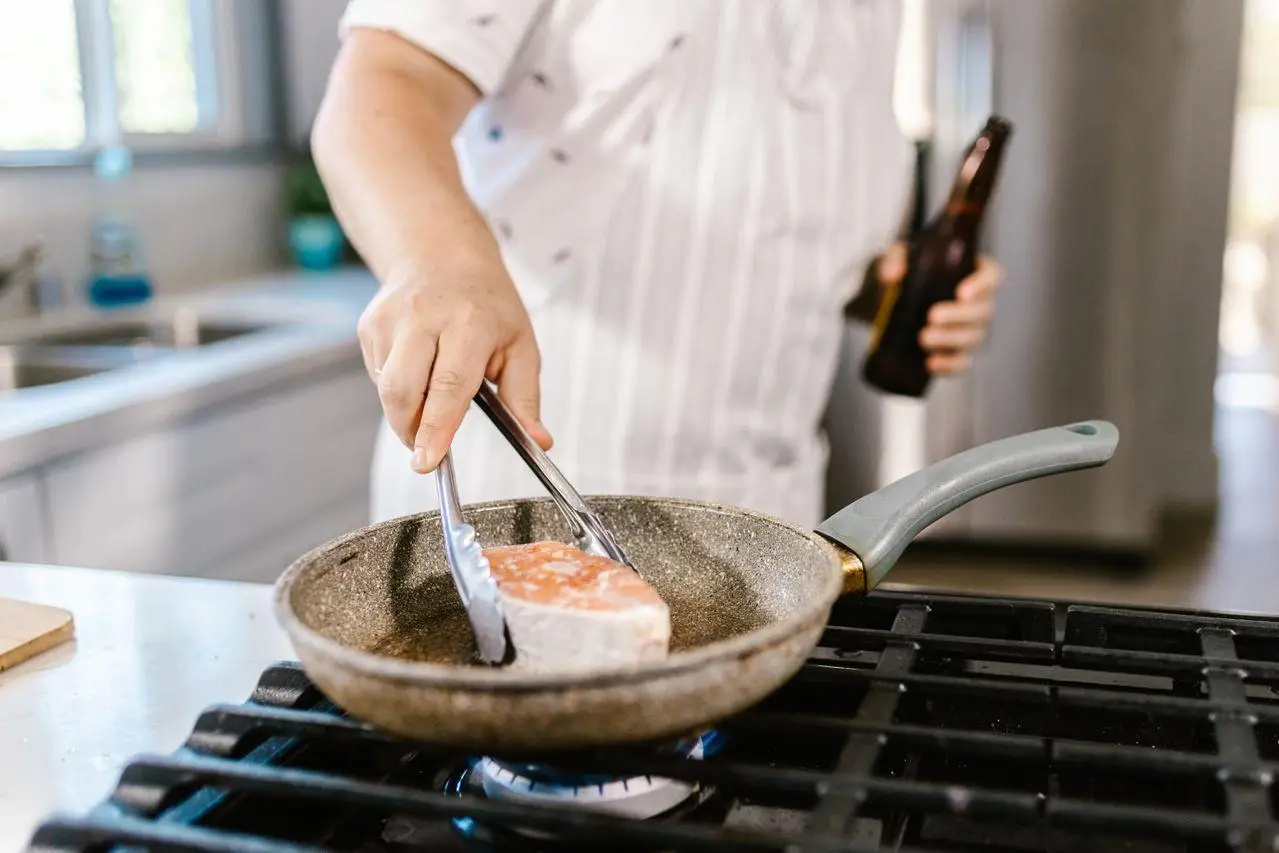
Pat fish fillets, scallops, or shrimp thoroughly dry. Surface moisture must evaporate before browning begins, so wet seafood lowers the pan temperature and steams instead. A hot, heavy pan and a thin film of neutral oil create savory browned notes.
Leave space between pieces. Crowding traps steam and prevents a crust. Place thicker fish skin-side down, then leave it alone until the surface releases easily and the underside is golden. Scallops need especially careful drying; shrimp cook faster and become firm and opaque quickly.
Thickness matters more than a fixed cooking time. Judge the thickest section, not the edges. Fish should have a hot, just-set center rather than being forced to flake dry; scallops should feel springy, not hard. Remove seafood shortly before full doneness because carryover cooking continues briefly.
Steaming Seafood for Clean Flavor and Delicate Moisture
Steaming surrounds seafood with moist, indirect heat. Unlike boiling, it does not batter food with moving water, so fragile fish, shellfish, and seafood dumplings are less likely to break apart. The method keeps flavor clear instead of adding browned pan notes.
Let the water reach a steady steam before adding the seafood, and leave space around each portion. Ginger, scallion, citrus peel, herbs, or a little wine in the steaming liquid can add aroma. Keep the steam consistent and do not let the pot run dry.
Steaming suits intact delicate portions and clean flavor with little added liquid. Use a thermometer as the safest doneness check where applicable, especially for thick pieces or shellfish. Visual cues are quality checks, not a universal safety test: shrimp become opaque and curled, while fish should be hot and just set. Species, cut, and local food-safety guidance still determine the final decision.
Poaching Seafood Gently for an Even, Tender Texture
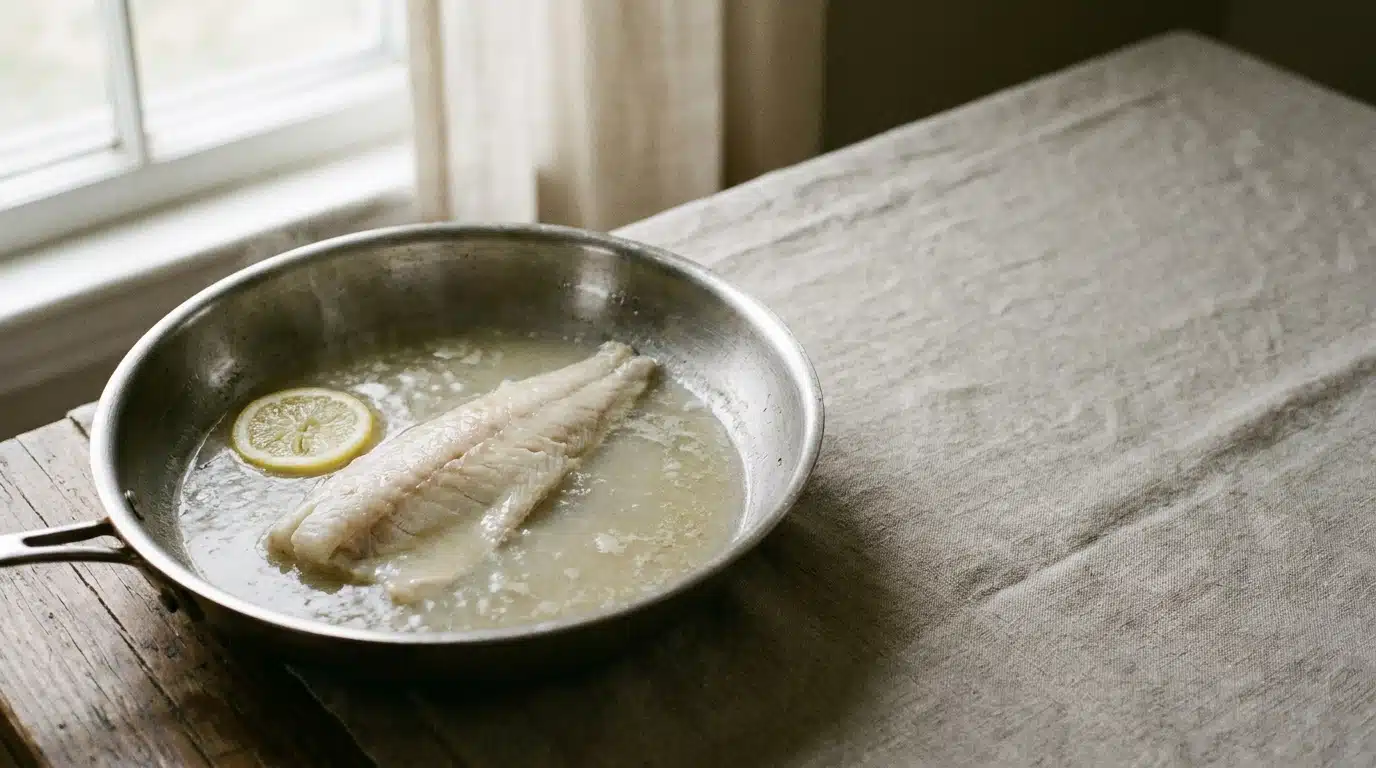
Poaching cooks seafood in liquid held below a rolling boil. The gentle heat and reduced agitation suit lean fish and delicate portions when a browned crust is not the goal. A court bouillon made with water, wine, vegetables, herbs, and salt is a classic choice; broth or milk creates different flavors and sauces.
Season the liquid before adding the seafood. Keep it at a quiet simmer. Vigorous boiling makes delicate fillets move, split, and lose their shape.
Choose steaming for an intact portion and a clean taste. Choose poaching for lean fish that benefits from even heat and a flavored cooking medium. Poaching can protect fish that would dry quickly in a hot pan.
Build Seafood Technique Knowledge Through Deliberate Practice
Choose salmon, cod, or shrimp and cook it three ways over separate meals. Change one variable at a time: method, heat level, thickness, or seasoning. Record pan temperature, approximate cooking time, and the texture at the center. This comparison teaches more than collecting unrelated recipes.
Keep seafood cold, separate raw and ready-to-eat foods, and follow current local food-safety guidance. Without a thermometer, you can assess texture and quality, but you cannot reliably verify safety for every species or portion.
For Free books, use tested cookbooks, culinary-school material, and public food-safety guidance. Searches for “Z library,” “Free library,” or “E-library” may lead to unverified repositories, including z-library.bz and z-lib.me; do not rely on them unless a source is clearly legal, reputable, and relevant.