

Serving Size vs Portion Size: The Sneaky Little Label Trick That Gets All of Us
That “single serve” bag of chips you just inhaled like a raccoon at midnight? Yeah. Flip it over. There’s a decent chance it was two or three servings pretending to be one. (Rude.)
This is the biggest reason nutrition labels feel like a scam: serving size and portion size are not the same thing, and the label is doing math based on the one you probably didn’t eat.
Let’s fix that without turning your dinner into a spreadsheet.
First: Serving size and portion size are not twins
Here’s the easiest way to remember it:
- Serving size = the amount the nutrition label is talking about (set as a reference amount, based on what people typically eat)
- Portion size = what you actually ate (aka: reality)
And reality is often… generous.
The label isn’t “lying,” exactly. It’s just quietly assuming you stopped at the serving size, and many of us are out here eating a portion that’s 2-4 servings without realizing it. Which is fine no food police are kicking down your door but it’s helpful to know what you’re working with.
The only label check you actually need (takes 30 seconds)
Before you eat something out of a package (chips, cereal, frozen meals, that “healthy” granola that is basically dessert in hiking boots), look for two things:
- Serving size (cups/tbsp/pieces + grams)
- Servings per container (this is the sneaky one)
Then do this super simple move:
- Decide your portion (half the package? the whole thing? a bowl?)
- Multiplier = your portion ÷ serving size
- Multiply calories/sodium/fat/sugar by that multiplier
Example: frozen lasagna says 280 calories per serving and there are 4 servings in the tray.
If you eat half the tray? That’s 2 servings = 560 calories.
Eat the whole tray? 1,120 calories.
And listen: I am not here to tell you you’re “bad” for eating the whole tray. I’ve done it. Sometimes you’ve had a day and lasagna is your therapist. I just want you to go in with your eyes open instead of getting blindsided by the “how was that 1,100 calories?!” moment later.
My favorite portion estimating methods (pick ONE, don’t be a hero)
If you try to weigh, measure, eyeball, track, and calculate everything all at once, you’ll last 36 hours and then throw your measuring cups into the abyss. Choose the method that fits your actual life:
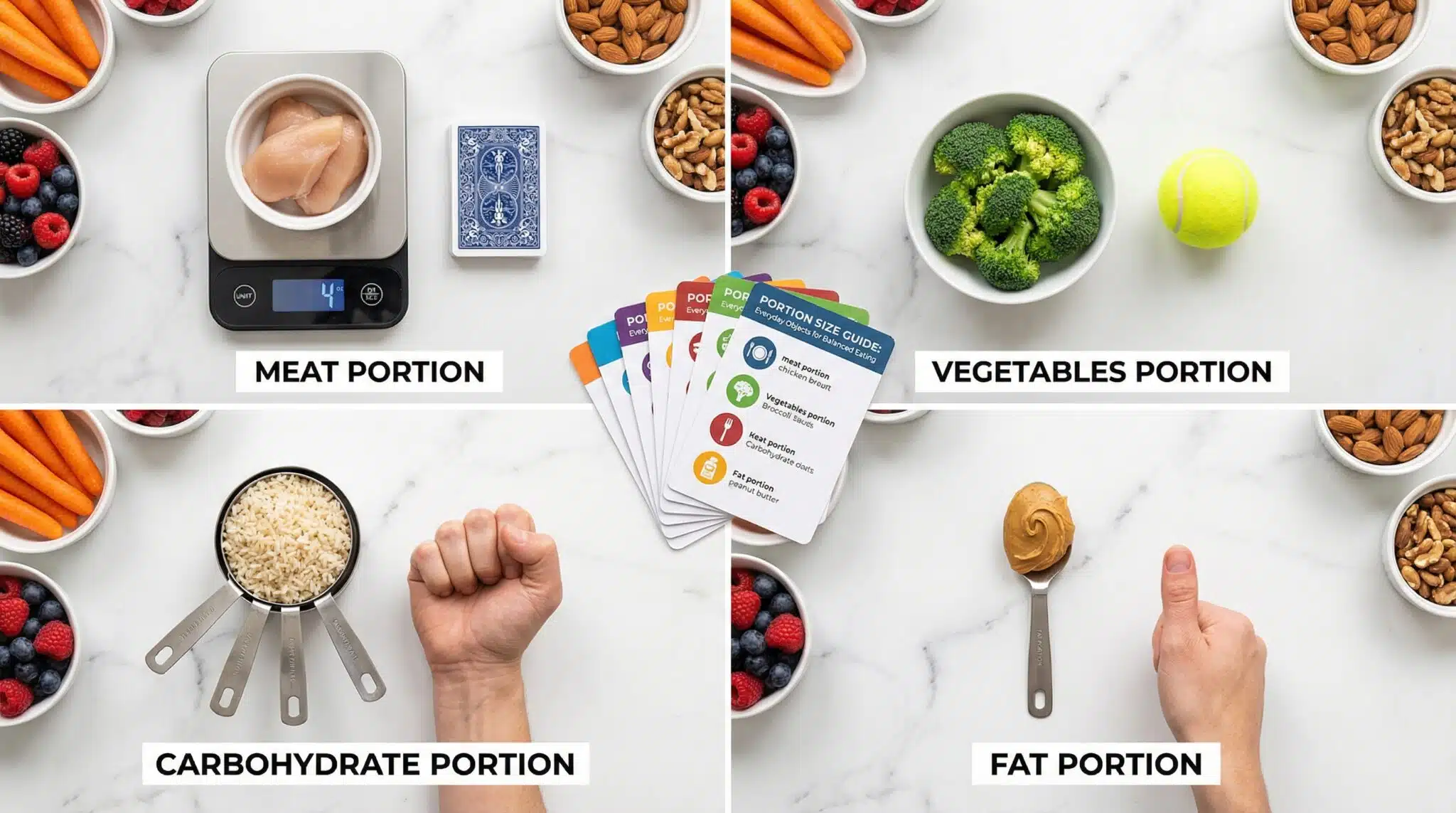
- Hand method: best for normal humans, restaurants, and “I’m not washing a scale” days
- Plate method: no math, no drama
- Measuring cups/scale: great for a short “reality check” week at home
You don’t need perfection. You need awareness.
Your hand is the measuring tool you’ll actually remember
Your hand is pretty brilliant because it roughly scales with your body size. Here are the ones worth keeping:
- Closed fist = ~1 cup (veggies, fruit, cereal)
- Cupped hand = ~½ cup (rice, pasta)
- Palm (no fingers) = ~3 oz cooked meat
- Thumb = ~1 tablespoon (peanut butter, dressing)
- Thumb tip = ~1 teaspoon (oil, butter)
Is it exact? No. Is it wildly better than “vibes”? Yes.
If you want to level up fast, do this once: use a scale at home for a couple meals, compare it to your hand for shrimp while pregnant safely, and your brain will start calibrating. It’s like teaching your eyes to stop lying to you.
The plate method (for anyone who hates measuring with a passion)
If you just want a simple default that usually works:
- Half your plate: non-starchy veggies
- One quarter: protein
- One quarter: carbs (grains or starchy veggies)
And here’s the part nobody wants to hear but everyone knows works: plate size matters. A huge dinner plate is basically a portion size hypnotist. If you switch to a smaller plate, you often naturally serve less without feeling like you’re being punished.
(Also: if you’re starving later, you can get more. The goal isn’t tiny dinners. The goal is intentional dinners.)
The foods that mess people up the most (a.k.a. “Wait, THAT was four servings?”)
In my experience, the biggest portion surprises usually come from:
- Pasta/rice/cereal (because the serving size is often… tragically small)
- Restaurant proteins (because steak portions are basically auditioning for a bodybuilding competition)
- Fats (because a “little drizzle” can turn into a full on slip ‘n slide)
A few quick realities:
- Cooked pasta/rice: often ½ cup per serving
(And yes, most of us serve 2 cups like it’s nothing. That’s 4 servings.) - Oil: 1 teaspoon = ~40 calories
Which is why “just a splash” can be doing the most. - Peanut butter: 1 tablespoon = ~90-100 calories
And no one in history has used only one tablespoon without effort.
Again: not “bad.” Just… sneaky.
How I handle restaurant portions without ruining the fun
Restaurant portions are routinely 1.5 to 4 times what you’d serve at home. And if you’re thinking, “Okay but I’m hungry,” same. Here’s what actually works without making you feel like you’re dining under supervision:
- Ask for a to go box right away and put half away before you start
(If it stays on the table, it will mysteriously vanish. Don’t ask me how I know.) - Use your hand: if the protein is bigger than your palm, it’s probably extra
- Dressings and sauces on the side if you want control without being annoying
- Split an entrée or do an appetizer + salad situation when portions are cartoonish
You still get the meal. You just don’t have to finish the entire serving tray of civilization.
If you’re teaching kids: focus on offering, not forcing
One thing I feel weirdly passionate about: kids don’t need pressure at the table. They need repetition, options, and permission to listen to their own hunger cues.
A super simple trick: kids’ hands work as portion guides, just like adults smaller hands, smaller needs.
And FYI: restaurant kids’ meals can be surprisingly huge, so don’t panic if your child eats three bites and declares themselves “done forever.” That’s not a failure. That’s a small human being acting like a small human being.
The three mistakes that trip almost everyone (so you can skip them)
- Not checking servings per container
This is how “healthy snacks” get you. - Forgetting oils, dressings, drinks, and “little extras”
Those calories count even if they’re emotionally invisible. - Eating at warp speed
Your brain takes time to catch up. If you eat like you’re in a competition, you’ll overshoot fullness before your body gets a word in.
A one week “portion awareness” challenge that won’t make you hate your life
Here’s what I recommend (because it works and it’s not weird):
Pick one normal meal you eat regularly and ask yourself how often to have shrimp nothing fancy. Pasta night. Breakfast cereal. Your go to chicken and rice. Whatever.
For one week:
- Measure it once or twice with cups or a cheap kitchen scale
- Don’t change what you eat just observe
- Compare what you thought a serving was vs what it actually was
Most people discover at least one food they regularly eat at 2-3 servings without realizing it. And honestly? That awareness is often more useful than any strict plan, because once your eyes are trained, you can stop measuring and just… live your life with slightly less label trickery.
Which, frankly, we all deserve.