

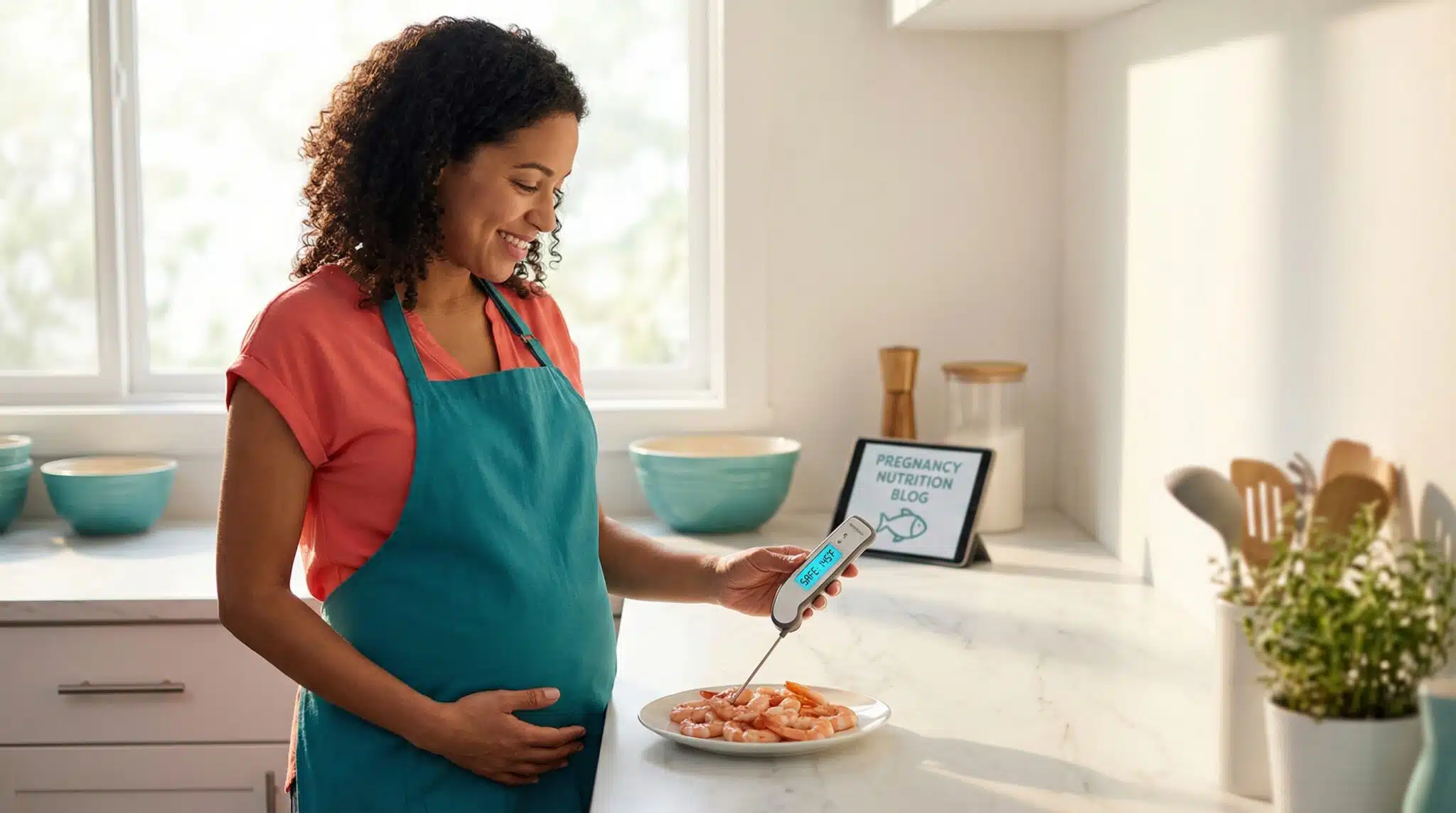
Craving Shrimp While Pregnant? Yes, You Can (But Let’s Not Get Wild About It)
If you’re pregnant and suddenly obsessed with shrimp like “I would eat shrimp in the shower if that were socially acceptable” levels of obsessed good news: shrimp is actually one of the easier seafood cravings to say yes to.
Shrimp is on the FDA’s “Best Choice” list for pregnancy, which is basically the government’s way of saying, “This one’s not trying to ruin your day.” It’s low in mercury, high in protein, and it brings some nice brain building omega-3s to the party.
The only catch (sorry) is that shrimp safety is less about mercury panic and more about the unsexy stuff: cooking it all the way, handling it like an adult, and being a little picky about pre-cooked shrimp that’s been hanging out in a cold case since who knows when.
Let’s break it down in real person terms.
Why Shrimp Is Basically the Teacher’s Pet of Pregnancy Seafood
Shrimp stays low on the food chain and doesn’t live long enough to stack up mercury the way big, older fish do. That’s why it’s considered low mercury compared to the “hard no” fish (we’ll get to those in a minute).
And mercury is the thing you actually want to watch in pregnancy because it can cross the placenta and affect baby’s developing brain and nervous system. Shrimp’s mercury level is so low you’d have to eat an honestly impressive (and kind of concerning) amount for it to become the issue.
So yes: shrimp is a top tier choice… as long as it’s cooked and handled properly.
The “Okay But Is It Even Worth It?” Nutrition Part (It Is)
Shrimp is one of those foods that’s weirdly high reward for minimal effort. Roughly a 4-ounce serving of cooked shrimp gets you:
- Protein (~24g): your body is building a whole human, so yes, it wants building blocks
- Vitamin B12 (~1.4 mcg): helps with nervous system stuff (yours and baby’s)
- Omega-3s (DHA + EPA, ~200-300 mg): supports baby’s brain and eye development
- Iodine (~30-40 mcg): helps thyroid function (which is not a vibe you want to mess with right now)
Also: a lot of pregnant people end up eating way less seafood than recommended because it feels confusing and scary. Shrimp is an easy way to sneak those nutrients in without playing “Mercury Roulette.”
How Much Shrimp Can You Eat in a Week?
Here’s the guideline that matters most:
Aim for 8-12 ounces of low mercury seafood per week total (not per type). So shrimp is sharing that weekly “seafood budget” with salmon, cod, tilapia, etc.
What does a shrimp serving look like?
About 4 ounces, which is roughly:
- 12-15 large shrimp, or
- 20-24 medium shrimp
So yes, you can absolutely have shrimp a couple times a week (even up to three meals) depending on what else you’re eating.
If you go over one week: don’t spiral. Mercury concerns around shrimp mercury per serving are about repeated high mercury fish over time, not “I ate shrimp twice and now I’m doomed.” Just balance it out the next week and move on with your life.
Cook It Like You Mean It: The Temperature That Matters
If you take one thing from this whole post, let it be this:
Cook shrimp to 145°F (63°C).
That’s the temp that knocks out the stuff you don’t want Listeria, Salmonella, Vibrio, and other bacteria/parasite risks.
And yes, shrimp turns pink and curls into a cute little “C” shape… but that can happen before the inside is fully safe. So if you’re the “I eyeball everything” type (hi, it’s me too), pregnancy is a great time to become a brief, glamorous user of a food thermometer.
Quick cooking time reality check (varies by size, so temp wins):
- Boil: ~3-4 minutes (medium shrimp)
- Sauté: ~2-3 minutes per side
- Grill: ~2-3 minutes per side
- From frozen: add a couple minutes, then check temp
Overcooked shrimp is a little rubbery. Undercooked shrimp is a little… emergency room-y. Choose rubber.
The Sneaky Risk: Pre-Cooked Shrimp Platters
This is the part that surprises people.
Pre-cooked refrigerated shrimp (party trays, deli containers, “cocktail shrimp” rings) can be riskier than buying raw and cooking it yourself because Listeria can grow in the fridge.
And pregnant people are way more likely to get seriously sick from Listeria (and it can affect the pregnancy), so I get a little dramatic about this one.
If you’re buying pre-cooked shrimp:
- Make sure it’s been kept at or below 40°F
- Check the sell by/use by date
- Buy from places with reliable refrigeration
- Eat it within 1-2 days
- Skip it if it’s been sitting out (like at a party where it’s been “chilling” on the counter for vibes)
Also: refrigerated smoked shrimp is higher risk if you’re eating it, reheat to 165°F.
Canned, shelf stable shrimp is generally fine as-is.
My personal rule? If I can’t confidently tell how long it’s been sitting around, I want it served hot.
Storing Shrimp Without Turning Your Fridge Into a Science Experiment
Shrimp is not hard, but it is the kind of food that rewards basic common sense.
Raw shrimp:
- Use within 1-2 days (or freeze it)
- Keep it on the bottom shelf so it can’t drip onto other food (because ew)
Cooked shrimp:
- Refrigerate within 2 hours (within 1 hour if it’s super hot out)
- Eat within 3-4 days
Thawing (don’t be chaotic):
- Best: overnight in the fridge
- Okay: sealed bag in cold water, change water every 30 minutes
- Don’t: on the counter (this is how regrets are made)
And please, for the love of all clean kitchens: don’t put cooked shrimp back on the same plate that held it raw. Cross contamination is a sneaky villain.
Ordering Shrimp at Restaurants Without Becoming “That Person” (You Can Be That Person)
When you’re pregnant, you’re allowed to be politely bossy. Truly.
Here’s exactly what to say:
“I’m pregnant can you make sure the shrimp is fully cooked through? I’d rather it be slightly overcooked than undercooked.”
No decent restaurant is going to clutch pearls over that.
Safer restaurant picks:
- Shrimp that’s grilled/boiled/fried and served hot
- Cooked sushi options (tempura shrimp rolls are common just confirm it’s cooked)
Skip these:
- Shrimp cocktail platters with mystery holding time
- Buffets (the shrimp may be fine, but the timeline is not)
- Raw preparations like ceviche (citrus is not a magic disinfectant, sorry)
Shrimp Preparations I’m Begging You to Avoid While Pregnant
If it’s raw shrimp, it’s a no.
That includes:
- sushi/sashimi with raw shrimp
- ceviche
- anything “lightly cured”
- grocery store sushi that’s been hanging out all day
Also, “sushi grade” is not a regulated term that guarantees safety. It’s more of a marketing vibe than a pregnancy protection plan.
Quick Detour: High Mercury Fish to Avoid Completely
Shrimp is low mercury. Some fish are not. Avoid these during pregnancy:
- Shark
- Swordfish
- King mackerel
- Tilefish (from the Gulf of Mexico)
- Bigeye tuna
- Marlin
- Orange roughy
If you want seafood, stick to low mercury options like shrimp, salmon, cod, tilapia, etc.
Buying Shrimp at the Store: My “Don’t Get Punked” Checklist
Wild caught vs. farm raised: mercury stays low either way. (Bonus: U.S. farmed shrimp often follows stricter rules than some imports.)
What I personally look for:
- No ammonia smell (if it smells like cleaning products, walk away)
- Firm texture, not mushy
- No excessive ice crystals (can mean thawed + refrozen)
If you’re eating locally caught shrimp and you’re not sure about water advisories, it’s smart to check local guidance if available. If there’s no guidance, some people choose to limit locally caught seafood as a precaution because contaminants vary and cooking doesn’t remove everything.
If You Accidentally Ate Undercooked Shrimp
First: breathe. One questionable bite does not guarantee you’ll get sick.
What to watch for:
- Salmonella symptoms: usually 6-72 hours after (nausea, vomiting, diarrhea, fever)
- Listeria symptoms: can show up days to weeks later (fever, muscle aches, flu like symptoms)
Call your healthcare provider if you have:
- any food poisoning symptoms
- fever over 101°F
- severe abdominal cramping
- or honestly, any fever during pregnancy (even if you’re not sure it’s related)
When you call, tell them what you ate, when you ate it, and whether it was undercooked. They’ll tell you what to do next based on your situation.
Also: if you have a known shellfish allergy, pregnancy is not the moment to “test” anything. Your immune system is already busy.
Bottom Line (AKA: Go Enjoy Your Shrimp)
You can absolutely eat shrimp while pregnant and it’s honestly one of the best seafood choices you can make.
Just keep it simple:
- Stay within 8-12 oz/week of low mercury seafood total
- Cook shrimp to 145°F
- Be extra cautious with pre-cooked refrigerated shrimp
- Skip raw/buffet/mystery timeline shrimp
- Call your provider if you feel sick or get a fever
Now go satisfy that shrimp craving like the capable, snack determined person you are.