

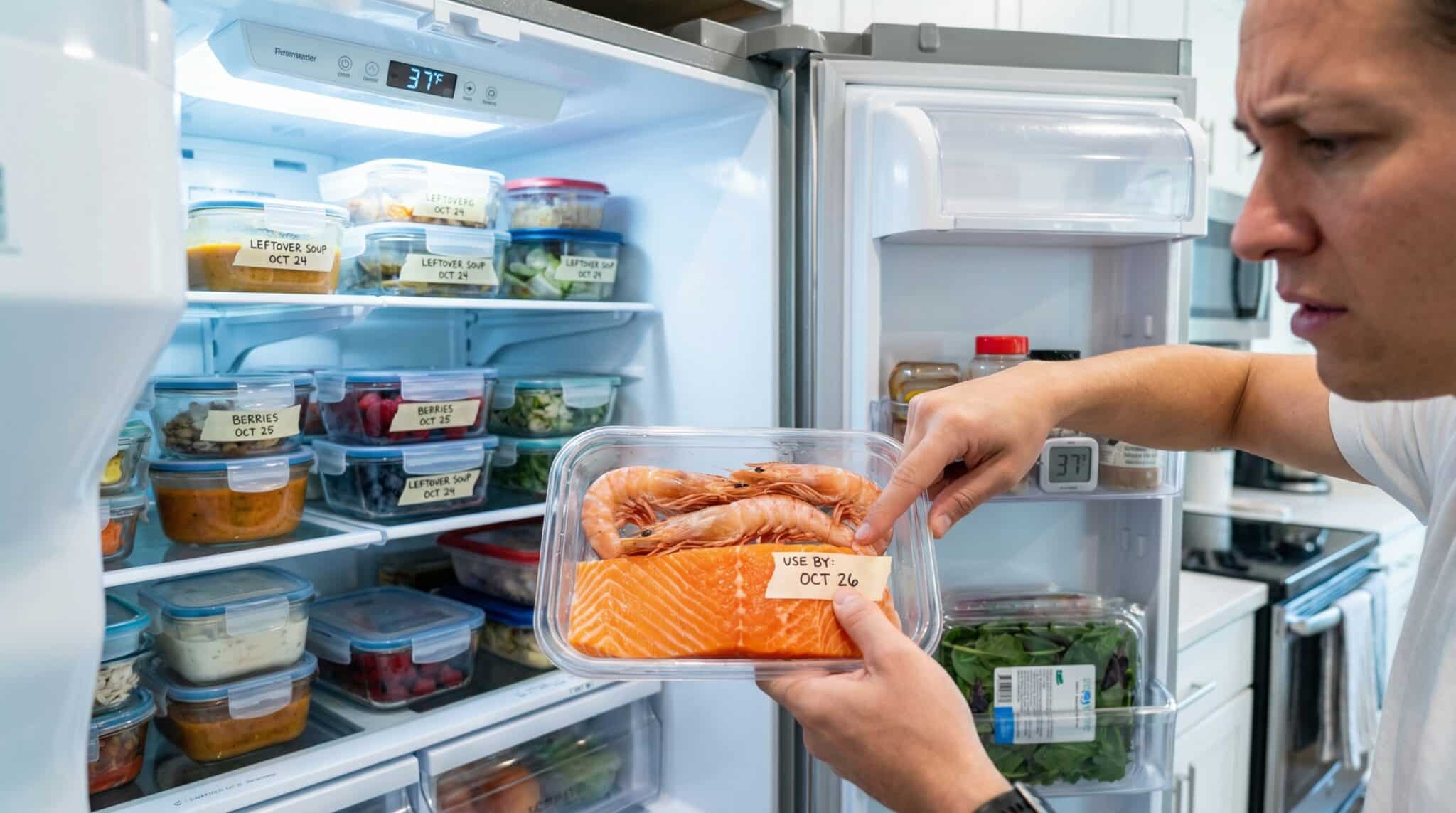
How Long Does Seafood Last in the Fridge? (AKA: Please Don’t Play “Smell Roulette”)
Seafood is delicious. Seafood is also… a little dramatic. Like a friend who’s fun at brunch but absolutely cannot be left unattended for long. If you’ve ever stood in front of your fridge holding a container of leftover shrimp thinking, “You seem fine… right?” hi, you’re my people.
Here’s the deal: seafood doesn’t give you a lot of wiggle room. The good news is you don’t need a culinary degree to store it safely. You just need a couple non-negotiable rules, a realistic timeline, and the confidence to toss something when it’s acting suspicious.
Let’s get into it.
First: Set Your Fridge Up to Win (40°F or Below, Please and Thank You)
Seafood safety starts with one extremely unsexy purchase: a fridge thermometer. Not the cute decorative kind. The cheap little one that tells you the truth even when your fridge dial is lying to your face.
- Your fridge needs to be 40°F (4°C) or colder.
- If it’s running 42-45°F, you’re basically keeping your salmon in a gentle spa where bacteria thrive. Adjust your fridge and re-check the next day.
Where you put seafood matters, too:
- Coldest spot is usually the back of the bottom shelf (not the door never the door).
- Keep raw seafood on the lowest shelf so nothing drips onto ready to eat food. (Because no one wants “mystery fish juice” on their strawberries.)
The Restaurant Trick That Actually Works: The Ice Bed Method
If you’re the kind of person who buys fish and then life happens (same), this can help keep it colder than the average fridge shelf.
Here’s how I do it when I’m trying to be a responsible adult:
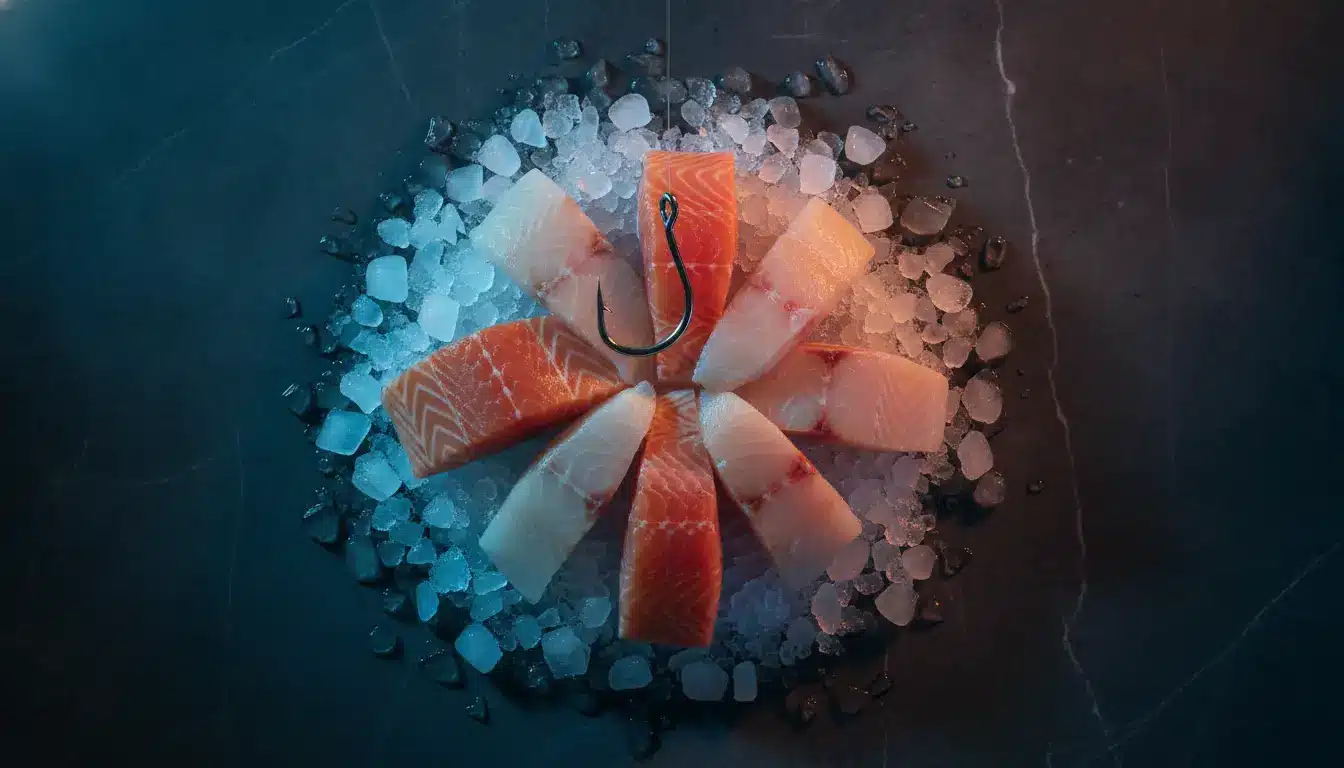
- Put a wire rack in a shallow pan.
- Add crushed ice under the rack.
- Set your wrapped fish on the rack (not sitting in water).
- Drain meltwater and refresh ice daily.
This keeps the fish closer to 32°F instead of hovering at 38-40°F. It’s not magic, but it can buy you a little time when the fish is already fresh and properly handled.
How to Store It Without Stinking Up Your Entire Fridge
A quick wrapping/container pep talk:
- Fresh fish fillets: wrap tightly (plastic wrap), then add a second layer (foil or freezer paper). Odors stay contained, and you can freeze it easily if plans change.
- Cooked seafood / shucked shellfish: airtight container with a lid that actually seals (not the “kinda perched on top” situation).
- Live shellfish (clams/mussels/oysters): shallow bowl + damp paper towel over them. Do not seal airtight. They’re alive. They need to breathe. (I know. It’s weird. Seafood is weird.)
And yes, “loosely tented foil” counts as wishful thinking, not food storage.
The Rule That Overrides Everything: The 2-Hour Rule
If seafood has been sitting out at room temp for more than 2 hours, it’s done. Toss it.
If it’s hot out (think 90°F+, picnic/cookout weather), that drops to 1 hour.
This is the part where people try to bargain. “But I’ll cook it really well!” Nope. This isn’t a romance novel; you can’t fix this with heat and good intentions. Once it’s been hanging out in the danger zone (40°F-140°F) too long, the risk isn’t worth it.
Leftovers tip: After cooking, get seafood into the fridge promptly. Use shallow containers so it cools faster. Don’t put a lava hot pot straight in the fridge (hello, warm fridge), but also don’t let it lounge on the counter all evening like it pays rent.
Power Outage Panic: What to Keep and What to Toss
If the power goes out, your job is basically: keep the fridge door closed and stop “checking on it” every 12 minutes (I say this with love because I’m guilty too).
General rule of thumb:
- A closed fridge usually stays safely cold for about 4 hours.
Then:
- If you KNOW it stayed at 40°F or below (because you have a thermometer in there), you’re probably fine.
- If you DON’T know and it’s been more than 4 hours, be conservative with seafood. It’s not the place to be brave.
- If seafood sat above 40°F for more than 2 hours? Toss it. No smell test, no “it looks okay,” no culinary gambling.
You can’t see the dangerous bacteria. They are sneaky little gremlins.
The Fridge Timelines You Actually Need (Bookmark This Mentally)
Let’s keep this simple and realistic. These assume your fridge is 40°F or below and your seafood was handled properly from the start.
Raw seafood (most of it)
- Raw fish (salmon, cod, tilapia, halibut, etc.): 1-2 days
- Raw shrimp / scallops: 1-2 days
Yes, that’s short. Seafood does not do “I’ll get to it eventually.”
Cooked seafood
- Cooked seafood leftovers: 3-4 days
(Still: if it smells weird on day 2, don’t gaslight yourself. Toss it.)
Live shellfish (special divas)
- Live clams & mussels: 2-3 days
- Live oysters: 7-10 days
- Live lobster & crab: cook same day (or within 24 hours max)
Smoked fish
- Smoked fish: up to ~14 days in the fridge (unopened/handled properly)
The thawed seafood reality check
- Once seafood is thawed: cook within 1-2 days. Freezing pauses the clock; it doesn’t magically reset your timeline to zero.
And a quick note on restaurant leftovers: I treat them like they’re on a shorter leash because I don’t know how long they sat before I got them. Personally? I try to eat restaurant seafood leftovers within 24 hours.
How to Tell If Seafood’s Gone Bad (Without Overthinking It)
1) Smell is your first clue
Fresh seafood should smell like… almost nothing. Maybe a mild ocean-y scent.
Bad seafood smells like:
- sour
- ammonia like
- sulfur/rotten
If you catch a whiff and your body instinctively leans away? That’s not you being dramatic. That’s your survival instincts doing their job.
2) Look for slime or weird color changes
Fresh fish is moist and glossy. Spoiled fish can look:
- dull/gray
- spotty (brown/green)
- slimy in a way that doesn’t rinse off
3) Texture doesn’t lie
Fresh fish should be firm and spring back when you press it. If it’s mushy or your fingerprint stays like you poked a memory foam mattress… nope.
4) Live shellfish test (quick and important)
- If a clam/mussel/oyster is open, tap it.
- If it doesn’t close, it’s dead. Discard it.
My rule: if two things are “off” (smell + texture, smell + color, etc.), I don’t negotiate. I toss it and move on with my life.
When You Should Freeze Instead (Because Life Is Chaotic)
If you’re not cooking seafood soon, freezing is your best friend.
Here’s the easiest decision:
- Cooking within 24 hours? Fridge is fine.
- Cooking in 24-48 hours? Fridge is okay if you’re storing it well (coldest spot, wrapped/sealed).
- Beyond 48 hours? Freeze it ASAP.
Freezer timelines (quality focused, not just “is it edible”):
- Lean fish (cod/tilapia): 6-8 months
- Fatty fish (salmon/tuna): 2-3 months (fat oxidizes faster)
- Shrimp/scallops: 4-6 months
- Cooked seafood: 4-6 months
How to Thaw Seafood Safely (No Countertop Shenanigans)
Please don’t thaw seafood on the counter. The outside warms up while the inside is still frozen, and you get that perfect bacteria party zone.
Do one of these:
- Fridge thawing (best/safest): move it to the fridge about 24 hours before you need it.
- Cold water thawing (fast): seal it in a leak proof bag, submerge in cold water, and change the water every 30 minutes. Cook immediately after.
- Microwave thawing (last resort): use defrost and cook immediately.
Reheating Leftover Seafood Without Turning It Into Rubber
Leftover seafood can go from “yum” to “tire tread” in about 40 seconds, so gentle heat and keeping the crust crisp is the vibe.
- Oven: 275°F, covered, splash of water/broth, about 10-15 minutes
- Stovetop: low heat, a bit of liquid, covered, 5-8 minutes
And yes, food safety wise, leftovers should safely reach 165°F. If you’re reheating something delicate (like shrimp), heat it gently, check it, and don’t keep blasting it “just to be sure” until it’s sad and chewy.
The Bottom Line (Print This in Your Brain)
If you remember nothing else, remember this:
- Keep your fridge at 40°F or below.
- Raw seafood = 1-2 days.
- Cooked seafood = 3-4 days.
- If it sat out more than 2 hours (1 hour if it’s hot): toss it.
- When in doubt, throw it out. Your stomach is not a storage experiment.
Seafood is amazing when it’s fresh and handled right. It’s also not the place to “see what happens.” Save your adventurous spirit for paint colors or thrift store chairs not questionable shrimp.